A Law Student Brings Personal Experience to the Supreme Court
Charvi S., a 20-year-old law student at the National Law School of India University in Bengaluru, decided to take a major legal step after experiencing lifelong health challenges. Born to parents who are first cousins, she suffers from progressive visual impairment, cone dystrophy, photophobia, and nystagmus. These medical conditions create severe daily hurdles, making it difficult for her to distinguish colors, navigate streets independently, or study comfortably. Medical studies indicate that marriages between close blood relatives, known as consanguineous marriages, increase homozygosity. This biological process raises the probability of children inheriting recessive genetic conditions, leading to congenital abnormalities, sensory impairments, developmental disabilities, and infant deaths. The petitioner filed a public interest litigation to question whether long-standing community customs should continue without proper safeguards for the health of future generations.
Contents
- A Law Student Brings Personal Experience to the Supreme Court
- Court Proceedings and the Response of the Bench
- The Prevalence of Consanguineous Marriages Across India
- Proposed Safeguards and Public Awareness Measures
- Role of Local Governance and Educational Institutions
- Timeline of Key Developments
- What Remains Unknown and Next Steps
- The Bottom Line
Represented by Senior Advocate Kaadambari Singh and advocate Anjuman Tripathy, the petitioner asked the highest court of the country to examine the legal frameworks governing family unions. The petition specifically challenges Section 5(iv) and Section 5(v) of the Hindu Marriage Act, 1955, alongside Section 4(d) of the Special Marriage Act, 1954. These statutory provisions generally prohibit marriages within prohibited degrees of relationship but grant exceptions where specific customary practices allow them. The legal challenge targets these exemptions, arguing that the State has a fundamental duty to protect citizen health and welfare. At the same time, the petitioner clarified that her plea does not aim to criminalize existing marriages or retroactively disturb the legal status of families already formed under these traditions.
Court Proceedings and the Response of the Bench
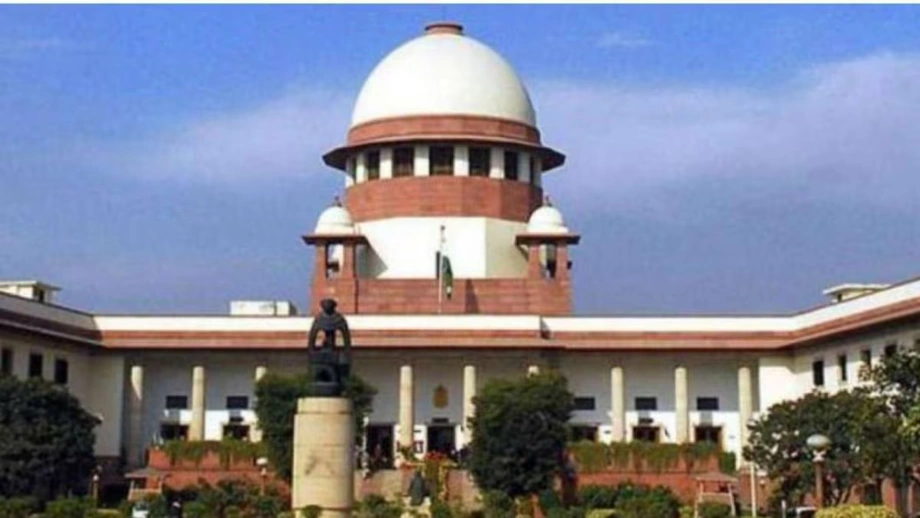
A three-judge Bench of the Supreme Court comprising Chief Justice of India Surya Kant, Justice Joymalya Bagchi, and Justice V. Mohana heard the petition on November 20. The judges acknowledged the gravity of the situation, with Chief Justice Surya Kant noting that the matter is an area of definite concern to everyone involved. The Bench commended the young law student for taking up such a significant societal issue despite her own 40 per cent visual impairment, expressing full sympathy and gratitude for her efforts. During the arguments, the Bench addressed the balance between individual freedom and public health protection, recognizing that marriage choices involve deep personal autonomy while also carrying severe biological consequences for offspring.
The judiciary carefully delineated the boundaries between court powers and legislative responsibilities during the hearing. Justice Joymalya Bagchi explained that the courts cannot dictate personal relationships or interfere with an individual freedom to choose a marriage partner. To illustrate this point, the Bench referenced a previous judicial case concerning a person with HIV, where the court ruled that choosing a partner remains a personal decision that courts cannot regulate through direct mandates. Justice Bagchi emphasized that the crucial element in such decisions is ensuring that individuals possess proper knowledge before committing to a union. Rather than issuing a direct order to ban or criminalize the practice, the apex court chose to issue a limited notice to the central government to explore potential legislative measures and public awareness campaigns.
The Prevalence of Consanguineous Marriages Across India
Statistical data reveals that marriages between close blood relatives form a widespread social practice in specific regions and communities across the country. According to the National Family Health Survey-5 conducted between 2019 and 2021, approximately 11 per cent of all marriages in India are consanguineous. This national average masks sharp regional variations, as the practice is heavily concentrated in southern states. Tamil Nadu records approximately 28 per cent of marriages as consanguineous, while Karnataka follows closely with 27 per cent. Many families in these areas follow traditional customs that have been practiced for generations without formal awareness of the potential genetic outcomes for their children.
Advocate Kaadambari Singh submitted to the court that rural populations often remain entirely unaware of how sharing genetic material affects recessive traits in offspring. Medical research cited in the legal filings shows that children born to first-cousin parents face roughly double the risk of birth defects compared to children born to unrelated parents. While many consanguineous unions do not result in visible medical complications, the statistical increase in genetic disorders creates a heavy burden for affected families and healthcare systems. The petition points out that bridging this information gap requires active intervention from public institutions to ensure that prospective couples understand the biological realities before making lifelong commitments.
Proposed Safeguards and Public Awareness Measures
The legal petition goes beyond questioning statutory exemptions by outlining practical solutions to protect future generations from preventable genetic disorders. One of the core proposals requests interim guidelines to establish premarital genetic counseling and voluntary screening facilities. These services would be deployed in districts and regions where consanguineous marriages occur frequently, allowing prospective couples to evaluate their genetic compatibility. Such counseling aims to provide clear, scientific information so that individuals can make fully informed choices without facing social coercion or legal penalties.
The Supreme Court responded favorably to the suggestion of widespread educational outreach rather than imposing immediate bans. The Bench emphasized that instilling scientific temper through institutional channels represents a constructive path forward for the Union of India. By suggesting educational reforms, the court pointed toward long-term societal transformation through knowledge rather than judicial overreach. The central government is now expected to formulate its official stance on whether new legislative frameworks or structured awareness campaigns are necessary to address the hidden health risks of blood-relative marriages.
Role of Local Governance and Educational Institutions
Spreading scientific awareness about hereditary disorders requires active participation from grassroots administrative networks and educational bodies. Chief Justice Surya Kant suggested that local community structures, including Anganwadi workers and panchayats, could play a vital role in educating rural communities about genetic health. These local workers interact directly with families and possess the community trust needed to discuss sensitive cultural practices respectfully and effectively. Utilizing local administrative machinery ensures that health information reaches remote villages where modern medical counseling is otherwise unavailable.
In addition to grassroots outreach, the Supreme Court specifically recommended integrating scientific information regarding consanguineous marriages into formal school and college curricula. Educating students early about genetics and recessive disorders helps build a generational shift in mindset, replacing blind adherence to custom with informed scientific understanding. The Bench noted that teaching these concepts as part of academic learning normalizes discussions around genetic health, empowering young adults to make healthy choices for their future families. The Central government must now consider these educational recommendations as part of its formal response to the judicial notice.
Timeline of Key Developments
- November 20: The Supreme Court bench issues a limited notice to the central government on a public interest litigation regarding consanguineous marriages.
- November 21: Legal reports and analyses highlight the petition challenges against specific provisions of the Hindu Marriage Act and Special Marriage Act.
What Remains Unknown and Next Steps
The central government has not yet submitted its formal legal response or indicated whether it intends to draft new legislation addressing consanguineous marriages. The Supreme Court did not specify a final deadline for the Union of India to file its reply, leaving the exact timeline for government action open. Furthermore, the judiciary has not ruled on the constitutional validity of the customary exceptions found within current family laws, having restricted the current notice strictly to the consideration of public awareness and potential legislative review. No date has been set for the next court hearing on the matter.
The Bottom Line
- The Supreme Court issued a limited notice to the central government asking it to consider legislation and awareness campaigns regarding consanguineous marriages.
- The petition was filed by 20-year-old law student Charvi S., who experiences visual impairments linked to her parents being first cousins.
- Data from the National Family Health Survey-5 shows that 11 percent of marriages in India are consanguineous, reaching 28 percent in Tamil Nadu and 27 percent in Karnataka.
- The legal challenge targets specific customary exceptions under the Hindu Marriage Act, 1955, and the Special Marriage Act, 1954.
- The court emphasized that marriage remains a matter of personal choice while stressing the necessity of informed decisions and public education through schools, colleges, and local workers.