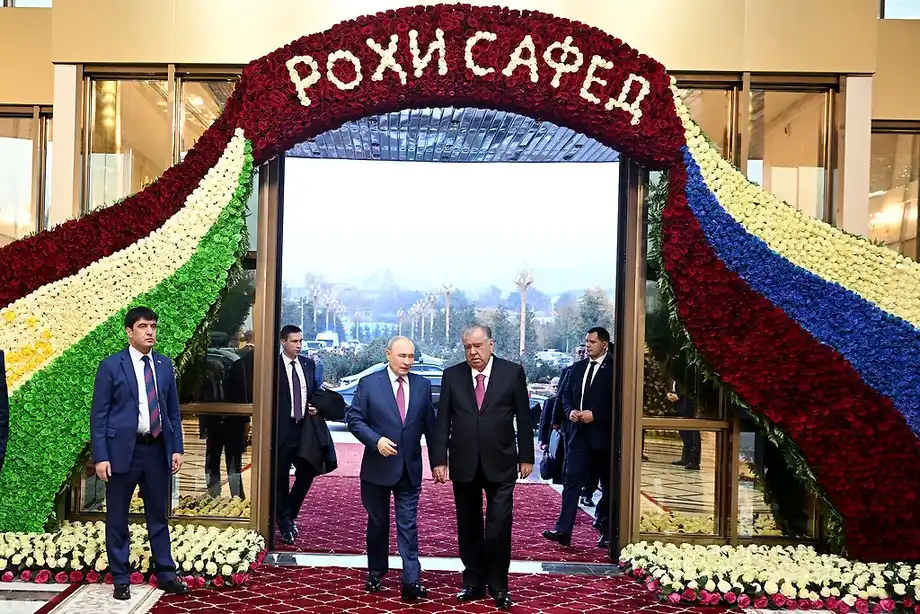
Russian Leader Concludes Dushanbe Trip
Russian President Vladimir Putin finished a working visit to Tajikistan on November 20, 2026, after flying into Dushanbe following participation in an Asia-Pacific Economic Cooperation summit in China. Tajik President Emomali Rahmon personally escorted his Russian counterpart to the international airport for his departure after a day of intensive bilateral negotiations. The visit took place just eight days after the two leaders met in Moscow, where they had gathered alongside other heads of state to prepare for Tajikistan to assume the chairmanship of the Collective Security Treaty Organization in 2027, as detailed in our earlier coverage of regional security and migration talks. While that summit addressed broad alliance matters, the Dushanbe meeting provided an opportunity to tackle specific regional challenges, trade targets, and military cooperation face-to-face.
Contents
According to the official Kremlin record of the trip, Putin touched down in the Tajik capital at 01:30 local time on November 20, with official substantive talks with Rahmon commencing at 12:15. The diplomatic engagement extended through a working lunch, highlighting the breadth of topics on the agenda between the two allied nations. Although media outlets previously reported that the trip was arranged on relatively short notice, the discussions covered a wide spectrum of bilateral ties, ranging from large-scale economic projects to border security.
Economic Growth and Regional Trade Ties
Trade relations formed a central pillar of the discussions, with Rahmon welcoming Putin by describing Russia as Tajikistan's main economic partner and a reliable strategic ally. Putin pointed to strong commercial momentum between the two countries, noting that bilateral trade turnover expanded by more than 25 percent over the previous year. He added that the positive trajectory continued into the current year, registering growth of nearly 19 percent during the first nine months. Economic cooperation currently extends across more than 70 constituent entities of the Russian Federation that maintain direct partnership ties with various districts and regions of Tajikistan.
Beyond traditional commerce, the two leaders reviewed collaborative initiatives in energy, industry, mining, agriculture, and transport, alongside emerging sectors such as artificial intelligence, digital government services, and cybersecurity. The economic discussions also touched upon broader infrastructural ambitions, building on long-term cooperation frameworks that seek to expand trade volume significantly by the end of the decade. At the same time, Tajikistan continues to balance its traditional economic reliance on Moscow with growing financial ties to other regional powers, particularly China, whose cumulative investments in the country have surpassed five billion dollars and whose bilateral trade with Dushanbe has expanded rapidly.
Security Cooperation and the 201st Military Base
Security issues, particularly the stabilization of the region and the prevention of cross-border threats, occupied a substantial portion of the Dushanbe agenda. Putin and Rahmon specifically reviewed the operations of the 201st Russian military base, which is stationed in Tajikistan and serves as one of Moscow's largest military installations outside its borders. The base traces its origins back to a motorized rifle division that operated in the country during the civil conflict of the 1990s, was officially reorganized in 2004 and 2005, and now maintains its headquarters in Dushanbe alongside a garrison in the southern city of Bokhtar under an agreement allowing a continued presence until 2042.
During the talks, Putin proposed discussing the military facility outside the formal framework of the Collective Security Treaty Organization, bringing in representatives from the Russian Ministry of Defense, including the Chief of the Main Directorate of the General Staff of the Armed Forces, Igor Kostyukov. Presidential press secretary Dmitry Peskov emphasized to reporters that both governments view the continued presence of the base as a vital stabilization factor for the region. The security partnership also involves active coordination between law enforcement agencies and special services to combat terrorism, extremism, cyber threats, and illegal drug trafficking.
Border Security and the Afghan Dimension
The situation along Tajikistan's approximately 1,300-kilometer border with Afghanistan proved to be another critical focal point for the two presidents. Rahmon updated Putin on security conditions in the borderlands, where Tajik border guards occasionally contend with smuggling operations and other security incidents originating across the frontier. These ongoing concerns are compounded by regional security incidents, including a border intrusion in the southern Khatlon region and a security breach that resulted in casualties among foreign workers.
Ahead of his arrival in Dushanbe, Putin coordinated with regional partners following a recent visit to Kabul by a high-ranking Russian delegation led by Deputy Prime Minister Alexei Overchuk, which focused on trade and agricultural cooperation with the Taliban administration. Moscow views the stabilization of Afghanistan's humanitarian and economic situation as a necessary step to curb the spread of radical ideologies. Russian security officials have previously noted that groups such as the regional branch of the Islamic State actively attempt to recruit operatives from Central Asia, making joint border defense and intelligence sharing an ongoing priority for both Dushanbe and Moscow.
Humanitarian Cooperation and Cultural Projects
Cultural and humanitarian ties received notable attention during the summit, with Putin thanking Rahmon for his administration's continued support for the Russian language. Mastery of Russian remains a vital gateway for Tajik citizens seeking higher education in Russian universities, professional advancement, and employment opportunities abroad. The educational partnership was recently underscored by the launch of the international teacher training program known as the Russian Philological School 2026 at the Russian-Slavic University in Dushanbe, an initiative designed to foster professional development among local educators.
The leaders also reviewed plans for concrete joint cultural and educational infrastructure projects in the Tajik capital. These proposals include the construction of a modern International Center for Gifted Children and a new building for the Mayakovsky Russian Drama Theatre in Dushanbe. Furthermore, practical humanitarian efforts extend to the activities of the military personnel stationed at the 201st base, who recently delivered food supplies, fresh produce, and educational safety seminars to children at a regional support center in the Khatlon region, reinforcing grassroots ties between the two societies.
Labour Migration Realities
Labour migration remains one of the most sensitive and economically significant topics connecting the two nations, given that remittances from workers in Russia account for nearly half of Tajikistan's gross domestic product. While official readouts from Dushanbe acknowledged that the presidents discussed the need to address ongoing administrative questions surrounding labour migration, public announcements did not specify the exact mechanisms under discussion. In an effort to diversify employment opportunities and reduce economic vulnerability, the government in Dushanbe has established formal migration agreements with numerous other countries in recent years.
At the same time, Moscow has continued to refine its administrative framework governing foreign labour. Regulatory adjustments introduced earlier in the year aim to streamline pre-departure procedures, including mandatory medical examinations, fingerprinting, and professional training programs conducted directly within Tajikistan prior to workers arriving in Russia. These policy changes reflect a broader effort by Russian authorities to institutionalize organized recruitment while transferring greater organizational responsibility to employers who utilize foreign labour.
What to Know
- Russian President Vladimir Putin completed a working visit to Tajikistan on November 20, 2026, meeting with Tajik President Emomali Rahmon in Dushanbe.
- Bilateral trade turnover grew by more than 25 percent over the previous year and nearly 19 percent during the first nine months of the current year.
- The two leaders confirmed that the 201st Russian military base will maintain its operations in Tajikistan as a key factor for regional stability under agreements extending until 2042.
- Discussions covered border security along the Afghan frontier, counterterrorism efforts, and joint cooperation in education, culture, and migration.