A Historic Opening Match on the Global Stage
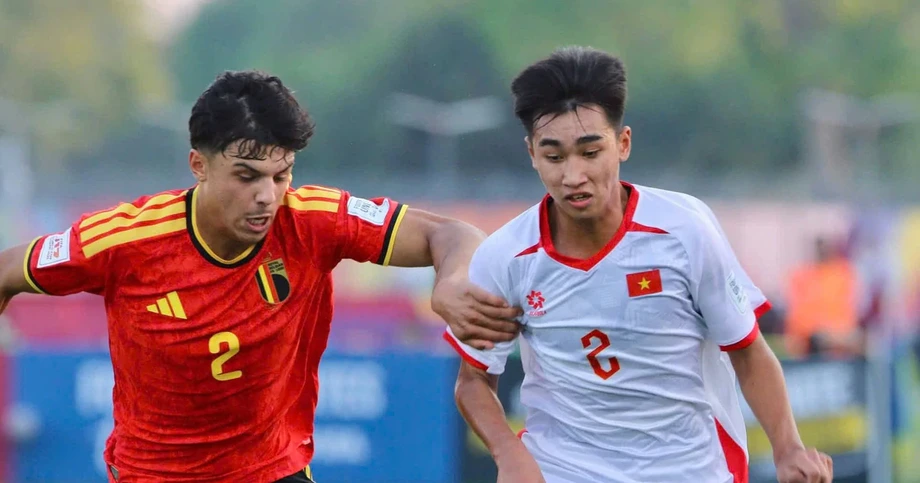
The FIFA U-17 World Cup Qatar 2026 brings together 48 national youth teams competing in Qatar from November 19 to December 13, 2026, with matches hosted at venues including the Aspire Zone Pitch. Among the participants, the national youth squad of Vietnam makes its historic debut as the sole representative from Southeast Asia. Drawn into Group G alongside traditional youth powerhouses Belgium, Mali, and New Zealand, the squad led by head coach Cristiano Roland faced an immediate trial by fire against the reigning European runners-up, Belgium, on November 20, 2026. Despite a narrow 2-3 defeat, the young team captured global attention by scoring twice against a heavily favored European opponent.
Contents
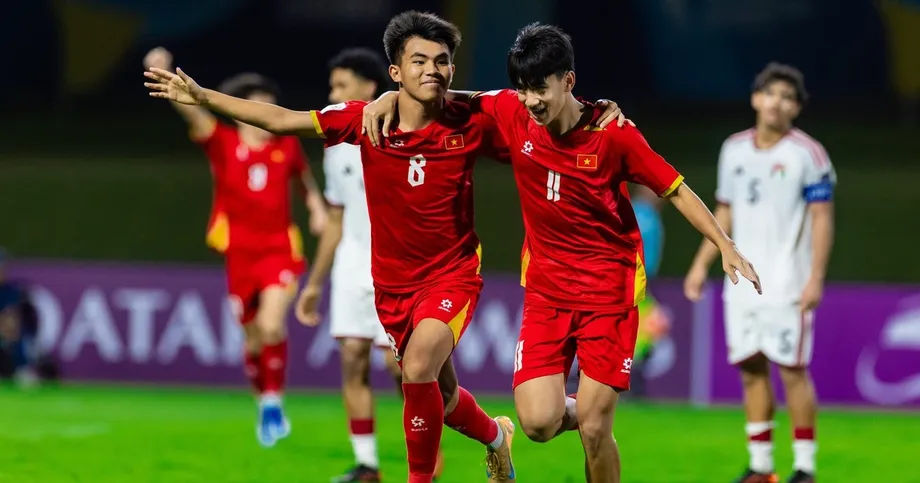
The match began with remarkable boldness from the tournament debutants. Just four minutes into the contest, midfielder Nguyễn Minh Thủy delivered a precise corner kick into the penalty area. Forward Lê Sỹ Bách anticipated the trajectory perfectly, executing an audacious and technically brilliant backheel shot that beat the Belgian goalkeeper. This moment secured the first ever goal for Vietnamese football at the U-17 World Cup, sparking immense pride among supporters back home and in the stadium. The squad maintained defensive discipline under intense pressure, marshaled by team captain Nguyễn Huỳnh Đăng Khoa and goalkeeper Lý Xuân Hòa, who worked tirelessly to protect the early advantage against waves of attacks.
Belgium eventually utilized their physical and tactical advantages to secure three goals through Moorthamer in the 39th minute, Achahbar in the 42nd minute, and Philips in the 60th minute. Even when trailing by two goals, the players refused to relent. In the 84th minute, midfielder Nguyễn Lực produced another moment of brilliance by curling a direct corner kick straight into the net, narrowing the scoreline to 2-3 and forcing the European side to defend anxiously through the final whistle. Head coach Cristiano Roland expressed immense pride in his squad's resilience following the final whistle.
I am very satisfied and proud of what the team has shown. The players played well and maintained their spirit until the very final minutes. Even though we lost, I think this will be a great source of pride for those who work in football as well as for Vietnamese spectators.
New Zealand Seeks Recovery Following Opening Defeat
New Zealand enters the tournament with substantial pedigree, marking their twelfth appearance at the U-17 World Cup. Their historical campaign history includes group stage progressions in 2009, 2011, and 2015, though recent editions have seen them struggle against opponents from stronger confederations. Managed by head coach Martin Bullock, the Oceanian side features many young talents developed through professional academies at Wellington Phoenix, Auckland FC, and Australian clubs. Their opening fixture on November 20, 2026, proved difficult as they encountered a dominant Mali team at the tournament venues in Qatar.
Mali established complete control over the contest, recording 70 percent possession and unleashing 29 total shots toward the goal frame. Forward Halidou Alhassane Maïga opened the scoring for the African side in the 11th minute by reacting quickest to a loose ball inside the penalty area. Despite the heroic efforts of New Zealand goalkeeper Joseph Chalabi, who contributed seven crucial saves to prevent a wider margin, the defense eventually yielded further goals in the second half. Halidou Alhassane Maïga completed his brace in the 50th minute with a deflected strike, and teammate Makan Sacko added a third goal four minutes later to seal a 3-0 victory for Mali.
This decisive result placed Mali at the top of the Group G standings on goal difference, followed by Belgium in second place, Vietnam in third, and New Zealand at the bottom. Both winless teams now find themselves facing a high-stakes encounter where a positive result remains essential for any realistic chance of progressing to the knockout rounds. The tournament format permits the top two teams from each of the twelve groups, alongside the eight best third-placed finishers, to advance into the round of 32.
Tournament Format and Qualification Scenarios
The expanded 48-team format at the 2026 tournament creates diverse pathways for teams seeking to survive the group stage. Group G contains four competitive sides, with Belgium and Mali widely viewed as the early front-runners for the automatic qualification spots. However, the inclusion of eight slots reserved for the best third-placed teams keeps aspirations alive for both Vietnam and New Zealand. Mathematics and performance metrics will dictate the final standings after the completion of all three round-robin fixtures.
For the national youth team of Vietnam, the upcoming fixture represents a calculated opportunity to secure their first points on the global stage. Securing a victory against the Oceanian representatives would elevate their points total to three, significantly improving their goal differential and placing them in a strong position ahead of their final group match against Mali on November 26, 2026. A subsequent draw against Mali would yield four points, a total historically sufficient in many expanded tournament formats to secure one of the coveted third-place qualification berths.
Conversely, a draw against New Zealand would leave the squad with one point, requiring an outright victory against Mali in the final group fixture to reach the four-point threshold. A defeat in the upcoming fixture would narrow their margin for error entirely, necessitating a win against Mali alongside favorable results from other groups. The coaching staff has spent the intervening days analyzing tactical adjustments, addressing defensive lapses from the opener, and preparing the players to capitalize on their scoring opportunities against a physically imposing opponent.
Tactical Preparation and Expected Lineups
Both teams approach the fixture with stable player rosters and clear tactical imperatives. The Oceanian side is expected to lean upon their physical stature and aerial prowess to trouble the Asian debutants during set pieces and crosses. Their tactical setup will likely emphasize direct play and high pressing to disrupt the intricate passing combinations favored by the Southeast Asian representatives. Players such as goalkeeper Joseph Chalabi, along with defenders and midfielders tasked with controlling the tempo, will need to rebound swiftly from their difficult opening match against Mali.
The squad from Vietnam is anticipated to retain a similar tactical structure that troubled Belgium, prioritizing swift transitions, technical agility, and spatial awareness to bypass taller opponents. Head coach Cristiano Roland emphasized maintaining proactive energy and disciplined positioning throughout the ninety minutes. The projected starting lineup for Vietnam features Lý Xuân Hòa in goal, supported by a defensive and midfield core including Mạnh Đức, Mạnh Cường, team captain Nguyễn Huỳnh Đăng Khoa, Quý Vương, Nguyễn Minh Thủy, Đại Nhân, Nguyễn Lực, Anh Hào, Trọng Phong, and Lê Sỹ Bách.
New Zealand is expected to field a competitive starting formation featuring Joseph Chalabi, Des Tombe, Ethan Dyer, Shimokawa, Sean Kane, Sena Vesty, McIntyre, Nunez, Trenberth, Hamilton, and Clegg. The tactical chess match between the two coaching staffs will center on midfield control and the defensive containment of quick counterattacks, making every tactical substitution critical as fatigue sets in during the latter stages of the match.
Schedule and Broadcast Information
The anticipated Group G encounter between Vietnam and New Zealand is scheduled to kick off at 22:30 Vietnam time on Monday, November 23, 2026, at the Aspire Zone Pitch in Qatar. This evening time slot offers favorable conditions for players and spectators alike. Following this fixture, the tournament schedule dictates that Vietnam will conclude their group stage campaign against Mali on November 26, 2026, at 20:00 Vietnam time. Concurrently, New Zealand will face Belgium on November 26 in their final group fixture.
Broadcasting arrangements ensure comprehensive coverage for supporters across multiple regions. Fans in Vietnam can view every match of the tournament live and in full definition through domestic digital platforms including MyTV, FPT Play, and TV360. International audiences can access regional broadcasts through official FIFA tournament partners, ensuring that the historic milestone achieved by the young squad reaches viewers worldwide.
The convergence of these scheduling details underscores the rapid pace of the tournament group stage, where recovery time is minimal and tactical preparation must be executed with absolute precision. As the teams prepare to step onto the pitch at the Aspire Zone Pitch, the stakes remain exceptionally high for both nations in their pursuit of tournament survival.
The Bottom Line
- The national youth team of Vietnam faces New Zealand in their second Group G match on November 23, 2026, at 22:30 Vietnam time at the Aspire Zone Pitch.
- Vietnam enters the fixture following a courageous 2-3 defeat against Belgium where Lê Sỹ Bách and Nguyễn Lực scored historic goals.
- New Zealand seeks recovery after suffering a 0-3 defeat against Mali in their opening match of the tournament.
- The top two teams in each group plus the eight best third-placed teams will qualify for the round of 32 in the expanded 48-team tournament.
- Matches are broadcast live across domestic platforms including MyTV, FPT Play, and TV360.