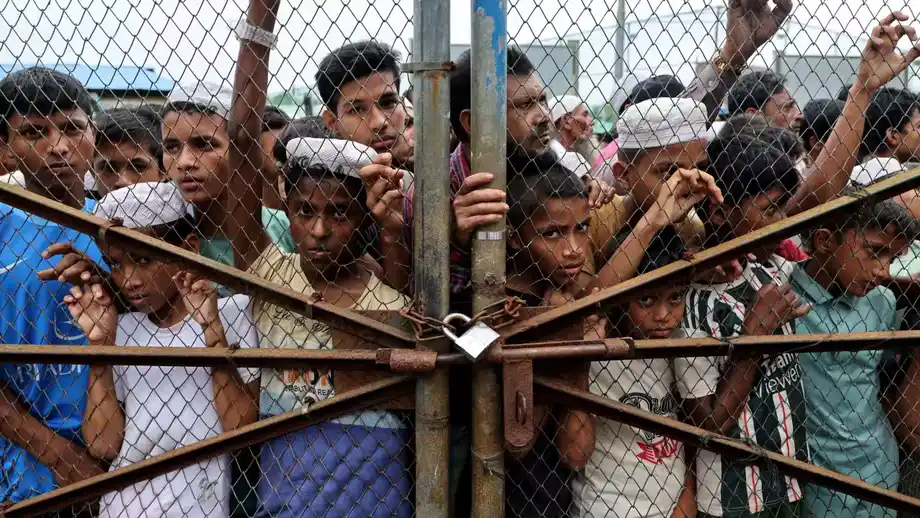
A proposal announced, then withdrawn from view
Malaysia's Deputy Prime Minister Ahmad Zahid Hamidi announced that 10,000 Rohingya refugees could move from Malaysia to Türkiye after three to six months of vocational training. The Facebook post describing the plan was later deleted without explanation, leaving its next steps uncertain.
Contents
Before the post disappeared, Zahid said Malaysia's Cabinet had approved the proposal after his official visit to Türkiye, and that Türkiye had agreed to receive the refugees. The programme was to involve Malaysian and Turkish officials, the United Nations refugee agency, UNHCR, and other organisations in selecting participants, arranging training and documents, and organising resettlement.
The announcement did not include a timetable, a selection process or a public explanation for the post's removal. Türkiye's Foreign Ministry did not respond to requests for comment or declined to comment, depending on the account. That leaves a key distinction for refugees and readers: Malaysian officials described a plan and said Türkiye had agreed, but no public details confirm when or how it would begin.
Zahid said the proposal was intended to address the situation in Malaysia in a more "coordinated, effective and humane manner." The proposed training would last three to six months and teach practical skills sought by employers in different industries. Employment would remain subject to Turkish laws and rules.
What would the programme involve?
The outline offered by Zahid connected resettlement with preparation for work. Malaysian and Turkish authorities, UNHCR and other agencies were expected to coordinate participant selection, training, documentation and transfer. Zahid said the process would take account of employer needs, international rules and the consent of the people involved.
Consent matters because resettlement means moving to another country to live there, rather than being sent back to the country someone fled. For a refugee, a move should be made with an understanding of the destination and the conditions there. The announcement said participation would take individual consent into account, but did not explain how consent would be obtained or what options people would have if they declined.
The plan's stated size, 10,000 people, would make it a major transfer for the Rohingya community in Malaysia. UNHCR figures cited in accounts of the announcement put the number of registered Rohingya there at roughly 126,000 to 129,000, while other figures describe Rohingya as about two-thirds of roughly 190,000 to 193,000 registered refugees from Myanmar. These totals refer to different reporting counts and categories; they all indicate that the proposed group would be a substantial share of the registered Rohingya population.
Why Malaysia is seeking another option
Malaysia hosted about 193,000 registered refugees from Myanmar at the end of February, according to UNHCR figures cited in accounts of the proposal. Rohingya made up around two-thirds. A separate count put the wider number of refugees and asylum seekers in Malaysia at 225,740 in August, about 90 percent of them from Myanmar. The dates and categories differ, so the figures describe different snapshots rather than a direct change in population.
Malaysia is not a signatory to the 1951 Refugee Convention and does not formally recognise refugees as a separate legal category. People seeking protection can therefore face immigration rules that treat them as undocumented migrants. This affects daily life, including access to secure status and the risk of detention.
Pressure on Rohingya families has also been visible in Kuala Lumpur. More than 100 asylum seekers were detained after gathering outside UNHCR's office to seek help and protection. Penang police said the group had moved to Kuala Lumpur voluntarily with help from state and federal authorities. Seberang Perai Utara district police chief Anuar Abdul Rahman linked the transfer to what he called "economic and territorial competition" as the Rohingya population grew in the area.
Prime Minister Anwar Ibrahim warned that people without proper permits could be detained. In a video posted on social media, he said: "No one has the right to take over any part of the city." The gathering and detention came amid reports of hostility toward the community, including families displaced from a settlement and refugee schools temporarily closed after threats.
Earlier attacks and evictions described the detention of Rohingya who travelled from Penang to seek assistance, along with threats affecting homes and schools. Those events show why the resettlement announcement is not simply a training proposal: for people facing insecure status and local hostility, whether a safe and voluntary route is actually available matters.
Returns to Myanmar continue alongside resettlement plans
Malaysia has also returned Myanmar nationals to their country. Anwar told Parliament that about 10,000 had been sent back since January, including around 1,400 by sea in one operation the previous week. Other accounts described more than 10,000 returns since January or about 1,500 people returned in late September. The figures cover different dates and operations.
The government has described some returns as voluntary. In October, it said it would seek clarification from Myanmar after reports that hundreds of people who had returned were detained. Anwar said Malaysia had required Myanmar to bring its citizens home and treat them fairly, without abuse, coercion or violations of their rights.
Myanmar has been in conflict since the military coup in 2021. The violence has made return a serious concern for people who fear persecution or harm. In July, Anwar said Myanmar had agreed to take 5,000 asylum seekers from Malaysia; UNHCR opposed returns in light of the ongoing conflict, according to an account of that proposal.
Rohingya people face particular risks because many have been denied citizenship in Myanmar. Without citizenship, they can lack legal recognition and face restrictions on movement and access to services. A return arrangement therefore depends on whether people can go back safely and voluntarily, not simply on whether a government agrees to receive them.
The court ruling sharpened the stakes
The resettlement announcement followed a ruling by the International Court of Justice, the United Nations' highest court, on Myanmar's 2017 military campaign against the Rohingya in northern Rakhine State. The court found Myanmar responsible for genocide. Accounts of the judgment said the court addressed killings, widespread sexual violence and extreme violence against children.
Presiding Judge Yuji Iwasawa said the court found that Myanmar's security forces "killed thousands of Rohingya civilians, perpetrated widespread acts of sexual violence as well as acts of extreme violence against children and attacked fleeing Rohingya." The case was brought by Gambia, a predominantly Muslim country in West Africa.
The court's ruling concerns Myanmar's responsibility under international law. It directed the country to investigate and punish those responsible, prevent genocide from happening again and support safe, voluntary return for displaced Rohingya. Accounts also said the judgment ordered reparations. These directions do not themselves provide a home or legal status for Rohingya living in Malaysia; those questions depend on how governments put arrangements into practice.
More than 700,000 Rohingya fled to Bangladesh during the 2017 military campaign, while others sought safety in Malaysia and elsewhere. The court ruling renewed attention to the violence that forced people to leave, at the same moment Malaysia announced a possible route for a limited number of refugees to settle in a third country.
Key dates and developments
2017: A military campaign in Myanmar's Rakhine State drove hundreds of thousands of Rohingya from their homes.
2021: A military coup in Myanmar triggered continuing conflict and further displacement.
End of February: UNHCR figures put registered refugees from Myanmar in Malaysia at about 193,000, around two-thirds Rohingya.
Thursday, before the announcement: The International Court of Justice ruled that Myanmar was responsible for genocide against the Rohingya.
Friday: Ahmad Zahid announced the proposed transfer of 10,000 people to Türkiye, with three to six months of training. The Facebook post was later deleted.
What is still unresolved?
No public timetable has been given for selecting participants, starting training or arranging travel. The announcement also did not set out the training locations, the industries involved, the legal status participants would receive in Türkiye or how refugees could make an informed choice. Türkiye's response was not publicly available when the post was removed.
For Rohingya refugees in Malaysia, the proposal could create a route to a third country, but only if the governments involved turn it into a clear programme and individuals choose to take part. Meanwhile, Malaysia's refugee population, its detention and return policies, and the safety of possible returns to Myanmar remain immediate concerns.
The Bottom Line
Malaysia's Deputy Prime Minister Ahmad Zahid Hamidi announced a plan to resettle 10,000 Rohingya in Türkiye after vocational training lasting three to six months.
Zahid said Malaysia's Cabinet approved the proposal and Türkiye agreed to receive the refugees, but the Facebook announcement was deleted without explanation.
The programme was described as involving UNHCR and requiring attention to participant consent, employer needs and international rules.
Malaysia hosts a large Rohingya population and has also returned thousands of Myanmar nationals amid continuing conflict and concerns about safety.
The International Court of Justice ruled that Myanmar was responsible for genocide against the Rohingya; the resettlement plan has no public start date or published selection details.