Nine spacecraft join China's expanding satellite network
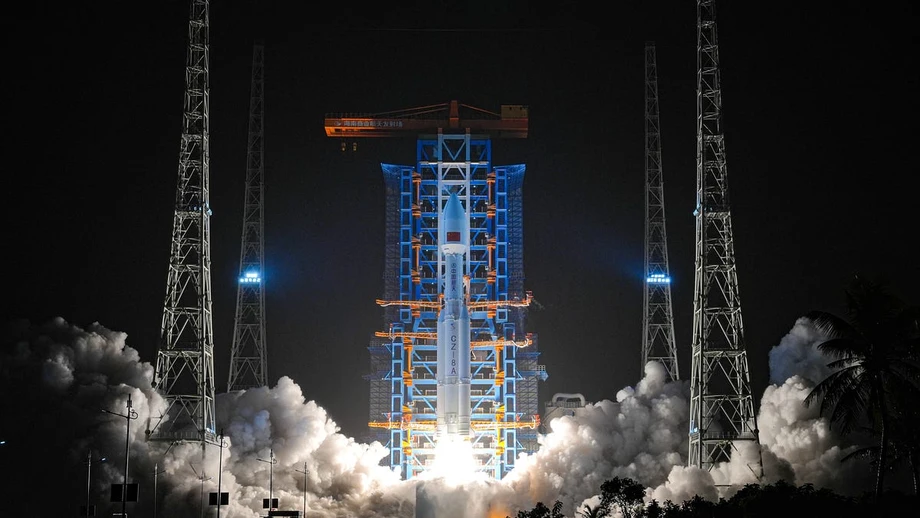
China launched nine satellites for its Guowang network from Hainan at 7:59 p.m. local time on Nov. 20, 2026, using a Long March 8A rocket. The spacecraft reached their planned orbit, according to the launch announcement. The mission was the 30th Guowang group, not a batch of 30 satellites.
Contents
The launch also drew attention beyond China. The Philippine Space Agency said two projected areas where rocket debris could fall lie in Philippine waters. It advised people to report suspected debris and warned them not to approach or collect it because pieces could contain toxic rocket fuel.
The latest deployment brings the number of Guowang satellites in orbit to 249. That remains a small start for a constellation planned to contain 12,992 spacecraft, but it marks a sharp increase from about 40 satellites reported launched by July 2025. The network is intended to provide internet connectivity and could also support other services, including remote sensing and navigation.
What does the 30th group mean?
Guowang's "30th group" is a mission sequence label. This particular group contained nine satellites, built by the Chinese Academy of Sciences' Innovation Academy for Microsatellites. Keeping the group number separate from the number of spacecraft helps explain why the launch headline may sound as if 30 satellites went up when nine did.
The Long March 8A lifted off from Commercial Launch Pad 1 at the Wenchang Commercial Space Launch Site in Hainan. The launch took place at 11:59 a.m. UTC, or 7:59 p.m. in the Philippines, one hour behind China. The rocket climbed through rainy weather before releasing its payload into low Earth orbit, the region relatively close to Earth where many communications satellites operate.
After the deployment, 249 Guowang satellites were in orbit, according to the launch account. Some may still be moving toward their assigned operating positions. A satellite being in orbit means it is circling Earth; it does not by itself mean it is already providing a service to customers.
How large is the network China plans?
China's stated Guowang plan calls for 12,992 satellites: 6,080 in orbits about 500 to 600 kilometers above Earth, and 6,912 at an altitude of about 1,145 kilometers. The two groups would operate at different heights, giving the network many satellites spread around the planet.
The scale is far beyond the present fleet. The 249 spacecraft now in orbit amount to about 1.9 percent of the planned total. In earlier Guowang expansion coverage, the count was about 40 by July 2025. The current total is roughly six times that earlier figure, although the July number described satellites launched while the newer count is satellites in orbit.
Satellite networks rely on many spacecraft because each one covers only part of Earth at a time. As satellites move along their paths, others can take over the connection. A large constellation can therefore serve areas far from fiber optic cables, though delivering continuous service also requires ground equipment, working links between satellites and a network that can route data to users.
More than an internet project
Guowang is operated by China Satellite Network Group, a state owned enterprise. Its planned role includes worldwide internet connectivity, with domestic user trials and service agreements underway ahead of a broader rollout in China. No date for that general rollout was given in the latest launch information.
The planned spacecraft may also carry equipment for laser communications, radar and optical imaging, navigation and positioning, and weather research. Remote sensing means collecting information about Earth from instruments aboard satellites. Navigation and positioning services use satellite signals to help determine where a receiver is located.
The satellites come in different sizes. Guowang spacecraft launched on Long March 8A and Long March 12 rockets use a platform weighing about 695 kilograms. Larger versions, weighing up to 1,000 kilograms, have flown on Long March 5B and Long March 6A rockets. Both types use electric propulsion to adjust their orbits and solar panels to generate power.
A faster launch rhythm
The Nov. 20 mission was the 13th flight of a Long March 8A and the 20th flight in the Long March 8 family. The rocket had flown five times in five months, following launches in July, August, September and October. The family's 10 missions in 2026 had all used the commercial launch pad at Wenchang to expand satellite networks.
Regular flights depend on more than the rocket itself. The launch site operator has worked to shorten preparations, and the vehicle was reported to spend about two and a half days on the pad awaiting liftoff. A quicker turnaround can make it easier to send up satellites in repeated batches, though the network's planned size means many launches and spacecraft will still be needed.
The Nov. 20 flight was China's 83rd launch of 2026 and the 679th flight of the Long March rocket family. Those figures place the Guowang deployment within a busy year for China's launch program, as well as within the longer effort to build a large communications network.
Why the Philippines issued a debris warning
The Philippine Space Agency identified two projected debris zones associated with the launch. One is within the Philippines' exclusive economic zone, about 98 nautical miles from Patag Island, 128 nautical miles from Bajo de Masinloc, 143 nautical miles from El Nido and 152 nautical miles from Busuanga.
The second projected zone is in Philippine archipelagic waters. It is about 40 nautical miles from Hadji Muhtamad in Basilan, 43 nautical miles from Tubbataha Reefs Natural Park, 52 nautical miles from Pangutaran Island in Sulu and 124 nautical miles from Puerto Princesa.
An exclusive economic zone gives a country rights over resources in the waters and seabed, while archipelagic waters are waters enclosed by the islands of an island nation. The agency shared a pre launch report with relevant government offices and issued a Notice to Airmen, or NOTAM, to alert those who may be affected by launch activity.
PhilSA asked anyone who sees suspected debris to inform local authorities. It warned people not to retrieve material or go close to it because rocket remnants may contain toxic fuel substances. The launch information identified possible drop zones; it did not give a confirmed location for any debris recovered after the flight.
What is known about the network's progress?
Guowang's development has included test spacecraft at different heights as China works toward its planned operating constellation. Earlier test deployments included satellites in orbits near 1,111 kilometers and a later test group at about 450 kilometers. The mix of test and operational deployments shows the program is building up in stages rather than switching on as one complete network.
The total of 249 in orbit is a useful measure of deployment, but the count alone does not show how many satellites are fully operational or where each one is positioned. The latest launch announcement did not specify when the nine spacecraft will reach their final working orbits, or when wider service will begin.
The immediate milestones are therefore practical ones: continued launches, positioning the satellites, and progressing from domestic trials toward customer service. The debris warning also shows how a launch can affect neighboring countries, even when the rocket lifts off from Chinese territory.
Key Points
- China launched nine Guowang satellites from Hainan at 7:59 p.m. China time on Nov. 20, 2026.
- The satellites formed Guowang's 30th group, bringing the reported in orbit total to 249.
- The planned constellation has 12,992 satellites, split between two main orbital heights.
- The network is intended for internet service and may support imaging, navigation, communications and weather research.
- PhilSA identified two possible rocket debris zones in Philippine waters and urged the public not to approach suspected debris.