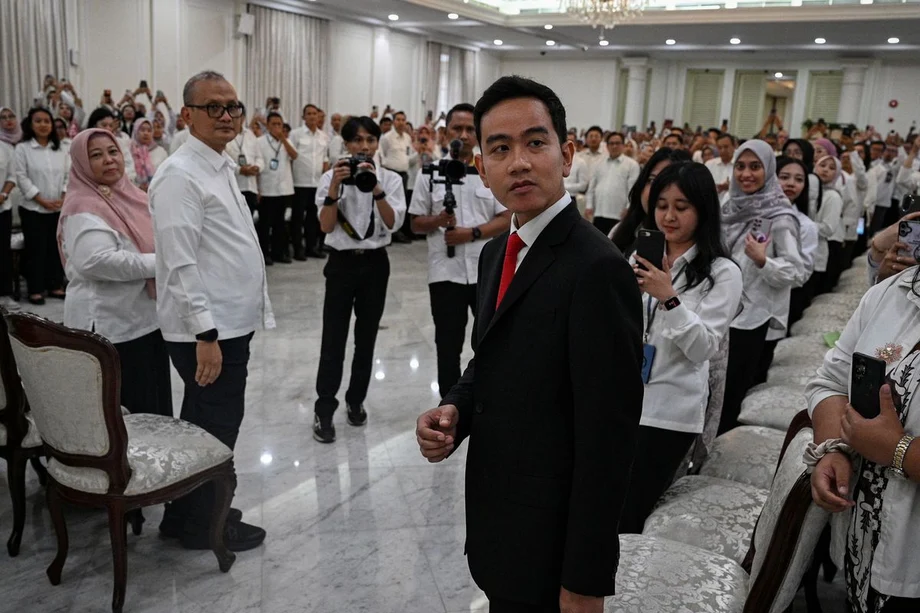
Breaking: Vice President Resigns Amid Constitutional Crisis
Indonesian Vice President Gibran Rakabuming Raka has resigned from office, tendering his resignation letter to President Prabowo Subianto at Halim Perdanakusuma Air Base on Wednesday, November 11, 2026. The dramatic departure comes after weeks of escalating legal challenges over his educational qualifications and a cross-party parliamentary motion that paved the way for impeachment proceedings.
Contents
- Breaking: Vice President Resigns Amid Constitutional Crisis
- The Education Controversy: From Court Rulings to Resignation
- The Impeachment Motion: Cross-Party Unity Against Gibran
- The Prabowo-Gibran Meeting: 2.5 Hours That Changed Everything
- A Fractured Alliance: Jokowi and Prabowo's Widening Rift
- Constitutional Process: What Happens Next for the Vice Presidency
- Economic Reassurance: Danantara Projects Confidence Amid Turmoil
- Public Reaction and Street Protests
- Gibran's Political Journey: From Surakarta Mayor to Shortest-Serving VP
- Key Points
Budi Arie Setiadi, chairman of Projo — the volunteer organization aligned with former president Joko Widodo — confirmed the resignation to reporters in Jakarta. "[Gibran mundur] betul," Budi said, using the Indonesian word for "true." He also verified that the resignation letter was delivered during a meeting with Prabowo at the air base. "[Diserahkan di Halim] betul," he added.
The resignation marks a stunning fall for Indonesia's youngest-ever vice president, who assumed office barely two years ago at age 37 after a controversial Constitutional Court ruling cleared his path to the ballot. His departure triggers a constitutional process in which the People's Consultative Assembly (MPR), the parliamentary upper house, has 60 days to select a replacement from two candidates nominated by the president.
Two sources at the MPR told Reuters that Gibran would submit his formal resignation letter to the upper house on Thursday morning. The upper house will oversee both the approval of his resignation and the selection of his successor.
The Education Controversy: From Court Rulings to Resignation
The crisis centers on questions about whether Gibran's educational documents meet the constitutional requirement that vice presidential candidates hold a senior secondary school diploma or its equivalent. Having studied in Singapore and Australia, Gibran relied on an Indonesian equivalency certificate issued by the Education Ministry to demonstrate his credentials.
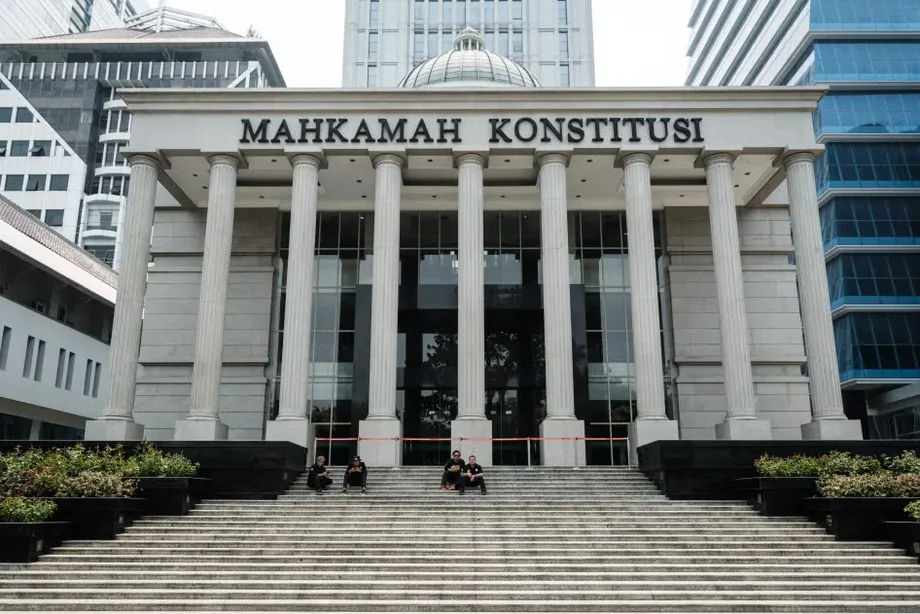
The legal challenges unfolded in two stages. On October 6, the Constitutional Court rejected a petition seeking to invalidate Gibran's candidacy and inauguration on standing grounds, but its ruling appeared to agree that his documents did not amount to a senior high school-equivalent diploma. The decision sparked protests across the country calling for his resignation or impeachment.
Then on October 30, the Supreme Court delivered a more definitive blow. Accepting an appeal by lawyer Subhan Palal, the court annulled Gibran's overseas high school equivalency certificate. "No evidence was found to show Gibran had a foreign diploma or certificate that could serve as the basis for equivalency with a senior high school or equivalent qualification," the court stated.
The Supreme Court also considered the Constitutional Court's earlier ruling, which had reached the same conclusion. Together, the two rulings created what constitutional scholars described as an unprecedented situation: a sitting vice president whose core eligibility document had been invalidated by the nation's highest courts.
Gibran had previously argued that undertaking university education was sufficient proof that he had completed senior high school. On Tuesday, November 10, he asked for the chance to challenge the Supreme Court ruling and prove the legitimacy of his education credentials, according to State Secretary Prasetyo Hadi.
The Impeachment Motion: Cross-Party Unity Against Gibran
Parliament reconvened on Tuesday after a month-long recess, and the political response was swift. By Wednesday, 120 lawmakers from all eight parliamentary factions had signed a motion to exercise the House of Representatives' right to express an opinion (HMP) — the first formal step in a potential impeachment process.
The breakdown of support revealed remarkable cross-party consensus: 14 members from PDI Perjuangan, 11 from Golkar, 11 from Gerindra (Prabowo's own party), 19 from NasDem, 18 from PKB, 28 from PKS, one from PAN, and 18 from the Democratic Party.
Deputy House Speaker Saan Mustopa announced that the proposal would be submitted to a plenary session scheduled for Thursday, November 12. "We will forward the proposal to this plenary session tomorrow," he told reporters at the parliamentary complex.
The HMP mechanism allows lawmakers to formally express their opinion that a vice president no longer meets qualifications for office. If approved, it could trigger a referral to the MPR for impeachment proceedings. The speed and breadth of the coalition — including members of the president's own party — signaled the depth of political peril facing Gibran.
State Secretary Prasetyo Hadi acknowledged the parliamentary process. "It is certainly a political process that we must all respect," he said. "After all, both the DPR and the members have rights."
The Prabowo-Gibran Meeting: 2.5 Hours That Changed Everything
The critical turning point came on Tuesday morning, November 10, when Gibran met with President Prabowo for two and a half hours. According to Prasetyo Hadi, Gibran expressed his intention to resign during that meeting, "in response to the developing situation" surrounding the court rulings.
Presidential spokesperson Prasetyo Hadi confirmed the development: "During the discussion, the vice president expressed his intention to resign in light of the evolving situation." However, he denied reports that Prabowo had rejected the request but did not confirm whether the president had accepted it at that time.
Gibran later told reporters that Prabowo had advised him to continue fighting his case, including seeking a judicial review of the Supreme Court ruling at the State Administrative Court. "One piece of his advice is that I keep fighting in the State Administrative Court... and file a civil review appeal to the Supreme Court's ruling," Gibran said, adding that he views Prabowo "as a father."
By Wednesday, the resignation had been formalized and delivered at Halim Perdanakusuma. Standing alongside Gibran, Prabowo told reporters he had accepted the resignation "with a heavy heart." He praised his former running mate: "[Gibran] has demonstrated a chivalrous attitude, a strong sense of responsibility, and the qualities of a statesman," Prabowo said, adding that the resignation was "for the benefit of the nation, the state, and the people of Indonesia."
Prabowo also addressed the education controversy directly: "He certainly believes that he completed his education through a proper and structured process. However, we must understand that educational systems abroad differ from those in Indonesia."
A Fractured Alliance: Jokowi and Prabowo's Widening Rift
Gibran's resignation cannot be separated from the deepening fracture between his father, former president Joko Widodo (known as Jokowi), and President Prabowo Subianto. Their alliance — forged after years of bitter rivalry — delivered a landslide victory in the 2024 election with 58.8 percent of the vote, largely attributed to voters' desire for continuity with Jokowi's legacy.
But tensions have flared since Prabowo took office. The president has shown little interest in advancing Jokowi's signature legacy project: the construction of Nusantara, the new capital city. Instead, Prabowo has directed state resources toward his own flagship program providing free school meals nationwide.
In a series of personnel reshuffles over the past year, Prabowo has moved many Jokowi loyalists into new roles, including long-serving finance minister Sri Mulyani Indrawati. Last week, authorities arrested several senior officials, including presidential chief of staff Listyo Sigit Prabowo — no relation to the president — on suspicions of wiretapping the president. Listyo, formerly the national police chief and widely considered a long-time Jokowi ally, was sacked a day later.
Allegiances within the cabinet have also shifted. On Monday, three members of Prabowo's cabinet collectively resigned from the party led by Kaesang Pangarep, Jokowi's youngest son, citing their desire to focus on their duties in Prabowo's administration.
Neither man has publicly confirmed the rift. Speaking to reporters on Thursday, Jokowi said he still supported Prabowo's leadership. He also characterized Gibran's resignation as part of "political dynamics" and revealed he had told his son "the position was temporary."
Constitutional Process: What Happens Next for the Vice Presidency
Indonesia's constitution provides a clear mechanism for filling a vice presidential vacancy. Under Article 8 of the 1945 Constitution, the MPR must elect a new vice president from two candidates nominated by the president within 60 days.
The upper house sources indicated Gibran would submit his formal resignation letter to the MPR on Thursday morning. Once received, the 60-day clock begins. President Prabowo will need to submit two nominees for the MPR's consideration.
Speculation about potential candidates has already begun. Names circulating in Jakarta political circles include senior ministers from Prabowo's cabinet, military figures, and technocrats. The choice will signal whether Prabowo seeks to repair bridges with the Jokowi camp or consolidate his own independent power base.
The process will unfold against a backdrop of multiple crises. The free school meals program is struggling for funding. Parts of Indonesia have recently battled the country's worst wildfires in a decade. The national stock market faces turbulence amid allegations of widespread market manipulation. And students and activists have staged demonstrations protesting the government's handling of environmental issues and corruption.
Economic Reassurance: Danantara Projects Confidence Amid Turmoil
Amid the political upheaval, Indonesia's sovereign wealth fund sought to calm investor nerves. Rosan Roeslani, CEO of Badan Pengelola Investasi Daya Anagata Nusantara (BPI Danantara), held a press conference at the St Regis Hotel in Jakarta on Wednesday to outline the fund's strategy for maintaining investor confidence.
"Investor confidence is not built from momentary situations, but from the quality of people managing the funds," Rosan said. He outlined three pillars: experienced managers with clean track records, credible institutions and management, and strong economic and corporate fundamentals.
Rosan emphasized that Danantara relies on deep evaluation when selecting management teams. "We ensure that both management and investment managers have long experience, good track records, without blemish," he said. He noted that Danantara's status as a state-owned institution adds credibility, while its management teams are chosen through rigorous evaluation.
On external pressures, Rosan acknowledged geopolitical and geo-economic impacts but insisted Indonesia's fundamentals remain strong. "What we see and ensure is that the fundamentals — from our economy and from our state-owned enterprises — are very, very good, and this can be reflected in the numbers," he said, pointing to the performance of listed companies, particularly in banking and financial services.
"In any situation or condition, there is always a challenge and opportunity," Rosan added, stressing transparent corporate governance as key to maintaining trust.
Public Reaction and Street Protests
The education controversy has galvanized public demonstrations across Indonesia. Following the Constitutional Court's October 6 ruling — which, while dismissing the petition on standing grounds, appeared to validate concerns about Gibran's credentials — protests erupted in multiple cities calling for his resignation or impeachment.
Student groups and civil society organizations have framed the issue as one of constitutional integrity and rule of law. "If the vice president's eligibility documents are invalid, the legitimacy of the entire ticket is called into question," said a spokesperson for a Jakarta-based legal advocacy group.
The protests have broadened in recent weeks to encompass wider grievances: the environmental crisis fueled by wildfires, corruption allegations, and economic hardship. Demonstrators have linked these issues to what they describe as a governance crisis at the highest levels.
Social media has amplified the debate. Hashtags related to Gibran's resignation trended nationally on Wednesday, with opinions divided between those viewing the resignation as accountability and those seeing it as political maneuvering.
Gibran's Political Journey: From Surakarta Mayor to Shortest-Serving VP
Gibran's rapid political ascent was extraordinary even by Indonesian standards. Elected mayor of Surakarta (Solo) in 2020 at age 33, he leveraged his father's popularity and his own social media savvy to build a national profile.
His path to the vice presidency required overcoming a constitutional age barrier. Election law required candidates to be at least 40, but Gibran was 36 when candidate registration opened in 2023. On October 16, 2023, the Constitutional Court — led by Anwar Usman, Jokowi's brother-in-law and Gibran's uncle by marriage — ruled 5-4 that those under 40 could run if they had previously been elected as a regional head. Anwar Usman was later removed as chief justice for not recusing himself.
Days after the ruling, Prabowo named Gibran as his running mate. The pair submitted their candidacy documents, including Gibran's high-school equivalency certificate, to the General Elections Commission on October 25, 2023. Its validity was not questioned at the time.
The Prabowo-Gibran ticket won the February 2024 election in a landslide. But the administration's first two years have been rocky. Polls have shown declining approval ratings, particularly since late 2025, as economic headwinds and governance controversies mounted.
Legal challenges to Gibran's education credentials began in September 2025 when lawyer Subhan Palal filed suit in Central Jakarta District Court, which dismissed the case. Subhan then pursued the matter through the State Administrative Court system, ultimately prevailing at the Supreme Court on October 30, 2026.
Separately, in September 2026, former law and justice minister Denny Indrayana and 10 other petitioners asked the Constitutional Court to invalidate Gibran's candidacy and inauguration. The court rejected the petition on October 6 for lack of legal standing but signaled agreement on the document deficiencies.
Gibran's tenure as vice president — barely 22 months — is the shortest in Indonesian history.
Key Points
- Vice President Gibran Rakabuming Raka, 39, resigned on Wednesday, November 11, 2026, submitting his resignation letter to President Prabowo Subianto at Halim Perdanakusuma Air Base.
- The resignation follows Supreme Court and Constitutional Court rulings invalidating Gibran's high school equivalency certificate, a core eligibility requirement for the vice presidency.
- 120 lawmakers from all eight parliamentary parties filed a motion of opinion (HMP) — the first step toward impeachment — with party breakdown: 14 PDIP, 11 Golkar, 11 Gerindra, 19 NasDem, 18 PKB, 28 PKS, 1 PAN, 18 Demokrat.
- Gibran expressed his intention to resign during a 2.5-hour meeting with Prabowo on Tuesday, November 10; Prabowo accepted the resignation "with a heavy heart" and praised Gibran's statesmanship.
- The People's Consultative Assembly (MPR) has 60 days to elect a replacement from two candidates nominated by President Prabowo.
- The crisis unfolds amid a widening rift between former president Jokowi (Gibran's father) and President Prabowo, marked by policy divergences, personnel changes, and arrests of Jokowi allies.
- Danantara CEO Rosan Roeslani emphasized strong economic fundamentals and experienced management to reassure investors amid political turbulence.
- Gibran's 22-month tenure is the shortest of any Indonesian vice president; his candidacy was enabled by a controversial Constitutional Court age-exemption ruling in October 2023.