A small ward that helped change malaria treatment
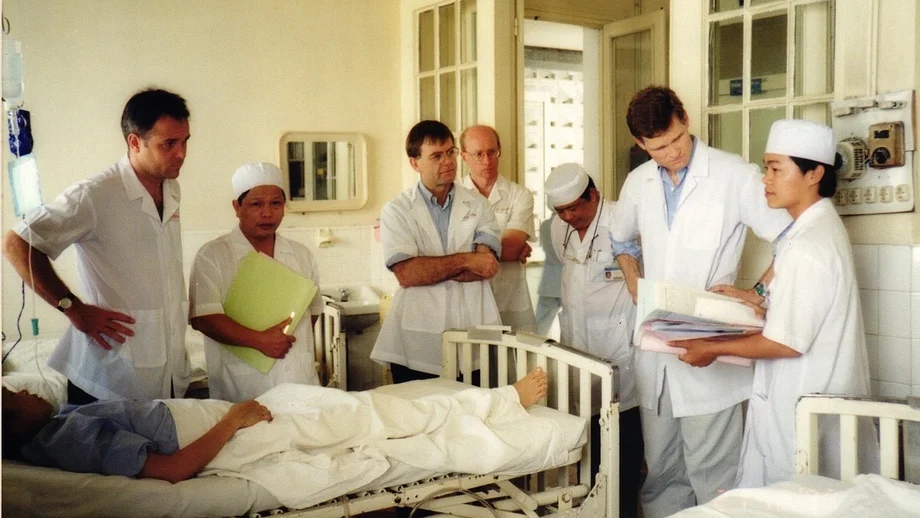
In January 1991, six doctors began studying severe malaria in a former leprosy ward at the Hospital for Tropical Diseases in Ho Chi Minh City. The research unit had eight beds. Around 40% of patients with severe malaria at the hospital were dying, making a basic treatment question urgent: could newer medicines save more lives?
Contents
- A small ward that helped change malaria treatment
- How did the partnership begin?
- What did the malaria trials find?
- Why survival improved beyond a single medicine
- Drug resistance changed the research question
- Why patients are followed for 42 days
- From improvised typhoid testing to brain infection studies
- COVID-19 tested the hospital and laboratory together
- Wearable dengue monitoring and the next generation
- Key Points
By 2000, mortality had fallen to about 10%, alongside the introduction of artemisinin medicines and better intensive care. The Oxford University Clinical Research Unit (OUCRU) has since grown into a network of more than 700 staff across Ho Chi Minh City, Hanoi, Nepal and Indonesia, investigating infections ranging from dengue and tetanus to tuberculosis and COVID-19.
The Hospital for Tropical Diseases dates its celebration of the partnership's 35th anniversary to November 17, 2026, in its anniversary statement; November 19 was also reported as the ceremony date. The hospital's account places clinical research, training and the fight against drug resistance at the centre of the next phase.
The partnership's story connects three practical challenges: finding treatments that work, checking whether they continue to work as germs evolve, and building local teams able to answer the next urgent medical question. Its malaria trials provide unusually detailed evidence of how that process developed, including the patients enrolled, the medicines compared and the limits of individual findings.
How did the partnership begin?
The Hospital for Tropical Diseases and Britain's Wellcome Trust signed a memorandum of understanding in December 1990. The Wellcome Trust Clinical Research Unit began operating the following January, with Oxford's Professor Nicholas White and Vietnamese doctors Tran Tinh Hien and Nguyen Huu Tri among its founders.
The hospital records eight initial beds, while former OUCRU director Guy Thwaites recalled nine in a retrospective. Both descriptions place six doctors at the beginning of a programme focused on severe malaria caused by Plasmodium falciparum, a parasite transmitted by infected mosquitoes.
Malaria parasites infect red blood cells and can cause dangerous complications, including coma, kidney failure and shock. The early programme studied artesunate and other medicines derived from artemisinin, seeking faster and more effective treatment for patients already critically ill.
The partnership subsequently expanded through several milestones:
- December 1990: the hospital and Wellcome Trust signed their cooperation agreement.
- January 1991: the clinical research unit began work in Ho Chi Minh City.
- November 1992: the unit's first artesunate trial findings were reported.
- 2003: OUCRU established a presence in Nepal.
- 2006: the network expanded to Hanoi.
- 2008: a research site opened in Indonesia.
- November 17, 2026: the hospital records the celebration of 35 years of cooperation.
What did the malaria trials find?
A randomized malaria trial at the Ho Chi Minh City hospital enrolled 370 adults between May 1996 and June 2003. It compared injections into muscle of artesunate and artemether, two medicines from the artemisinin family.
Researchers assigned patients to treatment groups by chance, and neither patients nor treating clinicians knew which medicine each person received. This approach helps make a fair comparison by reducing the influence of treatment expectations and decisions about which patients receive each drug.
Among 186 patients given artesunate, 13 died, or 7%. Among 184 given artemether, 24 died, or 13%. The difference was six percentage points. Its statistical result, p=0.052, was just above the conventional 0.05 threshold used to judge evidence of a difference, leaving uncertainty about the size of the survival benefit.
Nguyen H. Phu, Tran T. Hien, Nicholas J. White and their fellow trial authors expressed their conclusion cautiously:
Intramuscular artesunate may be superior to intramuscular artemether for the treatment of severe malaria in adults.
Artesunate also reduced the parasite count by 90% faster: a median of 16 hours, compared with 24 hours for artemether. Both medicines were well tolerated. Recruitment ended below the planned sample size because severe malaria admissions had fallen sharply, making further enrolment increasingly difficult.
Why survival improved beyond a single medicine
The hospital's progress involved treatment of the whole patient. Alongside studies of malaria medicines, clinicians improved intensive care, including assessment of blood acidity, kidney support and ventilation for patients who could no longer breathe adequately.
The trial paper describes severe malaria mortality falling from 40% in 1991 to about 5% in 2009, following the earlier decline to around 10% by 2000. Moving from 40 deaths per 100 patients to 10 represents a reduction of 30 percentage points, or three quarters of the earlier mortality rate.
Admissions changed just as dramatically. The authors recalled roughly three to five severe malaria patients arriving each day in the early 1990s, compared with about one per month a decade later. Their work therefore followed both better survival among hospitalized patients and a shrinking hospital burden.
The paper also describes a larger trial across Southeast Asia involving 1,461 patients, in which intravenous artesunate reduced mortality by 35% compared with quinine. That wider body of evidence helped the World Health Organization recommend artesunate for severe malaria. Vietnam's contribution was part of a sequence of studies that connected local clinical questions with international treatment guidance.
Drug resistance changed the research question
OUCRU's malaria research programme records 10,446 malaria cases and three deaths reported to Vietnam's National Malaria Control Programme in 2016. Those historical figures show how far the national burden had fallen while researchers were confronting a new threat: parasites surviving medicines that previously worked well.
WHO says artemisinin resistance was first confirmed in Cambodia in 2008 and subsequently spread within the Greater Mekong region, including Vietnam. Resistance means parasites respond less effectively to a medicine, making treatment harder and increasing the need to check whether the full treatment still cures patients.
OUCRU describes resistance associated with changes in the Pfkelch gene. Its programme tracks a lineage carrying the C580Y mutation that emerged in western Cambodia and also acquired resistance to piperaquine, a companion medicine. Combination treatments pair medicines so they can work together against the parasite; resistance to a companion drug can weaken that protection.
Vietnam began using dihydroartemisinin plus piperaquine as its first treatment choice for falciparum malaria in 2005, according to OUCRU's historical programme account. The same account describes poor completion of a seven day alternative course of quinine and doxycycline because patients tolerated it badly. Treatment research therefore had to consider effectiveness, side effects and whether patients could finish the medicine.
OUCRU lists artesunate susceptibility research with WHO in Binh Phuoc Province in 2010. In 2011, it joined the Tracking Resistance to Artemisinin collaboration with Mahidol University and the Worldwide Antimalarial Resistance Network, supported by Britain's Department for International Development.
Why patients are followed for 42 days
WHO's malaria elimination account describes how it works with Vietnam's National Institute of Malariology, Parasitology and Entomology (NIMPE) to monitor treatment. Researchers examine blood samples and follow patients for 42 days to check for a complete cure or treatment failure.
These therapeutic efficacy studies help authorities update national treatment guidelines. WHO reported resistance affecting two of six artemisinin combination treatments used internationally. Many Vietnamese monitoring sites were in the Central Highlands and central provinces, where resistance had been detected.
The work can require long journeys. WHO describes NIMPE staff travelling 11 hours by road to reach Muong Te district in Lai Chau Province, then visiting isolated La Hu communities. Floods and landslides can interrupt both access to initial testing and return visits after treatment.
Vietnam recorded 70% fewer malaria cases in 2020 than in 2019, while testing declined by 6%, WHO reported. Its account also recorded Vietnam's commitment to eliminate falciparum malaria by 2023. That was the target stated at the time; the continuing task described by WHO was to keep effective medicines available and maintain surveillance even as patient numbers fell.
From improvised typhoid testing to brain infection studies
Nguyen Van Vinh Chau, now deputy director of Ho Chi Minh City's Department of Health and a former hospital director, recalls field research in An Minh, Kien Giang Province, in the late 1990s. Without electricity, teams used equipment including a steamer for buns and oil lamps while culturing bacteria from blood samples.
Those expeditions helped isolate some of Vietnam's first identified typhoid bacteria resistant to several medicines. They also connected laboratory research with a problem clinicians could see directly: patients whose infections were becoming harder to treat.
Tetanus research involved more than 1,000 patients and helped develop the Tetanus Severity Score, a tool for estimating a patient's likely outcome. In 2007, Phan Tu Qui and colleagues described using magnesium sulphate in neonatal and adult tetanus care.
Research into infections of the brain and its surrounding tissues involved more than 4,000 patients. The programme investigated causes of illness and tested treatments for conditions including bacterial and tuberculous meningitis and fungal infections affecting people with HIV.
OUCRU and hospital researchers also identified Streptococcus suis, a bacterium associated with pigs, as a major cause of bacterial meningitis. Work linking infection with pig contact and consumption of raw or insufficiently cooked pork led to further collaboration with preventive health services and veterinary teams. A regional network studying infections passing from animals to people received Wellcome Trust and US National Institutes of Health support in 2005; OUCRU established a dedicated group in 2012.
COVID-19 tested the hospital and laboratory together
Le Van Tan, acting director of OUCRU in Ho Chi Minh City, recalls arriving at the hospital near the Lunar New Year in 2020 after learning of a suspected infection with the new coronavirus. Clinical and laboratory teams worked together on testing procedures, identification of the virus and sequencing its genetic material.
During a subsequent hospital lockdown lasting three weeks, the laboratory at times held more than 10,000 samples and processed over 2,000 a day. Genetic sequencing results were delivered within 24 to 48 hours, supporting the tracking of circulating viruses and transmission.
Sequencing reads a virus's genetic instructions. Comparing those instructions across samples helps researchers follow changes in the virus and investigate how infections may be connected. Chau also describes research into infections without symptoms, virus in saliva, immune responses after vaccination and infections occurring despite vaccination.
OUCRU participated in the international RECOVERY trial programme evaluating COVID-19 treatments. The wider programme showed that corticosteroids benefited patients needing oxygen or ventilation, while patients who did not need oxygen could be harmed. The practical lesson for care was specific: the usefulness of a medicine depended on the patient's stage and severity of illness.
Wearable dengue monitoring and the next generation
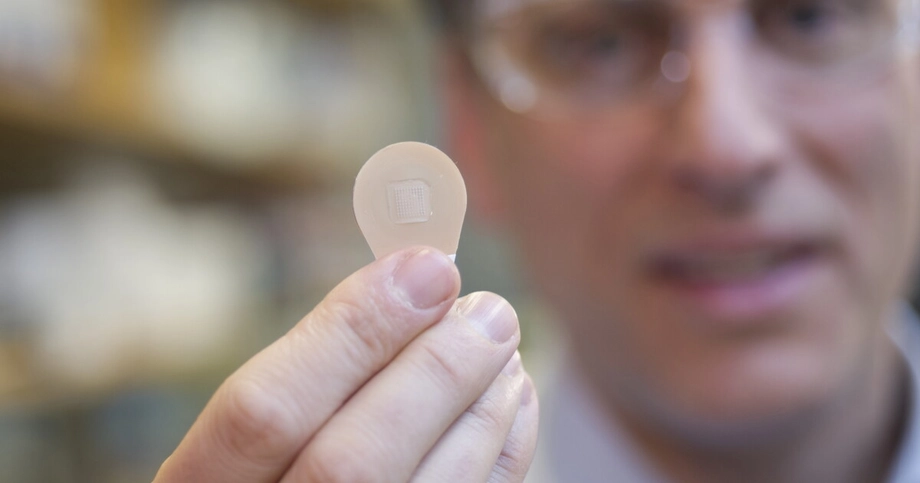
Dengue research is now exploring whether a wearable device called D-Skepe could reduce repeated blood sampling. The idea arose from the experience of children with severe dengue who needed finger prick blood tests several times a day.
The device combines optical sensing, known as photoplethysmography or PPG, with artificial intelligence. PPG uses light to detect changes associated with blood flow. Researchers aim to use the signals to monitor blood pressure, estimate the proportion of blood occupied by red cells and predict worsening illness.
D-Skepe remains a research project. Its accuracy, readiness for routine care and deployment date have not been specified. The intended benefit is concrete: continuous monitoring that helps doctors recognize deterioration while reducing some of the discomfort of repeated sampling.
Training remains another priority. Acting OUCRU director Kevin Baird has described building local research capacity as central to a durable programme, giving scientists in Vietnam, Nepal and Indonesia opportunities to lead work shaped by their countries' needs.
Hospital director Nguyen Thanh Dung says the partnership will continue clinical research and specialist training focused on emerging infections and antimicrobial resistance. City health director Tang Chi Thuong has called for stronger laboratory capacity, digital systems and AI applications tied to diagnosis, treatment and disease prevention.
The anniversary also recognized the people behind the collaboration. Former OUCRU director Guy Edward Thwaites received a commendation from Vietnam's prime minister. The hospital records a Ministry of Health medal for Mary Elizabeth Chambers, while three organisations and five individuals received city commendations. The organisational recipients were the hospital, its Vietnamese British infectious diseases department and OUCRU in Ho Chi Minh City.
Key Points
- OUCRU began in January 1991 with six doctors and eight beds, according to the hospital.
- Severe malaria mortality at the hospital fell from about 40% in 1991 to around 10% by 2000, alongside better medicines and intensive care.
- A trial involving 370 adults recorded mortality of 7% with artesunate and 13% with artemether, with statistical uncertainty around the survival difference.
- The network now has more than 700 staff across four sites in Vietnam, Nepal and Indonesia.
- Current priorities include drug resistance, emerging infections, local scientific leadership and research into wearable dengue monitoring.