44 interviews reveal the tension between convenience and safety
Pakistan's online medicine market is expanding beyond rules designed for physical pharmacies, leaving patients to balance cheaper, faster deliveries against fears of expired and counterfeit drugs. A qualitative study published in the Journal of Pharmaceutical Health Care and Sciences examined those concerns through 44 interviews: 16 with members of the public, 16 with community pharmacists and 12 with healthcare regulators.
Contents
- 44 interviews reveal the tension between convenience and safety
- What the research found
- Why patients turn to online sellers
- Officials have taken different positions on legality
- Counterfeit drugs and damaged medicines pose different risks
- Prescription checks and online advertising draw enforcement
- Can a mobile phone help verify a medicine?
- How the response has developed
- What patients can check and report
- Key Points
The researchers found that pharmacies licensed for sales at physical premises had moved into online distribution without an explicit regulatory framework for those services. Consumers valued convenience and lower prices, while pharmacists identified increased sales as a leading reason for taking their businesses online.
The central problem is a gap between permission to operate a shop and clear responsibilities for selling medicines through websites, apps and social media. Patients need confidence in the medicine, its seller, prescription checks and delivery conditions. Regulators need a way to identify the responsible business and follow a transaction when something goes wrong.
Official responses described between 2022 and 2026 show several approaches: provincial registration proposals, action against unlawful websites and a proposed mobile verification system. Together, they point to a broader task than removing suspicious sellers. Pakistan must also define how legitimate online pharmacies can operate under consistent, enforceable rules.
What the research found
The study sought practical experiences from people buying medicines, pharmacists selling them and officials responsible for oversight. Researchers used purposive and convenience sampling, selecting relevant participants and people they could reach, rather than drawing a random national sample.
Semi-structured interviews allowed researchers to ask common questions while exploring individual experiences. Interviews continued until data saturation, the point at which further conversations were no longer producing substantial new themes. Researchers then grouped recurring ideas through thematic analysis.
The analysis produced five themes from public interviews and five from the interviews with pharmacists and regulators. Its findings describe experiences and concerns among the participants; the size of Pakistan's online pharmacy market and the proportion of products that are counterfeit remain unknown.
Pharmacists proposed a central government platform where online pharmacies could register and provide services under standard protocols. Regulators called for coordination among the Drug Regulatory Authority of Pakistan (DRAP), Chief Drug Controller offices, the Pakistan Electronic Media Regulatory Authority and the Federal Investigation Agency.
The authors recommended revising medicine sales laws to explicitly authorize and regulate online pharmacy platforms. Their proposal would give digital sellers a defined place within the regulatory system, with obligations that match how medicines are actually being sold.
Why patients turn to online sellers
COVID-19 accelerated demand for medicine delivery after Pakistan's first pandemic restrictions disrupted travel and daily movement in 2020. For someone caring for a sick relative, buying medicines online could remove the need to leave home or travel to another city.
By February 2022, officials described platforms promising deliveries within four hours in Karachi and Lahore, or within 48 hours elsewhere through courier services. Some offered discounts of up to 20 percent and free delivery. Those services help explain why customers continued using online pharmacies despite concerns about product quality.
Rahul Basharat, a resident of Hassan Abdal, described ordering medicines while caring for his parents during their COVID-19 illness. Speaking in 2022, he explained the practical benefit:
Online pharmacies proved a blessing to me when my parents contracted COVID last year and I got all the required medicines at my doorstep without any delivery charges.
Basharat also acknowledged the risk of receiving poor quality products. His experience captures the pressure on patients: a service can solve an immediate access problem while leaving them uncertain about what arrives at the door.
Officials have taken different positions on legality
Punjab and Islamabad officials gave conflicting interpretations of online pharmacy operations in February 2022. Punjab health department spokesperson Hammad Raza Bukhari said online services were considered legal when attached to a licensed physical drug store or warehouse. Islamabad senior drug inspector Sardar Shabbir Ahmad described online pharmacies as "totally illegal" and said individual purchases and transactions were difficult to track.
Bukhari explained Punjab's position in these words:
These pharmacies first take a license for operation of their physical stores and then start online services as well, and this practice is considered legal.
Sindh Director-General Health Services Dr. Irshad Ahmed Memon said the Sindh Healthcare Commission had been directed to investigate unregulated platforms and develop an approach to registration and regulation. DRAP declined to comment at the time, citing health as a provincial subject, while the federal health ministry did not respond to requests for comment.
For a patient, those different positions make the status of an online seller difficult to understand. For a pharmacy, they create uncertainty about whether a premises licence covers an internet service and which authority sets the conditions. The study's call for explicit rules addresses that practical uncertainty.
Counterfeit drugs and damaged medicines pose different risks
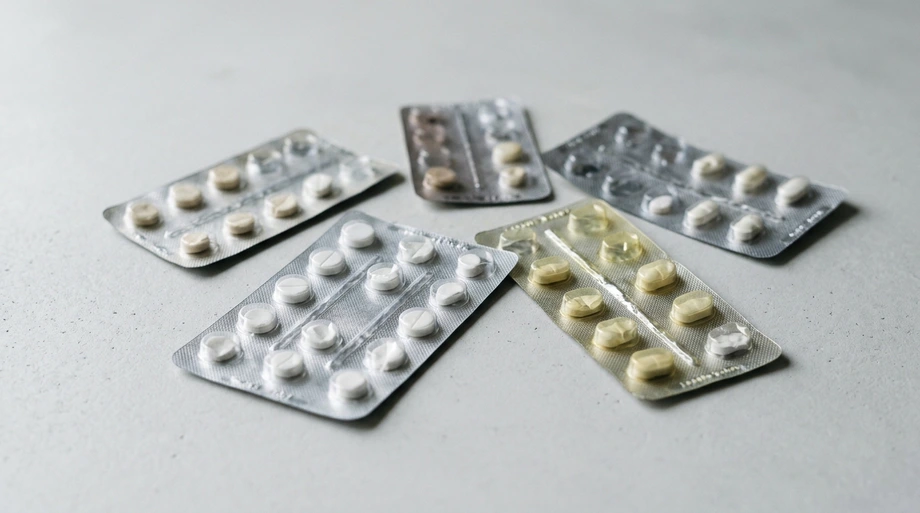
Counterfeit, or falsified, medicines deliberately misrepresent their identity, ingredients or origin. A product may contain the wrong ingredient, too little of the intended medicine or no active medicine at all.
Substandard medicines fail quality requirements even when they come from an authorized manufacturer. Production failures, poor storage or unsuitable transport can damage a genuine product. An expired medicine presents another concern because its approved period of use has passed.
Examples described in Pakistan include fake oxytocin, a medicine used to prevent dangerous bleeding after childbirth, and counterfeit antibiotics. An antibiotic with insufficient active medicine can allow an infection to continue and contribute to antibiotic resistance, making bacteria harder to treat.
Temperature also matters. Insulin, vaccines and some other medicines need controlled storage and transport. A delivery service must preserve those conditions throughout the journey, including time spent in warehouses and vehicles. Speed alone cannot meet every requirement for safe medicine delivery.
Unverified Facebook sellers, WhatsApp catalogue suppliers and unregistered websites add another layer of uncertainty because buyers may struggle to establish where products came from. Packaging checks can flag missing batch numbers, unclear expiry dates or unusual printing, while meaningful verification also requires a traceable supplier and reliable product records.
Prescription checks and online advertising draw enforcement
Prescription controls are a second concern alongside medicine quality. Pakistan Drug Lawyer Forum president Noor Muhammad Mahar warned in 2022 that people were buying medicines including steroids and narcotics online without a doctor's prescription.
Pakistan Pharmacists Association president Ghulam Farid Khan also called for enforcement against unregulated online pharmacies. He questioned how some sellers could offer prices below those manufacturers could afford, reflecting pharmacists' concerns about the origins of unusually cheap stock.
On April 21, 2026, DRAP asked the Pakistan Telecommunication Authority to block multiple websites and social media pages involved in unlawful medicine advertising and sales. A DRAP spokesperson highlighted promotion and sales without prescriptions, particularly involving medicines for sexual health, weight loss and mental disorders.
DRAP also said medicines smuggled from India and Iran were being sold online. It stated that drug advertising required prior approval and warned that violations could lead to fines, seizure of medicines and legal action.
The enforcement request brings a different agency into the response: the telecommunications authority can restrict access to websites and pages, while medicine regulators investigate products and sellers. The number of platforms affected and a timetable for completing the blocking action were not specified.
Can a mobile phone help verify a medicine?
DRAP operates a Quality Control Division and has begun phased implementation of a pharmaceutical Track and Trace System. Such a system assigns identifying codes to medicine packs so their movement through the supply chain can be followed.
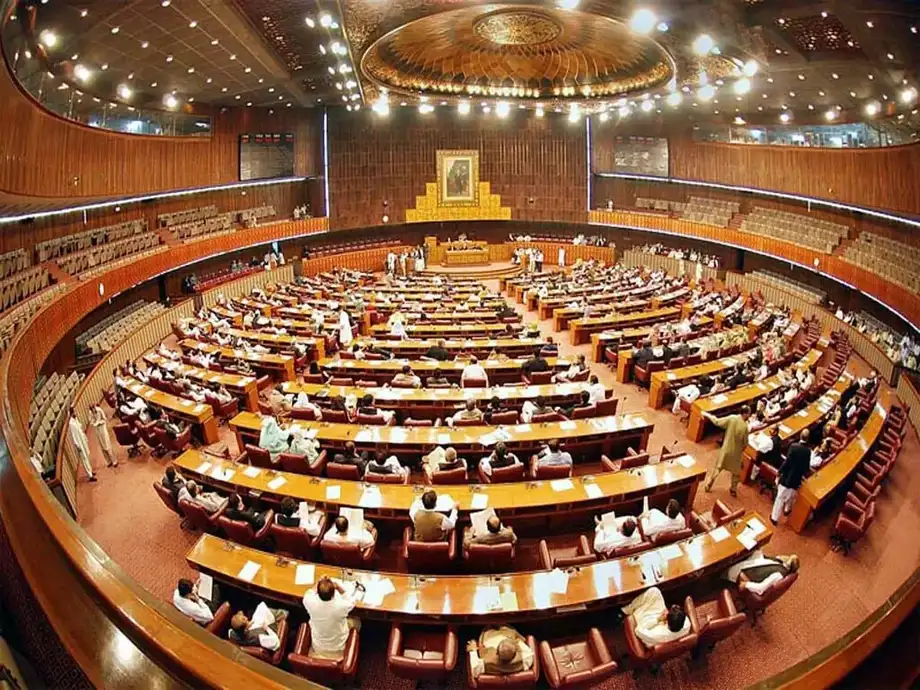
A further proposal was described to the Senate Functional Committee on Problems of Less Developed Areas on November 17, 2026. The committee, chaired by Senator Niaz Ahmed, was told that consumers would be able to scan medicine codes with a mobile phone and check authenticity alongside manufacturing, import and expiry information.
Officials said the proposed verification service would connect to DRAP's database and be accompanied by a public awareness campaign. No public launch date was given.
For patients, the useful change would be access to a recognized verification record rather than reliance on a seller's claims. For regulators, traceable packs could help connect a suspicious product with its recorded route through the supply chain. Product verification, pharmacy registration and prescription checks address different parts of the same transaction.
How the response has developed
Pakistan's response has moved from warnings about an expanding market toward website enforcement and proposed digital verification. The main developments span several years:
- February 2020: The pandemic began disrupting movement in Pakistan, encouraging demand for online medicine orders.
- February 19, 2022: Officials described rapid delivery services, discounts and conflicting provincial interpretations of online pharmacy legality.
- April 21, 2026: DRAP requested the blocking of multiple websites and social media pages over unlawful medicine promotion and sales.
- November 17, 2026: A Senate committee was briefed on a proposed phone scanning service connected to DRAP's database.
The study's recommendation ties these measures together: laws should explicitly cover online pharmacy services, while agencies share responsibility for registration, product quality, advertising and enforcement. A central register could give patients a clearer starting point for identifying accountable sellers.
What patients can check and report
Patients buying online can ask for the pharmacy's physical address, licensing details and information about the origin of its medicines. A business should be identifiable beyond a social media account or telephone number, and medicines requiring prescriptions need appropriate prescription checks.
On delivery, buyers can examine the batch number, expiry date, registration details and packaging, and raise concerns about unusual appearance or damaged products. Medicines needing refrigeration also require attention to delivery and storage conditions.
Suspected counterfeit or substandard medicines can be reported through DRAP's consumer complaint mechanisms or provincial drug inspection departments. Keeping the packaging, receipt, seller details and order record can help officials investigate the transaction.
Patients benefit from convenient delivery only when the service also protects treatment quality. The policy challenge is to preserve that access while making the seller, product and delivery process accountable.
Key Points
- A study based on 44 interviews found gaps between physical pharmacy licensing and online medicine sales.
- Patients valued convenience and discounts but feared counterfeit and expired products.
- Officials in Punjab and Islamabad gave conflicting interpretations of online pharmacy legality in 2022.
- DRAP requested action against websites and social media pages over unlawful promotion and sales in April 2026.
- A proposed mobile verification service would connect medicine codes to DRAP's database; no launch date was given.
- Researchers recommended explicit online pharmacy laws, centralized registration and coordination among regulators.