One in two technical teaching posts is vacant
Bangladesh has 253,945 vacant teaching posts across primary schools, secondary schools, technical institutions and madrasas, Education and Primary and Mass Education Minister ANM Ehsanul Haque Milon told Parliament on 18 November 2026. Technical institutions have the highest vacancy rate among the sectors for which he provided complete staffing totals: 14,697 of their 26,681 approved posts, or 55.1%, are unfilled.
Contents
- One in two technical teaching posts is vacant
- Where the vacancies are concentrated
- Primary schools face a leadership shortage
- Technical institutions and madrasas have different gaps
- Most secondary vacancies sit outside government schools
- Hiring must also match teachers to subjects
- What stage has recruitment reached?
- How the staffing response has developed
- Key Points
Madrasas account for the largest number of vacancies, with 101,873 posts empty. Government primary schools have another 48,994 vacancies, including 38,747 head teacher positions. At secondary schools, 88,381 posts remain vacant, most of them in institutions outside government management.
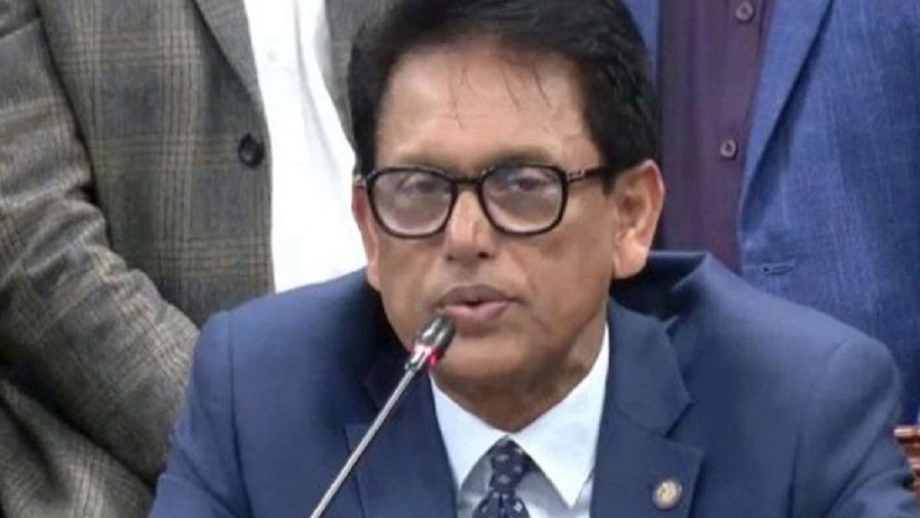
Milon disclosed the figures during the question and answer session in response to separate questions from MPs Md Rafiqul Islam Khan and Elias Molla. Khan, a Bangladesh Jamaat-e-Islami lawmaker, represents Sirajganj-4.
The minister said recruitment was moving through the Public Service Commission, the Non-Government Teachers' Registration and Certification Authority and several Bangladesh Civil Service examination cycles. His statement described classroom teaching as already disrupted by the shortage.
The numbers reveal several different staffing problems at once. Primary schools face a particularly large shortage of head teachers. Technical institutions have more approved teaching posts empty than filled. Secondary education depends heavily on recruitment outside government schools, while earlier education statistics point to gaps between the subjects teachers studied and those they teach.
Where the vacancies are concentrated
Milon's figures divide the national total into four groups:
- Government primary schools: 48,994 vacant posts across all 64 districts.
- Secondary schools: 88,381 vacancies, comprising 3,048 in government schools and approximately 85,333 in non-government schools.
- Technical institutions: 14,697 vacancies out of 26,681 approved posts.
- Madrasas: 101,873 vacancies out of 250,308 approved posts.
Madrasas account for about 40.1% of all the vacancies announced in Parliament. Secondary schools account for 34.8%, government primary schools for 19.3%, and technical institutions for 5.8%. Together, madrasas and secondary schools make up nearly three quarters of the total.
An approved post is a position that an institution is authorised to fill. A vacancy means no teacher currently occupies that position. In technical institutions and madrasas, the minister supplied both the number of approved posts and the number filled, making it possible to calculate the share that remains empty.
The same calculation is not possible for primary and secondary schools from his statement because he did not give their complete approved staffing totals. Their vacancy counts show the number of missing staff, while the technical and madrasa figures also show how much of the authorised workforce is absent.
Primary schools face a leadership shortage
Government primary schools have 38,747 vacant head teacher posts and 10,247 vacant assistant teacher posts. Head teacher positions therefore account for about 79.1% of all primary vacancies, nearly four out of every five.
Head teachers manage school operations as well as supporting teaching. Filling those positions matters for staff supervision, timetables and the daily organisation of lessons. The much larger head teacher gap means that recruiting classroom teachers alone would leave a substantial part of the primary staffing problem unresolved.
The 2024 Annual Primary School Census counted 65,567 government primary schools serving approximately 10.62 million pupils. Across government and private providers, it recorded 118,607 primary schools and 20.183 million students. Those figures show the size of the education network in which the staffing shortage is occurring.
Earlier figures published on 30 October put vacant government primary head teacher posts at more than 36,000 and assistant teacher vacancies at about 3,000, after 12,830 assistant teachers reportedly joined that month. Milon's November statement put both categories higher, especially assistant teachers, at 10,247. The two sets of counts were not reconciled in his statement.
A July ruling by the country's highest court had already prompted the Ministry of Primary and Mass Education to begin a process of promoting teachers into more than 36,000 vacant head teacher positions. That makes promotion another part of the response, alongside recruitment.
Technical institutions and madrasas have different gaps
Technical institutions employ 11,984 teachers against 26,681 approved posts. Their 14,697 vacancies exceed their filled positions by 2,713. Put simply, for every 100 authorised teaching positions, approximately 45 have teachers and 55 are empty.
Madrasas employ 148,435 teachers against 250,308 approved posts, leaving 101,873 vacancies. Their vacancy rate is about 40.7%, compared with 55.1% in technical institutions. The technical vacancy rate is therefore about 14.4 percentage points higher, even though madrasas need many more teachers in absolute numbers.
The distinction matters for staffing decisions. Madrasas require the largest volume of appointments. Technical institutions have a smaller workforce, but a greater share of that workforce is missing. A recruitment plan based only on the number of vacancies would give an incomplete picture of these different pressures.
Milon linked the staffing shortage to disrupted classroom activity. His figures place both sectors at the centre of the recruitment challenge: together, technical institutions and madrasas account for 116,570 vacant posts, almost 46% of the national total he announced.
Most secondary vacancies sit outside government schools
Non-government secondary schools account for approximately 85,333 of the sector's 88,381 vacancies, or 96.6%. Government secondary schools account for the remaining 3,048. Recruitment therefore has to proceed through different administrative routes rather than a single hiring exercise.
Milon said secondary vacancy information had been prepared and sent to the Ministry of Education for submission of recruitment proposals to the Public Service Commission for government schools. The Non-Government Teachers' Registration and Certification Authority, known as NTRCA, was continuing recruitment for non-government secondary schools.
The Directorate of Secondary and Higher Education had earlier recorded 702 government secondary schools with 15,293 approved assistant teacher posts, more than 3,000 of them vacant. It also recorded nearly 375 vacant head teacher posts. Those category figures provide another view of government school staffing alongside the minister's November total.
Zakiganj Government Girls' High School in Sylhet illustrates how a national shortage can become an immediate problem for one school. It was reported in October to have 486 students but only two teachers. Several temporary teachers had been hired to help keep classes running.
That school had 243 students for each of its two teachers before accounting for the temporary staff. The figure describes the school's staffing load, rather than the number of pupils sitting in a single classroom, and helps explain why temporary appointments became necessary.
Hiring must also match teachers to subjects
Bangladesh Education Statistics 2025, published by the Bangladesh Bureau of Educational Information and Statistics, recorded 9,982 secondary English teachers who had not studied English as a subject at bachelor's degree level. It also recorded 10,169 mathematics teachers who had not studied mathematics at that level.
Those figures identify a second staffing task alongside filling empty positions: matching teachers' subject preparation to the lessons schools need them to teach. Adding teachers and ensuring coverage of English, mathematics and other subjects are connected parts of the same classroom problem.
Information and communication technology, or ICT, presents another staffing gap. The subject became compulsory at secondary level in 2013, but separate ICT teaching posts had still not been created in government secondary schools 13 years later. Mathematics, business studies and science teachers were being trained or assigned to teach it.
Some schools also teach several education levels without separate staffing arrangements. Around 150 government secondary schools have primary sections without dedicated primary teaching posts. College sections operate at 10 government secondary schools without separate staffing structures for those additional levels.
Another 547 government primary schools teach through Class VIII, serving more than 70,000 students with teachers from the primary system. These arrangements help explain why a list of vacant posts is only one part of planning: authorities also need to account for the classes and subjects already being taught by existing staff.
What stage has recruitment reached?
Milon said recruitment processes under the 45th and 49th Bangladesh Civil Service examinations had been completed. Recruitment under the 46th and 47th examinations was continuing, while oral examinations for the 50th had also finished.
The Bangladesh Civil Service, or BCS, examination is a route into government service. An oral examination, also called a viva voce, is one stage of that selection process. The minister listed different examination cycles at different stages while describing the government's response to the shortage.
Milon, speaking as education minister, said he expected the recruitment process to finish promptly. He described the intended result for classroom teaching:
will return to normal
His statement gave no completion deadline, no number of teachers expected from each examination cycle and no allocation of those recruits across the four education sectors. For schools waiting for staff, the next practical step is the conversion of recruitment and promotion procedures into teachers taking up specific posts.
How the staffing response has developed
The recent sequence includes a court ruling, primary teacher appointments and the latest parliamentary disclosure. Each concerns a different part of the effort to fill positions:
- July 2026: A ruling by the country's highest court prompted a process to promote teachers into more than 36,000 vacant primary head teacher posts.
- October 2026: Some 12,830 assistant teachers reportedly joined government primary schools.
- 30 October 2026: Staffing figures showed continuing primary and secondary shortages, alongside problems matching teachers to subjects and education levels.
- 18 November 2026: Milon told Parliament that 253,945 teaching posts remained vacant and outlined recruitment through the PSC, NTRCA and BCS examination cycles.
The November figures make the scale of the task concrete. Primary schools need both leaders and classroom teachers. Secondary schools need recruitment across government and non-government institutions. Technical institutions need to fill more than half their authorised posts, while madrasas need more than 100,000 teachers.
The minister's stated goal is a return to normal classroom activity. Reaching it will depend on appointments reaching the institutions, education levels and subjects where staff are missing, including schools that are already relying on temporary teachers or assigning existing teachers across several roles.
Key Points
- Bangladesh has 253,945 vacant teaching posts across four education sectors, according to the minister's 18 November statement.
- Madrasas have the largest number of vacancies, at 101,873.
- Technical institutions have 55.1% of their approved teaching posts vacant.
- Government primary schools lack 38,747 head teachers and 10,247 assistant teachers.
- Non-government schools account for approximately 96.6% of secondary vacancies.
- Recruitment and promotion procedures are at several stages, with no completion deadline announced.