October 2028 deadline puts civilian trials for soldiers within reach
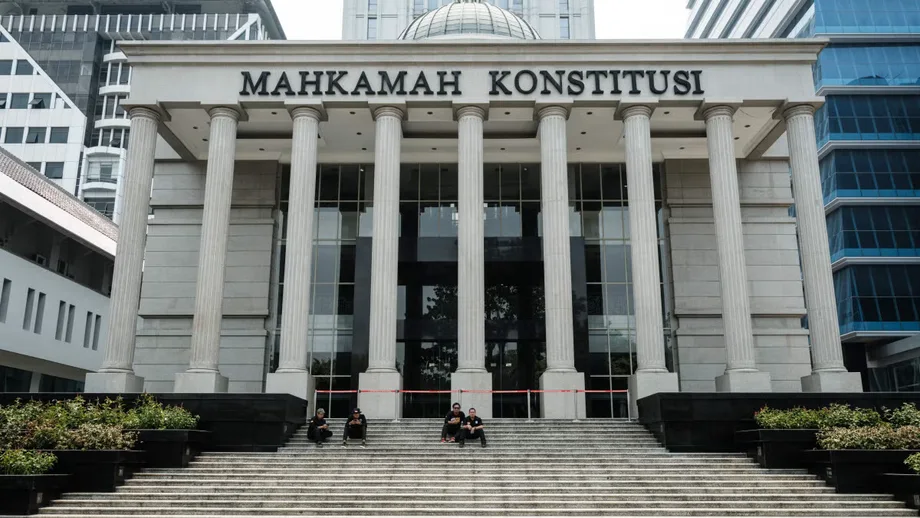
Indonesia's Constitutional Court has ordered a sweeping revision of Law No. 31 of 1997 on Military Justice, giving lawmakers until October 15, 2028, to change a system that keeps ordinary crimes committed by serving soldiers largely within military courts. If they miss the deadline, the law will lose its binding legal force.
Contents
- October 2028 deadline puts civilian trials for soldiers within reach
- Why a soldier's status has determined the courtroom
- Two families brought the consequences before the court
- Which crimes should military courts hear?
- Independence involves more than Supreme Court supervision
- The government and parliament defended the existing system
- Sentencing evidence included both short terms and severe penalties
- An acid attack sharpened demands for reform
- A reform promise now has an enforceable timetable
- Key Points
The nine justices ruled unanimously on October 15, 2026, in Case No. 260/PUU-XXIII/2025. Two women brought the challenge: Lenny Damanik, whose teenage son died after an assault by a soldier, and Eva Melina Br. Pasaribu, whose journalist father and three other relatives were killed when their home was burned.
The decision creates a binding deadline for a reform promised more than two decades ago. Indonesia's 2004 Armed Forces Law already provided for soldiers accused of ordinary crimes to face civilian courts, but implementation depended on a new military justice law that successive governments failed to enact.
The Constitutional Court's official ruling announcement says the existing law remains effective during the transition. Civilian trials therefore depend on the changes lawmakers now have to make, rather than an immediate transfer of every ordinary criminal case involving a soldier.
Chief Justice Suhartoyo read the verdict, while Justice Enny Nurbaningsih explained why the court required a comprehensive rewrite. The judgment reaches beyond deciding which courtroom hears a case. It calls for clearer definitions of crimes, stronger judicial integration, revised procedures and a workable way to resolve disagreements between military and civilian authorities.
Why a soldier's status has determined the courtroom
Article 9(1) of the 1997 law gives military courts authority over criminal offenses committed by serving members of the Indonesian National Armed Forces, known as the TNI. Its broad wording places ordinary offenses within military jurisdiction alongside offenses connected specifically to military service.
Jurisdiction means the legal authority to investigate or hear a case. Under the arrangement challenged by the petitioners, the accused person's military status can determine the justice system handling the case, even when the alleged conduct is domestic violence, corruption, a traffic offense or a crime against a child.
Human Rights Watch says civilian police generally cannot investigate military personnel under the law, apart from a few rarely used exceptions. Changing the trial venue therefore also requires rules about who gathers evidence, brings charges and transfers a case.
The petitioners challenged Article 9(1), along with Articles 43(3) and 127, which concern disagreements over whether proceedings belong in military or general courts. Their lawyer, Ibnu Syamsu Hidayat, argued that the existing arrangement weakens civilian supremacy, the principle that military power operates under civilian democratic authority.
The court found constitutional problems involving independent judicial power and fair legal certainty under Articles 24(1) and 28D(1) of the 1945 Constitution. It concluded that changing a few words in Article 9 would leave too much of the surrounding system unresolved.
Two families brought the consequences before the court
Lenny Damanik's son, Michael Histon Sitanggang, was 15 when a soldier assaulted him while dealing with a brawl near railway tracks in Medan, North Sumatra, in May 2024. The Constitutional Court's published judgment records the military court sentence against Sergeant Reza Pahlivi as 10 months in prison and restitution of Rp12,777,100.
Restitution is money an offender is ordered to pay a victim or the victim's family. The judgment records that failure to pay would bring an additional three months of confinement. Damanik also challenged the soldier's continued freedom during investigation and trial, when he remained in service.
Human Rights Watch said the offense carried a maximum penalty of 15 years. The difference between that maximum and the 10 months imposed became part of the wider argument about whether military justice provides adequate accountability for civilian deaths.
Eva Pasaribu's father, Tribrata TV journalist Rico Sempurna Pasaribu, died with his wife, a child and a grandchild in a house fire in June 2024. He had reported on a gambling operation allegedly involving a soldier identified in the petition as Corporal HB.
Three civilian defendants received life sentences for the killings. The soldier was not charged. Eva's petition said she reported the allegation to military authorities in July 2024 and submitted evidence, but received no meaningful investigation updates. Military investigators dismissed the allegation for lack of evidence.
Which crimes should military courts hear?
The court drew a basic boundary: military jurisdiction should rest on the nature of the offense, rather than simply on the accused person's uniform. Offenses arising from military duties, discipline, command structures or interests specific to military life belong within the specialist system.
Ordinary crimes under Indonesia's Criminal Code should generally go to general courts. For a civilian victim, that would mean a case proceeds through the ordinary criminal justice system even when the suspect is a serving soldier.
The court allowed for a narrowly defined exception during wartime in combat areas. Lawmakers would have to specify its scope in the revised law. That makes the wording of any exception an important part of the coming legislative work.
Justice Enny Nurbaningsih, explaining the danger when an ordinary offense remains within a system tied to military command, said:
there is a structural risk that military's institutional interests will conflict with the need to ensure independent and impartial legal proceedings.
The required rewrite also covers military field courts, procedural rules and the mechanism for settling disputes over the proper court. Clear boundaries would give investigators, prosecutors and families a defined route instead of leaving them to contest which institution controls a case.
Independence involves more than Supreme Court supervision
The government's defense rested partly on the constitutional position of military courts. It argued that they are part of the judiciary under the Supreme Court, with the same obligations of independence and fair procedure as other courts.
General Agus Subiyanto, commander of the armed forces, defended the system during the hearings. He said military judges have constitutionally protected judicial independence and operate under the Supreme Court's technical supervision.
The court nevertheless called for military justice to be fully integrated into a unified judicial structure. Military judges remain serving soldiers, while recruitment and career development of military court personnel remain under the TNI commander. Rights groups argue that these personnel arrangements create pressure even where judicial supervision formally belongs to the Supreme Court.
Legal expert Al Araf told the court that the 1997 law emerged from an authoritarian political framework. Zainal Arifin Mochtar, another expert who testified, pointed to overlapping jurisdictions, unclear rules for connected cases and persistent concerns about independence and accountability.
The practical challenge for lawmakers is to align control over personnel, investigation, prosecution and adjudication with the independence promised in the Constitution. Moving trials without settling those institutional responsibilities would leave key parts of the reform unfinished.
The government and parliament defended the existing system
Defense officials argued that criminal conduct by soldiers can affect military discipline and operational readiness. Marshal H. Haris Haryanto, the Defense Ministry's director general of Defense Forces, said military courts understand those institutional needs.
Haryanto described the purpose of the specialist courts during the proceedings:
Military courts are designed to understand these characteristics so they can deliver decisions that satisfy a sense of justice while also taking into account the interests of national defense.
The government also disputed claims that military trials generally operate behind closed doors. Its submission said hearings are public except in categories where the law requires closure, and that the Supreme Court's supervisory body and the Judicial Commission oversee them. Rights groups focused their concerns on restricted investigations, access to information and the influence of military command.
Parliament opposed striking down the challenged provisions. In the court's February hearing account, Commission III member Abdullah argued that military courts help develop disciplined, responsible and professional soldiers.
Abdullah warned that changing jurisdiction through isolated amendments could leave authorities without adequate legal rules. The court chose a comprehensive rewrite with a transition period, while rejecting parliament's position that the existing provisions should remain unchanged.
Sentencing evidence included both short terms and severe penalties
KontraS, the Commission for the Disappeared and Victims of Violence, presented monitoring figures that put individual families' complaints into a wider pattern. The judgment records 117 military court convictions from October 2022 through September 2023: 100 involving assault and 17 involving assault causing death.
Sentences in that group ranged from one month and 15 days to one year and three months. For October 2023 through September 2024, KontraS recorded 131 convictions, with sentences ranging from three to 10 months, including in cases involving murder.
The number recorded rose by 14, from 117 to 131, an increase of about 12 percent. Those figures describe the convictions monitored by KontraS rather than a complete national total.
The government's response pointed to military judgments imposing death sentences, life imprisonment and long prison terms. KontraS coordinator Dimas Bagus Arya Saputra acknowledged that the organization's evidence also included severe penalties, while maintaining its concern about cases receiving short terms.
A government witness, Rizky Agam Syahputra, described a different family experience after his father was shot. He said military investigators accepted the report, proceedings were public, relatives could attend, and the family was satisfied that the defendants were punished and dismissed from service.
An acid attack sharpened demands for reform
Human Rights Watch's October 28 statement highlighted the March 12, 2026, acid attack against Andrie Yunus, the 27 year old deputy coordinator of KontraS. The attack burned 24 percent of his body and threatened sight in his right eye.
A Jakarta military court convicted four soldiers in June, imposing prison terms ranging from 18 months to three years and dismissal from military service. On August 20, a military appeals court cut the two longest sentences by six months each and reversed those two soldiers' dismissals. The Judicial Commission alleged ethical violations by the panel that heard the case at first instance.
The case gives concrete weight to the question lawmakers must settle: who investigates and prosecutes an attack on a civilian when those accused are soldiers. It also shows why families and campaigners care about dismissal decisions as well as prison terms.
Elaine Pearson, Asia director at Human Rights Watch, urged President Prabowo Subianto and parliament to consult victims and rights groups and act promptly. She described the purpose of the reform:
Justice for civilian victims of military abuses shouldn't be blocked by an unfair military court system.
KontraS welcomed the judgment as closing a legal gap that had protected soldiers from accountable enforcement. Free Press Unlimited also welcomed it as a victory against impunity and called for prompt legislative action.
A reform promise now has an enforceable timetable
The 1997 law dates from the final years of President Suharto's New Order, before his resignation in 1998. MPR Decree No. VII/MPR/2000 later set out the division between military offenses and ordinary crimes, and Articles 65 and 74 of Law No. 34 of 2004 carried that reform into the armed forces framework.
The Constitutional Court has now attached a deadline to that unfinished process. The main steps are:
- 2000: MPR Decree No. VII/MPR/2000 sets out separate jurisdictions for military and ordinary offenses.
- 2004: The Armed Forces Law provides for civilian jurisdiction over ordinary crimes, pending implementing reform.
- December 15, 2025: Damanik and Pasaribu file their petition, later revised on January 20, 2026.
- February 25, 2026: Parliament presents its defense of the challenged provisions.
- October 15, 2026: The Constitutional Court orders comprehensive revision within two years.
- October 15, 2028: The deadline expires, after which the unchanged law would lose binding force.
Hidayat criticized the length of the transition and argued that ordinary crimes should move to civilian courts immediately. Rights groups want the legislation to specify investigative powers, prosecutorial responsibility and case transfers. The ruling announcement gives no detailed timetable for drafting, public consultations or a parliamentary vote.
President Prabowo faces those demands while expanding the military's civilian role. Amendments passed in March 2025 increased the number of civilian institutions open to serving soldiers from 10 to 14, a rise of 40 percent. Those institutions include the Supreme Court and the Attorney General's Office, making rules governing soldiers' accountability relevant beyond military units.
Key Points
- The Constitutional Court unanimously ordered reform of the 1997 Military Justice Law on October 15, 2026.
- The existing law remains effective during the transition but will lose binding force if lawmakers miss the October 15, 2028, deadline.
- The court said ordinary crimes committed by soldiers should generally go to civilian courts, with military jurisdiction tied to genuinely military offenses.
- The rewrite must address investigations, prosecutions, court boundaries, judicial integration and disputes over where cases belong.
- Victims' families and rights groups want prompt legislation developed through public consultation.