New restrictions target computing power rented from abroad
The United States on November 16, 2026, announced new restrictions on overseas data centers supplying advanced computing power to Chinese companies, extending its chip controls beyond where processors are shipped to who uses them remotely. The rule sets a threshold of more than 12 million aggregate total processing performance, a regulatory measure of computing capacity, and introduces additional licensing requirements for advanced semiconductor shipments to five countries.
Contents
- New restrictions target computing power rented from abroad
- Why a chip's location is no longer enough
- How the 12 million threshold works
- Five countries face an extra licensing requirement
- Exporters must look through customer ownership
- Transition periods and commercial exceptions need attention
- A replacement for the abandoned AI Diffusion framework
- Megaspeed scrutiny adds pressure inside Washington
- Congress and the Shenzhen meeting create the next tests
- Key Points
Indonesia, Malaysia, Singapore, Thailand and Brazil face the new destination requirements. A separate control reaches data centers outside the United States that supply computing capacity above the threshold to companies headquartered in Macau or countries in the US export control category known as Country Group D:5, including China, Russia, Iran and North Korea.
The Commerce Department's Bureau of Industry and Security, or BIS, sets out the measures in its interim final rule. The document also formally rescinds the Biden administration's AI Diffusion Rule, which BIS says was never enforced.
President Donald Trump began his Asia trip as the restrictions were announced. He is scheduled to meet Chinese President Xi Jinping on November 19 in Shenzhen, where the Asia Pacific Economic Cooperation summit is being held. Commerce Secretary Howard Lutnick is accompanying him as his department faces scrutiny over its handling of Chinese access to American chips.
The Commerce Department explained the purpose of the restrictions in a statement:
The rule is designed to ensure that existing restrictions on access to sensitive American technology cannot be circumvented through remote computing arrangements involving data centers in third countries.
Why a chip's location is no longer enough
Chinese AI developers can use American processors without bringing the hardware into China. A company can rent computing capacity from a data center in another country, send instructions over the internet and receive the results. The processors remain inside the overseas facility throughout the work.
Cloud computing makes that arrangement commercially useful. Training an AI model means running large amounts of data through processors so that the system learns patterns. Developers often need many powerful chips working together, making access to a large overseas installation valuable even when buying and importing the same equipment is difficult.
US licensing restrictions introduced in October 2022 generally required permission to sell advanced chips meeting specified technical thresholds to China, including Hong Kong and Macau. The new measure addresses another route: installing controlled technology elsewhere and supplying its computing power remotely to customers covered by US restrictions.
BIS says the controls extend existing restrictions on transactions involving companies headquartered in countries of concern, including companies whose ultimate parent is based there. An ultimate parent is the company at the top of a corporate ownership structure. Registering a subsidiary in another country therefore does not necessarily remove the licensing requirement.
How the 12 million threshold works
The rule targets access to more than 12 million aggregate total processing performance, commonly shortened to TPP. This is a technical export control measure used to add together the processing capability of covered chips. It is different from simply counting servers or customers.
The threshold is roughly equivalent to the maximum computing capacity of about 750 Nvidia H100 or H200 processors, although the legal test is the performance calculation rather than a fixed number of chips. Different hardware configurations can reach the threshold with different equipment totals.
BIS counts capacity supplied through linked data centers as well as a single facility. Those links can be digital, so the calculation can reach a connected network spread across several locations. Dividing a computing installation among buildings may still leave its combined capacity subject to the rule.
The controls also reach transactions conducted on behalf of restricted companies, including arrangements in which such a company is the direct or indirect purchaser. The document describes a primary remote end user as one consuming more than 50 percent of the data center's total computing capacity. Brokers and other intermediaries therefore become part of the customer checks required for a transaction.
Five countries face an extra licensing requirement
Advanced semiconductor exports, reexports and transfers within Indonesia, Malaysia, Singapore, Thailand and Brazil now face an additional licensing requirement. A reexport occurs when an item already exported from the United States is shipped onward from another country. A transfer within a country can involve a change of customer or use without another border crossing.
BIS identifies the five destinations as presenting a higher than normal risk that controlled technology will be diverted. Applications will receive individual review, including an assessment of the destination's export controls and cooperation with US enforcement.
The five country requirement and the remote access restriction address different parts of the trade. The destination requirement governs covered equipment sent to those locations. The remote access measure follows the intended use of covered equipment at foreign data centers, including those elsewhere in the world.
Companies headquartered in the United States, or whose ultimate parent is headquartered there, may qualify for an exclusion from the additional destination requirement if reporting conditions are met. The rule requires monthly reports, due by the first business day of the month after the transaction. Other applicable controls still govern those shipments.
The commerce secretary can designate more countries in consultation with the secretary of state or the president's national security adviser. BIS also lists possible responses to evasion, including further export restrictions, trade restrictions and sanctions against businesses involved.
Exporters must look through customer ownership
Chip exporters, data center operators and semiconductor manufacturers face more detailed duties to understand their customers. BIS expects checks on direct and indirect ownership or control involving people and companies connected to Macau or D:5 destinations.
An exporter must obtain enough information about a foreign data center's customer checks to assess compliance. Under the rule, a facility's refusal or inability to provide sufficient information creates a warning sign that the exporter must resolve before proceeding.
For an operator in Malaysia or Singapore, the practical work extends beyond identifying the company that signs a rental contract. The operator may need to determine who controls that customer, whether a broker is arranging access for someone else and how the computing capacity will be used.
The rule also addresses later changes in use. For covered shipments made without authorization because no restricted use was known at the time, exporters must tell recipients that BIS authorization is required if the equipment will subsequently provide computing capacity above the threshold to covered companies.
Transition periods and commercial exceptions need attention
Existing data centers supplying significant computing capacity to covered companies have 90 days from the rule's effective date to obtain a license if they want to continue those services. Operators that fail to do so face future export restrictions.
The document's summary excludes commercial recommender systems from the new remote access licensing requirement. These systems select products, videos or other content for users, such as shopping suggestions from an online retailer or a social media feed. Commerce says those functions do not present the same national security threat as the advanced AI activities targeted by the measure.
The operative text also contains a transition provision saying that qualifying existing operators providing remote access for commercial recommender systems may continue for 90 days, then must obtain a license. That creates uncertainty over how the stated exception applies to those existing services. Businesses relying on it need clarification from BIS.
The document contains placeholders for its Federal Register publication date. A firm calendar deadline for the 90 day transition cannot therefore be calculated from that text alone. Publication and the effective date will determine when affected operators must secure permission.
A replacement for the abandoned AI Diffusion framework
The new rule formally removes the AI Diffusion framework issued under President Joe Biden in January 2025. That framework sought to regulate the worldwide distribution of advanced AI chips through country limits, licensing conditions and controls on certain powerful AI models.
Trump's Commerce Department announced in May 2025 that it would not enforce that framework and intended to replace it. BIS now says the earlier regulations were never enforced. The replacement combines targeted destination requirements with controls tied to customers and their access to overseas computing power.
The policy developed over several years:
- October 2022: The United States introduced major licensing restrictions on advanced computing chips for China.
- January 2025: The Biden administration issued its AI Diffusion framework.
- May 2025: Trump's Commerce Department announced that it would not enforce that framework and planned to rescind it.
- November 16, 2026: Commerce announced the new overseas data center and destination controls.
- November 19, 2026: Trump and Xi are scheduled to meet in Shenzhen.
The interim rule also tightens the conditions under which chip fabricators and packaging companies can overcome regulatory presumptions affecting advanced chip designs. That gives Washington more oversight of companies seeking to use semiconductor production facilities in other countries.
Megaspeed scrutiny adds pressure inside Washington
Megaspeed International, a company based in Singapore with facilities in Malaysia, has become central to scrutiny of Chinese access to Nvidia technology. Commerce and Justice Department investigations began in 2024 over suspected diversion of Nvidia chips to China. The company denies wrongdoing.
Megaspeed addressed the allegations in a company statement:
Megaspeed conducts legitimate and lawful business. The company has retained external legal counsel to conduct a thorough internal investigation.
The restrictions follow Jensen Huang's reported departure as Nvidia chief executive and allegations concerning his relationship with a former Megaspeed executive. Allegations about that executive's intelligence connections remain unverified. The export control dispute centers on whether restricted customers obtained chips or computing services through intermediaries.
Treasury Secretary Scott Bessent challenged Lutnick earlier this month over Commerce's reluctance to designate Megaspeed as a possible national security threat. The Commerce Department said the new rule was written by and at the direction of the Treasury Department and the National Security Council.
Trump defended Lutnick while acknowledging disagreement between the two Cabinet secretaries over how quickly Commerce should have acted. He said he had no plans to dismiss the commerce secretary. The dispute leaves implementation with a department whose enforcement decisions are already under close political examination.
Congress and the Shenzhen meeting create the next tests
Congress is pursuing a parallel response through proposals addressing chip diversion, semiconductor manufacturing equipment and oversight of export approvals. The push for tighter controls includes requests for testimony from Huang and Lutnick, with lawmakers seeking December hearings. Representative Yvette Clarke has also said testimony is expected this month and next month; firm hearing dates were not given.
Lawmakers' proposed generation limit would seek to keep Chinese customers at least two Nvidia product generations behind the company's newest chips for 18 months. That proposal and the separate Chip Security Act remain under negotiation rather than law. The new Commerce rule operates through existing export regulations.
Chinese buyers also face restrictions imposed by Beijing. About 600,000 H200 processors were described as waiting in Hong Kong earlier in November while China withheld approval for large imports. For companies unable to install enough hardware at home, tighter overseas access adds another constraint on obtaining computing capacity.
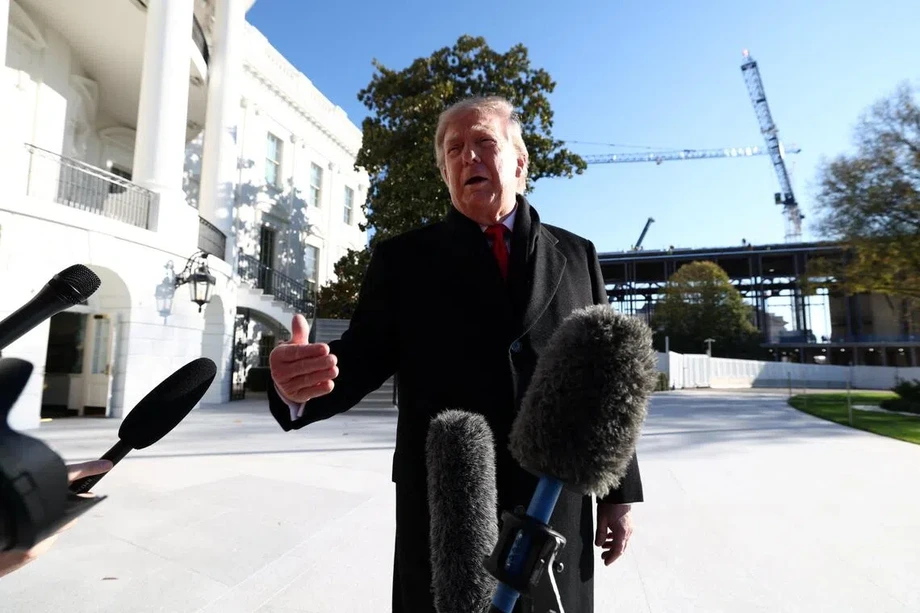
Trump has defended sales of less advanced processors while reserving restrictions for the most powerful technology. Speaking at the White House on November 16, the president described his position:
Selling the other chips is a good thing, not a bad thing.
The November 19 meeting with Xi brings the technology dispute into an immediate diplomatic setting. For data center operators, the next practical decisions concern customer screening, licensing applications and the transition deadline. For Chinese AI developers, the change means Washington will examine access to computing power abroad alongside direct purchases of advanced hardware.
Key Points
- The United States announced new controls on November 16 targeting restricted companies' remote access to advanced computing capacity outside the country.
- The remote access threshold is more than 12 million aggregate TPP, including capacity across digitally linked data centers.
- Indonesia, Malaysia, Singapore, Thailand and Brazil face additional licensing requirements for covered advanced semiconductor shipments.
- Qualifying companies headquartered in the United States may receive a destination exclusion subject to reporting requirements.
- Existing covered operators have a 90 day licensing transition tied to the effective date; the treatment of some recommender services needs clarification.
- The rule formally rescinds the AI Diffusion framework, which BIS says was never enforced.
- Trump and Xi are scheduled to meet in Shenzhen on November 19 as Congress pursues further restrictions and testimony.