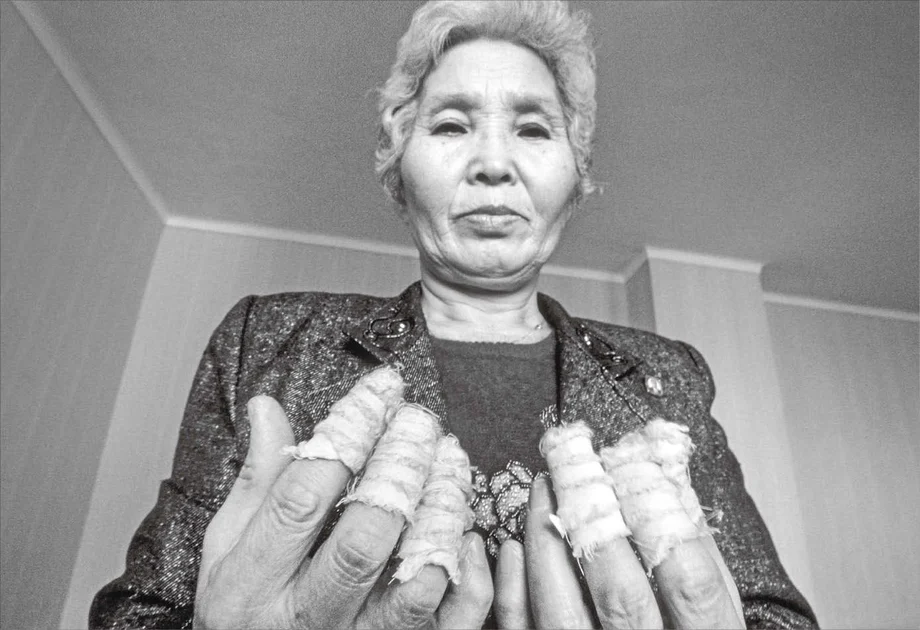
A disputed genetic finding meets an urgent demand for care
South Korea's Health and Welfare Ministry is facing demands to release findings from a study of atomic bomb survivors and their descendants, as families press lawmakers to extend support beyond the generation exposed in Hiroshima and Nagasaki in August 1945. The dispute centers on a reported 5% to 13% difference in genetic changes, a research program being extended toward 2029, and survivors whose average age is about 85.
Contents
- A disputed genetic finding meets an urgent demand for care
- What the published research actually contains
- What researchers mean by genetic changes
- Why the number of families matters
- The people a study can miss
- How the disclosure dispute developed
- What the proposed law would change
- Why Japan's experience matters
- Two decisions now facing South Korea
- Key Points
On November 12, 2026, a coalition of about 40 organizations gathered at the fountain plaza outside Cheong Wa Dae in Seoul to demand government backing for amendments to the Special Act on the Support for Korean Atomic Bomb Victims. The proposal, introduced in April by Rebuilding Korea Party lawmaker Kim Sun-min, would expand assistance to survivors' children.
The scientific work and the legislation now sit at the center of the same argument: how long families should wait for assistance while researchers investigate possible effects across generations. As of June 2026, 1,482 survivors from the directly exposed generation were living in South Korea.
The ministry commissioned Hanyang University researchers in 2020 to examine survivors' health and possible inherited effects of radiation exposure. After five years, researchers presented findings described as a 5% to 13% increase in genetic changes compared with controls. Families say they were briefly shown the results at a private meeting in Hapcheon in 2025, but were unable to keep the report.
Hanyang University professor Jin-Wu Nam, who participated in the research, describes the current findings as an association requiring further investigation. Families want the government to publish the completed analysis while continuing that work, rather than making disclosure and support wait for another research phase.
What the published research actually contains
The Korean Atomic Bomb Survivor Cohort, known as K-ABC, has already produced public academic papers explaining its methods and the people enrolled. Those publications provide a detailed foundation for understanding the project, while the later genetic analysis remains the focus of the disclosure dispute.
A 2024 cohort profile by Hamin Lee, Nam and colleagues, published online in Epidemiology and Health on November 18, records 2,544 participants enrolled between 2020 and 2024. They included 1,109 survivors, 1,193 children and 242 grandchildren, identified as G1, G2 and G3.
Of those enrolled, 1,828 completed both a questionnaire and a health examination, a participation rate of 71.9%. Whole genome sequencing and analysis covered 400 people selected for family comparisons. Sequencing means reading a person's DNA, the biological instructions carried in their cells.
The researchers also connected participant records with Statistics Korea mortality data for 1992 to 2022, National Cancer Registry data for 1988 to 2021, and National Health Insurance Service records for 2002 to 2022. These links allow researchers to compare family accounts with recorded diagnoses, treatment and deaths.
A 2023 study protocol had set out plans to recruit 1,500 people and analyze 200 family trios. Its preliminary cohort from 2020 contained 309 participants: 157 survivors, 127 children and 25 grandchildren. The later enrollment of 2,544 shows how much the broader study expanded.
What researchers mean by genetic changes
Nam says the later analysis examined 49 families in which members of the original exposed generation were still alive. The ministry, speaking on November 11, described the disputed 13% figure as referring to cases of genetic abnormalities compared with the general population.
The full later report has not been publicly released, leaving the exact calculation behind the 5% to 13% range, its uncertainty and the differences between generations unavailable for public examination. Readers therefore have a description of the result from officials and researchers, rather than a complete statistical account.
The research examines de novo mutations, DNA changes newly appearing in a child that are absent from the parents' sampled DNA. Such changes can arise through ordinary errors when DNA is copied, as well as through external influences. Comparing relatives helps researchers identify when a change appeared and whether it was passed to another generation.
Nam explains that an increase in genetic changes and an increase in disease are different measurements. A DNA change can have little effect, affect how a cell works, or contribute to illness. Connecting a particular change to an individual's disease requires additional evidence about the gene, the condition and other influences on health.
The protocol states the research objective in practical terms:
To examine whether the pattern of de novo mutations in the offspring of ABS is different from the non-exposed population.
ABS is the paper's abbreviation for atomic bomb survivors. The researchers also planned to examine whether any differences in mutation patterns had health effects, placing genetic comparisons and medical outcomes within the same project.
Why the number of families matters
Nam describes the 49 families in the later analysis as being near the statistical boundary for drawing a reliable conclusion. He says the next phase has secured 65 families and that roughly 80 may allow researchers to judge statistical significance, a calculation used to assess how readily a pattern could arise through chance.
Moving from 49 to 65 families adds 16, an increase of about one third. Reaching 80 would add another 15. Those recruitment goals concern the particular family analysis; the published cohort's 2,544 enrollees and 400 sequenced participants count people across a wider research program.
Nam also says that tracing a disease directly to a mutation caused by the atomic bomb would be extremely difficult. The ministry argues that more investigation and time are needed to explain the relationship between exposure, genetic changes and health.
A parliamentary office familiar with the work says researchers have offered no guarantee that another five years will settle causation. For surviving families, the practical problem is that the people whose exposure anchors the study are dying as the research continues.
The people a study can miss
Survivor selection is already a concern in the published research. The 2023 protocol states that, by 2021, 90% of the first generation registered with the Korean Red Cross had died. People who suffered severe effects often died earlier, leaving a study population more likely to include healthier survivors.
Researchers call this survival bias. A study conducted decades after an event observes the people who lived long enough to participate, while many of those most severely affected are absent. K-ABC therefore collected family histories covering deceased relatives, illnesses, ages at diagnosis and causes of death.
Sim Jin-tae, director of the Hapcheon Atomic Bomb Museum and head of the local survivors' association branch, raises a related concern: people able to walk attended the examinations, while people confined to bed were left out. His criticism concerns access to participation as well as the biological effects under investigation.
The cohort profile gives a precise picture of the examined survivors. Of 659 G1 participants who completed the survey and health examination, 645, or 97.9%, had been exposed in Hiroshima. Some 44.2% were within two kilometers of the explosion's center. Half could not remember their distance, so researchers used Korean Red Cross records and Japanese survivor handbooks to check exposure information.
How the disclosure dispute developed
The 2025 private briefing in Hapcheon brought together two ministry staff members, six Hanyang researchers and 17 survivors and children of survivors. Participants say organizers showed the report briefly and then collected it, prompting objections about access to results and the reasons for extending the project.
Parliamentary and campaign representatives say they proposed recruiting more participants and asking another institution to cross check the findings. They say the ministry instead commissioned further work from the same institution, citing budget considerations among its reasons.
The ministry's explanation centers on insufficient indicators and the need for further investigation. Some survivors and campaigners believe concern about compensation obligations also influences the government's reluctance to release the results. That is their allegation; the ministry has presented its decision as a research issue.
The main dates show how the scientific and political tracks have developed:
- August 6 and 9, 1945: Atomic bombs struck Hiroshima and Nagasaki.
- 2016: South Korea passed its special support law without provisions covering children and grandchildren.
- 2020: The ministry commissioned the Korean survivor cohort and genome project.
- January 2023 and November 2024: Researchers published the protocol and cohort profile.
- 2025: Families attended the private briefing in Hapcheon.
- April 2026: Kim Sun-min introduced amendments to expand support.
- November 12, 2026: Survivors, descendants and supporting organizations demanded government agreement to the amendments.
- 2029: The ministry's extended research program is intended to continue toward this year.
What the proposed law would change
Kim's amendment would create a basis for assistance with daily living and care, put funeral support more explicitly into law, and allow medical, funeral and welfare assistance for survivors' children. Campaigners describe legal recognition of the second generation as the proposal's central purpose.
The coalition's November 12 statement, published by People's Solidarity for Participatory Democracy, calls for a survey of survivors' circumstances while they are alive, restoration of their dignity, recognition of their children as victims, and state responsibility for care and human rights.
The coalition says families have faced illness, disability, poverty and discrimination together. Its statement recounts the experiences of Han Yu-sang's family, brothers Kang Sang-gi and Kang Sang-won, and Han Jeong-sun, president of an association for ailing second generation survivors.
The statement describes the Kang brothers as living with intellectual disabilities after their mother's death. It also recounts Han Jeong-sun's distress about her son's health and her subsequent activism. These accounts explain the coalition's demand for help with care, income and daily survival alongside continued genetic research.
Survivor organizations estimate that more than 1,000 children of exposed Koreans are living with illnesses, including cancers, respiratory and heart conditions, depression and anemia. That estimate comes from the organizations' assessment of families' needs. About 200 surviving members of the exposed generation live in Hapcheon.
Why Japan's experience matters
The Korean cohort papers estimate that about 70,000 Koreans were affected by the bombings, approximately 40,000 died, and about 23,000 survivors returned to Korea. Many had been in Japan under colonial rule as conscripted workers or military personnel, or had moved there to earn a living.
Japan provides medical assistance and allowances to recognized survivors of the exposed generation. Their children can receive free health examinations but remain outside the same medical assistance framework. Campaigners in Korea see that division as a warning about leaving descendants' support tied indefinitely to unresolved genetic findings.
The United States established the Atomic Bomb Casualty Commission in 1947 to study survivors and their children. That research continues through the Radiation Effects Research Foundation. Its findings that statistically significant hereditary effects had not been detected in survivors' children have been used to support Japan's position on assistance.
The Korean protocol and cohort profile describe earlier Japanese research as finding no association between parental exposure and genetic mutations or health effects in offspring. They also describe mixed findings from studies connected with Chernobyl, giving the Korean project a specific task: examine Korean families through genome analysis, clinical information and continued observation.
Japan's handling of overseas survivors remains another concern. In May 2023, shortly before the Hiroshima G7 summit, Prime Minister Fumio Kishida's cabinet said it did not intend to conduct a new investigation of foreign survivors abroad, citing difficulties collecting records and interviewing survivors. Campaigners have also pointed to the reported destruction in 1970 of a list naming 3,400 Korean forced laborers who may have been exposed.
Two decisions now facing South Korea
The government faces decisions about both access to research findings and eligibility for care. Publishing the completed analysis would let families and other researchers examine its methods and uncertainties. Legislators, meanwhile, must decide how the support law should address descendants' medical and daily living needs.
At the Seoul gathering, speakers included Han Jeong-sun and Yayoi Tsuchida, deputy secretary general of the Japan Council against Atomic and Hydrogen Bombs, alongside religious and civic representatives. The coalition planned to visit the National Assembly the following week and seek meetings with members of its Health and Welfare Committee.
The research plan also provides for follow up every two years and continued connections to mortality, cancer and insurance records. Those tools allow investigators to track new diagnoses and changes in health as participants grow older.
Hiroshima and Nagasaki have rebuilt over eight decades, as described in coverage of the cities' recovery. Families exposed in 1945 continue to face a different timetable: the consequences of radiation already absorbed, the needs of aging survivors and the unresolved health concerns of their descendants.
For the 1,482 survivors recorded in South Korea in June, a research endpoint in 2029 is a substantial wait. Their families are asking the government to continue scientific investigation while making existing findings accessible and deciding how care should reach the next generation.
Key Points
- Survivors and descendants want the government to release a disputed genetic analysis described as finding a 5% to 13% difference compared with controls.
- The published K-ABC cohort profile records 2,544 enrollees, 1,828 completed surveys and examinations, and genome analysis of 400 participants.
- Nam says the later family analysis covered 49 families, with 65 secured for further research and roughly 80 sought.
- An amendment introduced in April 2026 would expand care and assistance to survivors' children.
- About 40 organizations demanded government backing at a November 12 gathering in Seoul.
- South Korea had 1,482 surviving members of the exposed generation as of June 2026, with an average age of about 85.