India reach the final with 79 balls to spare
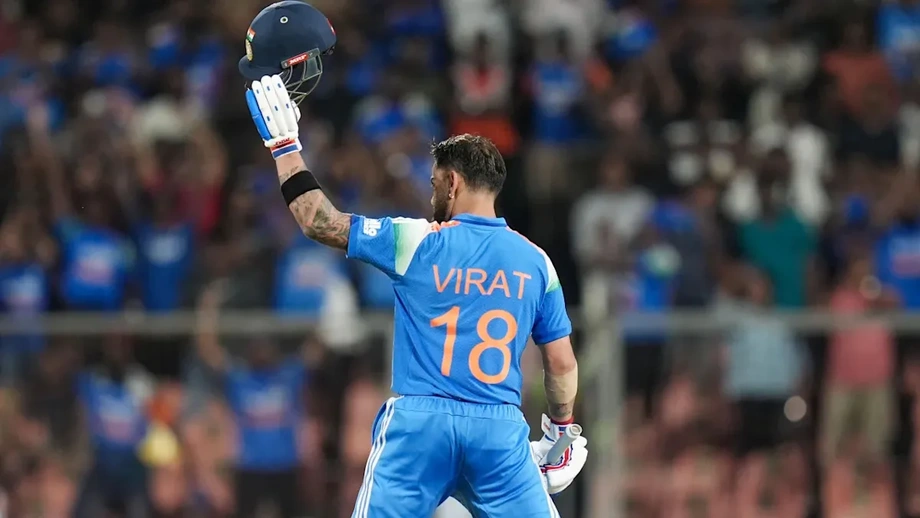
India captain Lakshya Rajesh Raichandani scored 93 from 90 balls as his team defeated Afghanistan by eight wickets at Al Amerat Cricket Ground Turf 2 in Oman on November 12, 2026, securing a place in the Under-19 Asia Cup final against Pakistan.
Contents
- India reach the final with 79 balls to spare
- A target of 228, a finish at 230
- Raichandani and Sehwag build the platform
- Vineeth keeps the chase under control
- Afghanistan's fifties could not produce a larger total
- Sood leads an attack with several contributors
- Two different routes through the tournament
- Pakistan bring another commanding semifinal win
- Key Points
The Board of Control for Cricket in India's official match centre records Afghanistan's total as 227 for eight from 50 overs and India's reply as 230 for two in 36.5 overs. India completed the chase with 79 balls remaining, a measure of how comfortably they reached their target.
Aaryavir Sehwag contributed 51 from 57 balls, while VK Vineeth finished unbeaten on 57 from 62. Their half centuries supported Raichandani's innings after India's bowlers, led by Ishan Sood's three wickets for 43 runs, had kept Afghanistan within reach.
Pakistan advanced by beating Bangladesh by nine wickets. The final gives India another meeting with the team that defeated them by three wickets during the group stage, and a chance to reverse the result of the previous tournament's title match.
A target of 228, a finish at 230
Afghanistan won the toss and chose to bat, leaving India to chase 228 for victory. Vineeth completed the pursuit with a six, taking India beyond the required total to 230. In cricket, the full value of a winning boundary counts, so a team can finish several runs above its target.
The margin of eight wickets means India lost only two of the ten wickets available to them. The overs figure also needs a little explanation: 36.5 means 36 completed overs and five more legal deliveries, rather than 36 and a half overs. With six balls in each over, India used 221 of their possible 300 deliveries.
India needed to score at 4.56 runs an over at the start of the chase. They finished at roughly 6.24 runs an over. That gap explains why the pursuit became comfortable: the batters scored quickly enough to leave a substantial cushion of unused deliveries.
India were 17 without loss after four overs before their opening partnership grew to 117. The innings gained speed without the early loss of a wicket that might have allowed Afghanistan to apply pressure.
Raichandani and Sehwag build the platform
Raichandani and Sehwag added 117 in 17 overs, taking India more than halfway towards the target before Afghanistan made their first breakthrough. Their partnership accounted for just over 51 percent of the 228 runs India needed.
Raichandani supplied the early momentum. He reached his first fifty from 39 balls and struck 13 fours and one six during his innings. Those boundaries brought him 58 of his 93 runs, allowing India to keep the scoreboard moving without relying entirely on singles.
Sehwag settled before attacking more frequently. His 51 included four fours and four sixes, which together accounted for 40 runs. He reached his half century with a six off Noor Ali Niazi before losing his wicket on the next delivery.
Niazi's breakthrough ended the opening stand, but Afghanistan still needed to remove a settled captain and stop the scoring at the other end. Sehwag had already supplied another substantial contribution after scoring 160 in India's previous match against the United Arab Emirates.
Vineeth keeps the chase under control
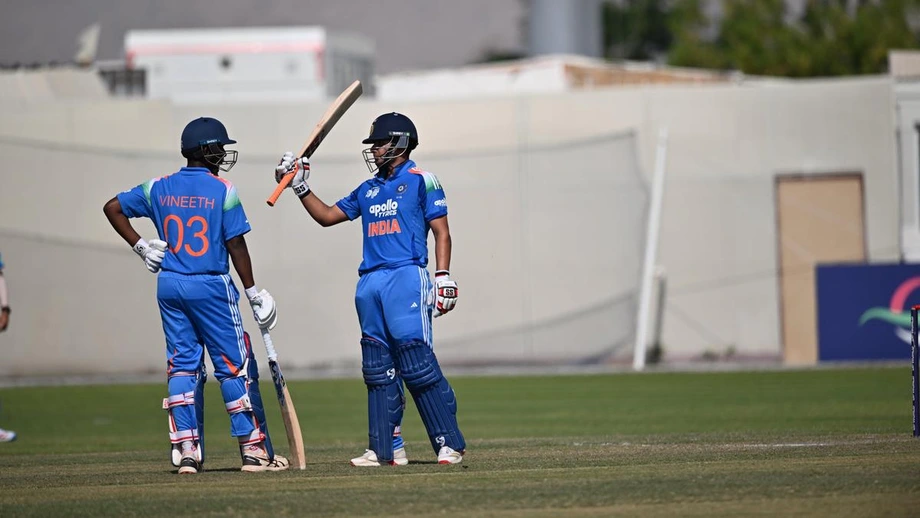
Vineeth joined Raichandani after Sehwag's dismissal and helped add another 77 for the second wicket. The first two partnerships brought India to 194, leaving only 34 runs to reach the target.
Raichandani fell seven runs short of a century when he attempted to lift a delivery from Afghanistan captain Sohail Khan over the field and was caught by Mohammad Ali. His 93 nevertheless gave India the largest individual contribution of the match.
Vineeth remained at the crease to finish the job alongside Yashbardhan Chauhan. His unbeaten 57 included five fours and a six, and he ended the match with a four followed by a six off Niazi.
India's chase therefore had two useful stages: the opening pair built a large foundation, then Vineeth maintained control after the first wicket. Afghanistan took only one further wicket, leaving India with both time and batting resources to spare.
Afghanistan's fifties could not produce a larger total
Afghanistan's innings rested on matching scores of 51 from wicketkeeper Noman Salarzai and Shah Faisal Rahimi. Subhan Zakhail added 31, while Sohail Khan remained unbeaten on 36 from 44 balls.
Salarzai faced 78 deliveries for his fifty, hitting two fours and two sixes. Rahimi used 72 balls for his 51. Together, they supplied 102 of Afghanistan's 227 runs, almost 45 percent of the total, but India's bowlers limited the pace at which those runs arrived.
Afghanistan were 143 for three during the 36th over, with seven wickets still available. That position offered an opportunity to increase the scoring late in the innings. India instead continued taking wickets, making it harder for Afghanistan to build an uninterrupted attacking partnership.
Zakhail was bowled by Yashbardhan Chauhan in the 20th over, while Salarzai was caught off Arjun Rajput. Rahimi remained a threat until Sood dismissed him with a yorker in the 49th over. A yorker is a delivery aimed close to the batter's feet, leaving little room for a full swing of the bat.
Sohail's unbeaten contribution helped Afghanistan complete their 50 overs, but the innings finished at 4.54 runs an over. India subsequently scored much faster, making Afghanistan's difficulty in accelerating a central part of the result.
Sood leads an attack with several contributors
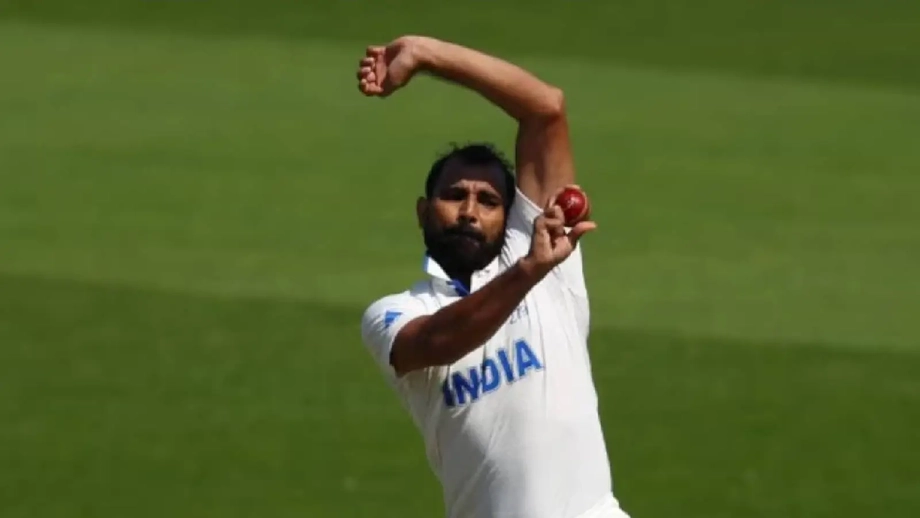
Sood took three wickets for 43 runs in nine overs, giving India their strongest wicket taking return. Aryan Savsani supported him with two for 29, removing Amir Hamza and Tahir Sarwary in quick succession.
Those five wickets represented more than half of Afghanistan's eight dismissals. The remaining three were shared by Kavya Patel, Yashbardhan Chauhan and Rajput, so India received wickets from five different bowlers rather than depending on a single successful spell.
Yashbardhan conceded 26 runs in seven overs, while Manal Chauhan gave away 31 in eight. Both kept their rates below four runs an over. Rajput's four overs brought one wicket for 20 runs, and Patel finished with one for 38.
For Afghanistan's batters, that meant few easy periods in which to recover lost momentum. Sood supplied the most wickets, but the quieter spells from other bowlers also mattered: they kept the target manageable before Raichandani and Sehwag took charge.
Two different routes through the tournament
India entered the semifinal as the second team in Group A, having beaten Nepal and the UAE but lost to Pakistan. Afghanistan arrived as the unbeaten winners of Group B after victories over Bangladesh, Malaysia and Sri Lanka.
Afghanistan's run made this a meeting between a group winner and an Indian team that had already experienced defeat. India's response was to combine a controlled bowling effort with their most important batting partnership at the start of the chase.
The sequence of India's results shows how their route to the final developed:
- November 6: India defeated Nepal by ten wickets.
- November 8: Pakistan beat India by three wickets.
- November 10: India defeated the UAE by 70 runs to secure a semifinal place.
- November 12: India beat Afghanistan by eight wickets at Al Amerat.
- November 14: India are scheduled to face Pakistan in the final.
Afghanistan's tournament ended after three group victories and a semifinal defeat. Salarzai and Rahimi both reached fifty in the knockout match, but the team could neither turn those innings into a larger total nor break India's opening partnership early enough.
Pakistan bring another commanding semifinal win
The completed scorecard confirms that Pakistan dismissed Bangladesh for 138 in 31.4 overs before reaching 141 for one in 21.5 overs. Rizwanullah led Pakistan's bowling with five wickets for 30 runs, while Hayam Khan scored 69 and Usman Khan finished unbeaten on 64.
Pakistan used only 131 deliveries in their chase, compared with India's 221 against Afghanistan. The targets were different, but both finalists advanced while losing very few wickets: one for Pakistan and two for India.
India also carry recent history into the final. Pakistan won their group meeting by three wickets, with Hamza Zahoor scoring an unbeaten century. Pakistan are the defending champions after Sameer Minhas scored 171 in the 2025 final against India. India had also lost the 2024 final to Bangladesh.
The fixture listing confirms that the title match is scheduled for Saturday, November 14, 2026, at Al Amerat, starting at 9:00 am local time (5:00 am GMT). India's immediate task is to reproduce the balance shown against Afghanistan: wickets from several bowlers, a substantial opening stand and a middle order able to complete the chase.
Key Points
- India defeated Afghanistan by eight wickets at Al Amerat Cricket Ground Turf 2 on November 12, 2026.
- Afghanistan made 227 for eight; India reached 230 for two in 36.5 overs, with 79 balls remaining.
- Lakshya Raichandani scored 93, Aaryavir Sehwag made 51 and VK Vineeth finished unbeaten on 57.
- Ishan Sood took three wickets for 43 runs, while Aryan Savsani claimed two for 29.
- Noman Salarzai and Shah Faisal Rahimi each scored 51 for Afghanistan.
- Pakistan bowled Bangladesh out for 138 in 31.4 overs and won by nine wickets to set up another meeting with India.
- The final is scheduled for Saturday, November 14, 2026, at 9:00 am local time (5:00 am GMT), following Pakistan's three wicket victory over India in the group stage.