A reflected image becomes a privacy shield
Researchers at POSTECH and KAIST have developed a way to hide sensitive information on a foldable smartphone by using the reflections between its partly folded screens. In a controlled test on a Samsung Galaxy Z Fold7, nearby observers could identify an average of just 0.65 of the 10 keypad digits displayed with the system, a recognition rate of 6.5%.
Contents
- A reflected image becomes a privacy shield
- How two unreadable images reveal a number
- Why the phone follows the user's eyes
- What the keypad and viewing tests found
- Privacy comes with a slower PIN entry
- Recognition at UIST 2026
- Where the prototype could be useful
- Turning a display annoyance into a tool
- Key Points
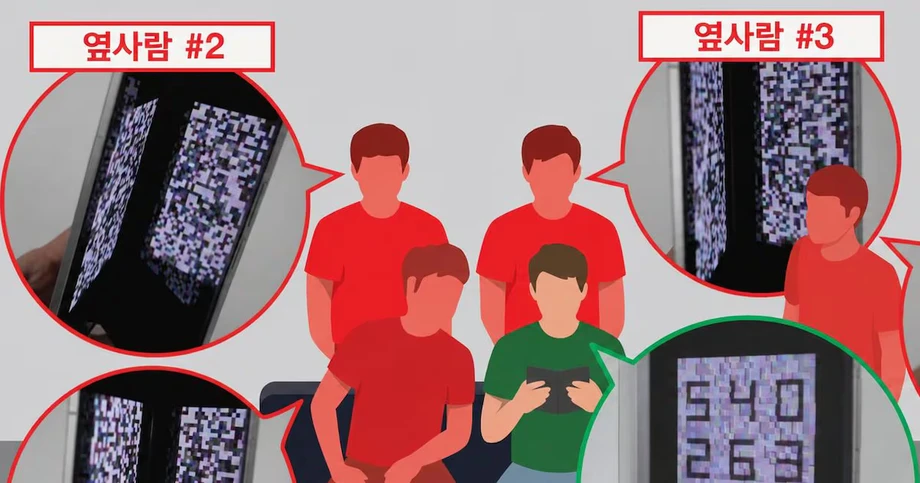
The technology, called Fold2Unfold, splits content into two images that are difficult to understand separately. From the intended user's eye position, a reflection combines with the image viewed directly to reveal the original content. Someone looking from another angle sees misaligned patterns instead.
POSTECH announced the research on November 10, 2026, following its presentation at ACM UIST 2026 in Detroit from November 2 to 5. The university's team, including computer science professor Inseok Hwang and master's researcher Kyoosik Lee, worked with KAIST computing professor Jun Han.
The researchers' Fold2Unfold project description says the system combines reflections between screens with eye tracking, without adding hardware. Its evaluation involved controlled studies of people entering a personal identification number, or PIN, on a commercial foldable device.
The prototype also brings practical costs. Entering a PIN containing six digits took an average of 8.2 seconds, compared with 4.2 seconds on an ordinary screen. Keeping the camera running and the display bright also increases power use. The result is a promising research system for moments involving sensitive information, with speed, stability and battery consumption still needing attention.
How two unreadable images reveal a number
A foldable phone held partly open, much like a small laptop, places its two display surfaces at an angle to each other. Light from one side reflects off the other, creating a mirror image that can interfere with ordinary viewing. Fold2Unfold makes that reflection part of the display.
The software divides a number or other content into two complementary images and places one on each side. Neither image makes the original information readable on its own. The user sees one image directly, together with a reflected image from the opposite side.
At the correct viewing position, the two overlap to reconstruct the original number. Moving sideways changes how they line up, so an observer sees a confusing pattern. The privacy effect depends on the geometry between the screens and the viewer's eyes.
The researchers also compensate for the reflected image appearing darker than the image viewed directly. That brightness adjustment helps the two parts form a readable whole rather than an uneven picture. Splitting the content, aligning the images and balancing their brightness all contribute to what the user sees.
Why the phone follows the user's eyes
Fold2Unfold must keep the images aligned as the user moves. A person entering a password may shift their head, change their grip or adjust how far the phone is folded. Each movement changes the path of the reflected light.
The front camera tracks the user's eye position in real time. The system also calculates the phone's fold angle, then adjusts the position and shape of the displayed images. The project description calls this dynamic warping: the software continually reshapes the pictures so they still fit together from the user's viewpoint.
Lee, the paper's first author and a master's researcher at POSTECH, said the team's goal was to keep the screen readable for its user while making it difficult for surrounding people to interpret. He described maintaining a natural view as eye position and fold angle changed as a central part of the work.
This adjustment matters because the protected view is narrow. The software has to keep that view aligned with the person using the phone, rather than require the person to hold their head perfectly still.
What the keypad and viewing tests found
The controlled keypad task examined a familiar privacy risk: someone watching a person enter a PIN. This is often called shoulder surfing, meaning an observer tries to learn private information by looking at another person's screen.
On an ordinary display, nearby observers could identify almost all 10 keypad digits. With Fold2Unfold, they identified an average of 0.65 digits out of 10. The official project description gives the same result as a 6.5% recognition rate.
The viewing angle experiment found that digits became difficult to read when an observer's viewpoint moved just 7.5 degrees away from the user's line of sight. With the conventional privacy film tested for comparison, most digits remained readable at 30 degrees to either side.
Those figures show why the researchers focused on protecting the area close to the user's viewpoint. The 30 degree angle at which most digits remained readable through the tested film was four times the 7.5 degree offset at which Fold2Unfold made reading difficult.
At a viewing distance of 35 centimetres, a 7.5 degree offset corresponds to a sideways shift of approximately 4.6 centimetres. In everyday terms, a small change in where someone's eyes are positioned can disrupt the combined image. The reported result concerns keypad digit recognition in a controlled task, with a small amount of information still readable on average.
Privacy comes with a slower PIN entry
Participants took an average of 8.2 seconds to enter a PIN containing six digits with Fold2Unfold, against 4.2 seconds using the ordinary display. That is four extra seconds, or roughly twice the entry time.
The official project description calls the increase in input time modest. The measured times give users a more concrete way to judge the tradeoff: a brief banking task would take longer, while surrounding observers would have much more difficulty reading the keypad.
Touching the display can also move the phone. If that movement shifts the reflected and direct images out of alignment, the reconstructed content can become harder for the intended user to read. The system's eye tracking and image adjustments therefore have to work while someone is actively tapping, not just looking at a stationary device.
Power consumption is another practical concern. The prototype needs continuous camera operation and a bright screen, both of which increase energy use. Battery life becomes part of the decision about when such a feature would be useful, alongside the time needed to complete a task.
Recognition at UIST 2026
ACM UIST's official awards list names Fold2Unfold as a Best Demo Honorable Mention. Its demonstration is titled "Demonstrating Fold2Unfold: Screen Privacy Protection against Shoulder Surfing using Inter-Screen Reflection on Foldable Smartphones."
The official listing credits six authors: Kyoosik Lee, Jiha Kim, Jonghyuk Yun, Suwon Yoon, Jun Han and Inseok Hwang. Fold2Unfold was one of five demonstrations receiving an honorable mention, alongside one Best Demo winner. Those six awards came from 127 demonstrations accepted and shown at the conference.
The research's public milestones took place over November:
- November 2 to 5, 2026: The work was presented at ACM UIST in Detroit and received a Best Demo Honorable Mention.
- November 10, 2026: POSTECH announced the joint research and described its privacy protection results.
The project received support through South Korea's Ministry of Science and ICT research programmes, including support for established researchers, pioneering convergence technology and global convergence research.
Where the prototype could be useful
The research team sees potential uses in entering mobile banking passwords, checking account balances, reading private messages and viewing personal information. Each involves content that a person may need to see in public while keeping it hidden from nearby passengers or customers.
A software approach could make deployment simpler because the prototype uses a commercial foldable phone's existing screen and camera. Users would not need to attach a special privacy film or carry another device. The technique does, however, depend on the phone being partly folded so its display surfaces can reflect each other.
Fold2Unfold remains a research prototype. No consumer release date or plan to include it in a commercial phone was announced. The tests used a Galaxy Z Fold7, while broader use would require work on the practical issues already visible in the prototype.
The strongest immediate case is a short task involving sensitive information. A person might accept several extra seconds to enter a banking PIN if it makes nearby viewing much harder. Longer sessions would make the demands of holding the device, maintaining image alignment and powering the camera more noticeable.
Turning a display annoyance into a tool
Hwang, the POSTECH professor involved in the research, described the central idea as finding a protective use for an unwanted display effect.
The significance lies in transforming the bothersome screen reflection into a means of protecting user information.
The work brings together three parts that need to function at once: a physical reflection between screens, software that divides and adjusts the content, and a camera that follows the user's eyes. Together, they make the readable image depend on a particular viewing position.
The next technical challenge is making that arrangement comfortable during ordinary use. The tests recorded a large reduction in readable keypad information, alongside slower entry and extra power demands. Improving those practical details would help turn a demonstration of visual privacy into a feature people could use during everyday financial and personal tasks.
Key Points
- POSTECH and KAIST developed Fold2Unfold to combine two images through reflections on a partly folded smartphone.
- Nearby observers identified an average of 0.65 of 10 keypad digits, a recognition rate of 6.5%.
- Digits became difficult to read at a viewing offset of 7.5 degrees, compared with most remaining readable through the tested privacy film at 30 degrees.
- Entering a PIN containing six digits took 8.2 seconds, compared with 4.2 seconds on an ordinary display.
- The system uses existing hardware, but continuous camera operation, screen brightness and movement create practical challenges.
- Fold2Unfold received a Best Demo Honorable Mention at ACM UIST 2026. No consumer release date was announced.