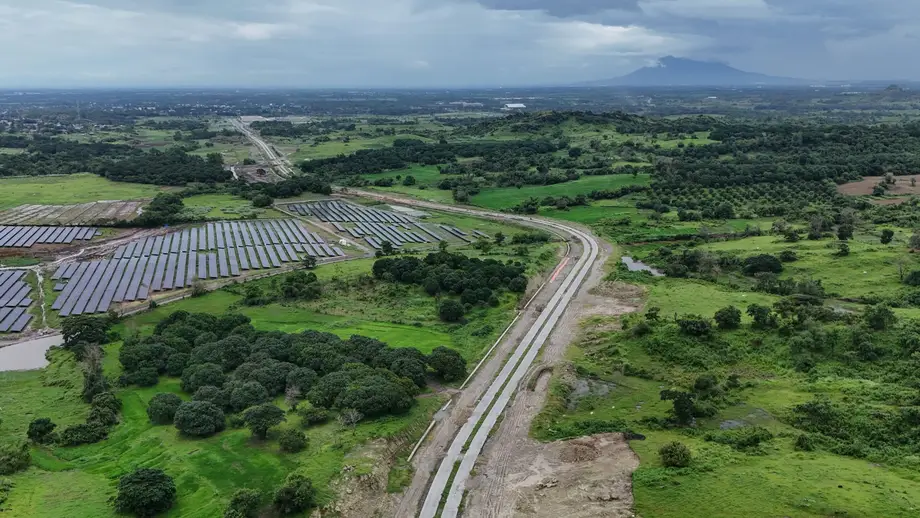
A 1,619 hectare technology hub awaits an agreement
The Philippines and the United States are aiming to conclude an agreement before the end of 2026 for a proposed artificial intelligence and advanced manufacturing hub in New Clark City, Capas, Tarlac. Philippine trade officials say negotiations are progressing well, although the master agreement remains unfinished and no signing is expected during the Association of Southeast Asian Nations summit in Manila.
Contents
- A 1,619 hectare technology hub awaits an agreement
- Why the signing will have a separate occasion
- What negotiators still have to settle
- From joining Pax Silica to planning construction
- What New Clark City's Golden Node would contain
- Land support and the wider Luzon corridor
- How investment could reach Filipino businesses
- Why researchers question the industrial payoff
- Water, electricity and communities remain central
- Key Points
The proposed development covers 1,619 hectares inside the Luzon Economic Corridor. The Bases Conversion and Development Authority (BCDA) estimates that it could attract $40 billion to $70 billion in investment and generate 130,000 to 190,000 direct jobs over several decades. Those are projections: no firm investor commitments have been announced.
Trade Undersecretary Ceferino Rodolfo, who also heads the Board of Investments, said on November 10 that the government still hoped to sign before the end of the year. He described the lack of a summit announcement as a scheduling decision, while acknowledging that negotiations on the agreement itself were continuing.
The project combines a large industrial ambition with practical questions for Tarlac: which businesses will occupy the site, how much water and electricity they will need, and how farmers and other nearby communities will be affected. Officials are targeting groundbreaking by 2028, following a period of planning and preparation.
Why the signing will have a separate occasion
Rodolfo said the government wanted the proposed hub to receive attention separately from ASEAN and Asia-Pacific Economic Cooperation events. He said other regional initiatives also deserved attention during the diplomatic meetings.
Speaking on the sidelines of the Fourth ASEAN Investment Forum, Rodolfo explained the decision:
While there will be no announcement during the upcoming meeting between President Trump and President Marcos, this is simply a matter of timing.
US Ambassador to the Philippines Lee Lipton had already rejected expectations of an announcement. In a November 7 statement on X, he addressed speculation about the proposed Pax Silica Economic Security Zone:
No such announcement on the Pax Silica Economic Security Zone was ever planned.
BCDA President and Chief Executive Officer Joshua Bingcang had earlier identified November, coinciding with the summit and President Donald Trump's expected visit, as a target for signing. He had acknowledged that there was no definite signing date. Lipton said decisions would be made in consultation with the Philippine government, with rigorous discussions about the initiative's effects on stakeholders.
What negotiators still have to settle
The planned framework agreement will define the industries intended for the hub and address legal, commercial and other development matters. BCDA is expected to sign for the Philippines, alongside its American counterpart.
Rodolfo said no significant substantive issue was preventing an agreement and described the two governments as sharing a vision for the advanced manufacturing hub. Asked what still needed to be finalized, however, he said:
The master agreement itself, the whole thing.
Rodolfo declined to identify the provisions still under negotiation. No signing date or venue has been announced. His assessment is that talks remain on track, with completion depending on their pace and outcome.
BCDA and the US Department of State have been exchanging proposed arrangements. Bingcang said in July that the Philippines was among the most advanced participants in the Pax Silica coalition in negotiating a framework. Philippine officials subsequently said BCDA was awaiting Washington's response to a draft reviewed with the Office of the President and the Department of Trade and Industry.
From joining Pax Silica to planning construction
Washington launched Pax Silica in December 2025 to connect participating countries across critical minerals, electronics, semiconductors and other industries supporting artificial intelligence. A supply chain is the series of steps that takes a product from raw materials through processing and manufacturing to customers.
The Philippines joined as the initiative's 13th signatory on April 17, when Rodolfo signed the declaration. The proposed New Clark City hub became a flagship project for that participation.
The main milestones show how the proposal has moved from membership to negotiations over a physical development:
- December 2025: The United States launched Pax Silica.
- April 17, 2026: The Philippines signed the declaration as the 13th participant.
- April 20, 2026: BCDA announced that it had allocated 4,000 acres in New Clark City for a Pax Silica Coordination Office and industrial hub.
- July 2026: Bingcang said draft arrangements were being exchanged and identified November as a signing target.
- November 7, 2026: Lipton said no summit announcement had been planned.
- November 10, 2026: Rodolfo maintained the goal of concluding an agreement before the end of 2026.
- 2028: Philippine officials are targeting groundbreaking after planning and preparation.
Rodolfo said signing within 2026 would preserve the timetable for about two years of development planning. BCDA has also described groundbreaking as a goal within that preparation period, making the sequence of the agreement, master plan and construction preparations central to the schedule.
What New Clark City's Golden Node would contain
BCDA's April 20 announcement allocated a 4,000 acre property in New Clark City for the Pax Silica Coordination Office, where technology companies, research institutions and government agencies would work together. That area is approximately 1,619 hectares, matching the proposed hub's stated size.
The agency designated the site as Pax Silica's first Golden Node, its name for a new type of investment hub built around artificial intelligence and advanced manufacturing. The proposal is for an industrial ecosystem, with businesses, infrastructure and research activity connected in one location, rather than simply an administrative office.
The Board of Investments' hub discussion series describes the project as an AI-Native Industrial Acceleration Hub. Its priorities include critical minerals, talent, data centers and advanced manufacturing. In plain language, AI-native means designing operations to use artificial intelligence from the outset.
Data centers house the computers that store information and run digital services, including AI systems. Semiconductors are the chips that allow those computers and many other electronic devices to work. Linking those activities with materials processing and manufacturing is the industrial logic behind the proposal.
Land support and the wider Luzon corridor
BCDA has announced a two year grace period on lease payments, which it describes as an unconditional contribution in kind to support economic cooperation between the Philippines and the United States. Instead of an initial cash payment, the agency is contributing the value of that lease relief.
The annual lease rate from the third year will be set under a subsequent agreement. This makes the future rental terms another part of the project's commercial arrangements.
New Clark City sits within the Luzon Economic Corridor, an infrastructure and investment initiative involving the Philippines, the United States and Japan. The corridor aims to connect Subic Bay, Clark, Metro Manila and Batangas through rail, ports and airports, while helping ease congestion in Manila.
The proposed Pax Silica hub would be one of the corridor's priority nodes, or major centers of activity. Its intended industries include critical mineral processing, semiconductor production and advanced manufacturing. Transport connections would matter to those businesses because materials, machinery and finished products must move between factories and international markets.
How investment could reach Filipino businesses
Semiconductors and electronic products are already the Philippines' leading exports. The government wants Pax Silica participation to help the country move beyond assembly, testing and packaging into more valuable technology activities.
Finance Secretary Frederick Go explained that ambition in the BCDA announcement:
By joining Pax Silica, the Philippines is ensuring that our mineral resources and strategic location are not simply supporting global industries from the margins, but are actively harnessed to build the industries of the future,
Bingcang has said the hub could create quality jobs and give local enterprises a larger role in the international technology economy. BCDA has identified Apple, Nvidia, Qualcomm and Taiwan Semiconductor Manufacturing Co. as potential investors, while its investment and employment estimates stretch over several decades.
For Filipino businesses, the intended benefit goes beyond factory employment. Local suppliers could gain opportunities to provide goods and services to the hub. The government's more ambitious goal is to build capabilities in technology and manufacturing that allow domestic companies and workers to take on more valuable work.
Why researchers question the industrial payoff
A discussion paper by the University of the Philippines Center for Integrative and Development Studies warned that the country could remain primarily a manufacturing base while research and design continue overseas. It called for stronger domestic technological capabilities so the Philippines could gain more from the proposed investments.
Research and design determine how products work and how they are made. Assembly puts components together. Both create economic activity, but the university paper's concern is where the knowledge and capacity to develop new technology will sit.
IBON Foundation Executive Director Sonny Africa raised a similar concern about relying on foreign investment to develop Filipino industry. He cited Intel's arrival in 1974 and Texas Instruments' arrival in 1979, arguing that decades of multinational semiconductor activity had not produced a strong Filipino owned semiconductor industry.
Africa argued that foreign companies benefit from Filipino labor, critical minerals and government incentives. His criticism puts a concrete test alongside the government's investment targets: whether the hub helps domestic enterprises acquire skills, technology and business opportunities, rather than measuring its success mainly through the size of foreign investment or exports.
Water, electricity and communities remain central
Farmers, indigenous communities and environmental groups have raised concerns about possible displacement, environmental effects and the proposed hub's demand for water and electricity. Those issues affect both residents around New Clark City and the infrastructure needed to support the intended industries.
Computing facilities need electricity to run equipment and cooling systems. Industrial water and energy requirements will also depend on which manufacturers locate at the site and what processes they use. The framework agreement's definition of the industries to be hosted will therefore help shape the practical demands of the development.
BCDA is continuing consultations with stakeholders. Rodolfo said opposition had not caused the decision to avoid a summit signing and that consultation had always been part of the process. Lipton likewise said discussions would examine the initiative's potential effects on stakeholders.
The next milestone is the agreement targeted for completion before the end of 2026. After that, master planning and preparations would turn the proposed industrial vision into decisions about land, infrastructure and facilities. For Tarlac residents and prospective workers, those decisions will connect the promise of investment to everyday matters such as livelihoods, resource use and access to jobs.
Key Points
- The Philippines hopes to conclude the Pax Silica hub agreement with the United States before the end of 2026.
- No signing is expected during the ASEAN summit, and the master agreement remains under negotiation.
- The proposed New Clark City hub covers 1,619 hectares within the Luzon Economic Corridor.
- BCDA projects $40 billion to $70 billion in investment and 130,000 to 190,000 direct jobs over several decades.
- The project includes two years of lease relief, with the annual rate from the third year to be agreed separately.
- Officials target groundbreaking by 2028, while consultations continue over displacement, water, electricity and environmental effects.
- Researchers and IBON question how much domestic technological capability the investment will build.