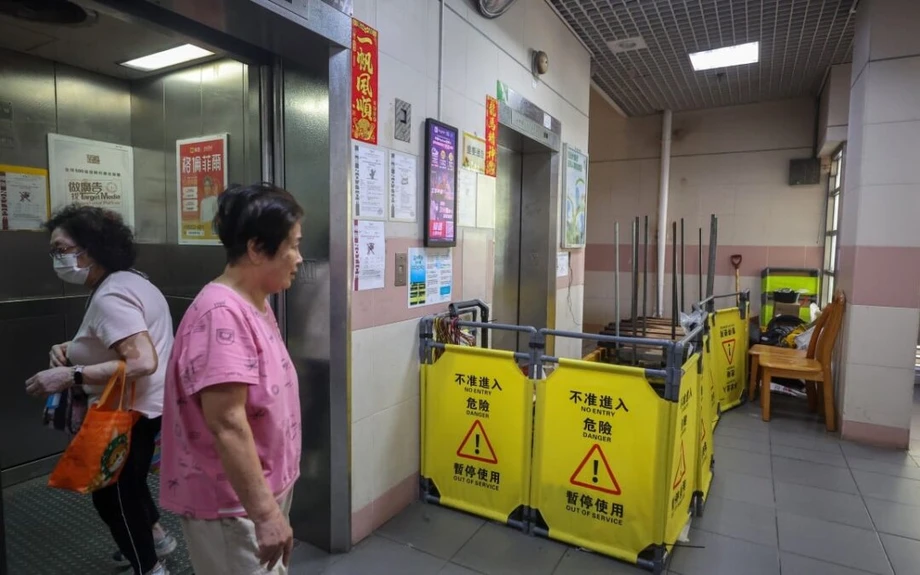
720 lifts need repairs across estates and private buildings
Hong Kong authorities have ordered Taizoom Elevator Company (HK) Limited, also identified as Tai Yat Elevator (Hong Kong), to repair 720 lifts missing required fire resistant door frame components. The defects affect 48 lifts at two housing estates and another 672 lifts in 338 private buildings, widening a case that has brought police arrests and a review of the city's lift approval system.
Contents
- 720 lifts need repairs across estates and private buildings
- Why the missing frames matter
- How the repair design will work
- Older standards explain the safety assessment
- How the case spread beyond two estates
- Police investigate the completion claims
- Three layers of inspection face scrutiny
- Digital evidence and the cost of independence
- What residents can expect next
- Key Points
At a November 9, 2026 briefing, Electrical and Mechanical Services Department (EMSD) Director Poon Kwok-ying said the affected lifts represented about 90 percent of those installed by the contractor. By comparison, inspections of about 900 lifts installed by other contractors, across 480 buildings, found all had the required components.
Taizoom must pay for the repairs. Work on 39 lifts at Pok Hong Estate in Sha Tin and nine at Tsui Ping (North) Estate in Kwun Tong is due to finish by mid-November. Repairs in the private buildings are expected to take two to three months, with each lift requiring roughly two or three days of work.
The department has accepted a repair design that passed two tests lasting 120 minutes each. It also plans to inspect every repaired lift to check that the missing parts have been installed.
For residents, the immediate issue is arranging access while repairs take place. For regulators, the larger task is explaining how hundreds of lifts received approval despite missing parts that professionals were responsible for checking. Police are investigating suspected fraud and false statements, while EMSD is examining the conduct of the contractor and engineers who signed the approval documents.
Why the missing frames matter
A lift landing door is the door people see on each floor while waiting for a lift. Its fire resistant parts work together to help keep flames from passing between a building floor and the lift shaft. The frame components are part of that protective assembly.
Inspections at the two estates found that Taizoom had submitted valid fire resistance certificates and installed the corresponding door panels, but omitted the accompanying frame components before certifying the work as complete. A certificate describes the performance of a tested assembly; workers still have to install its required parts.
Vincent Ho, president of the Hong Kong Institute of Building Safety, described the omission as rare and unacceptable. He said the frames were integral to the fire protection provided by the doors and were positioned inside the lift shaft, where professionals rather than residents would normally see them.
EMSD said the missing components did not affect the lifts' safe daily operation. Its repair order addresses their compliance with fire protection requirements. Residents can therefore face a situation in which a lift continues carrying passengers while still requiring compulsory remedial work.
How the repair design will work
Taizoom's proposed solution adds J-shaped and L-shaped fittings beside the landing door panels. When the doors close, the two fittings lock together, helping prevent flames from passing through the assembly.
EMSD commissioned two fire consultants to review the proposal. Both considered it technically feasible and practical to install in the affected buildings. The department said differences between existing door designs and conditions at individual sites had required time to develop a suitable solution.
The design underwent a fire resistance test at the National Elevator Quality Inspection and Testing Center on November 4, followed by another at a Hong Kong laboratory on November 6. EMSD staff and fire specialists attended the local test. The department said the design passed both tests and met the relevant requirements of the Code of Practice for Fire Safety in Buildings.
Further tests are planned for other landing door designs. Some private buildings have already received L-shaped fittings, with J-shaped fittings to follow. Buildings where work has yet to start are expected to receive both components together.
Older standards explain the safety assessment
Most affected lifts are around 30 to 50 years old, and the buildings concerned were completed before 1990, according to EMSD. Poon said a fire consultant had assessed the relationship between the older requirements and the replacement door panels.
Poon explained that the original rules required landing doors to resist fire for 60 minutes and did not specify the particular frame components now at issue.
"At that time, the requirement for landing doors was 60 minutes of fire resistance, and there was no requirement for specific door-frame components," he said.
The replacement panels installed by Taizoom passed testing under BS 476, Part 22, with a fire resistance rating of at least 120 minutes, Poon said. On the consultant's assessment, fire safety after the new panels were installed was no lower than before the replacement work.
EMSD nevertheless requires the current installations to include the missing components. Poon made clear that Taizoom remained responsible for correcting the omissions.
Nevertheless, failing to install the required components is still unlawful. The EMSD has instructed Taizoom to carry out remedial work on the lifts in the affected buildings as soon as possible. Taizoom must pay all associated costs.
How the case spread beyond two estates
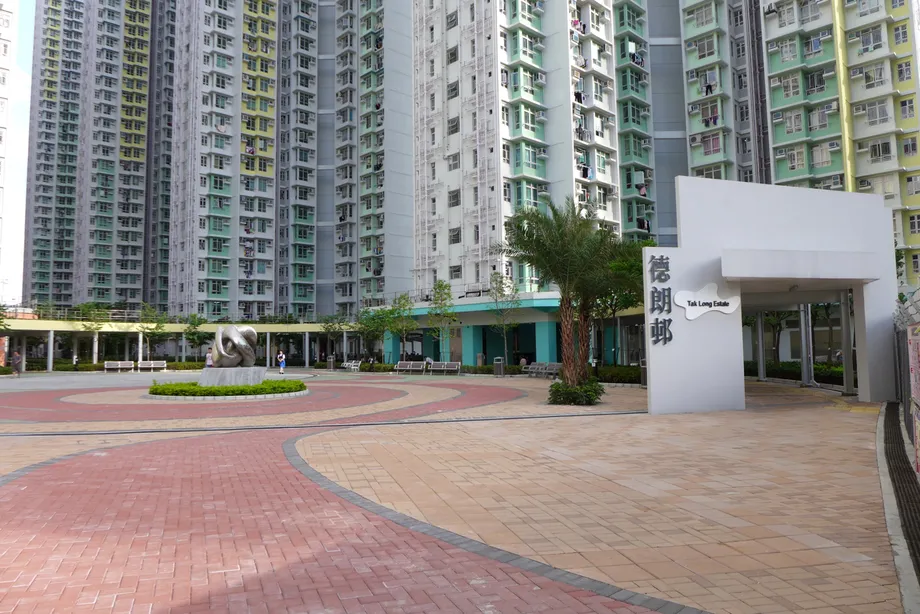
EMSD began unannounced inspections following public complaints about Taizoom's work. The first findings involved replacement and modernisation projects carried out during 2025 and 2026 at Pok Hong and Tsui Ping (North) estates.
The investigation then expanded to private buildings. By the department's October update, inspectors had checked 383 buildings with Taizoom installations and found missing components in 338 private properties. The subsequent total of 720 affected lifts includes those private buildings and the 48 lifts in 11 blocks at the two estates.
- October 16: EMSD referred the case to police over suspected fraud and false statements.
- October 20 update: Inspection findings identified 338 private buildings with missing components after checks of 383 buildings with Taizoom lifts.
- November 4: The proposed repair design completed its first fire resistance test.
- November 6: A second fire resistance test took place in Hong Kong.
- November 9: EMSD set out the repair programme and reported that checks of about 900 lifts installed by other contractors had found the required components.
- Mid-November: Repairs at the two estates are due to finish, alongside deadlines for wider industry checks and reporting.
The 672 affected lifts in private buildings account for roughly 93 percent of the 720 requiring repairs. Most of the remedial programme will therefore depend on coordinating work with individual building managers and owners' corporations, rather than completing the two estate projects alone.
Police investigate the completion claims
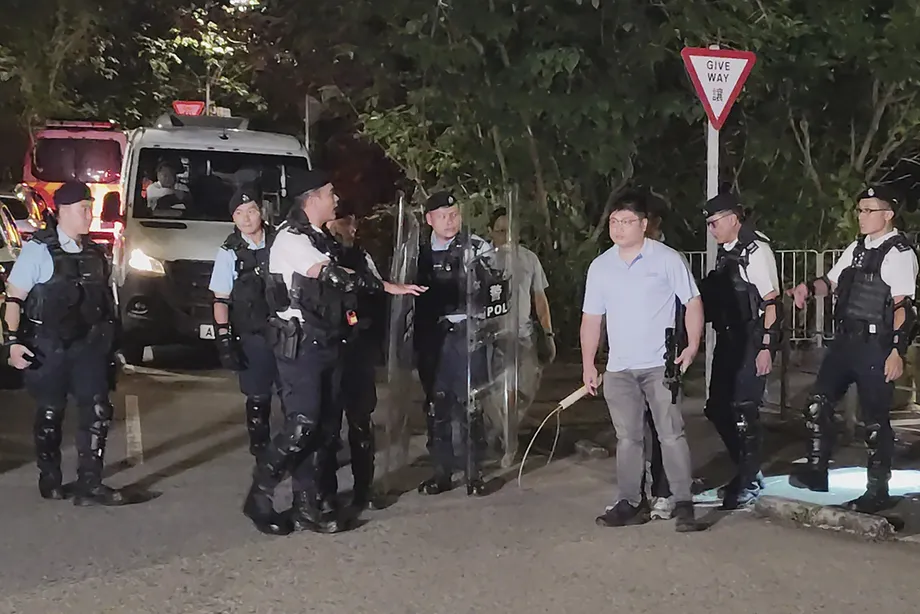
Police arrested three men on suspicion of fraud: a 79-year-old company director surnamed Cheung, an 82-year-old staff engineer surnamed Chung and a 63-year-old external consulting engineer surnamed Lam. The two engineers were responsible for examining installations and certifying safety documents.
Officers from the New Territories South Regional Crime Unit searched the contractor's headquarters at Chai Wan Industrial City Phase 1. They seized estate logs, personnel files, internal correspondence and meeting records as part of the investigation.
Investigators are examining allegations that the contractor and certifying engineers concealed the missing components while telling EMSD and estate owners' corporations that the replacement work was complete and complied with requirements. The criminal investigation remains active; no trial date or outcome was given.
EMSD is also examining suspected serious negligence or misconduct under the Lifts and Escalators Ordinance, including responsibility for the documents used to obtain permission to operate the lifts. It is considering a disciplinary inquiry mechanism and says people found to have broken the law may face prosecution.
The case has also affected procurement elsewhere. The Housing Authority advised the owners' corporation of Fu Heng Estate in Tai Po to suspend the award of a pending lift modernisation contract while it considered its next steps.
Three layers of inspection face scrutiny
Hong Kong's approval process already has three layers. A registered contractor first checks its own work. A registered lift engineer then carries out a thorough examination. EMSD engineers subsequently conduct an inspection at the site and functional testing before the relevant use or resumption permit is issued.
Maxine Yao, a member of EMSD's lifts and escalators safety advisory committee, said the contractor can engage its own registered engineer or hire an outside professional for the engineering examination. Her proposal is to add an independent third party to strengthen that middle layer.
Yao described the number of affected lifts as shocking and said the system could be improved. She set out her preferred change:
I have said I hope the department can introduce independent third-party inspection to add one more step in the middle tier to ensure public safety.
Legislator Kwok Fu-yung also called for deeper and more frequent sample checks, greater independence and accountability for registered engineers, stronger penalties and better arrangements for removing registrations. Electrical and building services engineer Ho Wing-ip said the incident exposed failures in inspection and supervision and called for a review involving workers, supervisors, contractors and government departments.
Digital evidence and the cost of independence
EMSD plans to extend its digital work log system from maintenance to lift installation, upgrades and replacement work. Contractors would have to submit photographs and videos showing that required components had been fitted.
Ho Wing-ip supported the proposal, saying digital images could provide evidence of installation at relatively low cost and save time. He pointed to information such as recording dates as useful for checking records and making fabrication harder, and suggested considering similar practices in other construction work.
Yao also supported updating the digital system and hoped it would be ready before the end of the year. Photographs and videos could give inspectors a record of components that residents rarely see and that become harder to check once work is complete.
Independent inspection presents a different cost issue. Yao warned that it would add both time and expense, and that some individual flat owners would be sensitive to the extra charges. Some estates already hire outside inspectors, while others may resist another bill.
The proposed reforms therefore involve two practical changes: making contractors document what they install, and deciding who should independently verify that work. EMSD expects to finish a wider review before the end of the year, covering installation, major alterations, inspection, maintenance, registration and approval under the Lifts and Escalators Ordinance.
What residents can expect next
Taizoom is expected to schedule repair work, where possible, to reduce disruption to residents. Each lift should need about two or three days, although the full programme across 338 private buildings is expected to take two to three months. EMSD says it will monitor progress and check every repaired lift.
Poon described the omissions as an individual contractor's integrity problem rather than common industry practice. The department's inspection of about 900 lifts installed by other contractors found the required parts in every case.
Ho Wing-ip took a more cautious position on the extent of the problem, saying the industry picture should be assessed after all lift companies submitted their reports by mid-November. EMSD had instructed other contractors to inspect their installations and was conducting its own sample checks.
The next milestones are completion of the estate repairs, the wider industry inspection returns, continued repairs in private buildings and the regulatory review before the end of the year. Together, those steps will determine how quickly residents receive completed installations and how the approval process changes.
Key Points
- Taizoom must repair 720 lifts missing required fire resistant door frame components and pay all associated costs.
- The total includes 48 lifts at Pok Hong and Tsui Ping (North) estates and 672 lifts in 338 private buildings.
- The repair design uses interlocking J-shaped and L-shaped fittings and passed two fire resistance tests lasting 120 minutes.
- Estate repairs are due by mid-November; the private building programme is expected to take two to three months.
- Police arrested three men on suspicion of fraud, and criminal and regulatory investigations continue.
- Checks of about 900 lifts installed by other contractors found the required components in every case.
- EMSD plans installation photographs and videos, a check of every repaired lift and a wider regulatory review before year-end.