A fortune in stone, a toll at every checkpoint
Armed checkpoints stand every 10 to 15 kilometres along routes used to smuggle jade from Hpakant, northern Myanmar, toward China. For Aung Kyaw, a former mine truck driver paid about 700,000 kyat per trip, moving a valuable stone means paying whichever force controls the next stretch of road.
Contents
- A fortune in stone, a toll at every checkpoint
- How jade travels from the mines to China
- Why control of Hpakant pays
- Jade money also moves through weapons networks
- Reforms stalled before the coup
- Billions disappear from the public accounts
- Mining damage follows families home
- Australia faces calls to target gemstone revenue
- Buyers struggle to trace a stone's history
- Key Points
His account captures how Myanmar's jade wealth feeds its civil war. The military and its opponents fight over mining territory while collecting money from the same industry. Drivers face detention, landmines and air strikes. Families living beside the mines face displacement, dangerous slopes and the loss of land that once supported their livelihoods.
Myanmar produces about 70% of the world's jade, according to Global Witness. Its landmark 2015 investigation estimated annual production could be worth as much as US$31 billion. Today, no central body publishes production records, leaving the current value of the trade and its payments to armed groups unknown.
Hpakant's mines are divided between the military and the Kachin Independence Organisation (KIO), the political organisation associated with the Kachin Independence Army (KIA). Surrounding territory remains contested. Control brings access to stones, mining payments and fees charged to trucks moving through armed checkpoints.
Aung Kyaw, who uses a pseudonym because he fears for his safety, spent about a decade driving dump trucks at the mines before moving into smuggling. He said his earlier earnings had supported his children's schooling and his mother's health care. After the February 2021 military coup disrupted work, a Chinese businessman offered him the transport job.
Aung Kyaw described why he accepted work that could get him killed:
It was a solid income, that's why I agreed.
How jade travels from the mines to China
Chinese buyers are the main customers for Myanmar's jade. In China, the stone has cultural associations with good luck and purity of spirit. The finest jadeite, the type primarily associated with Myanmar, can sell for more than some diamonds. Nephrite, another stone also called jade, comes from numerous countries.
Miner Sai Myo Htwe said more Chinese buyers had begun travelling directly to the mines since the coup, selecting rough stones and handing accumulated shipments to carriers. Some jade previously moved through markets in Mandalay or official auctions in Naypyidaw, where transactions could be recorded and taxed. Much now bypasses those channels.
Aung Kyaw and other local residents described two main back roads through jungle, mud, steep climbs and boulders. Shipments are usually divided into three transport stages involving different drivers and vehicles. The final stage crosses the N'Mai River.
Aung Kyaw said payments followed the instructions of the people organising the shipment, regardless of which armed group staffed a checkpoint:
Whoever is holding the gun, we just pay the fees as instructed by the bosses.
Drivers also carry gifts or bribes, including expensive liquor and parcels whose contents they may not know. Fighting can stop a convoy without warning, forcing drivers to spend the night in the jungle. Aung Kyaw described being detained for three days during a dispute between a regional commander and his transport team's leadership.
Another driver, he said, survived gunfire by surrendering under a white flag and explaining that he worked for a Chinese carrier group. His vehicle was so badly damaged that it had to be replaced.
Why control of Hpakant pays
The military held direct control over the mining area during the first years after the coup. A later KIA offensive captured large stretches of territory along the Chinese border, while fighting around Hpakant intensified. The division of mining territory now gives rival forces opportunities to collect revenue.
Thomas Kean, an analyst at the International Crisis Group, explained how territory and income have become closely connected:
Controlling Hpakant is very lucrative. The biggest change since the 2021 coup has been the direct contest for territorial control, because controlling territory now means controlling the [unofficial] taxation.
Unofficial taxation means payments demanded outside the ordinary public tax system. For a trader, a checkpoint fee becomes part of the cost of moving jade. For the force collecting it, a road or mining plot becomes a continuing source of money.
The International Crisis Group describes a trade in which military and KIA interests can overlap despite decades of warfare. Rivals have cooperated to share profits, while local communities receive little benefit. No response from the military or the KIA's top commander was received to requests for comment on these accounts.
Jade money also moves through weapons networks
Global Witness's investigation, Jade and Conflict: Myanmar's Vicious Circle, traced relationships extending beyond the military and KIA. It alleged that the United Wa State Army (UWSA), the Arakan Army (AA) and smaller armed actors participated in illegal mining, bribery and smuggling.
The investigation described jade income flowing into weapons purchases. It said the UWSA sometimes paid the KIA in weapons, and cited a KIA intelligence official who said those weapons were then sold to the AA for a profit. These are allegations made by the organisation about the operation of the conflict economy.
Keel Dietz, Global Witness's Myanmar policy adviser and a co-author of the investigation, described cooperation among forces that fought elsewhere:
The Tatmadaw, armed militias, and ethnic armed groups such as the KIA, UWSA and AA literally found common ground to dig up jade ever faster and more destructively, even as they were in conflict elsewhere in the country.
Global Witness also alleged that Aung Pyae Son, the son of military leader Min Aung Hlaing, benefited from payments connected to dynamite imports and arrangements for illegal mining after the civilian government suspended new licences. The allegations place both mining supplies and permission to operate within the industry's networks of private profit.
Reforms stalled before the coup
Aung San Suu Kyi's National League for Democracy government tried to reduce the damage and secrecy surrounding gemstone extraction. Its efforts included suspending new permits, preparing new rules and seeking greater transparency. Opposition from military and commercial interests limited those changes.
The sequence shows how dangerous mining continued through attempted reform and then military rule:
- 2015: Global Witness estimated annual jade production at up to US$31 billion. A collapse of a waste mound about 60 metres high killed more than 100 miners.
- 2016: The civilian government stopped issuing new gemstone permits while pursuing reform.
- 2019: A new gemstone law opened the way for mining permits to resume but left out proposed ownership disclosure and company accountability provisions.
- April 2019 and July 2020: Major landslides killed more than 200 people combined.
- 1 February 2021: The military seized power, followed by renewed conflict affecting Hpakant and its jade trade.
The 2019 law omitted a proposed requirement to disclose beneficial ownership, meaning the people who ultimately own or control a company. Such disclosure would help the public identify who benefits from mining businesses, including companies operating through other firms or representatives.
The law also omitted proposed checks on companies with records of human rights abuses, environmental damage or corruption. Limits on plot sizes and permit lengths drew criticism from people involved in the separate reform policy, who argued that miners needed sufficient space and time to manage waste safely.
Myanmar Gems Enterprise (MGE) presents another governance problem. The state enterprise helps regulate the industry and issue licences while maintaining commercial interests in mining ventures. Its role places a participant in the business within the system responsible for supervising that business.
Billions disappear from the public accounts
Global Witness's 2015 estimate put annual production at up to US$31 billion and the share of Hpakant jade smuggled into China at 90%. Other historical estimates put the share smuggled from Myanmar at up to four fifths, while its later investigation estimated up to 90% nationwide, almost all destined for China.
The scale of unrecorded trade leaves public authorities without the taxes that could otherwise support services. Official auctions continue, but their sales provide only a partial view of an industry whose most important transactions often take place outside formal markets.
Global Witness found that smuggling rose by an estimated 50% to 80% after the civilian government's licence suspension. Mining interests accelerated extraction around expiring permits and continued operating illegally, weakening the intended pause for reform.
China's demand also connects jade to the movement of hidden wealth. Kean said President Xi Jinping's periodic campaigns against corruption had temporarily reduced illicit cash flows used to buy unrecorded stones. Valuable jade can concentrate substantial wealth in an object small enough to carry.
China's Foreign Ministry has said it is unaware of allegations that Chinese companies are involved in jade smuggling. Drivers and miners, meanwhile, describe Chinese buyers and transport organisers working directly with the trade around Hpakant.
Mining damage follows families home
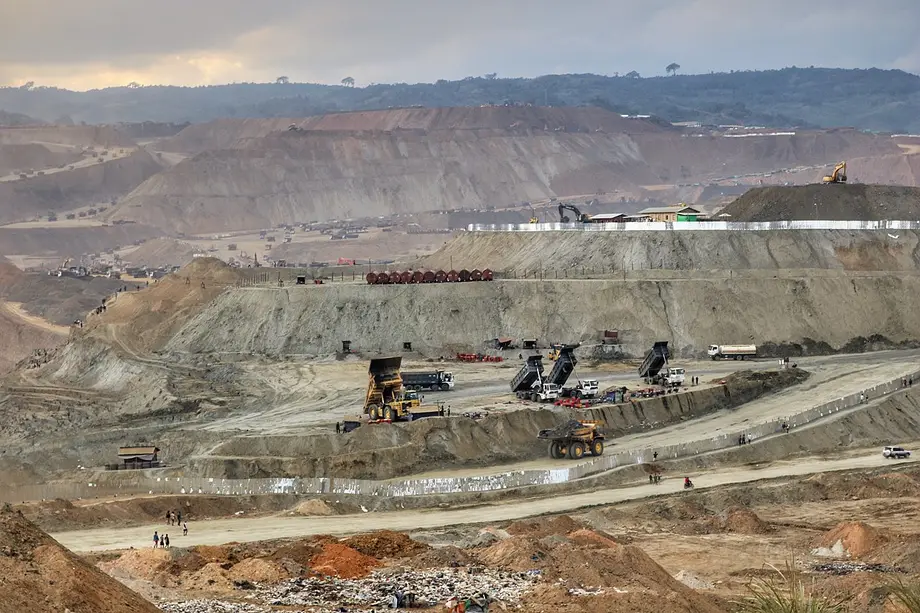
Hpakant's dangers extend beyond fighting. Large machines remove hillsides and deposit enormous quantities of waste near pits and settlements. Unstable slopes threaten workers searching discarded earth for overlooked stones, as well as people sleeping nearby in temporary shelters.
Historical estimates described about 300,000 migrant labourers working around Hpakant. Global Witness estimated that, before the coup and COVID-19, up to 400,000 freelance miners travelled to the region each year. For many, the search for one valuable stone offered an escape from poverty that ordinary wages could not provide.
A landslide in 2020 killed at least 174 miners. Flooding displaced nearly 7,750 people in July that year, according to the United Nations humanitarian office. A flash flood in 2018 had killed 11 people and destroyed 70 homes.
Dietz said mining companies were supposed to prepare closure plans but commonly abandoned sites without repairing the damage. Open pits filled with water and waste chemicals, leaving hazards after extraction stopped.
ND Seng, who grew up in Hpakant and uses a pseudonym to protect her brother, recalled a different way of working: families searched small plots together and shared whatever they earned. Since the coup, she said, some Kachin families have been pushed off their plots, while migrant workers have left because of the risks.
May Sabe Phyu, a Kachin activist, described the effect on residents:
The conflict is more severe. People are displaced again and again.
Seng Htoi of the Kachin Women's Association Thailand said conflict had deepened lawlessness, including the drug trade. Aung Kyaw said drugs became so prevalent at his boarding house that he sometimes moved to a monastery already crowded with families fleeing air strikes.
Australia faces calls to target gemstone revenue
Campaigners want importing countries to act against the trade. Justice for Myanmar has urged Australia and other governments to ban gemstones from Myanmar, arguing that natural resource revenues sustain the military regime.
Australia has not sanctioned Myanmar Gems Enterprise, and trading jade sourced from Myanmar remains legal there. The Department of Foreign Affairs and Trade said Australia had sanctioned 21 individuals over human rights abuses and the overthrow of elected leaders, alongside five entities involved in funding access to weapons and jet fuel.
DFAT condemned the regime's "brutal and ongoing atrocities" but did not comment specifically on MGE. Other Western governments have imposed sanctions on the enterprise or military business groups.
China, the principal destination for Myanmar's jade, has no comparable boycott movement. Kean pointed to restrictions on political organising and the cultural attachment to jade as obstacles to consumer pressure. The trade's dependence on smuggling also makes enforcement a challenge: stones can bypass official export channels before entering international jewellery markets.
Buyers struggle to trace a stone's history
Jewellers and campaigners disagree over whether jade can still be bought responsibly from small producers. Their accounts meet at a practical problem: a finished stone may pass through many hands without a reliable record of where it was mined or who collected money along its route.
Fiona Frith, international jewellery director at Bonhams, said much of the jade handled by the auction house came from families in China, with little information about its original source. She described the limits of visual identification:
We can't physically say where something is from by looking at it.
Bonhams generally avoids jade certified as originating in Myanmar, particularly since the coup. Australian gem dealer Wai Yan said his company, Mays Gems, avoided Hpakant, government auctions and purchases from China. He said it instead bought from Yangon or Mandalay and smaller miners, believing this allowed trade without financing the military.
Gem Rock Auctions chief executive Ross Sedawie also said purchases from artisanal sellers could be ethical, although increasingly difficult. His marketplace requires verified sellers in Thailand and China to agree that sales do not benefit military businesses or other armed groups. He acknowledged that checking identities and obtaining promises left gaps in the chain.
Min Tent of Burma Campaign UK took a stricter position, arguing that buyers could not obtain dependable assurance:
There is no way to buy jade from Myanmar and be sure it is ethically traded.
For a customer, authenticity and origin are different questions. A stone can be genuine jade while its journey from mine to shop remains undocumented. For Hpakant's residents, that missing history can include checkpoint payments, lost family plots and dangerous work whose rewards flow elsewhere.
Key Points
- The military and Kachin forces control different parts of Hpakant's jade mining area and collect income from the trade.
- Drivers describe smuggling routes to China with armed checkpoints every 10 to 15 kilometres.
- Global Witness estimated annual jade production at up to US$31 billion in 2015; the current value is unknown.
- Attempts at reform left major gaps in ownership disclosure, company accountability and regulation.
- Miners and nearby communities face landslides, flooding, displacement and loss of land.
- Australia has not sanctioned Myanmar Gems Enterprise, while sellers acknowledge difficulty tracing jade through the supply chain.