A Windows build with ambitious features and unfinished work
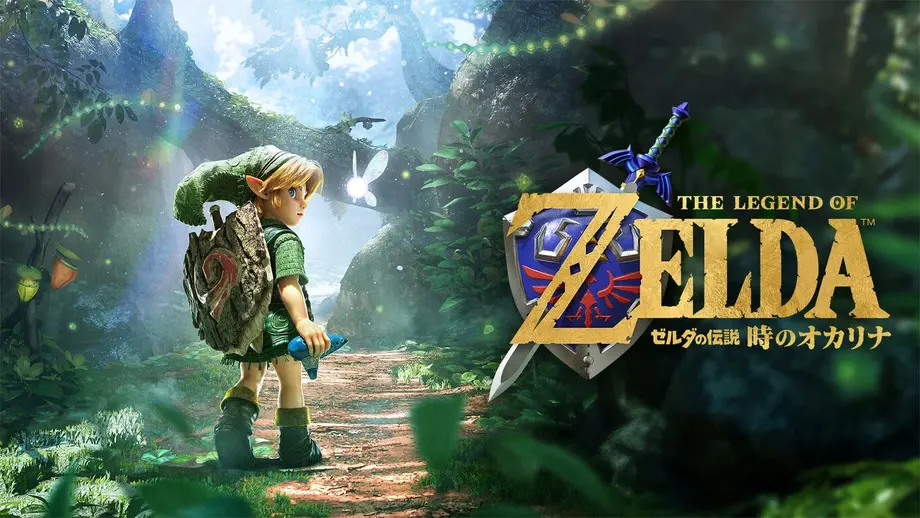
Developer tangerineturtle1 has released NX2navi, a project that turns version 1.1.1 of the Nintendo Switch 2 release of The Legend of Zelda: Ocarina of Time into a native Windows application. Its latest listed update, version 0.5.0, fixes broken fog, flickering flowers and trees that produced dark columns stretching into the sky.
Contents
- A Windows build with ambitious features and unfinished work
- How the game becomes a PC application
- The hardware requirements go beyond a powerful GPU
- Sharper images and more frames mean different things
- Version 0.5.0 repairs visible problems
- Other PC projects have different performance claims
- Apple devices use a different technical route
- Owning a copy and sharing a build are separate issues
- Key Points
The project promises a default 60 frames per second, resolutions up to 5K, ultrawide displays and several options for improving image quality. Its central technical feature is static recompilation: translating the game's processor instructions into code a Windows PC can run before play begins.
NX2navi includes no Nintendo game files. Players must supply their own dump of version 1.1.1, and the launcher builds the playable application on their computer. The first build takes an estimated 10 to 25 minutes.
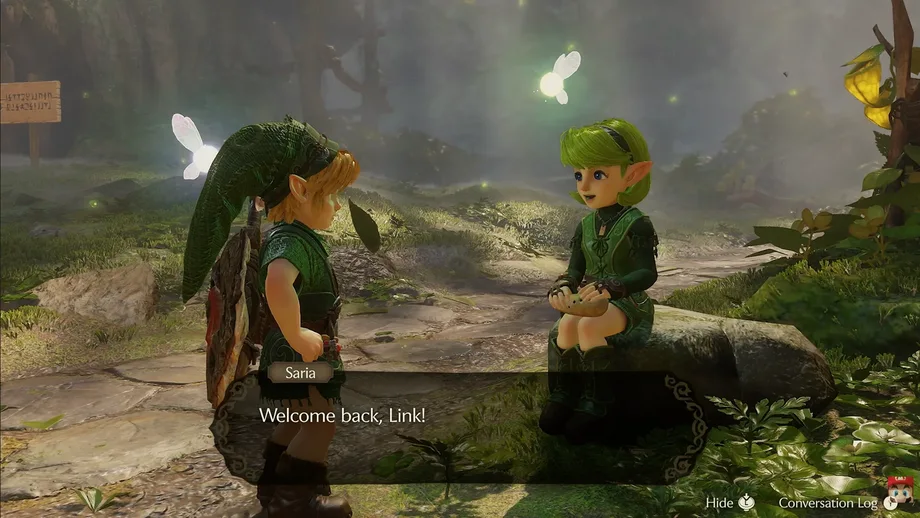
The developer's NX2navi project documentation labels the port early development but playable. It names Kokiri Forest, Kakariko Village, Death Mountain Trail and its crater, the Temple of Time and Great Fairy fountains as locations running at 60 frames per second or more on current graphics cards.
Those features arrive amid competing efforts to run the remake outside Nintendo's hardware. The remake's release date is reported as November 5, 2026, placing these demonstrations within days of launch. NX2navi still has visual bugs, occasional crashes and short pauses when entering new areas, while its hardware requirements exclude some otherwise capable gaming computers.
How the game becomes a PC application
A conventional emulator recreates enough of a console's hardware and operating environment to run its games. When the console and PC use different processor instruction sets, the emulator typically translates instructions during play, often keeping translated blocks for reuse.
NX2navi moves that processor translation into the build process. It converts the game's code into x86-64 instructions for Windows and uses a custom Vulkan renderer to draw the graphics. Vulkan is an interface through which software tells a graphics card what to display.
Static recompilation can reduce the work required during play and give developers more room to adapt a particular game to PC hardware. It also requires substantial work for each title: translating processor instructions is only part of making graphics, sound, controls and the game's expected system services function correctly.
NX2navi's launcher finds the player's game dump, downloads its build tools and creates the application locally. Later updates rebuild only the parts that changed. Shader preparation is also part of setup. Shaders are small programs that tell the graphics card how to draw surfaces, lighting and other effects.
Earlier projects applied related techniques to much older games. Zelda 64: Recompiled brought Majora's Mask to PC in 2024, while Unleashed Recompiled adapted the Xbox 360 version of Sonic Unleashed. NX2navi applies the approach to a newly released commercial game, making ownership and distribution immediate concerns alongside technical progress.
The hardware requirements go beyond a powerful GPU
NX2navi requires Windows 10 or later, an x86-64 processor with SSE4.2 support and at least 16 GB of system memory. The game needs about 30 GB of free storage, with another 1.5 GB required for the launcher and its tools.
The graphics card must support Vulkan 1.3 and two particular extensions: VK_EXT_external_memory_host and VK_EXT_mesh_shader. The second provides mesh shader functionality, a way for modern graphics hardware to process scene geometry. Buyers checking compatibility need to look at these capabilities, rather than relying only on a card's memory capacity or price.
An early demonstration showed the remake running at 60 frames per second on an Nvidia GeForce RTX 5090 while using 18.6 GB of graphics memory. A later showcase claimed substantially lower memory use. The current documentation gives a concrete change behind the effort to reduce demand: textures normally remain compressed in BC3 format, which the developer says uses about half as much video memory at the same speed.
The project reserves its uncompressed texture path for computers with at least 20 GiB of graphics memory and 48 GiB of system RAM. Graphics memory holds resources such as textures and rendered images; it is separate from the main memory used by Windows and other applications.
The installer is unsigned, so Windows SmartScreen displays a warning on its first launch. That warning is another practical consideration for users evaluating an executable from an independent developer, alongside the project's early development status.
Sharper images and more frames mean different things
NX2navi offers resolution settings above the game's stated 1440p, including 1800p, 4K and 5K. It can also match the window's dimensions. Players can select 21:9 or 32:9 ultrawide presentation while keeping the heads up display, menus and movies at 16:9.
The frame rate defaults to 60, with limits from 30 to 240 frames per second, an option to follow the display's refresh rate and an unlimited setting. These are selectable targets; actual performance depends on the computer and what the game is drawing.
Nvidia RTX owners can use DLSS upscaling or DLAA anti-aliasing. AMD FSR 3.1 provides another set of upscaling and anti-aliasing options. Upscaling renders the scene at a lower resolution and reconstructs a larger image, reducing the graphics workload. Anti-aliasing smooths jagged edges.
Frame generation is a separate feature. NX2navi's FSR 3.1 implementation inserts a generated image between two frames drawn by the game, aiming for roughly twice the displayed frame rate. The interface is excluded from that process, helping keep text and other screen elements intact. A higher displayed frame count can make motion look smoother, while the game's response still depends on the underlying rendering rate.
DLSS Frame Generation is not available in NX2navi. FSR 3.1 frame generation is available on Nvidia hardware too, subject to the port's hardware requirements. HDR support covers both the game's native HDR and an option that converts its standard image for an HDR display. Keyboard, mouse and gamepad remapping, gyro input, rumble and stereo or 5.1 sound round out the PC controls.
Version 0.5.0 repairs visible problems
The developer's version 0.5.0 release notes identify a specific regression in version 0.4.0: a broken shader loop disrupted the calculation of fog. Kokiri Forest and other foggy locations consequently appeared under a bright white and yellow haze.
Version 0.5.0 restores the game's fog and lighting calculations. It also fixes small white flowers and other foliage flickering between frames, and removes the tree artifacts that created dark vertical columns.
Players upgrading from 0.4.0 face another shader preparation step, estimated at about 90 seconds on the boot screen. During play, entering a new area can still hold a frame for about 0.2 seconds while textures are prepared. A first visit after installation can bring another brief pause while the graphics driver prepares resources it has not encountered.
The project also lists a rare crash in the game's particle code, which handles effects made from many small visual elements. Its documentation describes work to prepare graphics pipelines in the background and keep that preparation off the main drawing thread, but some interruptions remain.
The reported sequence shows how quickly the software is changing:
- November 5, 2026: the remake's reported Switch 2 release date.
- Launch period: early PC emulation demonstrations reportedly ran at about 20 frames per second, followed a day later by demonstrations reaching 60.
- NX2navi 0.4.0: a shader regression affected fog rendering.
- NX2navi 0.5.0: the developer fixed fog, foliage flicker and tree artifacts, with shaders prepared again after updating.
Other PC projects have different performance claims
Lichii and Eglantine emulation demonstrations reportedly reached 60 frames per second from the opening area through the Great Deku Tree. One user also claimed stable 4K output at 60 frames per second. Other tests still showed texture flicker, lighting errors, stuttering and audio falling out of sync.
Eglantine's developers reportedly addressed white flashes and black screens while improving shader processing and pipeline caching. Pipeline caching saves prepared graphics configurations so the software can reuse them instead of rebuilding them repeatedly.
Hookshot is another static recompilation project, attributed to developer NotRexed. Its developer reportedly achieved frame rates around 50 without frame generation on a Ryzen 7600X and a GeForce RTX 4060 Ti with 16 GB of graphics memory. Hookshot advertises ultrawide support, upscaling and frame generation modes labelled 2x, 3x and 4x.
The differing names matter when comparing videos and feature lists. Hookshot's performance figures belong to Hookshot, while NX2navi's documented frame generation inserts one image between rendered frames. A demonstration using a Lichii fork called Fritzi also showed a community DLSS 5 setup and additional frame generation tools. Those are separate configurations from NX2navi.
Another demonstration by YouTuber ElAnalistaDeBits used an HDMI processing setup to reduce shimmering in the console's output compared with its reported FSR 1.0 presentation. That approach processes an image after the console produces it, whereas NX2navi integrates its graphics options into the PC rendering process.
Apple devices use a different technical route
Nxnative has also reportedly added support for Switch 2 software, with footage showing Ocarina of Time running at 60 frames per second in the Great Deku Tree on a Mac. Demonstrations have extended to an iPhone version posted by Joe Jiang.
Apple computers and the Switch use processors from the Arm family. Nxnative can therefore execute much of the original ARM64 code directly, while recreating the console services the game expects and translating graphics commands into Apple's Metal interface.
NX2navi instead targets x86-64 Windows computers and translates the processor code ahead of play. Both approaches need substantial graphics and system compatibility work, but they handle the processor difference in distinct ways. Their performance figures also come from different devices, settings and areas of the game.
Owning a copy and sharing a build are separate issues
NX2navi's developer requires players to obtain their own game files from their own console and provides no instructions for obtaining them. Dumping Switch 2 software generally involves modifying the console's software protections, bringing legal and practical risks that vary by jurisdiction.
Developer tangerineturtle1 explains the distribution restriction in the project documentation:
The game is built from your files on your machine, so the result contains the game. It is for your own use. Do not share it.
A completed local build therefore contains Nintendo's game even though the launcher does not. The developer also states that no project license grants rights to Nintendo's software.
NX2navi describes itself as an independent, noncommercial fan project without Nintendo's endorsement. Its source is publicly readable, but its additions and changes are reserved under a license requiring written permission to copy or publish them. The base import retains its MIT license, and third party components retain their respective licenses.
Nintendo's previous enforcement actions provide context for the project's uncertain legal position. Yuzu's developers agreed in 2024 to pay $2.4 million and shut down. Ryujinx went offline later that year after Nintendo contacted its lead developer. A separate court order requiring a Reddit moderator to pay $4.5 million concerned Switch piracy.
Nintendo's response to NX2navi is not stated in the project documentation, and no date for a complete or stable release is given. For players, the immediate choice involves an unofficial application with demanding compatibility requirements, unfinished areas and restrictions on sharing the result. For the developer, each update must address both the game's particular technical behaviour and the responsibilities of distributing tools around copyrighted software.
Key Points
- NX2navi converts Ocarina of Time version 1.1.1 for Switch 2 into a native x86-64 Windows application with Vulkan graphics.
- Players must provide their own game dump. The initial local build takes an estimated 10 to 25 minutes.
- Version 0.5.0 fixes fog, flickering foliage and tree artifacts. Brief pauses and a rare particle crash remain listed issues.
- The port requires 16 GB of RAM, about 31.5 GB of storage including tools, and specific Vulkan capabilities.
- Features include ultrawide output, resolutions up to 5K, HDR, DLSS upscaling and FSR 3.1 frame generation. DLSS Frame Generation is not available.
- Hookshot, Lichii, Eglantine and Nxnative are separate projects with different technical approaches and performance claims.
- The developer says completed builds contain the game and must not be shared.