A small release brings a long wait into view
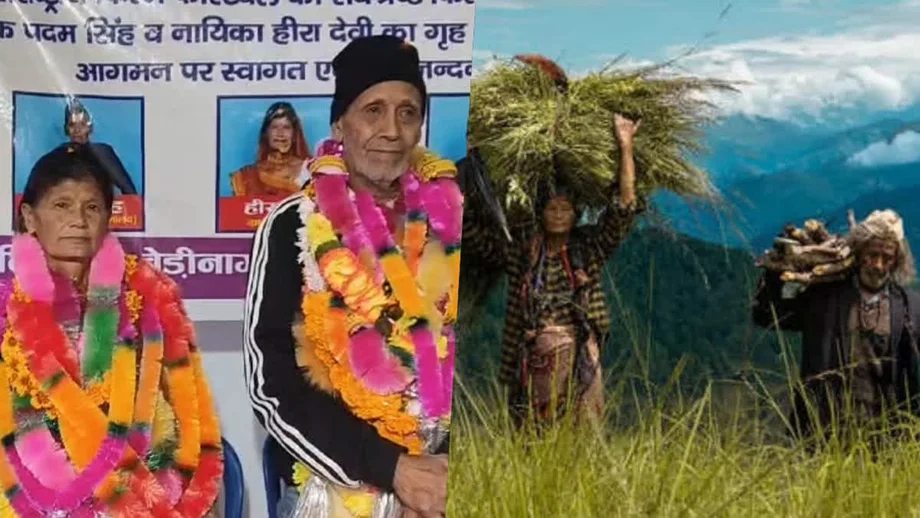
After two years without a distributor, Vinod Kapri's 111-minute film Pyre opened in Indian cinemas on 30 October across 70 screens. Its leads, retired army soldier Padam Singh Kapri and village resident Heera Devi, had never acted for a camera. Now audiences are embracing their portrayal of an elderly couple waiting for a son who left for Mumbai 28 years earlier.
Contents
- A small release brings a long wait into view
- Sixty-five years together, 28 years waiting
- When medical care depends on a neighbour
- The real couples behind the characters
- What Uttarakhand's migration figures show
- Why people leave, and why they stay away
- The sounds and weather of a lived place
- From festival recognition to cinema tickets
- The audience sees its own family
- Key Points
Kapri says the film has won 18 awards since beginning its festival run in 2024, including three prizes for best feature and 12 audience awards for best film. A producer friend eventually financed its theatrical release after distributors and streaming platforms passed on it. Growing ticket demand then brought more screenings.
The story reaches beyond one fictional household. Uttarakhand's Rural Development and Migration Commission recorded 1,048 uninhabited villages in the 2011 Census. Its first report also documented 118,981 permanent migrants over a period of 10 years, alongside 383,726 people who had moved away but continued returning occasionally.
Pyre gives those numbers a human shape. In its remote Kumaoni village, losing a neighbour means losing someone who can carry a sick woman to medical care. When the last helpers prepare to leave, the couple's fear becomes painfully practical: who will look after them, and who will carry their bodies when they die?
Sixty-five years together, 28 years waiting
Padam Singh and his wife Tulsi, played by Heera Devi, are known as Bubu and Aama, Kumaoni terms for grandfather and grandmother. They have shared 65 years of marriage in a mountain home without roads or electricity. Their son Hariya has been away in Mumbai for nearly three decades, having left to find work.
Kapri, a former television journalist who wrote and directed the film, describes the relationship at its centre:
It's a story of companionship, of loneliness and of waiting.
Bishan, the village postman, interrupts that waiting with a letter promising Hariya's return. The prospect transforms the couple's routine. They bathe, dress carefully and prepare food for the neighbours who remain. Seeing their child again becomes an event around which they can organise their days.
Daily life still contains jokes, complaints and familiar disagreements. Padam drinks; Tulsi smokes beedis. Their bickering gives the relationship its warmth, allowing affection to emerge through small actions rather than grand declarations. When Tulsi becomes ill, Padam's determination to arrange help makes that affection visible.
When medical care depends on a neighbour
Laxman and Jeevan, two younger villagers, help carry Tulsi down the mountain for treatment. Padam summons assistance with a bhankora, a traditional horn associated with worship and village gatherings. He pays for help with goats.
The arrangement draws on a couple Kapri met in Munsiyari. According to the director, the man kept about 40 to 50 goats and gave animals to villagers who helped take his wife to hospital. Livestock, neighbours and physical strength together formed the household's way of getting medical care.
Laxman and Jeevan's plans to leave therefore threaten much more than the couple's social life. Without them, another illness could leave Tulsi stranded. A departing villager warns Padam that there may soon be nobody to carry either spouse down the mountain for cremation.
Padam responds by building two funeral pyres outside their home. A pyre is a structure of wood on which a body is cremated. His preparations give the film its title: he is trying to solve a task that age, terrain and an emptying village have made impossible to manage alone.
The real couples behind the characters
Kapri traces the film's beginnings to an elderly couple in Munsiyari. He has placed that meeting in 2018 in one telling and in 2017 in another. What stayed with him was their concern for each other: the husband worried about who would care for his wife if he died first, while she worried about who would cook for him.
An initial attempt to film with that couple ended after a week. Kapri then approached Naseeruddin Shah and Ratna Pathak Shah. According to Kapri, Shah liked the script but felt that actors without roots in the region would struggle to do justice to the characters.
Kapri found his male lead in his own family. His uncle, a retired army havildar, expressed an interest in acting and gave an impromptu audition at the director's father's 80th birthday celebration. The fictional marriage also drew on the director's memories of his uncle and aunt Tulsi, whose arguments concealed lasting companionship.
Heera Devi brought another kind of familiarity. A widow who had supported her family through farming, cutting grass and tending buffalo, she also earned a living cooking at a nearby school after her husband's death. Her four children moved to the plains, leaving her living alone in the village.
Heera Devi initially worried about remembering dialogue and about what her children and neighbours would think. Her children encouraged her. The distance between her own experience and Tulsi's isolation was small enough for her to recognise the film's world immediately.
What Uttarakhand's migration figures show
The Rural Development and Migration Commission's first migration report describes a state divided by opportunity. Between the 2001 and 2011 censuses, Almora and Pauri Garhwal together lost 17,868 residents. Smaller villages accounted for the population decline, while villages with more than 125 households continued growing in those districts.
The commission recorded 16,793 census villages in 2011, including 1,048 without inhabitants. That is about 6.2% of the total. A later commission count put completely uninhabited villages at 1,792 by 2022, showing how widespread village abandonment had become.
The first report's subsequent survey also listed 734 revenue villages and smaller settlements that became uninhabited after 2011, and 565 whose populations had fallen by half. Pauri Garhwal had the largest number in both categories, with 186 emptied settlements and 112 that lost at least half their residents.
Permanent departure is only part of the pattern. The commission recorded 383,726 people migrating on a semi-permanent basis from 6,338 gram panchayats, or village council areas, during its 10-year survey period. Another 118,981 people from 3,946 council areas had migrated permanently. People in the first group still returned home from time to time; those in the second had moved away for good.
The film concentrates on what happens between such visits. Even where a house remains occupied and relatives return occasionally, an elderly resident may need help on an ordinary weekday when nobody is there.
Why people leave, and why they stay away
Employment was the leading reason for migration in the commission's findings, accounting for about half of departures, followed by education at about 15%. Poor roads, inadequate water supplies and limited health services added to the pressure to move.
Economic opportunities were concentrated in Uttarakhand's three plains districts. The report found that income per person in Bageshwar, Champawat, Tehri and Almora was less than half that in Dehradun and Haridwar. In 2011, about 17% of hill district residents lived in urban areas, compared with 42% in the plains districts, a gap of 25 percentage points.
Research discussed in the commission's report found that about three quarters of migrants stayed away for longer periods. Nearly 74% held salaried jobs in government or private employment. A regular job elsewhere can turn an initial move for education or work into years of absence.
Haridwar shows that movement also takes place within the more prosperous plains. A district commission study recorded 8,166 people moving from 153 village council areas between 2008 and 2018 while continuing to return periodically. Bahadarabad accounted for 3,091, Roorkee for 2,376 and Bhagwanpur for 1,716. Families were moving towards places with work, including industrial and tourism employment.
Padam Singh's appeal links family responsibility with that economic geography. The actor urges younger people to remain connected to their birthplace, while also asking the government to bring education and employment closer to home. His argument addresses both sides of the separation: parents need care, and their children need a living.
The sounds and weather of a lived place
Pyre's setting is specific to Kumaon. A Jaagar, a ritual invoking ancestors and mountain deities, appears with the hudka drum. The soundtrack also draws on the folk song Sarg Tara Junyali Raat by Gopal Babu Goswami. Such details place the couple within traditions learned through family and village life.
Migration changes the conditions in which those traditions pass between generations. Poet, theatre artist and activist Girish Tiwari, known as Girda, argued that roads should bring employment into the hills so people could stay. His wider concern was that culture depends on people being present to practise and share it.
Cinematographer Manas Bhattacharyya presents the mountains in wide views that make the couple's isolation visible. Rain, thunder and deteriorating houses turn the landscape into a place requiring constant effort. The film also reflects concern about increasingly harsh weather associated with climate change.
Filming around Berinag in Pithoragarh demanded some of the same physical effort. Kapri says certain locations required almost four hours of walking each way, leaving only a few hours to shoot in usable light. The crew stayed in the village rather than travelling in from hotels.
Sound recordist and designer Soustav Naskar helped build the film's world through wind, thunder, silence and distant sounds. Kapri says childhood memories of frightening storms shaped that approach. The result connects the couple's emotional vulnerability to the conditions surrounding their home.
From festival recognition to cinema tickets
Pyre premiered in Estonia in 2024 and won the Audience Award at the Tallinn Black Nights Film Festival. Its two leads travelled abroad for the first time as the film began reaching viewers beyond Uttarakhand.
Kapri's account of its journey to cinemas includes a sharper complaint about streaming services: he says platforms rejected the film without watching it because it lacked recognised stars. Festival recognition therefore preceded a long struggle to secure a commercial release.
- 2017 or 2018: Kapri meets the elderly couple in Munsiyari who help inspire the story.
- 2024: Pyre premieres in Estonia and begins its international festival run.
- 30 October: The film opens in Indian cinemas across 70 screens after a producer friend funds the release.
- After release: Positive audience responses and ticket demand lead to additional screenings.
Haldwani supplied a concrete example of that demand. Screenings took place at Walkway Mall and Laxmi cinema. Cinepolis Walkway Mall general manager Atul said the first two shows sold 100 and 92 tickets, each reaching more than 90% occupancy.
Early box office estimates put the first three days at approximately 10 lakh, 27 lakh and 49 lakh rupees, totalling 86 lakh rupees, or 8.6 million. Another opening estimate was about eight lakh rupees. No final earnings total or confirmed streaming release date has been announced.
The audience sees its own family
Padam Singh and Heera Devi have encountered viewers who want to hug them, touch their feet and speak about parents or grandparents waiting elsewhere. Videos shared online show people leaving screenings in tears. Praise has also come from actors including Naseeruddin Shah and Anupam Kher.
Padam Singh says Shah watched the film in Mumbai, cried and embraced him. Recalling the meeting, the first-time film actor said:
He watched the entire movie and had tears in his eyes. He hugged me. He said, 'Bubu, the role you have performed, I wouldn't be able to pull off even in seven lifetimes.'
Heera Devi describes the response through the resemblance between the screen village and her own. Asked why the story connects with audiences, she said:
in reality, our village is just like this
Her new life travelling to festivals and screenings has brought a cost familiar from the film: finding someone to care for what remains at home. She sold her buffalo because nobody could look after the animal while she travelled. Even as Pyre carries its leads to new places, their attachment remains with the village.
Kapri has explored migration before, in his book 1232 km and a documentary following seven workers travelling from Ghaziabad to Bihar during the 2020 lockdown. Pyre approaches the subject from the other end of the journey: the people waiting at home, and the everyday care that disappears when a village loses its working generation.
Key Points
- Pyre follows an elderly Kumaoni couple waiting for their son after 28 years apart.
- Its leads, Padam Singh Kapri and Heera Devi, were village residents without previous film acting experience.
- Kapri says the film won 18 awards but spent two years without a distributor before opening across 70 screens on 30 October.
- Uttarakhand's migration commission recorded 1,048 uninhabited census villages in 2011 and 118,981 permanent migrants during its 10-year survey period.
- The film connects loneliness with practical losses, including neighbours who provide transport to medical care and help with funeral rites.
- Strong audience responses have brought additional screenings, while final earnings and a streaming release date remain unannounced.