Four plants to close a critical manufacturing gap
India will offer a capital subsidy of 30% for four lithium and nickel processing plants under a Rs 2,814 crore programme approved by the Union Cabinet. The Capex Support Scheme to Promote Critical Mineral Processing will run from the financial year 2026-27 to 2030-31, targeting a missing link between securing minerals and turning them into materials manufacturers can use.
Contents
- Four plants to close a critical manufacturing gap
- What the plants will actually produce
- How the subsidy and bidding will work
- Why overseas processing is a concern
- Where electric vehicles and other industries fit
- Four states are preparing processing parks
- Raw materials remain central to making plants work
- Processing and recycling could develop together
- The programme's next steps
- Key Points
The programme provides for two lithium plants with minimum processing capacities of 30,000 tonnes each and two nickel plants with minimum capacities of 50,000 tonnes each. Government support is capped at Rs 500 crore for each lithium beneficiary and Rs 900 crore for each nickel beneficiary. Cobalt is expected to be recovered during nickel production.
The Cabinet, chaired by Prime Minister Narendra Modi, approved the scheme on Wednesday. Its intended beneficiaries extend beyond electric vehicles to battery storage, electronics, defence and speciality steel. The central aim is to make more refined materials in India rather than depend heavily on overseas processing.
India faces three practical constraints identified by the government: plants require substantial investment, suitable processing technologies are difficult to access, and supplies of raw materials are limited. The subsidy addresses the cost of building facilities, while the bidding process will determine which technically qualified companies can deliver them with the least government support.
What the plants will actually produce
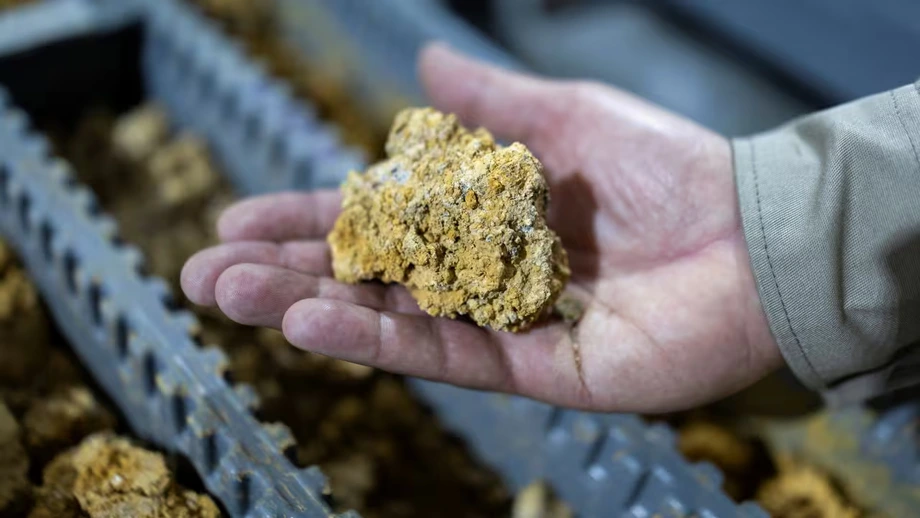
Lithium and nickel ores, or intermediate products that have already undergone some treatment, will be processed into compounds of high purity. Processing means separating useful materials from other substances and preparing them to meet the requirements of industrial customers. Finding a mineral deposit and producing a usable chemical are different stages of the same supply chain.
For India, domestic value addition means keeping more of that work within the country. Instead of relying primarily on imported refined materials, manufacturers could obtain compounds processed in Indian facilities. The programme therefore focuses on the industrial step connecting mineral supplies with factories making batteries and other products.
Cobalt recovery gives the nickel projects another potential output. The government expects it as a by-product, meaning it would be recovered alongside nickel rather than through a separate cobalt plant. The scheme's four supported facilities remain divided equally between lithium and nickel processing.
How the subsidy and bidding will work
The 30% subsidy applies to eligible investment, with a separate maximum payment for each mineral. Capital expenditure, often shortened to capex, is money spent establishing assets such as plants and equipment. Companies will still need financing beyond the government contribution to bring their projects into operation.
The selection process has two stages. Applicants first undergo a technical assessment. Only those that qualify can proceed to financial bidding, where two beneficiaries for each mineral will be chosen using the least-cost criterion. In plain language, the government will prefer qualified applicants seeking the smallest capital subsidy.
The four individual subsidy ceilings add up to Rs 2,800 crore: Rs 1,000 crore for the two lithium beneficiaries and Rs 1,800 crore for the two nickel beneficiaries. Actual awards will depend on eligible investment and the support requested in competitive bids. The nickel ceiling of Rs 900 crore per beneficiary is 1.8 times the lithium ceiling of Rs 500 crore.
Payments will be released in three instalments tied to specified project milestones. Companies will therefore receive support in stages as their projects progress. The winning companies, final plant locations, application deadline, detailed payment milestones and commissioning dates have not yet been announced.
Why overseas processing is a concern
The government says India remains substantially dependent on imports of refined intermediates and materials of high purity, including those derived from lithium, nickel and cobalt. Domestic infrastructure for separating, concentrating and processing these minerals is still at an early stage, making local manufacturers reliant on overseas suppliers for important inputs.
The government statement accompanying the decision described the risk created by the concentration of processing capacity:
Processing of critical minerals remains geographically concentrated in a few global locations. This exposes supply chains to geopolitical disruptions, price volatility, and potential supply restrictions,
China is a major presence in critical mineral supply chains. It controls more than 90% of global processing capacity for certain materials, including rare earths and graphite suitable for batteries. Those materials illustrate the wider concentration problem; the new four-plant scheme specifically targets lithium and nickel.
For Indian manufacturers, additional domestic suppliers could provide more choices when overseas trade is disrupted or prices change sharply. Local processing would also move an important production step closer to the industries that use the finished compounds. Reliable mineral supplies and workable technology will determine how much of that opportunity the plants can capture.
Where electric vehicles and other industries fit
Lithium is a key input for lithium-ion batteries used in electric vehicles, consumer electronics and systems that store electricity. Its low weight and electrochemical properties help batteries store energy. Battery energy storage systems, often called BESS, hold electricity for later use, rather than powering a vehicle directly.
Nickel is widely used in stainless steel and is also important in some lithium-ion battery designs. Batteries using nickel rich materials in their cathodes can store more energy for a given weight and use less cobalt. The cathode is one of a battery's two electrodes, the components involved in storing and releasing electrical energy.
The government's list of supported sectors includes electric mobility, battery storage, electronics, defence and speciality steel. Union Minister for Coal and Mines G. Kishan Reddy also identified semiconductors, heavy equipment and machinery among the industries expected to benefit. A broader customer base could connect the processing plants with several branches of Indian manufacturing.
Prime Minister Narendra Modi has described domestic processing as part of India's ability to develop future technologies. In a post on X, he pointed to the importance of lithium, nickel and cobalt for vehicles, batteries, electronics and defence, while highlighting the country's dependence on imported refined materials.
Four states are preparing processing parks
Gujarat, Maharashtra, Odisha and Andhra Pradesh have received clearance for critical mineral processing parks. Mines Secretary Keshav Chandra said the states had identified mineral sources, processing methods and industries that could develop around the parks. Such planning links the supply of raw materials with processing facilities and customers.
Chandra said Maharashtra's park would cater to lithium and Odisha's to nickel. The parks in Gujarat and Andhra Pradesh would focus on rare earth elements. These state projects form part of the wider effort to build domestic processing capabilities alongside the newly approved subsidy programme.
Chandra described the approach at an industry event:
All these four parks will have their own ecosystem for a particular mineral,
At the 60th Annual General Meeting of the Federation of Indian Mineral Industries, Chandra had also signalled that incentives for lithium and nickel processing were coming soon. The Cabinet decision now sets out the programme's budget, plant capacities and selection method.
Raw materials remain central to making plants work
The Federation of Indian Mineral Industries welcomed the scheme as a way to encourage investment and strengthen supplies for battery manufacturing and other strategic industries. The industry body also called for dependable raw material supplies through both domestic mining and overseas sourcing.
A processing facility needs a steady stream of suitable material to operate. Domestic refining can therefore develop alongside imports of ores or intermediate products. For manufacturers, the change would be that more of the conversion into usable compounds takes place in India, even when some inputs come from abroad.
Chandra has also raised concerns about mining blocks that remain idle after auctions, statutory clearances and the signing of leases. He described companies holding such blocks without starting operations as "squatting" and urged industry members to address the problem.
Idle mining blocks and limited processing capacity affect different parts of the mineral supply chain. Bringing mines into operation helps provide material; building processing plants helps turn that material into industrial inputs. The government's stated constraints also include access to appropriate technology, another requirement for producing compounds at the purity customers need.
Processing and recycling could develop together
India's push for mineral processing also connects with efforts to recover valuable materials from discarded products. Earlier efforts at recovering lithium from waste included a Haryana facility producing lithium carbonate from used scooter batteries. That work showed how batteries reaching the end of their useful lives can become a source of mineral inputs.
Collection remains a major challenge for recycling. Much of the initial handling and dismantling of electronic waste takes place in informal workshops, while advanced processing capacity is limited. Recovering materials depends on getting suitable waste to facilities that can separate and refine its contents.
Rajesh Gupta, managing director and founder of Evergreen Recyclekaro India, said the new programme complements existing government support for critical mineral recycling. He said the two approaches could build a more dependable domestic supply chain, combining processing of mineral resources with recovery from used batteries and electronic waste.
Attero co-founder and chief executive Nitin Gupta identified domestic processing capacity as a key gap, even as India works to secure mineral resources. LOHUM founder and chief executive Rajat Verma likewise welcomed support for facilities that can convert lithium and nickel into compounds of high purity.
The programme's next steps
The scheme covers five financial years, giving companies and the government a defined period for developing the supported facilities. Its main announced steps are:
- Before Cabinet approval: The Mines Ministry signalled plans for lithium and nickel incentives and outlined preparations for processing parks in four states.
- Wednesday's Cabinet decision: The government approved Rs 2,814 crore in support for four processing plants.
- 2026-27 to 2030-31: The scheme's implementation period covers technical qualification, competitive selection and support tied to project milestones.
The next practical stage is turning the approval into selected projects. Technical assessments will identify eligible companies, financial bids will determine the subsidy sought, and milestone payments will connect public funding to progress. Together, these steps will shape how the announced capacity becomes operating infrastructure.
For battery makers and other industrial customers, the intended result is a domestic source of refined materials. Achieving that requires the four plants to secure financing, technology, raw materials and buyers alongside the capital subsidy. The programme brings those linked tasks into a single push to expand India's processing base.
Key Points
- India approved Rs 2,814 crore for critical mineral processing from 2026-27 to 2030-31.
- The scheme offers a 30% subsidy on eligible investment for two lithium plants and two nickel plants.
- Minimum capacities are 30,000 tonnes per lithium plant and 50,000 tonnes per nickel plant.
- Support is capped at Rs 500 crore per lithium beneficiary and Rs 900 crore per nickel beneficiary.
- Technically qualified applicants will compete on the lowest capital support requested, with payments in three stages.
- Raw material supplies, processing technology and project delivery will be central to bringing the facilities into operation.