Southern Taiwan gains a major chip investment
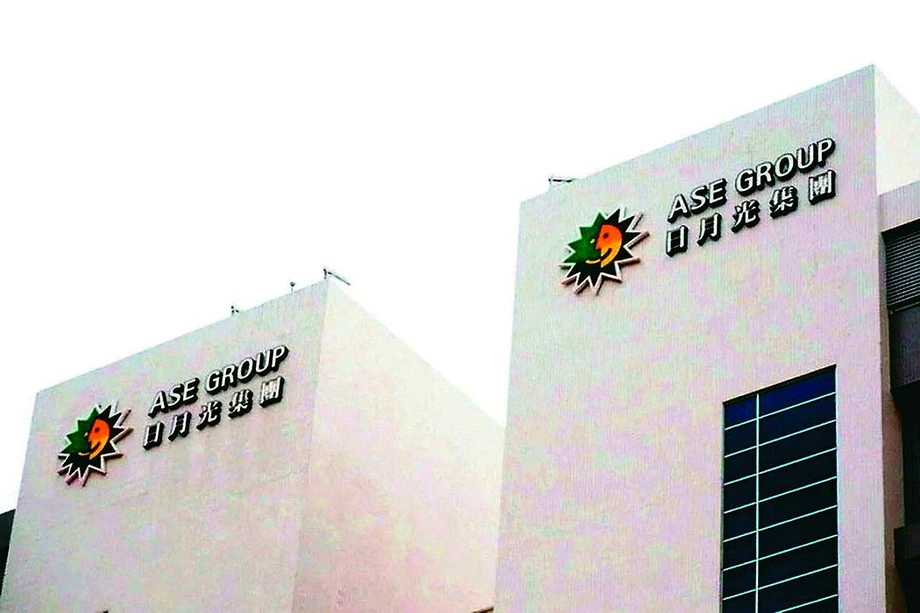
ASE Semiconductor plans to invest NT$123.7 billion in advanced chip packaging and testing facilities in Kaohsiung and Tainan, adding 3,553 jobs for Taiwanese workers as artificial intelligence increases demand for the final stages of semiconductor production.
Contents
- Southern Taiwan gains a major chip investment
- Why AI chips need more than a factory
- What will change inside ASE's plants?
- A larger spending plan is taking shape
- Revenue targets extend beyond conventional packaging
- Testing demand was already accelerating in 2025
- The production calendar reaches into 2027
- Quartz expansion addresses another factory constraint
- Cold storage adds a different kind of capacity
- Key Points
Taiwan's Ministry of Economic Affairs said its InvesTaiwan office approved the project alongside investments by Taiwan Wonik Quartz and Tung Hing Industrial. Together, the three companies plan to invest about NT$126.8 billion in semiconductor services, essential manufacturing materials and refrigerated logistics.
ASE accounts for roughly 97.6% of that investment, calculated from the ministry's rounded total. Its expansion covers the Nanzih Technology Industrial Park and the Kaohsiung and Tainan campuses of the Southern Taiwan Science Park, reinforcing a manufacturing corridor already central to Taiwan's chip industry.
The company will add intelligent production lines that combine automation, artificial intelligence and data analysis. The aim is to process more sophisticated chips while improving production efficiency and the proportion of products that meet quality requirements.
The investment comes as parent company ASE Technology Holding raises spending and revenue expectations for advanced packaging and testing. Its latest capital expenditure plan reaches US$11.5 billion, while its advanced packaging and testing revenue target has increased from US$3.7 billion to more than US$4 billion.
For Taiwan, the announcement connects three practical needs: more capacity to finish powerful processors, more local supplies for factories making chips, and more jobs across several industrial locations. The three approved projects together are expected to create 3,749 positions for Taiwanese workers.
Why AI chips need more than a factory
ASE operates in packaging and testing, the stages that turn manufactured semiconductor components into protected, connected and checked products ready for use. A chip must be able to communicate with other components and work reliably inside a computer, server or other device.
Advanced packaging can bring several semiconductor components together in a compact assembly. For artificial intelligence and high performance computing, or HPC, those connections help processors exchange large amounts of information with memory and other chips.
Testing checks whether those components and finished assemblies perform as required. As products become more complex, the equipment and time needed to check them can increase. ASE's earlier business outlook showed testing revenue growing at twice the rate of packaging revenue within its advanced operations.
ASE's NT$123.7 billion project therefore addresses a different part of the supply chain from a factory that manufactures chips on silicon wafers. Both are necessary: additional wafer production needs sufficient packaging and testing capacity before finished products can reach customers.
What will change inside ASE's plants?
ASE plans to connect automated equipment, machines of different types and microsystem packaging technology through its expanded production lines. Artificial intelligence and large datasets will support decisions about how those lines operate.
The ministry said the changes are intended to improve manufacturing efficiency and product yield. Yield means the share of output that passes the required standards. Raising it allows a factory to produce more usable products from the materials and processing effort it consumes.
ASE also plans to install solar power equipment as part of its effort to reduce carbon emissions and pursue net zero operations. The announcement combines additional manufacturing capacity with changes to how factories use information, equipment and energy.
The NT$123.7 billion project has no stated completion date or production capacity figure. Its 3,553 planned jobs are expected positions rather than a count of workers already hired.
A larger spending plan is taking shape
ASE Technology Holding Chief Financial Officer Joseph Tung said in the company's latest outlook that annual capital expenditure would rise from US$10.5 billion to US$11.5 billion. Capital expenditure is money spent on assets such as factory buildings, production machinery and supporting facilities.
The US$1 billion increase represents about 9.5% growth from the previous budget. Around half of the additional spending is intended for buildings and facilities, with the other half going to equipment. Advanced packaging and testing projects account for 60% of equipment investment.
ASE has 22 factory projects under way across Taiwan. More than half are expected to begin adding capacity during the current and following year covered by that outlook. The group is also looking for suitable existing buildings to shorten the time needed to expand.
The ministry's NT$123.7 billion investment approval concerns ASE Semiconductor's specified Taiwan expansion. The parent's US$11.5 billion capital budget describes its annual spending programme. The announcement provides no breakdown showing exactly how the approved project fits into that budget.
ASE's earlier 2025 plan shows how quickly investment expectations have grown. At that stage, Tung announced a US$1 billion increase in capital expenditure, while institutional investors estimated annual spending would exceed US$6 billion. The more recent US$11.5 billion budget reflects a later planning period.
Revenue targets extend beyond conventional packaging
ASE's latest target for its LEAP advanced packaging and testing business is more than US$4 billion, up from US$3.7 billion. That is an increase of more than US$300 million, or at least 8.1%. The company aims to double that business again in the following year.
Tung also expects the business covering the full packaging process to generate about US$300 million in the current outlook year and exceed US$1 billion the next year. Reaching that threshold would mean revenue more than tripling.
Co-packaged optics, known as CPO, is another planned source of growth, with revenue expected to exceed US$500 million in the following year. The technology places optical connections close to processing components, allowing light to carry data between parts of a computing system.
These figures are management targets. Customer orders, equipment installation and the successful start of production will determine how much revenue the expanded operations generate.
Testing demand was already accelerating in 2025
ASE's 2025 outlook provides an earlier measure of the demand behind its expansion. The company targeted US$1.6 billion in advanced packaging and testing revenue, with packaging contributing 65% and testing 35%.
Those shares equal approximately US$1.04 billion for advanced packaging and US$560 million for advanced testing. Testing was growing twice as quickly as packaging, showing that checking increasingly complex chips was becoming a larger business opportunity alongside assembling them.
ASE also planned additional final testing capacity to support next generation AI chips in the second half of 2026. Final testing checks a completed packaged chip before it moves further toward use in a finished product.
The company's 2025 outlook projected more than 20% annual growth in packaging and testing revenue measured in US dollars. For the fourth quarter, it forecast consolidated revenue growth of 1% to 2% from the previous quarter and a gross margin improvement of 0.7 to 1 percentage point, using an exchange rate of NT$30.4 to US$1.
Third quarter net profit in 2025 reached NT$10.87 billion, up 45% from the preceding quarter and 12% from a year earlier. Earnings per share were NT$2.5, and profit reached its highest level since 2023.
Advanced packaging technologies accounted for 48% of packaging and testing revenue. That category included bumping, flip chip, wafer level packaging and system in package technologies, which provide different ways to connect, assemble or combine semiconductor components. A larger contribution from these services and higher factory utilisation supported profitability.
The production calendar reaches into 2027
ASE's expansion includes a 310 millimetre automated panel packaging line scheduled to begin production in the first half of 2027. The line will support its FOCoS and FOCoS-Bridge platforms, which are designed for advanced chip assemblies.
Panel packaging processes components on panels rather than relying solely on circular wafers. ASE's planned automated line adds a specific production milestone to its broader programme of factory and equipment investment.
- 2025: ASE targeted US$1.6 billion in advanced packaging and testing revenue and announced an additional US$1 billion in capital expenditure.
- Second half of 2026: Expanded final testing capacity was expected to support customers' next generation AI chips.
- First half of 2027: ASE plans to start production on its automated 310 millimetre panel packaging line.
Tainan is also preparing for more wafer manufacturing. TSMC's planned additional Tainan 3nm factory is scheduled for commercial production in the first half of 2028, following another Tainan project expected to start mass production in the first half of 2027. Together, the announcements show investment extending across both chip fabrication and the services needed afterward.
Quartz expansion addresses another factory constraint
Taiwan Wonik Quartz plans to invest about NT$2.34 billion in Tongluo, Miaoli County, to expand its factory and install intelligent production lines. The project is expected to create 176 jobs for Taiwanese workers.
The company, part of the Wonik group, makes ultra high purity quartz vessels, diffusion tubes and cleaning components used in the early stages of semiconductor manufacturing. It also provides processing and repair services.
Quartz components must meet demanding purity requirements because unwanted material can disrupt sensitive chipmaking processes. Taiwan Wonik Quartz is expanding because its existing production capacity has reached its limit.
The new facilities will use advanced robotic arms, a supply chain management system and digital records covering the full production process. Those records allow the company to track how a product was made. An intelligent energy monitoring system is intended to improve energy management and reduce emissions.
The InvesTaiwan office said the investment would increase local production of essential semiconductor materials and strengthen supply chain resilience. For manufacturers, more local capacity can provide another nearby source of the components needed to keep production equipment operating.
Cold storage adds a different kind of capacity
Tung Hing Industrial plans to invest about NT$830 million in an intelligent refrigerated warehouse at Zhongpu Industrial Park in Chiayi County. The company, which has served the baking and food service ingredients market for nearly 80 years, expects to add 20 jobs for Taiwanese workers.
A cold chain keeps temperature sensitive products within suitable conditions during storage and transport. The planned warehouse serves a different industry from ASE and Wonik, while sharing their focus on greater capacity and more automated operations.
The three projects give the investment approval a geographical reach from Miaoli through Chiayi to Kaohsiung and Tainan. ASE contributes by far the largest spending commitment and employment forecast, while the other projects address specific capacity needs in materials and food logistics.
The InvesTaiwan office said Taiwan's three major investment programmes had attracted 1,840 companies, with cumulative commitments approaching NT$3 trillion and an estimated 174,000 jobs for Taiwanese workers. Nine more companies were awaiting review.
For the latest approvals, the concrete commitments are factory expansion, additional equipment, a refrigerated warehouse and thousands of planned positions. Their delivery will depend on construction, installation and recruitment turning the announced investment into operating capacity.
Key Points
- ASE Semiconductor plans NT$123.7 billion in advanced packaging and testing investment in Kaohsiung and Tainan, with 3,553 jobs for Taiwanese workers.
- Three approved projects total about NT$126.8 billion and are expected to create 3,749 jobs.
- ASE Technology Holding's latest annual capital expenditure budget is US$11.5 billion, up from US$10.5 billion.
- ASE is advancing 22 factory projects across Taiwan and targets more than US$4 billion in LEAP revenue in its latest outlook.
- An automated 310 millimetre panel packaging line is scheduled to begin production in the first half of 2027.
- Taiwan Wonik Quartz plans a NT$2.34 billion expansion in Miaoli, while Tung Hing Industrial plans a NT$830 million refrigerated warehouse in Chiayi.