January 26 deposits depend on two budget deadlines
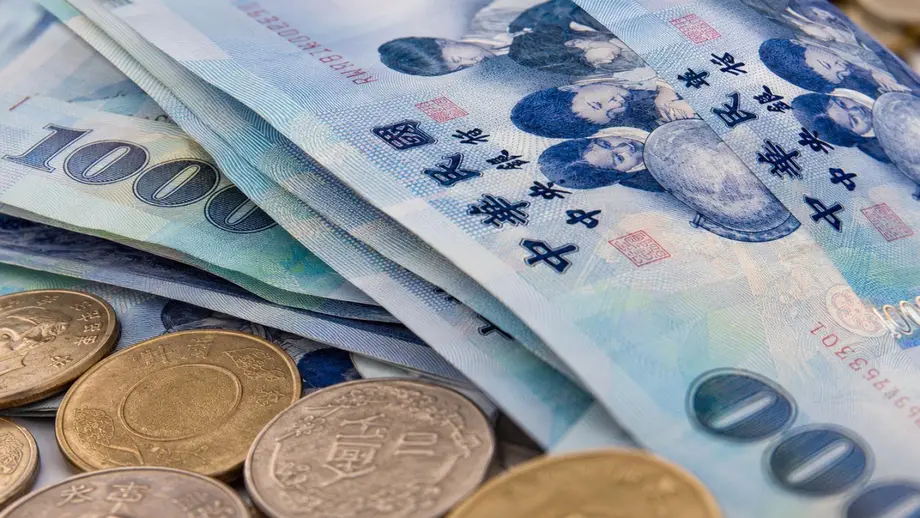
Taiwan's planned NT$10,000 payment could begin reaching eligible residents on January 26, 2027, provided lawmakers approve the central government budget by January 5 and President Lai Ching-te promulgates it by January 20. Online registration would open on January 25, while people collecting cash would face a longer wait: February 15 for ATMs and February 22 for post offices.
Contents
- January 26 deposits depend on two budget deadlines
- Why the parliamentary calendar matters
- The proposed payment calendar
- Who would receive NT$10,000?
- Five ways to collect the money
- How the government proposes to pay for it
- Where the NT$20,000 proposal stands
- Local payments have separate residence rules
- Disaster recovery money and payments still being planned
- No national registration is open yet
- Key Points
Premier Cho Jung-tai set out those conditions on October 31, 2026. The Executive Yuan, Taiwan's Cabinet, approved the Ministry of Finance's distribution plan on October 8. As of November 2, registration had not opened and no official application website had been announced.
The timing matters because Lunar New Year's Day falls on February 6, 2027. Under the proposed schedule, the first bank deposits would arrive 11 days before the holiday, while ATM and post office collection would start afterward. January 26 is the proposed start of the first deposits, rather than a payment date for every recipient.
The government has allocated NT$235.7 billion for the scheme in its proposed 2027 central government budget. Eligibility would have no income or wealth ceiling, and several categories of foreign residents would qualify alongside Taiwanese citizens.
A competing Kuomintang proposal would distribute NT$20,000 through separate legislation and a special budget. Meanwhile, township payments ranging from NT$3,000 to NT$10,000 have their own residence requirements and collection deadlines, some falling before the national scheme is expected to begin.
Why the parliamentary calendar matters
The 2027 budget passed its first reading and went to legislative committees on October 2. Taiwan's budget documents call 2027 year 116, using the Republic of China calendar. The proposed cash payment is part of that annual budget, so its funding must pass the budget approval process.
Lawmakers agreed on October 30 to extend the legislative session until January 31, 2027. They also agreed to suspend plenary and committee meetings from November 23 to 27 ahead of local elections on November 28. The extended session runs 26 days beyond the government's January 5 target for final budget approval.
Parliament can still approve the budget before the extended session ends. For households, however, the decisive dates are January 5 and January 20, because those are the conditions attached to the proposed January launch.
The Budget Act sets out the submission, approval and execution process. Article 46 requires the Cabinet to submit the annual budget four months before the financial year begins. Article 51 sets the ordinary timetable for legislative approval and presidential promulgation. Article 54 generally requires new spending plans to await completed budget scrutiny when approval is delayed.
The Ministry of Finance has sought access to the second reserve fund and begun procurement preparations to shorten the work required after approval. A task force led by Cabinet Secretary-General Chang Tun-han brings together the finance and digital affairs ministries, Financial Supervisory Commission, transport ministry and anti-fraud command centre to prepare payment systems, customer service and safeguards against scams.
The proposed payment calendar
The Ministry of Finance's plan separates registration, deposits and cash collection rather than opening every channel together. The following dates remain conditional on budget approval and the government's final announcement:
- August 17, 2026: President Lai announced the proposed NT$10,000 payment.
- October 2, 2026: The 2027 annual budget entered committee scrutiny.
- October 8, 2026: The Cabinet approved the finance ministry's distribution plan.
- January 5, 2027: Target deadline for the budget's third and final legislative reading.
- January 20, 2027: Target deadline for presidential promulgation.
- January 25, 2027: Earliest planned opening of online registration.
- January 26, 2027: Planned start of the first bank deposits.
- February 15, 2027: Planned opening of ATM cash collection.
- February 22, 2027: Planned opening of post office collection.
- August 31, 2027: Proposed general collection deadline.
- January 31, 2028: Proposed extended deadline for eligible babies born from August through December 2027.
The registration plan would initially divide applicants by the final digit of their national identity or residence certificate number. That arrangement would apply for the first five days, with registration open to everyone from the sixth day.
Who would receive NT$10,000?
The proposed payment has no wealth exclusion. A person's eligibility would depend on citizenship, household registration or a qualifying residence status, rather than income.
The planned categories are:
- Taiwanese citizens with household registration in Taiwan.
- Taiwanese nationals without household registration who hold residence permission.
- Foreign nationals with permanent residence permission.
- Foreign, mainland Chinese, Hong Kong and Macau spouses of Taiwanese citizens who hold residence permission.
- Government personnel assigned overseas on official duties and qualifying dependants with Taiwanese citizenship.
- Eligible newborns born in Taiwan by December 31, 2027.
Household registration is the official record connecting a citizen to a registered household and address. For foreign nationals, the proposal specifically includes permanent residents and qualifying spouses with residence permission, making immigration status central to eligibility.
Babies born from August 1 through December 31, 2027, would have until January 31, 2028, to claim. This gives families whose children are born near or after the general August deadline a later application window. Final eligibility checks and required documents await the finance ministry's implementing rules.
Five ways to collect the money
The government plans five distribution channels: automatic deposits, online registration for a bank deposit, ATM withdrawals, post office collection and distribution using official recipient lists for remote communities or special groups.
Automatic deposits would use accounts already held in government payment records. Planned recipients include people receiving labour insurance pensions, occupational accident insurance pensions, National Pension benefits, elderly farmer allowances, farmer retirement savings payments and monthly labour retirement payments.
People receiving disability living allowances or living allowances for older people with low or lower middle incomes are also included in the automatic deposit plan. Other groups include children in institutional care, veterans receiving publicly funded residential care and government personnel assigned overseas.
Other eligible residents could register a bank account online or collect cash through participating ATMs or post offices. The finance ministry's plan envisages ATMs operated by 17 banks, adding Shanghai Commercial & Savings Bank and bringing network coverage to 86.18%. The final bank list and detailed operating instructions await publication.
Distribution through official lists would serve some people who cannot easily use the ordinary channels, including residents of designated remote areas and people in correctional institutions. For households without convenient digital access, the practical dates to watch are the later openings for ATM and post office collection.
How the government proposes to pay for it
President Lai announced the scheme on August 17 under a policy described as sharing the gains from the artificial intelligence industry. The government said stronger expected economic growth allowed it to raise projected 2027 revenue to NT$3.9266 trillion and allocate NT$235.7 billion for the payments while balancing revenue and expenditure without additional borrowing.
The payment allocation equals about 6% of projected annual revenue: NT$235.7 billion divided by NT$3,926.6 billion. That comparison shows the scale of the commitment within the government's revenue forecast.
The proposed individual payment matches the NT$10,000 distributed under the 2025 scheme. The budgets are also close, at approximately NT$236 billion for 2025 and NT$235.7 billion for 2027. Their legal routes differ: the 2025 payment used a special law and special budget, while the new proposal sits inside the ordinary annual budget.
Budget chief Chen Shu-tzu said on August 20 that cash distributions require three conditions: no increase in debt, proper provision for welfare allowances and major construction, and no use of accumulated surpluses from previous years. The government therefore presents the payment as conditional on fiscal circumstances rather than a fixed annual benefit.
Lawmakers are also considering a separate 2026 supplementary budget worth about NT$607.6 billion, which entered committee scrutiny on October 2. Party negotiations set November 20 as its target for final approval, adding another major spending bill to the legislative calendar.
Where the NT$20,000 proposal stands
The Kuomintang caucus has proposed a special act to share economic gains and stabilise living conditions, with a payment of NT$20,000 per person. It received its first reading on October 2. On October 16, lawmakers voted 52 to 40 to send it directly to the second reading stage and party negotiations.
The draft allows funding through accumulated fiscal surpluses or borrowing. It would require the Cabinet to submit a special budget within one month after the act takes effect, with distribution envisaged within three months after the special budget takes effect.
Cho said on October 2 and again on October 27 that increasing the payment would require borrowing. Kuomintang caucus leader Fu Kun-chi argued that tax collections above forecasts could cover NT$20,000, while Kuomintang lawmaker Lai Shyh-bao suggested reducing the supplementary budget to provide funding.
Kuomintang lawmaker and Tainan mayoral candidate Hsieh Lung-chieh said the party was aiming for a third reading on November 20. He also said Cho might decline to countersign the legislation and urged voters to express support for cash payments in the November 28 local elections. November 20 is therefore a political target for a legislative step; the proposal has no confirmed payment date.
Democratic Progressive Party caucus official Wu Szu-yao challenged the accelerated procedure and the push for a vote before the election. She pointed to Taipei's accumulated surplus of NT$57.7 billion and a proposal by 19 city councillors from different parties for a local NT$20,000 payment, which she said Kuomintang councillors had stalled.
The national NT$20,000 bill still requires negotiations, final legislative approval and action on its special budget. How it would fit with the Cabinet's NT$10,000 scheme, including the final amount recipients would receive, has not been settled.
Local payments have separate residence rules
Several townships are distributing their own money, with eligibility tied to local household registration dates. Residents must check those local conditions separately from the national scheme.
In Changhua County, Huatan Township is paying NT$6,000 to residents registered there on or before March 1, 2026. Village distribution took place from July 20 to August 14. The supplementary collection window runs from August 19 through November 30, with collection at the township office on Wednesdays only.
Yunlin County's Linnei Township is paying NT$3,600. Eligible residents must have been registered by March 31, 2026, and must not have moved out or been removed from the register following death by May 27. Babies born by March 31 can qualify if household registration is completed before the collection deadline.
Linnei held village cash distribution from July 27 to August 9 and office collection from August 10 to September 9. From September 14 through December 31, residents can submit paper applications for a bank transfer or cheque.
Changhua County's Zhutang Township is paying NT$3,000 to people registered by June 30, 2026, who remained registered when its recipient list was compiled. Its detailed collection notice gives the second phase as October 29 through December 15, from 9 a.m. to 4 p.m. on the township office's first floor, excluding Wednesdays. A broader schedule lists 5 p.m. as the closing time on December 15; residents should confirm that final day's hours before travelling.
Zhutang's detailed notice places the first village distribution phase between October 5 and 23, while a broader schedule lists village collection through December 15. Residents who need someone else to collect must prepare an authorisation form, identification and seals for the recipient and representative, plus the household registration booklet. Any changes to the authorisation form require a seal.
Disaster recovery money and payments still being planned
Hualien County's Guangfu Township has a NT$10,000 disaster recovery payment connected to the Mataian River barrier lake disaster. Eligibility requires household registration on or before September 23, 2025, and continued registration on June 8, 2026.
The current cash collection window, ending at 5 p.m. on November 16, serves eligible residents who applied between June 8 and August 10 but whose transfers did not reach their accounts. This is collection of the original recovery payment for those applicants.
Taitung County's Yanping Township plans NT$5,000 per eligible resident before Lunar New Year 2027, increased from an earlier NT$3,000 proposal. The township estimates 2,000 to 3,000 people may qualify. Its budget still requires approval by township representatives, and the residence cutoff and collection arrangements await announcement.
Yilan County's Toucheng Township also plans NT$3,000 per eligible resident, with the distribution date to be announced. Households considering these payments should keep the different local deadlines in view, especially where collection closes during 2026.
No national registration is open yet
The Ministry of Finance's position as of November 2 is that the national scheme has no open registration channel or announced official application website. Messages promising early registration or immediate payment should therefore be checked before anyone submits personal or financial information.
Residents should reach government announcements through verified agency websites and check the complete address, including the correct .gov.tw domain. Suspicious messages asking for passwords, verification codes, transfers, deposits or ATM operations can be checked through Taiwan's 165 anti-fraud hotline.
For now, households can prepare by checking their likely eligibility category, identifying whether they may receive an automatic deposit and noting any local collection deadline. The next decisive national steps are budget approval and presidential promulgation, followed by the government's final payment instructions.
Key Points
- NT$10,000 deposits could start January 26, 2027, if the budget passes by January 5 and is promulgated by January 20.
- Online registration is planned for January 25, ATM collection for February 15 and post office collection for February 22.
- The proposed scheme has no income or wealth ceiling and includes several categories of foreign residents.
- The general claim deadline would be August 31, 2027, with an extension for eligible babies born from August through December.
- The NT$20,000 proposal remains under legislative consideration, without a confirmed payment date.
- Township payments have separate registration requirements, collection arrangements and deadlines.
- As of November 2, 2026, national registration had not opened and no official application website had been announced.