Four Million Seniors Could Qualify for Central Subsidies
Taiwan's government faces a November 6 deadline to decide whether to countersign legislation that would shift National Health Insurance premiums for about 4.03 million older people to the central budget. The Ministry of Health and Welfare estimates that 83% of people aged 65 and older would qualify, at an annual cost of about NT$40 billion.
Contents
- Four Million Seniors Could Qualify for Central Subsidies
- Who Would Receive the Subsidy?
- Existing Assistance Targets Financial Need
- How Much Would the Policy Cost?
- Why Younger Households Are Part of the Debate
- Could Vulnerable Seniors Lose Other Support?
- Medical Groups Challenge the Design
- Election Promises Meet an Aging Population
- What Happens at the November 6 Deadline?
- Key Points
The amendment to Article 22 of the Senior Citizens Welfare Act passed the Legislative Yuan on October 16, 2026, by 60 votes to 39, with support from the opposition Kuomintang and Taiwan People's Party. It would require the central government to pay the full premiums of seniors meeting specified income conditions.
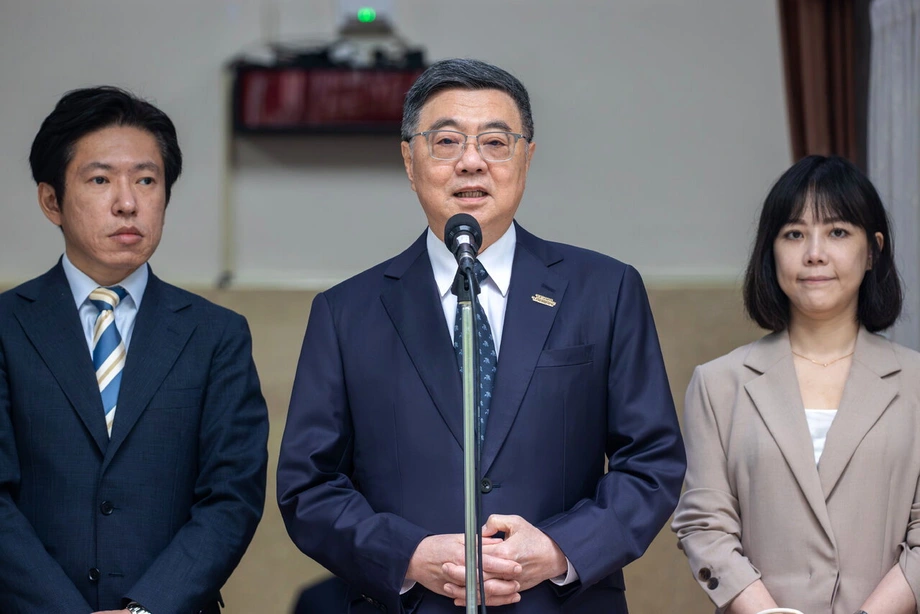
Premier Cho Jung-tai asked the health ministry on November 5 to assess the consequences and consult affected groups. According to Executive Yuan spokesperson Li Hui-chih, Cho challenged the measure on three grounds: fairness between generations, protection for disadvantaged people, and constitutional and fiscal rules.
For families, the immediate attraction is a smaller recurring insurance bill. For the government, the central question is where the replacement money would come from every year. A second dispute concerns whether changes to the law would leave some vulnerable seniors without the legal basis for existing assistance with medical expenses.
Who Would Receive the Subsidy?
The amendment covers people aged 65 and older whose assessed consolidated income falls below the tax filing threshold or whose applicable income tax rate is below 20%. The central government would pay their premiums in full, extending support far beyond the poorest households.
Eligibility would depend on tax assessment rather than age alone. The tax brackets cited when the amendment passed placed net consolidated income of NT$1.38 million or less below the 20% rate. Financial adviser Chao Kun-cheng, a former general manager at Deloitte's financial advisory business, used a threshold of NT$1.33 million in discussing the proposal. The operative rule is the applicable tax rate, with exemptions, deductions and other income conditions affecting the assessment.
Net consolidated income is the amount left for tax calculation after permitted exemptions and deductions. A household's salary receipts, taxable income and available wealth can therefore be different amounts. The Taiwan Primary Care Association argues that the tax rate alone may give an incomplete picture of assets and capacity to pay.
The subsidy concerns insurance premiums, the regular payments that keep a person enrolled. Patients can also face copayments when receiving care and charges for services outside NHI coverage. Those expenses are at the heart of the separate dispute over assistance for vulnerable seniors.
Existing Assistance Targets Financial Need
The National Health Insurance Administration's premium subsidy guidance lists full premium support for low income households and citizens over 70 in households classified as having low to middle incomes. It also lists full support for seniors aged 65 and older whose household registration has been on an outlying island for more than a year.
The guidance, published in June 2022, identifies other eligible groups, including people with severe or extreme disabilities and certain Indigenous residents. Taiwan already combines insurance contributions with subsidies based on financial circumstances, disability, location and other conditions.
Cho said the government currently budgets NT$1.22 billion annually for premium assistance for disadvantaged seniors aged 70 and older. He described assistance for disadvantaged people aged 65 to 69 as depending on local government finances. The NT$1.22 billion allocation covers a narrower group than the proposed national subsidy.
Supporters want to reduce the importance of a senior's address. Some cities and counties have long paid premiums for eligible older residents, while governments with tighter budgets have had less room to provide comparable benefits. Moving responsibility to the central government would create a national entitlement under the amendment's income rules.
How Much Would the Policy Cost?
The health ministry estimates annual spending at about NT$40 billion. Taiwan People's Party lawmakers have offered lower figures: nearly NT$39 billion when the amendment passed, using a monthly subsidy of NT$826 per senior, and NT$33.9 billion in a subsequent defense of the policy.
At NT$826 a month, the assumed subsidy amounts to NT$9,912 a year for each recipient. The party compared its NT$33.9 billion estimate with a projected NT$3.9 trillion central government budget for 2027, putting the subsidy at about 0.87% of that total, or roughly 1%.
The party also argues that central payment would release about NT$21 billion now committed by local governments, allowing them to help other disadvantaged residents. That would move responsibility between levels of government while giving local administrations more spending flexibility.
Cho said the amendment identifies no funding source. Former NHI Administration director general Lee Po-chang explained that, if the central government budgets enough to pay the premiums in full, the insurance fund continues receiving those contributions. The payer changes from the senior or family to the government.
Lee's explanation places the immediate budget issue at the central treasury: officials would need to find reliable revenue or adjust other spending. The insurance fund would receive the premiums promised under the subsidy as long as the government made the required payments.
Why Younger Households Are Part of the Debate
The Taiwan Medical Association says people aged 15 to 64 sustain about 70% of NHI income. It argues that many working households already face housing costs and the expense of raising children, making the distribution of any new spending a matter of fairness between generations.
The health ministry illustrated the scale by dividing NT$40 billion across 14.85 million people aged 20 to 64, producing about NT$2,690 per person annually. Dividing the same amount among 6.98 million households that pay tax produces about NT$5,720 per household. These calculations describe the size of the expenditure; the eventual burden would depend on the financing chosen.
Physician Su Wei-shuo, a founder of a civic alliance monitoring health insurance, has challenged suggestions that the subsidy would require higher premiums for younger adults. He called for officials to publish a clear funding plan and calculation method. He also cited average monthly disposable living funds of NT$16,793 for older people and average care expenses of NT$1,824, arguing that many seniors have limited room in their budgets.
Tsai Ming-chung, chair of the KMT's medical committee, urged Cho to countersign the amendment and argued that families paying premiums for dependent parents would benefit too. His argument broadens the debate beyond older recipients: some savings could remain with working children who currently help pay those bills.
Could Vulnerable Seniors Lose Other Support?
Health Minister Shih Chung-liang warned on October 28 that about 66,000 vulnerable older people could lose the existing legal basis for assistance with copayments and medical expenses outside NHI coverage. His concern centers on provisions removed from Article 22 when lawmakers created the broader premium subsidy.
Some recipients qualify for help under the Senior Citizens Welfare Act without meeting the household income and asset rules used for social assistance. Shih argues that relying on another law could leave those people outside the replacement arrangements.
Taiwan People's Party lawmakers counter that medical subsidy rules under the Social Assistance Act continue to provide support. Su also argues that local governments can maintain assistance through administrative rules or programs. Supporters therefore describe the change as a shift in legal arrangements rather than the removal of assistance.
The practical issue is whether every affected recipient would remain eligible under another rule or a new local program. The government had not set out a complete transition arrangement before the countersignature deadline. For someone needing repeated treatment or services outside NHI coverage, continuity of that assistance could matter as much as the premium subsidy.
Medical Groups Challenge the Design
The Taiwan Medical Association said legislation affecting millions of people and several public budgets needed thorough actuarial analysis and public hearings. Actuarial analysis uses population and financial projections to estimate how costs and income may develop over time.
Shih argues that NHI relies on mutual support and contributions based on capacity to pay. Older people account for more than 42% of NHI spending, he said, while representing about one fifth of Taiwan's population. His concern is that a broad exemption would commit public funds that may also be needed for treatment, long term care and other welfare programs.
Shih, speaking before a book launch at Mackay Memorial Hospital on the day the amendment passed, framed his objection around the durability of the insurance system:
An election is temporary, but the NHI system is something people rely on and needs to be stable and sustainable,
Lee, the former NHI chief, has urged attention to avoidable medical spending as well as subsidy policy. He identified unnecessary outpatient visits, repeated tests and treatments with little clinical benefit, and called for better coordination between levels of care, changes to payment rules and reasonable copayments alongside protection for vulnerable patients.
Taiwan People's Party lawmakers have also accused Shih of encouraging medical organizations to oppose the amendment. The caucus pointed to similarities in successive statements and demanded political accountability. That allegation formed part of the political dispute, alongside the organizations' stated objections to funding and eligibility.
Election Promises Meet an Aging Population
The amendment passed about six weeks before local elections, putting a familiar municipal benefit at the center of a national budget argument. The Taiwan People's Party says it fulfills a promise made by its founding chairman, Ko Wen-je, during his 2024 presidential campaign.
Taipei introduced premium assistance for residents aged 65 and older in 1996 under Mayor Chen Shui-bian. The city changed eligibility and introduced a wealth exclusion in 2009 as costs increased. Ko later introduced senior premium subsidies during his tenure as mayor, and other local governments adopted similar policies.
Opposition lawmakers have highlighted senior premium subsidy promises from Democratic Progressive Party candidates, including Chen Su-yueh in Changhua and Chou Chun-mi in Pingtung. They argue that the central government's opposition conflicts with policies promoted by its own party locally.
The Taiwan People's Party has compared the subsidy with much larger commitments, citing NT$230 billion for cash payments, NT$233.8 billion for CPC Corporation capitalization and NT$172.5 billion in support for CPC and Taiwan Power Company. Its argument is about spending priorities: a national benefit for older residents should also receive budget space.
Population projections show why officials are concerned about a permanent commitment. The government estimates annual subsidy spending could rise from about NT$40 billion to NT$62.86 billion by 2049, an increase of roughly 57%. Taiwan Hospital Association leader Hung Tzu-jen has similarly warned that costs could exceed NT$60 billion as the older population grows.
The National Development Council projects that people aged 65 and older will account for 52.9% of the population in 2075, when the population would fall to 12.15 million. It projects 136.6 children and older people for every 100 residents aged 15 to 64. Shih has also pointed to competing care needs: annual funding for long term care rose from under NT$5 billion in 2015 to more than NT$110 billion in 2026.
What Happens at the November 6 Deadline?
Cho has linked the countersignature decision to constitutional and budget procedures. He questioned whether the amendment followed Article 70 of the Constitution and Article 91 of the Budget Act, including the required consultation with the Executive Yuan over spending increases.
Cho said that if the procedure complied with constitutional requirements, the executive would have no right to refuse countersignature. His November 5 instruction was for the health ministry to gather views and assess the measure against three principles: contributions based on ability to pay, protection for disadvantaged people and sustainable finances.
The legislative and executive steps span several dates:
- October 16, 2026: Lawmakers approved the Article 22 amendment by 60 votes to 39.
- October 27: The legislature sent the measure for presidential promulgation, according to KMT medical committee chair Tsai Ming-chung.
- October 28: The Executive Yuan received the legislative communication, and Shih warned about assistance for approximately 66,000 vulnerable seniors.
- November 5: Cho requested a comprehensive review and consultation.
- November 6: The deadline for the executive decision on countersignature.
The decision brings together three concrete tasks: securing the money to pay premiums, defining eligibility consistently and maintaining medical assistance for people who depend on it. Those choices will determine both the savings families receive and the responsibilities that move onto the central budget.
Key Points
- The amendment would fully subsidize NHI premiums for qualifying people aged 65 and older through the central government.
- The health ministry estimates about 4.03 million recipients, or 83% of seniors, and annual spending of about NT$40 billion.
- The government projects annual costs could reach NT$62.86 billion by 2049.
- Full government payment would keep the corresponding premium income flowing to NHI while shifting the bill to the central budget.
- Officials warn that about 66,000 vulnerable seniors could lose the legal basis for other medical assistance; supporters say alternative rules can preserve support.
- Premier Cho requested a review on November 5 ahead of the November 6 countersignature deadline.