Four Operations, a Much Larger Waiting List
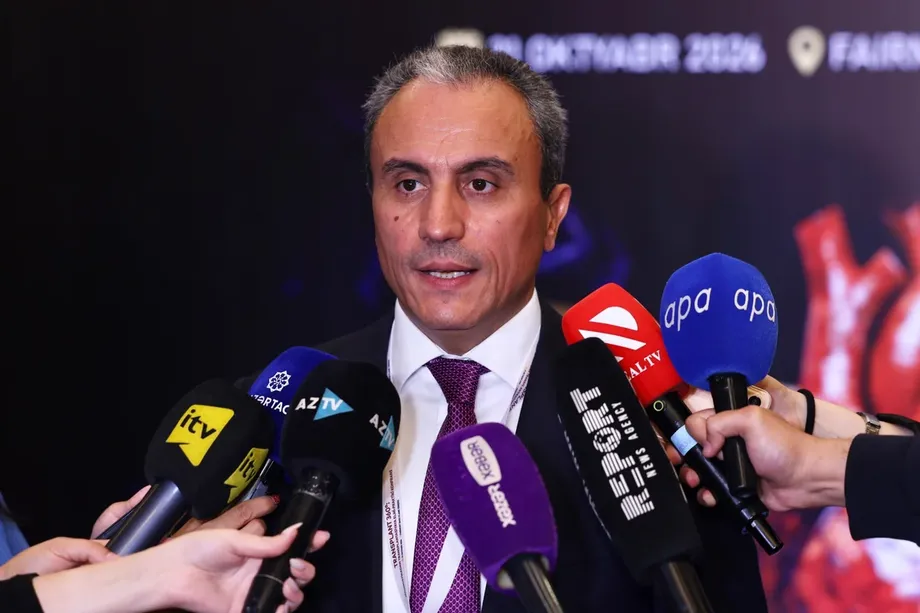
Azerbaijan has performed four heart transplants over the past year, all described as technically successful, while more than 50 patients still await a donor heart. Those waiting include children aged four or five and adults up to 60, according to Professor Kamran Musayev, honorary chairman of the Society of Cardiovascular Surgery.
Contents
- Four Operations, a Much Larger Waiting List
- How the Program Reached Its First Anniversary
- What a Sustainable Program Requires
- Children and Adults Face the Same Shortage
- How Donation Decisions Are Made
- More Registrations, More People Seeking Treatment
- The Shortage Extends Beyond Hearts
- Insurance and Public Funding Enter the Debate
- Key Points
At a conference held during Heart Transplantation Week, Musayev said the next goal was to turn those first operations into a lasting national program capable of treating more patients. The gathering marked the first anniversary of what participants described as the first transplant of a heart from a deceased donor in Azerbaijan and the South Caucasus.
The urgency extended beyond the conference's celebration of surgical progress. Yegana Abbasova, chairperson of the board of the Coordination Center for Organ Donation and Transplantation, said more than 50 people were awaiting heart transplantation and that she had recently received notice that two patients had died.
Azerbaijan's challenge now reaches across several parts of healthcare: identifying donors, recording consent, preparing patients, performing surgery and providing care afterward. Conference participants also called for heart transplants to be included in compulsory health insurance, bringing the question of payment alongside the question of medical capacity.
How the Program Reached Its First Anniversary
Musayev traced Azerbaijan's preparations for transplantation to 1999. He described a process lasting 26 to 27 years before the country tested transplantation from deceased donors in actual clinical practice, first with a liver operation and then with a heart transplant.
The chronology he presented at the anniversary conference, described in an account dated October 31, 2026, places those operations in 2025:
- 1999: Azerbaijan began the work Musayev identified as the starting point for the program.
- February 2025: The country performed its first liver transplant from a deceased donor, according to Musayev.
- October 2025: The first heart transplant from a deceased donor followed.
- October 2026: The anniversary conference reviewed four heart transplant operations performed during the preceding year.
Musayev said the experience had tested the entire process, including donation and the medical, social and other aspects of transplantation. His aim was to make that process a regular part of healthcare rather than an occasional achievement.
He credited Azerbaijan's progress to healthcare policies established under former President Heydar Aliyev and continued by President Ilham Aliyev. He also cited First Vice-President Mehriban Aliyeva's attention to healthcare and described the country as a regional leader in complex fields such as transplantation.
What a Sustainable Program Requires
Musayev's central message was that the work must continue beyond the first successful operations. A sustainable program means that the chain of care can function repeatedly: a suitable donor is identified, donation is authorized, a recipient is prepared, surgery takes place and care continues after the operation.
The conference's scientific program reflected that wider task. Participants discussed diagnosis, medical and surgical treatment, preparation for transplantation, donor selection, the transplant procedure and management of the period after surgery.
Each stage addresses a different practical need. Diagnosis helps determine which patients may need a transplant. Donor selection assesses whether an organ is suitable. Monitoring after surgery allows medical teams to follow the recipient's condition and respond to complications.
Musayev said all four heart transplant operations had been technically successful. No figures were given for recipients' subsequent survival or recovery, and no timetable was announced for expanding the program or deciding the proposed insurance changes.
Children and Adults Face the Same Shortage
More than 50 people awaiting a heart transplant represent a substantial demand for a program that has performed four such operations in a year. The waiting list includes very young children as well as adults, requiring the service to consider patients with very different sizes and medical needs.
Ahliman Amiraslanov, chairman of the Health Committee of the Milli Majlis, Azerbaijan's parliament, also described the number awaiting heart transplantation as very high. Musayev said the number of patients requiring a transplant was increasing.
Abbasova's account gave the waiting list an immediate human cost. Speaking as the head of the organ donation coordination center, she described the notice she had received about patients who had died:
More than 50 people are awaiting heart transplantation. Yesterday, I received a letter stating that two of the patients had already passed away.
Those deaths show why expanding access involves more than scheduling additional surgery. Patients must receive a suitable donated organ while they are still able to undergo the operation. The availability of donors and the readiness of the medical service have to come together at the right time.
How Donation Decisions Are Made
Musayev said heart transplantation requires donors with diagnosed brain death. Brain death means the permanent loss of all brain function, including the functions that control breathing. It is different from a coma, in which some brain function remains.
Medical support can keep blood circulating for a period after brain death, allowing doctors to assess whether organs are suitable for donation. Donation then depends on the consent process described by the country's transplant officials.
Musayev explained that families may approve donation, or people may register their wishes in advance. Abbasova said 1,800 people in Azerbaijan had registered to donate their organs after death. She described how that registration would apply if a registered donor experienced brain death:
If these individuals experience brain death, their organs will be transplanted to others without obtaining their families' consent.
Advance registration therefore gives the coordination center a record of a person's decision. For potential donors without a recorded decision, Musayev highlighted the role of families in agreeing to organ donation.
More Registrations, More People Seeking Treatment
Musayev said interest in transplantation was growing in two directions: more people were volunteering to donate, while more patients were coming forward as needing a transplant. He said the vast majority of those who had registered voluntarily with the Ministry of Health's coordination center during the preceding year had done so very recently.
He linked that recent concentration of registrations to public confidence in treatment within Azerbaijan. Speaking about the people who had joined the registry, he said:
This is direct evidence of the growing trust of the population in domestic medicine.
The 1,800 registrations give the program a pool of people who have expressed a wish to donate. Actual transplantation still depends on the circumstances of death, medical suitability and the needs of the recipient. A registry records decisions; the clinical donation process determines which organs can be used.
For the coordination center, growing interest also means managing both sides of the service: recording donor wishes and maintaining information about patients who need organs. The conference's focus on donor selection and preparation placed those practical responsibilities alongside surgical training and treatment.
The Shortage Extends Beyond Hearts
Abbasova said more than 1,500 people were on Azerbaijan's waiting list for donated organs. The heart transplant queue is one part of that wider demand, which also includes people seeking liver transplants.
Between 50 and 60 patients awaiting liver transplantation die each year, according to Abbasova. Her figures connect the new heart program to a broader problem: people with different forms of organ failure are depending on the same national donation and coordination system.
A liver transplant was the first deceased donor operation in the sequence Musayev described, taking place in February before the first heart transplant in October. That shared history helps explain why conference discussions covered the donation process as a whole rather than surgery for one organ alone.
Abbasova also called for corneal transplantation to be included in compulsory health insurance. The cornea is the clear front surface of the eye, and transplantation replaces damaged corneal tissue. Her proposal brought another form of transplantation into the discussion about access and payment.
Insurance and Public Funding Enter the Debate
Abbasova urged the inclusion of both heart and corneal transplantation in the compulsory health insurance services package. Such a package sets out the services paid for through the insurance system, making its contents central to how patients obtain treatment.
Amiraslanov said the new state budget allocated approximately 2.1 billion manats to healthcare. Including compulsory health insurance expenditure, he put the amount at around 4 billion manats. He also cited approximately 800 million manats in healthcare expenditure in previous years.
The 2.1 billion and 4 billion manat figures describe different spending scopes: the larger amount includes compulsory insurance. Amiraslanov presented the figures as evidence of increased resources for healthcare, while the conference's transplant proposals concerned how some services should be covered and organized within that system.
He also argued that bringing healthcare system management under the Ministry of Health could improve the use of funds, including money used for organ transplantation. His comments linked administrative responsibility with the effort to make complex treatment available more regularly.
For patients, the issues discussed at the conference meet at a concrete point: access to a suitable organ, a medical team ready to operate and a service able to support treatment afterward. Azerbaijan's first four heart operations have created a starting point. Officials and clinicians are now seeking the donation arrangements, coverage and continuing care needed to serve a much larger waiting list.
Key Points
- Azerbaijan performed four heart transplants over the past year, all described by Professor Kamran Musayev as technically successful.
- More than 50 patients await heart transplantation, including children aged four or five and adults up to 60.
- Coordination center head Yegana Abbasova said she had recently been informed that two patients awaiting heart transplants had died.
- More than 1,500 people await donated organs, while 1,800 people have registered to donate after death.
- Abbasova called for heart and corneal transplantation to be included in compulsory health insurance.
- The program's expansion depends on donation, patient preparation, surgery, continuing care and funding.