At least a dozen flights redirected over Russia
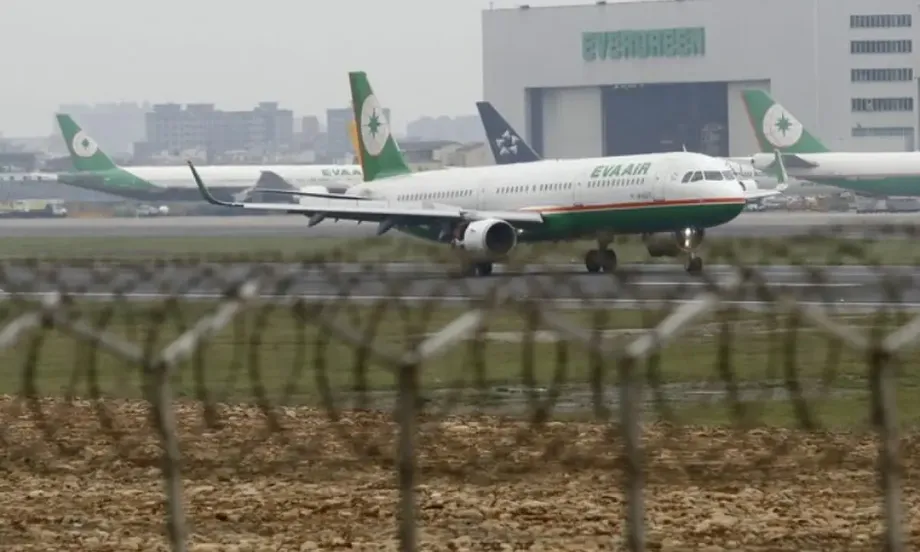
Pakistan has barred Taiwanese airlines from its airspace under its One China policy, forcing China Airlines and EVA Air to change routes between Asia and Europe. Flightradar24 tracking data cited on October 28, 2026, showed that neither carrier had crossed Pakistan since the morning of October 25, while at least a dozen flights had instead travelled over Russia.
Contents
The restriction turns Islamabad's diplomatic support for Beijing into an operational problem for two major Taiwanese carriers. Some flights have taken more northerly paths through Russia, while others have travelled through different parts of South Asia and the Middle East. The changes have added hours to some journeys and increased fuel costs.
Pakistan's Defence Minister Khawaja Asif confirmed that the decision reflected the country's position on Taiwan. Taiwan's Foreign Ministry subsequently condemned Pakistan's use of airspace as a political tool and said it would coordinate with transport officials while respecting airlines' decisions about safety, journey times and costs.
The measure has been described as the first known blanket restriction on Taiwanese commercial airlines explicitly based on the One China policy. Earlier cases involved permission for aircraft carrying Taiwanese officials, rather than a broad prohibition affecting commercial carriers.
What Pakistan's defence minister said
Asif tied the restriction directly to Pakistan's recognition of mainland China and its exclusion of Taiwanese carriers. Pakistan's defence minister described the aviation policy in these words:
We have permitted only Chinese airlines to fly over Pakistan.
His explanation concerned the distinction Pakistan draws between mainland Chinese and Taiwanese airlines. The practical consequence for China Airlines and EVA Air is the loss of permission to cross Pakistani territory on journeys to and from Europe, even when their aircraft would not land there.
An overflight is a journey through a country's airspace without landing. Losing that permission can close off a useful part of an international route, requiring an airline to plan a different path across several countries.
The restriction's duration, the details of a formal directive and the immediate reason for introducing it have not been made clear beyond Asif's policy explanation. No date has been announced for a review or for restoring access.
How the flight paths changed
China Airlines and EVA Air began changing routes over the weekend before the October 28 announcement. One specific flight, a China Airlines service from Taipei to Rome on October 24, travelled through Russian airspace instead of its previous route through India, Pakistan and Turkmenistan.
Flightradar24 observations placed the broader shift away from Pakistan from the morning of October 25. At least a dozen flights between Asia and Europe subsequently used Russian airspace. Another published count described more than 10 flights, giving a similar picture of repeated changes across the two carriers' operations.
The sequence shows how the disruption became visible before the minister's explanation:
- October 24, 2026: A China Airlines flight from Taipei to Rome used a route through Russian airspace instead of its previous path through India, Pakistan and Turkmenistan.
- October 25: Tracking observations showed China Airlines and EVA Air avoiding Pakistani airspace from the morning onward.
- October 28: Asif's explanation linked the restriction to Pakistan's One China policy, as the route changes became publicly known.
Routes connecting Taipei with Rome and London were among those identified in coverage of the changes. China Airlines operates the Rome service, while EVA Air serves London. Other affected aircraft have taken paths across South Asia and the Middle East rather than using Russia.
Why Russia is back on the route map
Taiwanese airlines had generally avoided Russian airspace since February 2022, when Russia launched its full invasion of Ukraine. Their approach was similar to that of many airlines in Asia, Europe and North America.
Taiwan's Civil Aviation Administration said it had never prohibited Taiwanese carriers from flying over Russia. It did not comment on the latest rerouting. China Airlines and EVA Air also declined to comment when initially approached about the changes.
Russia offers a northerly route between East Asia and Europe. Its renewed use shows how the loss of one air corridor can change an airline's choices elsewhere. For the Taiwanese carriers, a route they had generally avoided became part of the response to Pakistan's restriction.
Airlines must weigh several considerations when choosing a path: permission to enter each country's airspace, flight safety, journey time and operating cost. Taiwan's Foreign Ministry specifically identified safety, time and cost as factors that carriers should consider when planning their next routes.
The additional hours described on some services mean longer journeys for passengers and more fuel burned by aircraft. The airlines have not announced a common timetable adjustment or a figure for the additional expense.
Taiwan condemns the restriction
Taiwan's Foreign Ministry rejected Pakistan's position and condemned what it described as the politicization and weaponization of airspace. It said Taiwan is a sovereign country and has never been subordinate to the People's Republic of China.
The ministry said it would remain in close contact with Taiwan's Ministry of Transportation and respect commercial airlines' route planning. Its response addressed both the sovereignty dispute and the immediate task of keeping international services operating.
Beijing claims Taiwan as part of its territory. Taiwan, which has its own elected government and a population of about 23 million, rejects that claim. Only 12 countries maintain formal diplomatic relations with Taipei, including Belize and Tuvalu.
Pakistan's One China position recognises the People's Republic of China as the government of China and treats Taiwan as part of Chinese territory. Islamabad opposes Taiwanese independence and efforts to establish either two Chinas or one China and one Taiwan.
Pakistan has taken that position into international organisations as well. It has opposed Taiwan's participation in bodies including the World Health Organization and opposed a proposal to invite Taiwan to the organisation's annual assembly.
A partnership reaching beyond aviation
Pakistan ended official relations with Taiwan in 1951 and established diplomatic relations with the People's Republic of China that year. Its support for Beijing on Taiwan has continued through successive governments.
President Asif Ali Zardari and Prime Minister Shehbaz Sharif have both repeated that position. A joint statement following Sharif's May visit to China opposed Taiwanese independence and supported China's efforts toward national reunification. Taiwan's Foreign Ministry rejected the statement's claims about Taiwan's status.
Foreign Office spokesperson Tahir Andrabi also reaffirmed Pakistan's position in early January, calling Taiwan an "inalienable part of China". The statement is dated January 2 in several accounts and January 3 in the original description of the remarks. It followed Chinese military exercises around Taiwan involving live fire and simulated attacks on maritime targets.
Economic and military ties provide the wider setting for Pakistan's decision. China has channelled billions of dollars into Pakistan through the China-Pakistan Economic Corridor, part of President Xi Jinping's Belt and Road Initiative.
China is also Pakistan's largest arms supplier. Their defence relationship drew attention during the May 2025 conflict between Pakistan and India, when Pakistan used Chinese J-10C fighter aircraft. A further initiative, the China-Pakistan Information Corridor, was launched on the Tuesday before the airspace restriction was reported.
These connections explain the depth of the relationship in which Islamabad has placed its aviation policy. Asif's stated reason for the restriction was Pakistan's position on China and Taiwan.
What makes this restriction different
Pakistan's action reaches ordinary commercial services rather than a single diplomatic journey. A restriction affecting an airline can require repeated route changes across its schedule, with consequences for passengers, fuel use and aircraft planning.
In April, Seychelles, Mauritius and Madagascar revoked overflight clearances for Taiwanese President Lai Ching-te's aircraft during preparations for a visit to Eswatini. The planned visit was postponed. Those decisions concerned a presidential aircraft; Pakistan's restriction targets Taiwanese commercial carriers.
Article 1 of the 1944 Convention on International Civil Aviation recognises that states have complete and exclusive sovereignty over the airspace above their territory. In simple terms, governments control access to the skies over their countries, within the international aviation rules and obligations that apply to them.
Whether Taiwanese airlines can currently use mainland Chinese airspace is described inconsistently: several accounts say China allows their overflights, while another says political restrictions prevent them. Pakistan's confirmed exclusion is the immediate constraint driving the route changes described here.
For passengers, the concrete issue is the journey their aircraft can take. For the airlines, it is how to maintain European services after losing a transit corridor. Taiwan's transport authorities and carriers now face those operational decisions alongside an increasingly explicit dispute over sovereignty.
Key Points
- Pakistan has barred Taiwanese airlines from its airspace, citing its One China policy.
- China Airlines and EVA Air stopped crossing Pakistan from the morning of October 25, according to flight tracking observations.
- At least a dozen flights between Asia and Europe instead used Russian airspace, while others took alternative routes through South Asia and the Middle East.
- Some journeys have become longer and more expensive to operate.
- Taiwan's Foreign Ministry condemned Pakistan's action and said airlines should plan routes according to safety, time and cost.
- The restriction's duration and a date for reviewing it have not been announced.