A Rs 239 Gain Per Share as Jio Enters the Market
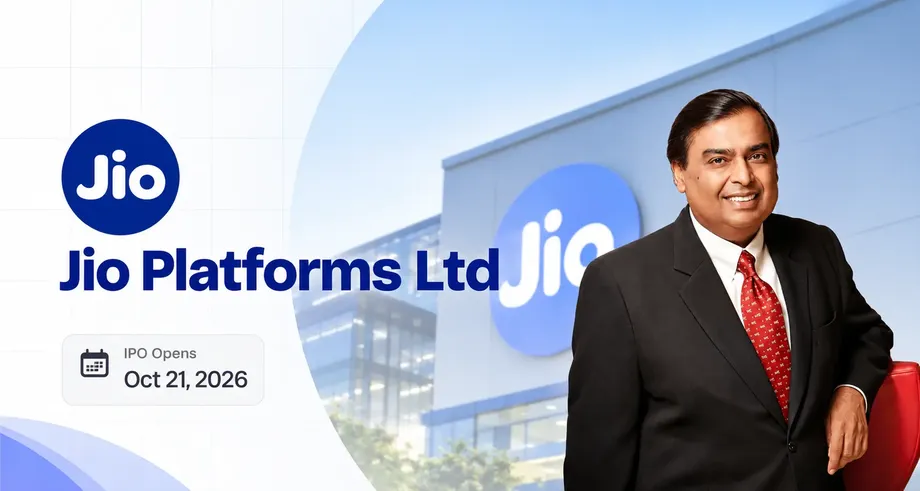
Jio Platforms opened at Rs 1,358 on the National Stock Exchange in Mumbai on Wednesday, October 28, 2026, rising about 21% above its Rs 1,119 offer price as India's biggest initial public offering began trading. The debut valued Mukesh Ambani's telecom and digital business at about $131.52 billion, placing it behind only its parent, Reliance Industries, among India's listed companies.
Contents
- A Rs 239 Gain Per Share as Jio Enters the Market
- Where the IPO Money Will Go
- What the Opening Price Meant for Small Investors
- Institutional Buyers Drove the Demand
- A New Market Ranking for Reliance's Digital Business
- Jio Rose While the Wider Market Fell
- The Ambani Family Marks a Corporate Milestone
- How the Offering Reached Listing Day
- What Investors Will Be Watching
- Key Points
The Rs 30,213 crore offering has a concrete financial priority: Jio plans to use Rs 27,500 crore to repay part of the borrowings of its telecom subsidiary, Reliance Jio Infocomm. That is about 91% of the money raised. The remaining proceeds are intended for general corporate purposes.
For an investor allotted the minimum lot of 12 shares, the opening price increased the holding's value from Rs 13,428 to Rs 16,296, a gain of Rs 2,868 before taxes and trading costs. Those figures describe the value at the opening price; the amount an investor receives depends on the price at which the shares are sold.
Jio's opening rally came during a sharp decline in India's broader stock market. Investors were buying into a business with 533.3 million telecom subscribers at the end of June 2026, backing from Meta and Google, and a central place in Ambani's expansion beyond oil and chemicals.
Where the IPO Money Will Go
Jio issued 27 crore new shares, equivalent to 270 million shares, at the top of a price range running from Rs 1,065 to Rs 1,119. Multiplying the number of shares by the final offer price gives the Rs 30,213 crore issue size.
The offering consisted entirely of fresh shares, with no offer for sale by existing shareholders. In simple terms, Jio sold newly created ownership stakes to raise money for the company. Existing investors were not selling their holdings through this offering.
Reliance Jio Infocomm, the subsidiary receiving the planned debt repayment, operates the group's mobile connectivity, fixed broadband and related digital services. Paying down its borrowings makes the IPO directly relevant to the financial position of the operating telecom business, rather than simply giving Jio Platforms a stock market price.
The Rs 27,500 crore allocation leaves Rs 2,713 crore of gross proceeds for other corporate purposes before accounting for offering expenses. Jio has also been expanding in 5G, digital applications and artificial intelligence, although the announced use of proceeds puts debt repayment first.
What the Opening Price Meant for Small Investors
Retail investors could apply for up to 14 lots, or 168 shares. At Rs 1,119 per share, that required an application worth Rs 187,992. At the opening price of Rs 1,358, the same number of shares was worth Rs 228,144, an increase of Rs 40,152.
That calculation applies to an investor who actually received all 168 shares. Applications exceeded the number of shares available in the retail category, so an application for the maximum amount did not automatically result in the maximum allocation.
The opening gain was Rs 239 per share. Before listing, trading indications from the grey market had suggested a premium of about Rs 247, or 22.10%, implying a possible opening price of Rs 1,366. The actual NSE opening was Rs 8 below that indication.
The grey market is an unofficial market for trading interests in shares before they begin trading on an exchange. Its quoted premium reflected expectations ahead of the debut. Once trading opened, investors could see the exchange price and make buying or selling decisions against that price.
Institutional Buyers Drove the Demand
Jio's public offering was subscribed 22.19 times during the October 21 to 23 bidding period. Subscription measures how many shares investors requested compared with the number available: demand of 22.19 times means applications sought more than 22 shares for every share on offer.
The detailed category figures put subscription by qualified institutional buyers at 70.55 times and retail subscription at 2.72 times; other published tallies gave 67 times and 2.76 times, respectively. Noninstitutional investors subscribed 14 times. Qualified institutional buyers include large professional investors such as investment funds and insurers.
Before public bidding, Jio raised Rs 8,110 crore from 212 anchor investors. These are institutional investors allocated shares ahead of the public offer. Participants included BlackRock, Capital Group, Fidelity Investments and T. Rowe Price, alongside domestic mutual funds and insurers.
Requests for the anchor allocation reached nearly Rs 2.5 lakh crore, more than 30 times the amount allocated. Across the offering, bids were reported to exceed Rs 7 lakh crore, and the issue became fully subscribed within 100 minutes of opening. The money requested by applicants was much larger than the amount Jio ultimately raised because many bids could not be filled.
A New Market Ranking for Reliance's Digital Business
Jio's opening valuation moved it ahead of Bharti Airtel and HDFC Bank, making it India's second largest listed company by market capitalisation. Market capitalisation is the share price multiplied by the total number of shares, giving a market value for the company's equity.
Brokerages had assessed Jio at about $108.3 billion at the offer price. The opening valuation of $131.52 billion was roughly $23.22 billion higher, reflecting the increase in the price investors were willing to pay for each share.
Reliance Industries remained above Jio in the ranking. The debut therefore put a parent and its subsidiary in the top two places, while giving public investors a way to buy shares directly in the group's telecom and digital business.
Meta and Google invested in Jio Platforms in 2020, alongside private equity firms and other institutional investors. Their presence connects the newly listed company with two major global technology groups as it develops services beyond basic mobile connectivity.
Jio Rose While the Wider Market Fell
India's benchmark indices were under pressure as Jio prepared to begin trading. The Sensex fell to 72,872 shortly after opening, while the Nifty reached 22,540 during early trading, down from its previous close of 22,749.
Technology services shares were among the biggest early decliners. Infosys fell 4.50%, Tech Mahindra dropped 3.50%, Tata Consultancy Services lost 3%, and HCL Tech declined 2.50%. Jio's opening gain stood in sharp contrast to those losses.
Brent crude traded above $115 a barrel, adding to concerns about inflation and business costs. Higher oil prices can make fuel and transport more expensive, putting pressure on household budgets and company spending.
Investors were also awaiting a US Federal Reserve policy decision and watching tensions in the Middle East. Elsewhere in Asia, shares rose after gains on Wall Street, with South Korea's Kospi climbing 5.07% and Japan's Nikkei 225 rising 1.36%. India's weak opening came despite those advances.
The Ambani Family Marks a Corporate Milestone
Mukesh Ambani attended the listing ceremony at the National Stock Exchange with his wife, Nita Ambani, and their children Akash, Isha and Anant. Akash Ambani, Jio's managing director, joined the family as they rang the IPO bell on stage.
Anant Ambani spoke about the history of Reliance and Jio during the ceremony, and Mukesh Ambani became visibly emotional. The event gave a public face to a major step in the family's plan to expand Reliance from an oil and chemicals conglomerate into a business spanning consumer services and technology.
The listing was described as Reliance's first in two decades. Major Indian newspapers carried front page Jio advertisements thanking India, reflecting the scale of the company's campaign around the debut.
Jio now brings a telecom subscriber base exceeding half a billion into a separately traded business. That scale gives the listing significance beyond the ceremony: investors can place a daily market value on a company serving a substantial part of India's communications market.
How the Offering Reached Listing Day
Jio's move from public bidding to exchange trading took place within a week. The main dates and milestones were:
- End of June 2026: Reliance Jio Infocomm had 533.3 million subscribers.
- Before public bidding: Jio raised Rs 8,110 crore from 212 anchor investors.
- October 21: Public subscription opened with a price range of Rs 1,065 to Rs 1,119.
- October 23: The bidding period closed, with total subscription reaching 22.19 times.
- October 28: Jio opened on the NSE at Rs 1,358, compared with the Rs 1,119 offer price.
The shares were scheduled for listing on both the NSE and the Bombay Stock Exchange. The opening price and investor gain calculations in this article use the NSE debut.
What Investors Will Be Watching
Several brokerages considered the valuation at the offer price attractive and pointed to potential gains. Their assessments also identified competition, heavy capital spending and changes to India's telecom rules as risks.
Spectrum, licensing and fees are particularly relevant to the business. Spectrum is the range of radio frequencies mobile networks use to carry calls and data. Government decisions about access to those frequencies, permission to operate and related charges can affect a telecom company's costs and investment plans.
Jio's planned debt repayment gives investors a specific use of the funds to track. Future financial results will also show how the company balances spending on networks and digital services with the income generated by its large customer base. No date for completing the Rs 27,500 crore repayment was announced.
The debut also arrived during a busy period for Indian listings. LSEG data put India first globally by number of IPOs, with 246 listings so far that year, but fourth by money raised, at $13.5 billion, behind the United States, mainland China and Hong Kong. Jio's arrival adds a major telecom and digital business to that market at a time when investors are still confronting oil prices, interest rate decisions and volatile shares.
Key Points
- Jio opened at Rs 1,358 on the NSE, about 21% above its Rs 1,119 offer price.
- The debut valued Jio at about $131.52 billion, second in India behind Reliance Industries.
- The Rs 30,213 crore IPO consisted of 27 crore new shares, with no sale by existing shareholders.
- Jio plans to use Rs 27,500 crore, about 91% of the proceeds, to repay subsidiary borrowings.
- A minimum allocation of 12 shares gained Rs 2,868 in value at the opening price, before taxes and costs.
- The offering was subscribed 22.19 times, with institutional investors driving demand.
- Jio's rally came as Indian benchmark indices and major technology services shares fell.