Thousands face disruption as government portal goes offline
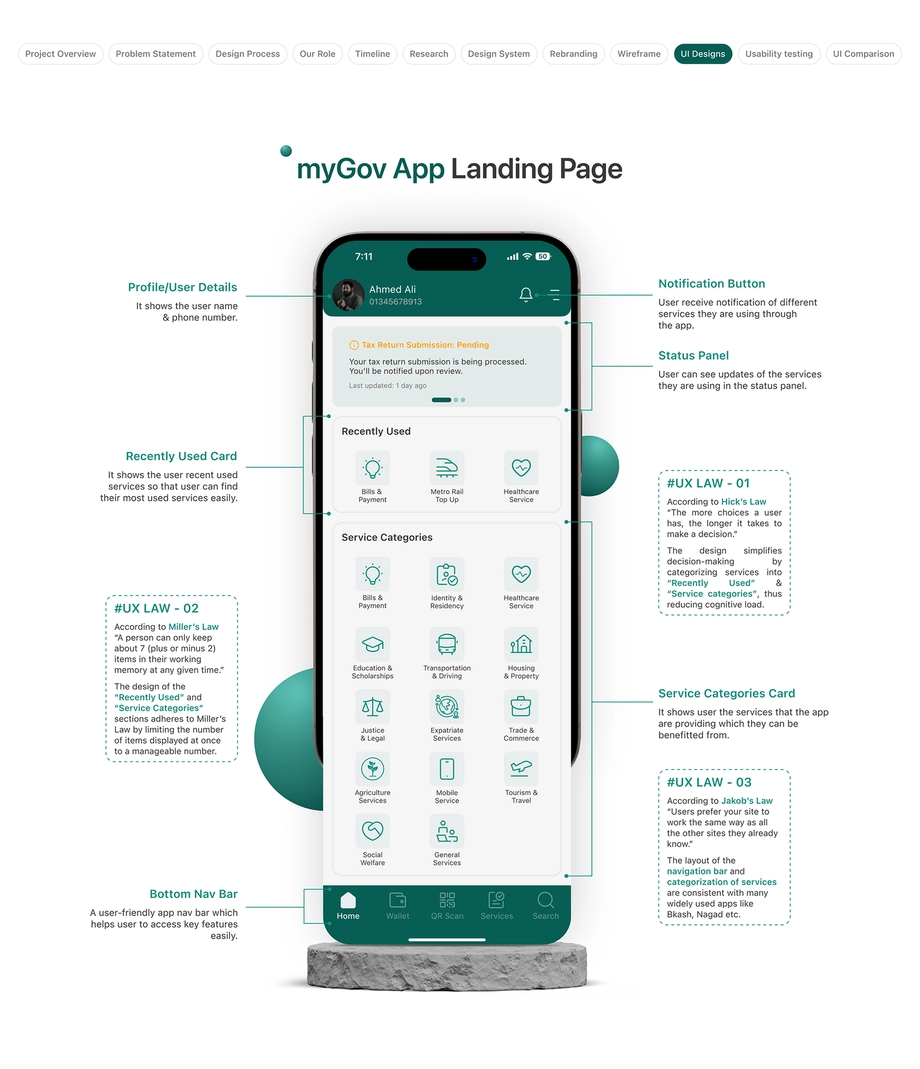
Bangladesh's myGov portal, which connects citizens and businesses to 440 government services, has been taken offline for security upgrades linked to concerns about PHP, the software used to operate many websites. The shutdown interrupts access to services including document authentication for people preparing to study or travel abroad.
Contents
- Thousands face disruption as government portal goes offline
- What services are affected?
- Why the upgrade requires a shutdown
- What the PHP warning means
- How the shutdowns unfolded
- Bank websites returned while transactions continued
- More than 50 websites and applications flagged
- What agencies have been told to do
- A global warning with local consequences
- Key Points
The portal was reported inaccessible from the night of October 25, 2026, and remained unavailable on October 26. Aspire to Innovate, known as a2i, which operates myGov, says about 5,000 to 6,000 people use the platform each day. Its services bring together ministries, government departments and local government institutions.
Visitors encountered a Web server is down message and Cloudflare error 521. The error page showed the browser and Cloudflare's Dhaka connection working, while the server hosting myGov was not responding. Cloudflare sits between visitors and a website's own server; the message placed the connection problem at that server.
The interruption follows precautionary closures affecting Bangladesh Bank, commercial banks and digital land services after warnings about serious PHP security flaws. Several banking websites had returned by October 25, while myGov's maintenance continued.
Restoration messages gave different deadlines: one announcement referred to midnight on October 26, while another maintenance notice specified midnight on October 27. An a2i official also expected access to return by Tuesday, October 27. Users therefore faced uncertainty about the precise reopening time.
For applicants, the immediate issue is access to a shared government gateway. A person seeking a certificate, a business awaiting a permit and someone checking an allowance application may depend on different departments, yet reach those departments through the same portal.
What services are affected?
MyGov allows users to submit applications, follow their progress and pay fees. Its catalogue includes certificate attestation, applications concerning land, allowances, business licences and permits. Services are normally accessible through its website and app, although the reported shutdown concerned the website and did not separately establish the app's operating status.
The e-Apostille service is especially relevant to students and other people preparing to go overseas. It allows users to apply online for authentication of educational certificates and other official documents, reducing the need to visit government offices with paper copies.
Applicants commenting on myGov's Facebook announcement described concerns about urgent document submissions. A delay in reaching the authentication service can leave someone unable to complete a necessary step before sending documents to an institution abroad. No number was given for applicants whose deadlines fell during the outage.
A2i's estimate of 5,000 to 6,000 daily users shows the scale of dependence on the portal. Those figures describe normal daily use; the number of people whose applications were actually delayed during this shutdown has not been published.
Why the upgrade requires a shutdown
Muhammad Anwar Uddin, a2i's project director, confirmed that the platform needed updates and that PHP issues were among the concerns. He described a mixed technical environment, with some systems using other technologies.
"Yes, there are some issues like that. Some issues have come up that are PHP-based, and some of our systems are outside PHP," he said.
An a2i official speaking anonymously explained that technicians initially tried to update myGov while keeping it accessible. Technical difficulties later led them to take it offline. Several domains associated with the platform need to be updated together, followed by checks that services work correctly on the new version.
The work therefore involves both installing software and testing the services that depend on it. An application form, its connection to a government department and its payment or tracking functions must continue to operate after the underlying software changes.
What the PHP warning means
PHP is a programming language that runs on a website's server. It can process information submitted through forms, retrieve records from databases and produce the pages a visitor sees. A security flaw in that software can put the information and functions behind a website at risk.
Bangladesh's Government Computer Incident Response Team, BGD e-GOV CIRT, issued an advisory on October 22 concerning PHP2Shell. The warnings described two serious vulnerabilities that could allow attackers to run malicious code or unauthorised commands remotely on affected servers without logging in.
Tanvir Hasan Zoha, an associate professor in the Department of Cyber Security and Digital Forensics at Daffodil International University, explained the potential consequence for an affected system.
"If a vulnerable version of PHP is used, the server can be compromised. The flaw could allow code to be run remotely on the server without any password," he said.
An attacker able to run commands on a server could potentially view or change stored information, steal sensitive data or interrupt the service. The exposure of an individual website depends on its PHP version, installed security fixes and server settings.
CIRT project director Md Nazmul Haque Khandoker said the agency had no information about attacks in Bangladesh at the time of his comments. CIRT had alerted a2i and the Data Centre Company, and an agency official confirmed that PHP issues had been flagged on some websites operated by a2i.
How the shutdowns unfolded
The myGov interruption came after several days of warnings and precautionary action. Government agencies and banks were checking their systems while international organisations also responded to the vulnerabilities.
- October 21: The European Union Agency for Cybersecurity and other agencies issued a joint advisory warning about malicious code execution and recommending disconnection where prompt updates were impossible.
- October 22: BGD e-GOV CIRT issued its PHP advisory. Bangladesh Bank took its website offline, and digital land services also suspended access.
- October 24: Bangladesh Bank's website remained unavailable while technical teams reviewed security.
- October 25: Bangladesh Bank restored its main website at 8am after checks. Several commercial banks also restored access. MyGov was reported offline from that night.
- October 26: MyGov remained inaccessible, with a2i confirming upgrade work and PHP concerns.
- October 27: A maintenance notice identified midnight as the expected end of work, while an a2i official expected restoration by Tuesday.
Bangladesh Bank's shutdown lasted about two and a half days. Its reopening shows that institutions were restoring access individually after checks, rather than following a single national reopening schedule.
Bank websites returned while transactions continued
Bangladesh Bank spokesperson and executive director Arief Hossain Khan said no bank website had been hacked and that digital transactions faced no immediate risk. Internet banking and mobile banking continued during the website shutdowns, according to the central bank.
Public websites and transaction systems can operate separately. Customers could therefore lose access to a bank's public information pages while still using its banking services. MyGov users faced a different practical problem because the portal itself is an entry point for government applications and related tasks.
Agrani Bank, Janata Bank, IFIC Bank, Standard Islami Bank, SBAC Bank and Bengal Commercial Bank were among the institutions whose websites returned after precautionary closures. Khan said Bangladesh Bank reopened on Sunday, a working day, so staff could continue monitoring it.
Restoration also varied within institutions. Bangladesh Bank's recruitment website, erecruitment.bb.org.bd, still displayed a maintenance message at 6:51pm on October 25, even though its main website had reopened that morning. Applicants seeking jobs therefore faced a different access situation from visitors to the main bank website.
National Cyber Security Agency Director General Taibur Rahman said precautionary action had helped avert a potential disaster. He said institutions were restoring websites gradually after security checks. The agency was also coordinating with CIRT and government bodies to assess exposure and follow developments.
More than 50 websites and applications flagged
An Information and Communication Technology Division source said more than 50 websites and web applications had been identified as using old, flawed PHP versions by 6pm on October 25. CIRT's monitoring covered government, public sector and private organisations.
Khandoker said some institutions had still not updated PHP after earlier warnings, with monitoring finding even older versions in some cases. CIRT also said several organisations had not confirmed that security updates were complete, while others had not responded.
A2i separately said about 36,500 websites under the National Portal Framework were not built on PHP. It said other government portals were being examined to identify their underlying technologies.
Zoha estimated that 60 to 85 percent of Bangladesh's public and private websites might use PHP, while acknowledging that published figures for government websites were unavailable. His estimate concerns a broad range of websites, whereas a2i's figure concerns a particular government framework.
What agencies have been told to do
CIRT instructed organisations to identify where PHP is used and check the versions installed across websites, servers, hosting systems and other environments supporting web applications. Systems directly accessible from the internet were to receive priority.
Organisations were told to install verified security fixes and replace versions that no longer receive support. Software support matters because developers supply fixes when security weaknesses are discovered; an abandoned version can leave an institution without those routine protections.
Sukarna Barua, an associate professor in the Department of Computer Science and Engineering at Bangladesh University of Engineering and Technology, explained that risk.
"If a developer stops supporting an old version, a patch or update won't be available even when a security flaw is found. Absolute security can't be guaranteed, but using supported and updated versions greatly reduces the risk," he said.
Where immediate updates are impossible, CIRT recommended restricting access. Options include allowing connections only from approved internet addresses or through a virtual private network, which provides a controlled connection for authorised users. Particularly exposed services could be temporarily disconnected.
CIRT also called for examination of server logs, the records of requests and activity that can help staff find unusual connections or intrusion attempts. Access restrictions offer temporary protection while repairs proceed. The agency said responsibility for securing a service remains with its institution even when an outside contractor operates it.
A global warning with local consequences
Cloudflare chief executive Matthew Prince said attempted attacks exceeded several million within 10 hours of the vulnerabilities being disclosed. That speed helps explain why organisations chose temporary disconnection while investigating exposure and applying updates.
Precautionary measures extended across Europe and Asia. Government bodies and other organisations in France, the Netherlands and Belgium restricted services. Germany's central IT service provider closed several government websites, while Finland suspended government web services for security work. Japanese agencies also limited or temporarily closed some online services.
Bangladesh's response exposed the practical cost of concentrating many services in a common digital gateway. MyGov normally saves applicants repeated visits to separate offices. During its shutdown, the same shared access point left people seeking many different services facing one interruption.
Dr Mashiur Rahman, an IT expert and engineering manager at Omron Healthcare Singapore, urged institutions to keep a regular inventory of their software and assign staff to monitor updates and security risks. That task connects directly to CIRT's finding that some organisations continued running old PHP versions after being warned.
For myGov, a2i's stated sequence is to update the connected domains and test services before restoring access. For applicants, reopening needs to bring back the functions they rely on, including submitting documents, checking progress and paying fees.
Key Points
- MyGov's website went offline for security upgrades affecting access to a platform with 440 government services.
- A2i says the portal normally serves about 5,000 to 6,000 people daily.
- Document authentication, allowances and business applications are among the services reached through the platform.
- Restoration announcements cited different deadlines, with one notice specifying midnight on October 27.
- Bangladesh Bank restored its main website on October 25 and said internet and mobile banking continued during its closure.
- CIRT urged institutions to check PHP versions, install security fixes, restrict access where necessary and inspect server logs.