Nine committee members back a higher borrowing rate
Pakistan's central bank raised its policy interest rate from 11.5% to 12% on October 26, 2026, as expensive oil, rising wheat prices and the Middle East conflict threatened to keep inflation above its target. The new rate takes effect on October 27, with the bank still forecasting economic growth of 3.5% to 4.5% for the fiscal year ending June 2027.
Contents
- Nine committee members back a higher borrowing rate
- Why oil and wheat changed the calculation
- Inflation eased in September but stayed above target
- What higher rates mean for households and businesses
- A stronger vote for action after September's hold
- Remittances help cover a larger external deficit
- Reserves and the IMF provide breathing room
- Growth forecast holds despite mounting risks
- Why some economists preferred to wait
- Key Points
State Bank of Pakistan Governor Jameel Ahmad announced the decision at a press conference in Karachi. Nine of the Monetary Policy Committee's 10 members supported the increase of 50 basis points. The remaining member wanted a larger rise, showing that the disagreement was over how much to tighten policy.
A basis point is one hundredth of a percentage point, so the decision adds half a percentage point to the benchmark rate. That benchmark influences borrowing costs across the economy, including business loans and some consumer debt.
September inflation stood at 10.3%, above the bank's target range of 5% to 7%. Oil prices above $100 a barrel and problems with domestic wheat supplies were central to the decision. The bank also warned that higher food and energy costs could spread into other prices if households and businesses began expecting inflation to stay high.
Pakistan enters this period with stronger financial cushions than during earlier bouts of pressure. Central bank foreign exchange reserves were about $21.5 billion, covering three months of imports, while money sent home by Pakistanis abroad was running ahead of expectations. Those resources help pay external bills, but expensive energy and recovering imports continue to test them.
Why oil and wheat changed the calculation
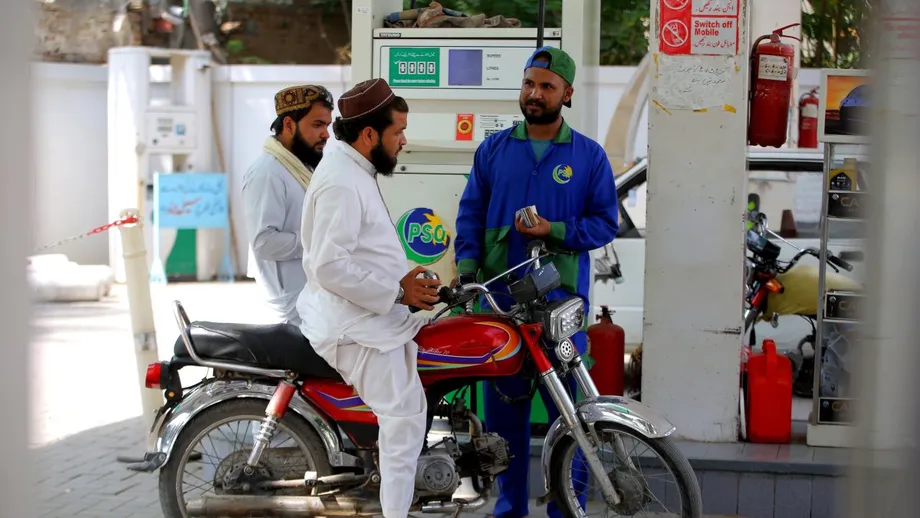
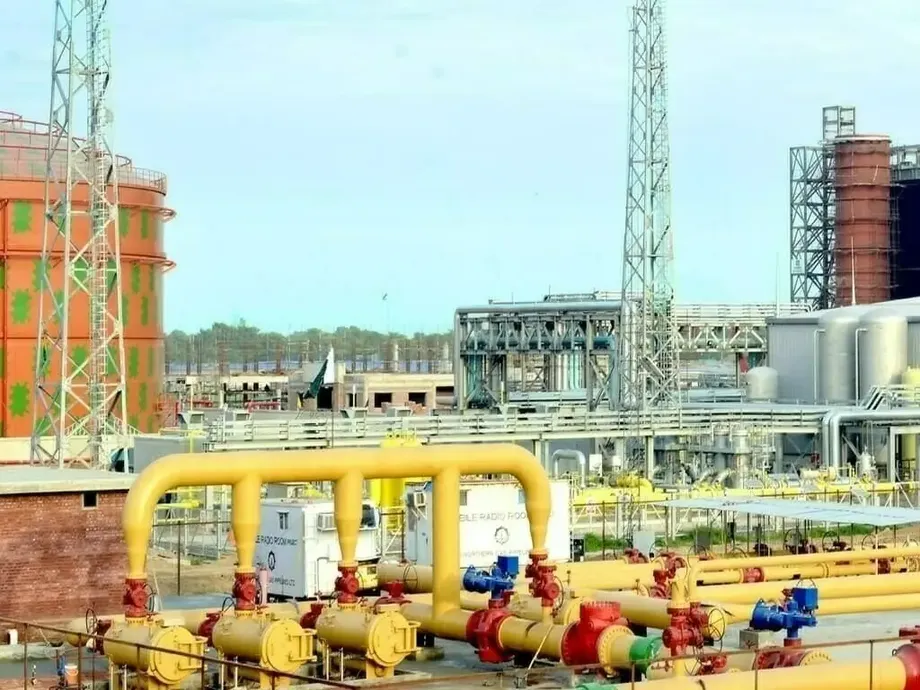
Ahmad said geopolitical conditions had pushed energy prices higher, while wheat had become more expensive in recent months. Pakistan depends on imported energy, so a rise in global oil prices can increase both the country's import bill and the costs faced by households and businesses.
The Monetary Policy Committee identified the persistence of the Middle East conflict as a central concern. In its policy statement, the committee said:
The Committee noted that the intensification in the Middle East conflict, and low prospects of its near-term resolution, are keeping global energy prices at persistently elevated levels.
Fuel costs reach beyond petrol stations. Transporting wheat, operating machinery and moving finished goods all require energy. When those activities become more expensive, businesses may charge more for their products. Higher wheat prices create a further strain because wheat is a basic food used across Pakistan.
The bank said earlier monetary measures and government spending discipline had helped contain the domestic effects of the global shock. Its concern now is that prolonged pressure will make inflation harder to bring down, even after the initial jump in oil or food prices passes.
Inflation eased in September but stayed above target
Pakistan's annual inflation rate moved from 9.2% in July to 11.1% in August before easing to 10.3% in September. September's reading was still higher than the committee had expected and remained 3.3 percentage points above the upper end of its target range.
Lower inflation means prices are rising more slowly, rather than returning to their earlier levels. A household can therefore face a larger grocery bill even when the annual inflation rate falls from one month to the next.
Core inflation, which excludes volatile food and energy prices, remained around 8.4%. This measure helps the bank assess how widely price pressures have spread beyond items that can swing sharply with weather, harvests or international markets.
Consumer surveys added to the bank's concern. Households expected higher inflation, although business inflation expectations declined. Confidence indicators weakened for both groups. The committee was therefore responding to a mixed picture: some price pressures had eased, while families remained worried about future costs.
What higher rates mean for households and businesses
The 12% benchmark is intended to slow the spread of inflation through spending and expectations. Higher interest rates generally make borrowing less attractive and saving more rewarding, reducing some pressure on demand.
Businesses seeking loans for machinery, inventory or expansion may face higher financing costs. Consumers taking new loans may also pay more. Payments on existing loans with variable interest rates can rise when their contracts reset, while the timing and size of any change depend on the loan terms.
Higher borrowing costs come at an awkward moment for companies trying to expand after a period of economic weakness. They can delay investment or reduce the amount a business can afford to borrow. For households already paying more for food and fuel, a higher loan payment would add another expense.
The bank's aim is to prevent the original supply shock from becoming a broader cycle of price increases. For example, a transport company facing higher fuel bills may raise charges, leading shops to increase prices. If businesses expect costs to keep rising, they may build further increases into their plans. Economists call this spread into other prices a second round effect.
Oil supplies, wheat distribution and trade disruptions require responses beyond monetary policy. The interest rate decision addresses spending and expectations while those supply pressures continue.
A stronger vote for action after September's hold
The October decision followed a September meeting at which seven committee members supported keeping the rate at 11.5%, while three wanted an increase of one percentage point. By October, all 10 members favoured an increase, although one wanted more than the half point adopted.
The recent sequence shows how the committee's assessment changed:
- July 2026: The bank kept its policy rate unchanged at 11.5%.
- September 14, 2026: The committee again held the rate at 11.5%, despite three members favouring an increase.
- October 26, 2026: Nine members backed an increase to 12%, while one preferred a larger rise.
- October 27, 2026: The new 12% rate takes effect.
Ahmad said inflation expectations and the external position had worsened since September. The policy rate nevertheless remains 10 percentage points below the record 22% reached in June 2023, illustrating how far borrowing costs had fallen before the renewed tightening.
Remittances help cover a larger external deficit
Pakistan recorded a current account deficit of $874 million in July through September, compared with $755 million in the same period a year earlier. That is an increase of $119 million, or about 16%.
The current account tracks trade in goods and services alongside income flows and transfers, including remittances. A deficit means the country needs financing from investment, borrowing or other sources to cover the gap.
Money sent home by Pakistanis working abroad provided an important cushion. Remittances reached $10.9 billion in the first quarter of the fiscal year, prompting the central bank to raise its annual forecast by $1 billion.
Ahmad explained the revision at his press conference:
Due to this strong performance, the SBP has revised its annual outlook for remittances upward from $44 billion to $45 billion.
The bank retained its forecast for a current account deficit between zero and 1% of gross domestic product for the fiscal year ending June 2027. Ahmad said exports were improving but remained below what the economy needed. Rice, textile products with greater value and services were helping the recovery.
Imports were also rising as activity recovered. Figures attributed to the Pakistan Bureau of Statistics showed that imports excluding oil increased 15% in the first quarter, compared with 6% for petroleum. Cars, machinery and other goods contributed to the increase, making the external balance a matter of domestic recovery as well as energy prices.
Reserves and the IMF provide breathing room
The central bank said its foreign exchange reserves remained stable at around $21.5 billion, supported by continued purchases of foreign currency. At roughly three months of import cover, those reserves provide a cushion for paying overseas bills when foreign currency inflows fluctuate.
Pakistan also reached a staff level agreement with the International Monetary Fund in October that could release about $1.21 billion. The IMF's executive board must approve the agreement before that money becomes available; no board decision date was given.
The IMF said implementation of Pakistan's programme remained broadly on track despite difficult external conditions. The central bank also noted that the Federal Board of Revenue exceeded its collection target in the first quarter, supporting the government's finances during the period.
The committee called for stronger fiscal and external buffers, a broader tax base and structural reforms. In practical terms, it wants the government to have more reliable revenue and the country to hold more foreign currency, giving both greater capacity to absorb sudden increases in global costs.
Growth forecast holds despite mounting risks
The bank kept its growth forecast at 3.5% to 4.5% for the fiscal year ending June 2027. Revised official figures put growth in the previous fiscal year at 3.7%, so the new forecast allows for either a modest slowdown or a stronger recovery.
Large scale manufacturing expanded 1.9% in July and August compared with a year earlier. Cement sales, petroleum sales and lending to private businesses also pointed to recovering activity, while initial estimates for summer crops were better than expected.
The committee warned that a further escalation of the Middle East conflict could weaken that outlook. Adverse weather associated with worsening El Niño conditions was another risk, particularly for agricultural production and food prices.
Pakistan's exchange rate adds another consideration. The real effective exchange rate, which compares the rupee with trading partner currencies after allowing for inflation differences, had risen to nearly 109, its highest level in eight years. When domestic prices rise faster than prices abroad while the currency stays broadly stable, Pakistani goods can become relatively more expensive.
A weaker rupee would make imported fuel costlier in local currency, while a stronger rupee in real terms can put pressure on export competitiveness. The bank must weigh those pressures alongside the cost that higher interest rates impose on investment and economic recovery.
Why some economists preferred to wait
A poll by Topline Securities found that 61% of market participants expected a rate increase before the decision. Of all respondents, 54% expected an increase of 50 basis points and 7% expected 100 basis points; the remaining 39% expected no change.
The Pakistan Institute of Development Economics preferred a conditional hold. It argued that inflation risks required vigilance, but that demand across the economy was not yet overheating and price pressures had not spread widely enough to justify an immediate increase.
The institute set out its position before the meeting:
"While the balance of risks has shifted toward tightening, current macroeconomic conditions do not yet establish a compelling case for an immediate rate increase," PIDE said.
The disagreement centres on timing. Waiting would give businesses more time to recover under the existing rate. Acting now seeks to prevent persistent food and energy inflation from shaping wider pricing decisions. The committee chose earlier action while retaining its forecasts for growth and the current account deficit.
Households and businesses now face a combination of higher borrowing costs and continued uncertainty over essential prices. The bank's next assessments will depend on whether oil and wheat pressures ease, whether inflation expectations settle, and whether remittances and exports keep pace with the growing import bill.
Key Points
- Pakistan raised its policy interest rate from 11.5% to 12% on October 26, effective October 27, 2026.
- Nine committee members backed the half percentage point rise; one wanted a larger increase.
- September inflation was 10.3%, above the bank's target range of 5% to 7%.
- Oil above $100 a barrel and rising wheat prices were major reasons for the decision.
- The annual remittance forecast increased from $44 billion to $45 billion after first quarter inflows of $10.9 billion.
- Foreign exchange reserves stood near $21.5 billion, covering about three months of imports.
- The bank retained growth of 3.5% to 4.5% and a current account deficit of zero to 1% of GDP as its forecasts for the fiscal year ending June 2027.
- An IMF agreement could release about $1.21 billion, subject to executive board approval.