A fourth trophy and a first as world No. 1
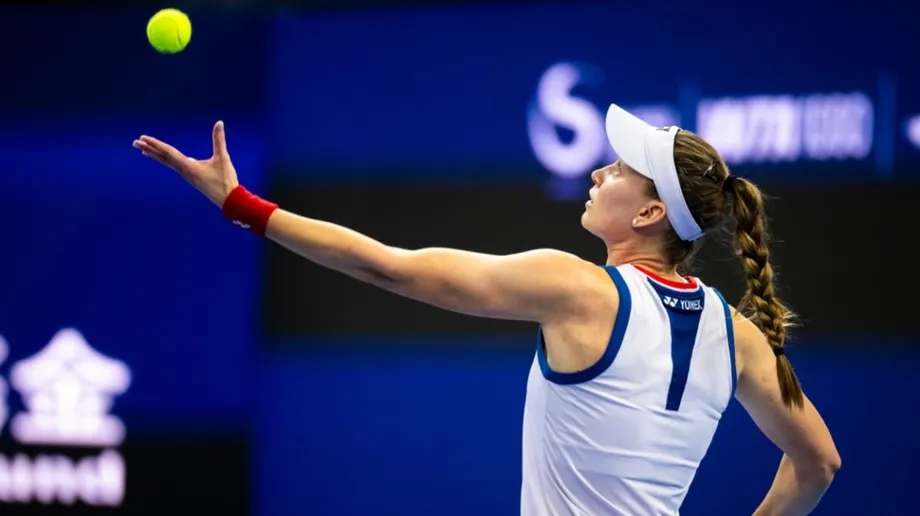
Elena Rybakina retained her Ningbo Open title on October 25, 2026, beating Canada's Leylah Fernandez 6-2, 6-2 in 1 hour and 17 minutes. The victory gave the Kazakhstan player her fourth title of the season, the 15th of her career and her first since becoming world No. 1.
Contents
- A fourth trophy and a first as world No. 1
- Fernandez threatened first, Rybakina took control
- Four breaks made the difference
- Different routes to the championship match
- A demanding week for the Canadian finalist
- A much shorter contest than Stuttgart
- Why defending 500 points matters
- Tokyo comes next, then the season finale
- Key Points
Rybakina converted four of her five break points and saved all four that Fernandez earned. Those numbers explain the final more clearly than the ace count: Rybakina hit three aces to Fernandez's two, but repeatedly won the points that could change control of a set.
The top seed earned 500 ranking points and $185,500 in prize money. Fernandez, ranked No. 30 and playing her 10th career tour final, received 325 points and $114,500.
Ningbo joins the Australian Open, Stuttgart and the US Open on Rybakina's list of titles this season. Her 53rd match victory of 2026 extended her lead in tour match wins, while her fourth trophy put her alone at the top of the season's title count.
Fernandez threatened first, Rybakina took control
Fernandez created the first opening in the second game, earning break points against Rybakina's serve. Rybakina held, however, and the Canadian's early opportunities disappeared without a change in the score.
A break point is a chance for the player receiving serve to win the game. Because the server usually has an advantage, taking one can quickly shift a match. Fernandez generated those chances early; Rybakina was the player who turned them into a lead.
Fernandez held for 2-1 before Rybakina won five consecutive games. The decisive move began with a break in the fifth game, followed by a hold for 4-2 that included a powerful crosscourt backhand winner. Rybakina broke again and served out the set without losing a point in the final game.
The opening set lasted 38 minutes. Fernandez had started competitively, but Rybakina's ability to protect her own serve and attack the Canadian's service games turned a close opening into a 6-2 score.
Four breaks made the difference
Fernandez held serve to begin the second set, but Rybakina broke in the third game and moved ahead 3-1. The Canadian earned two chances to break back during the set; Rybakina saved both and kept her advantage.
Another break gave Rybakina the opportunity to serve for the championship. She completed the second set by the same 6-2 margin, finishing a match in which Fernandez never managed to win a game on the Kazakhstan player's serve.
Rybakina's conversion rate on break points was 80 percent, four successful attempts from five chances. Fernandez finished at zero from four. Across the final's 16 games, Rybakina won 12 and Fernandez four, a three-to-one split.
Rybakina also recorded two double faults, points conceded by missing both permitted serves. Her success came from more than free points on serve: with only three aces, she still held every service game and broke Fernandez twice in each set.
Different routes to the championship match
Rybakina arrived in the final having lost just one set during the tournament. After a bye into the second round, she led Polina Kudermetova 5-0 when Kudermetova retired, ending their match after about half an hour.
Polish qualifier Katarzyna Kawa provided a longer test in the quarterfinals. Rybakina won 6-1, 3-6, 6-1, recovering from the loss of the middle set to take the deciding set comfortably.
Sixth seed Diana Shnaider then pushed Rybakina harder than their semifinal score of 6-3, 7-5 might suggest. Rybakina needed 11 set points to finish the opening set. In the second, she lost serve without winning a point while serving for the match, before eventually closing out the victory.
Fernandez spent just under eight hours on court across her first three matches, all of which went to a deciding set. She beat Elise Mertens 2-6, 6-3, 7-5, Aliaksandra Sasnovich 7-5, 6-7 (3), 6-3 and Ekaterina Alexandrova 4-6, 6-2, 6-1. Against Mertens, she recovered from 5-3 down in the final set by winning four straight games.
A demanding week for the Canadian finalist
Fernandez secured her place in the final by beating Marie Bouzkova 6-3, 7-5, a match that took just under two hours despite being settled in two sets. Her route required four completed matches, compared with Rybakina's two completed matches and the early retirement.
The Canadian entered the final with an 11-2 record since the start of the Asian swing, the series of tournaments played in Asia during this part of the season. She had won the Singapore Tennis Open in September and was seeking a second title in as many months.
Rybakina acknowledged that workload and Fernandez's results during the trophy presentation. The Ningbo champion congratulated her opponent and the people supporting her:
I want to congratulate Leylah for a great week. A lot of tough matches and tough wins. Congrats to you and your team.
Fernandez, the runner-up, congratulated Rybakina and described her own team's focus after another deep tournament run:
I'd like to congratulate Elena for a wonderful week, a wonderful year. We're having a good end of year. We just gotta keep going, keep working hard. I wanna thank my family for always supporting me and believing in me in these tough moments.
A much shorter contest than Stuttgart
Ningbo was the sixth career meeting between the players. Rybakina entered with a 3-2 lead and extended that advantage to 4-2, winning their third consecutive encounter.
Their previous match, in this season's Stuttgart quarterfinals, had lasted exactly three hours. Rybakina saved two match points before winning 6-7 (5), 6-4, 7-6 (6) on clay. The Ningbo final took 103 minutes less.
Break point conversion connected the two results. In Stuttgart, Rybakina took four of eight chances while Fernandez converted three of 14. In Ningbo, Rybakina again recorded four breaks, this time from only five opportunities, while denying Fernandez every chance.
Their first four meetings had been split evenly on hard courts. Sunday's result gave Rybakina another victory on that surface, with far less time needed than in their most recent contest on clay.
Why defending 500 points matters
Rybakina became world No. 1 for the first time on September 14 after winning the US Open. Ningbo was her first tournament victory with that ranking and strengthened her bid to finish the season at the top.
The 500 ranking points require a little explanation. Tennis rankings generally count results over a rolling period of about a year. When a player returns to a tournament as defending champion, the previous result's points are due to leave that calculation as the new result takes their place.
Rybakina was defending 500 points in Ningbo and earned 500 again. Winning therefore preserved the value of that tournament result in her ranking total, rather than simply adding another 500 to the points she already held from last year's title.
Fernandez earned 325 points for reaching the final, 175 fewer than the champion. The prize money gap was $71,000, with Rybakina receiving $185,500 and Fernandez $114,500.
Ningbo also brought a personal milestone: Rybakina successfully defended a tournament title for the first time. She had already become a repeat champion in Stuttgart earlier this year, but Ningbo was her first victory at the same event in consecutive seasons.
Tokyo comes next, then the season finale
Rybakina is scheduled to play the Pan Pacific Open, a WTA 500 event in Tokyo, next. She reached the semifinals there last year and will again be defending ranking points from that result.
The next major date is November 8, when she is due to begin her title defence at the WTA Finals in Indian Wells. The year-end No. 1 ranking has not yet been settled.
Her recent schedule places the Ningbo result between setbacks in Beijing and Wuhan and another demanding stretch. The key dates and results are:
- September 14: Rybakina became world No. 1 following her US Open victory.
- October 25: She beat Fernandez in Ningbo to secure her fourth title of 2026.
- The following week: She is scheduled to compete at the Pan Pacific Open in Tokyo.
- November 8: Her title defence at the WTA Finals in Indian Wells is scheduled to begin.
Rybakina described her connection with Ningbo after winning there for the second time in two appearances:
It's already my second year here, second win. It's such a special place for me. Thank you so much Ningbo. Xiexie,
The champion also thanked the spectators for their support:
It's amazing to play in front of you. It always gives a lot of motivation, a lot of energy to keep on playing.
Key Points
- Elena Rybakina defeated Leylah Fernandez 6-2, 6-2 in 77 minutes to retain the Ningbo Open title.
- She converted four of five break points and saved all four chances Fernandez created.
- The victory was her fourth title of 2026, her 15th career title and her first as world No. 1.
- Rybakina earned 500 ranking points and $185,500; Fernandez received 325 points and $114,500.
- Tokyo is next on Rybakina's schedule, followed by her WTA Finals title defence from November 8 in Indian Wells.