A shortage beneath the AI chip
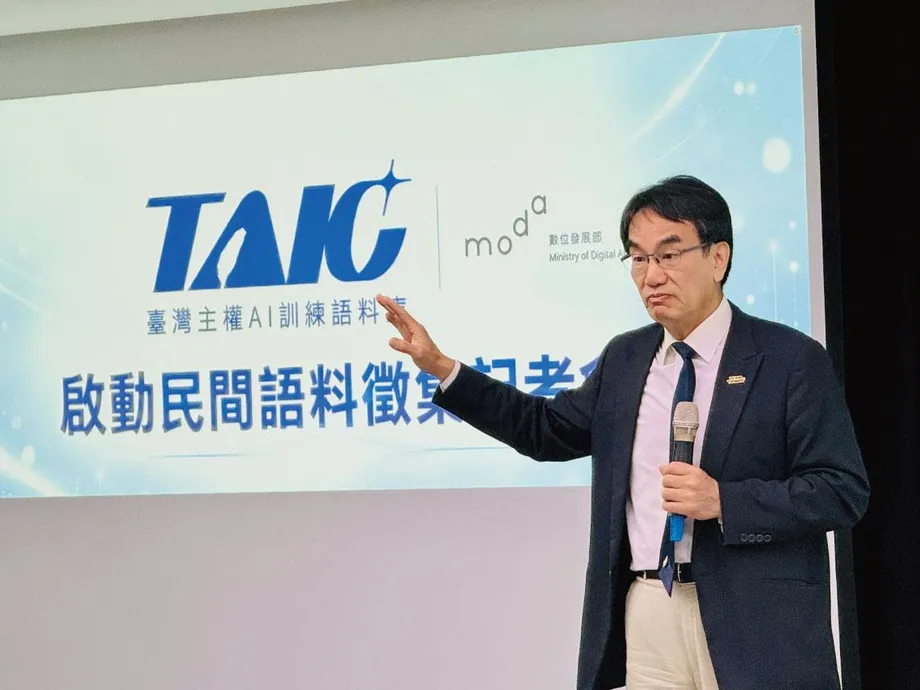
Some equipment needed to make advanced chip substrates now takes 30 months to arrive, while supplies of certain critical materials could fall about 20% short of demand in 2027, Unimicron chairman S.C. Chien warned at the TPCA Show on October 20, 2026. His warning explains why the race to build artificial intelligence infrastructure is reaching beyond processors and memory to the sophisticated wiring bases underneath them.
Contents
- A shortage beneath the AI chip
- Why each accelerator needs more substrate
- How large could the supply gap become?
- Materials can hold back an equipped factory
- Equipment delays stretch the expansion timetable
- Customers are paying for access
- Where billions in new investment are going
- Better yields matter as much as more machines
- Glass and ceramics are longer term options
- The dates and economics to watch
- Key Points
Nvidia is supporting substrate expansion at Taiwan's Unimicron through a capacity reservation agreement. Additional production is expected to begin in the second quarter of 2027 and reach full planned capacity around the middle of 2028. Nvidia is also working with Japan's Ibiden and South Korea's Samsung Electro-Mechanics, aiming to increase the substrate capacity serving its products to 2.5 times the current level over three years.
ABF substrates connect a processor's tiny electrical contacts to the much larger circuit board below it. Bigger AI chips need larger substrates with more wiring layers. Each package therefore consumes more factory time and materials, even before manufacturers increase the number of chips they ship.
J.P. Morgan forecasts annual ABF demand growth of 34%, 39% and 40% from 2026 through 2028, against capacity increases of about 9% to 12%. Buyers are responding with longer contracts, advance payments and support for new factories. Suppliers able to secure materials and manufacture these difficult products reliably are gaining greater power to negotiate prices.
Why each accelerator needs more substrate
AI accelerators increasingly combine several computing chips with stacks of high bandwidth memory, or HBM, inside one package. The substrate must carry electrical signals and distribute power across that larger assembly. Think of it as a road network that needs both more land and more levels as a city grows.
A substrate measuring 110 by 110 millimeters has four times the footprint of one measuring 55 by 55 millimeters: 12,100 square millimeters instead of 3,025. Adding more wiring layers increases the manufacturing burden again. Producers must repeatedly apply insulating film, form microscopic connections and create copper wiring, keeping each layer aligned with the others.
J.P. Morgan's estimates illustrate the combined effect. Nvidia's Hopper generation uses a substrate footprint of 3,190 square millimeters across 12 layers. Its model for the later Feynman generation reaches about 18,000 square millimeters across 24 layers. Multiplying footprint by layers gives 38,280 square millimeters for Hopper and 432,000 for Feynman, an increase of roughly 11.3 times in this measure of processing work.
Ibiden's roadmap also shows steady expansion: substrates measuring 90 by 90 millimeters in 2026, 110 by 110 millimeters in 2028, and 130 by 130 millimeters or larger from 2030. These are development targets, with commercial output depending on manufacturing progress and customer approval.
How large could the supply gap become?
J.P. Morgan estimates global ABF demand will rise from 11,308 billion square millimeters in 2025 to 29,565 billion in 2028, using a model adjusted for manufacturing complexity. That would put demand at about 2.6 times its 2025 level.
The bank projects utilization above 100% in 2027 and near 130% in 2028. In practical terms, a projected utilization rate of 130% means customers would want roughly 130 units of production for every 100 units available. Factories would face orders they could not fulfill, leaving buyers to accept delays, seek another supplier or change production plans.
Other forecasts put the ABF supply shortfall at about 10% in the second half of 2026, 21% in 2027 and more than 40% in 2028. Goldman Sachs estimates deficits of 34% and 51% for 2027 and 2028. The estimates use different demand assumptions and ways of measuring the gap; their common message is that planned expansion is struggling to match rising requirements.
AI servers and high speed switches account for much of the change. J.P. Morgan projects their share of global ABF demand will rise from 26% in 2024 to 73% in 2028. Demand from conventional servers grows more slowly, while consumer electronics consumption remains below its 2024 level.
Materials can hold back an equipped factory
Ajinomoto supplies an estimated 95% or more of the world's ABF insulating film. Substrate manufacturers apply this film between copper wiring layers, making it a common input across otherwise competing suppliers.
Ajinomoto's film production was operating at full capacity in the second quarter of 2026, at about 2 million square meters a month. The company notified customers in May of an approximately 30% price increase taking effect in the third quarter. Shipments to China were also reportedly reduced by 30%, adding a regional constraint to an already concentrated supply chain.
Glass fiber cloth with a low coefficient of thermal expansion is another bottleneck. The coefficient measures how much a material expands when heated. Materials that expand less help large substrates stay flat as processors heat up and cool down.
J.P. Morgan estimates Unimicron receives 35% to 40% of Japanese producer Nittobo's T-glass allocation, while Ibiden receives 30% to 35%. Smaller suppliers collectively receive an estimated 25% to 33%. These allocations can determine how much advanced output a company can deliver, even when it has factory space and installed machinery.
Chien's forecast of a possible 20% gap in 2027 concerns certain critical materials, including low expansion glass cloth, copper clad laminates and ABF inputs. The Taiwan Printed Circuit Association also identifies limited supplies of low expansion glass cloth as a constraint, because new material plants need time to start production and increase output.
Equipment delays stretch the expansion timetable
Unimicron's chairman said delivery times had lengthened for more than 80% of equipment, with roughly one fifth taking around twice as long as before. Some critical machines require a wait of up to 30 months.
A factory building therefore represents only one stage of expansion. Manufacturers also need tools, materials, trained employees and customer qualification. Qualification means demonstrating that a production line can repeatedly make substrates that meet a customer's electrical, mechanical and reliability requirements.
J.P. Morgan's equipment analysis points to a similar delay. Orders for substrate lithography tools, which help define tiny wiring patterns, begin recovering in 2026 after a weak 2025. Equipment ordered during that recovery is expected to contribute qualified commercial output in 2027 or later.
Unimicron has tried to coordinate those schedules earlier. Chien said its teams began sharing expansion plans with suppliers in early 2025, sometimes alongside customers and their customers. More than ten exchanges helped suppliers understand future requirements, and some began increasing supply in 2026.
Customers are paying for access
Nvidia, AMD and cloud service providers are seeking contracts extending through 2028, while some customers are asking suppliers to plan capacity for 2029 and 2030. Cooperation can include advance equipment payments, machines placed with manufacturers and contributions toward factory construction.
Capacity reservation fees give suppliers financial support before new production is ready. Buyers, in return, secure agreed access to future output. This arrangement helps manufacturers commit to expensive expansion after the industry's previous investment wave contributed to price weakness during 2023 through 2025.
Industry estimates put substrate related commitments associated with Intel, Nvidia and AMD at around $5 billion, or NT$162.9 billion. Intel accounts for an estimated $3 billion, with Nvidia and AMD at about $1 billion each. Companies named in these estimates have declined to discuss individual customer arrangements, and the precise deposits and contractual terms remain undisclosed.
Intel chief executive Lip-Bu Tan has said several customers made advance payments to help secure substrates and capacity. Kinsus says it has signed supply agreements lasting three to five years, although these currently cover a relatively small share of its business. The company would prefer customers to help finance expansion rather than simply reserve existing factories.
Where billions in new investment are going
Unimicron's annual capital expenditure budget has risen from NT$34 billion to NT$53.7 billion following an additional NT$19.7 billion allocation. It has also added NT$17.6 billion in orders for equipment with long delivery times. Those equipment orders are a separate purchasing commitment and should be considered alongside the company's construction and production schedule.
Ibiden plans to invest ¥500 billion during fiscal 2026 through 2028, targeting AI server substrate capacity at 2.8 times its 2024 level. Samsung Electro-Mechanics is investing $1.2 billion in ABF expansion, with volume production targeted for the third quarter of 2027.
Samsung Electro-Mechanics also has a multiyear agreement with Nvidia for dedicated lines at Sejong and Busan in South Korea, with deliveries scheduled to start in 2026. The agreement covers both computing chipsets and networking switches. Neither company disclosed the investment amount or how costs would be divided.
Kinsus has approved NT$23.5 billion for capacity and equipment expansion, including planned spending of NT$8 billion in 2026, of which NT$6 billion is for ABF. It subsequently added a separate NT$19.6 billion project budget. Nan Ya PCB plans a NT$46.8 billion factory for large substrates with many layers.
Kinsus aims to double quarterly ABF capacity from about 40 million units to 80 million by 2029. Land is available for that plan, but the company says further expansion would require additional sites. Zhen Ding subsidiary Leading Interconnect plans to increase its Shenzhen factory buildings to more than seven before 2030.
Better yields matter as much as more machines
Larger substrates are harder to keep flat. Copper, resin, glass reinforcement and silicon expand at different rates as temperatures change. This can cause warping, make tiny wiring layers harder to align and reduce the share of finished products that pass inspection.
Yield is that passing share. A production line with a 60% yield delivers 60 acceptable units for every 100 it processes. Improving yield can increase usable supply without building an entirely new factory, although the equipment still spends time processing units that later fail.
Industry estimates place yields for substrates used with Intel's EMIB packaging at around 45%, with suppliers targeting 50% in the fourth quarter of 2026 and 60% in the first quarter of 2027. EMIB uses small silicon bridges to connect chips within a package, placing demanding requirements on substrate construction.
Chien also pointed to AI chips drawing more than 1,000 amperes. Delivering that current while limiting electrical noise, maintaining signal quality and managing heat requires suppliers to participate earlier in system design. Unimicron, Nan Ya PCB and Kinsus are developing larger and more complex products, while Zhen Ding is expanding advanced substrate and interconnect capabilities for AI servers.
Glass and ceramics are longer term options
Glass cores and ceramic interposers are being developed to address the dimensional stability and thermal challenges of very large packages. A core supports the substrate, while an interposer provides dense connections between chips. These components occupy different places in the package and require different manufacturing processes.
Unimicron is pursuing glass and ceramic core technologies alongside advanced packaging substrates. Nan Ya PCB is testing glass substrates and developing core materials with thermal expansion below three parts per million per degree Celsius. Kinsus is participating in glass and ceramic process development with packaging partners.
Glass reinforced organic substrates already contain glass fiber cloth. A glass core replaces the central supporting structure with glass, requiring new methods for making connections through it and controlling manufacturing defects. Suppliers are also using automated routing and design rules that help engineers avoid layouts that are difficult to manufacture.
Development schedules extend beyond the immediate shortage. TSMC's panel packaging approach, CoPoS, is targeted for trial production in 2027 and mass production in the second half of 2028. Commercial scale for its glass core technology is projected after 2030. Existing organic ABF production therefore carries much of the expansion burden through 2028.
The dates and economics to watch
The Taiwan Printed Circuit Association and the Industrial Technology Research Institute estimate global substrate production value at $14.75 billion in 2025, up 18.5%, and forecast $19.51 billion in 2026, up 32.3%. That is an increase of $4.76 billion in a year, across the broader substrate market.
The next milestones show when investment could begin easing pressure, and when product complexity could increase it again:
- Fourth quarter of 2026: suppliers target approximately 50% yield for EMIB substrates.
- First quarter of 2027: the EMIB yield target rises to approximately 60%.
- Second quarter of 2027: additional Unimicron capacity supported by Nvidia reservations is expected to begin coming online.
- Third quarter of 2027: Samsung Electro-Mechanics targets volume production from its ABF expansion.
- Middle of 2028: Unimicron's reserved expansion is expected to reach full planned capacity.
- 2029: Kinsus targets quarterly ABF capacity of 80 million units.
J.P. Morgan estimates next generation accelerator substrates could command average selling price premiums above 50%. Higher material costs and production difficulty will absorb part of that increase. Suppliers with dependable material allocations, strong yields and qualified output are best placed to turn tighter supply into stronger earnings.
For chipmakers and data center operators, the practical change is earlier purchasing and closer involvement in manufacturing plans. A processor rollout increasingly depends on securing its substrate years ahead, then ensuring the material, equipment and production schedules arrive together.
Key Points
- AI packages are consuming more substrate area and wiring layers per chip, increasing factory workloads faster than chip counts alone suggest.
- J.P. Morgan forecasts ABF demand growth of 34% to 40% annually during 2026 through 2028, against capacity growth of about 9% to 12%.
- Some equipment takes 30 months to arrive, while selected critical materials could face a 20% supply gap in 2027.
- Nvidia and other buyers are using reservations, longer contracts and advance payments to secure future output.
- Major capacity additions are scheduled for 2027 and 2028, with usable supply dependent on materials, yields and customer qualification.
- Glass and ceramic technologies are advancing, while organic ABF substrates remain central to the current expansion.