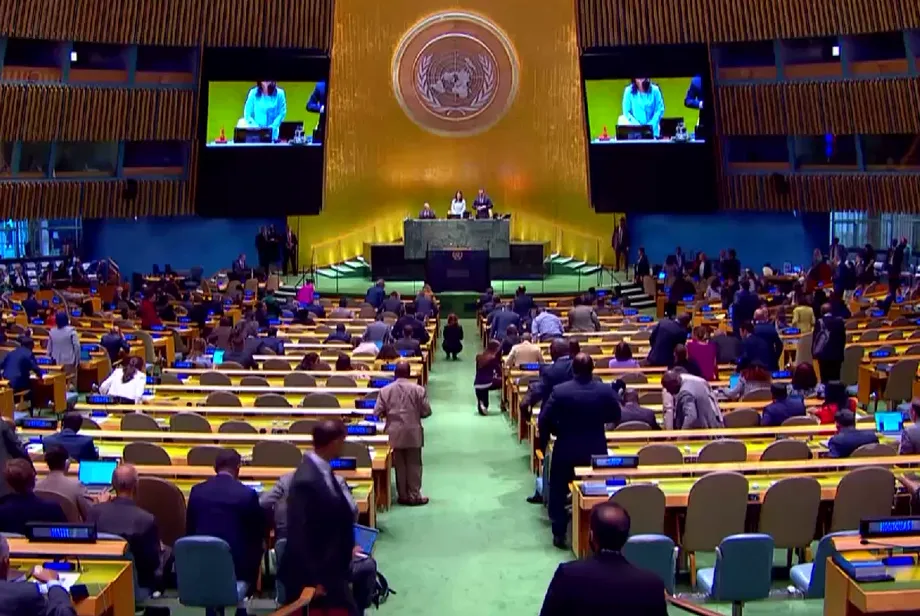
A $900,000 debt and a dispute over representation
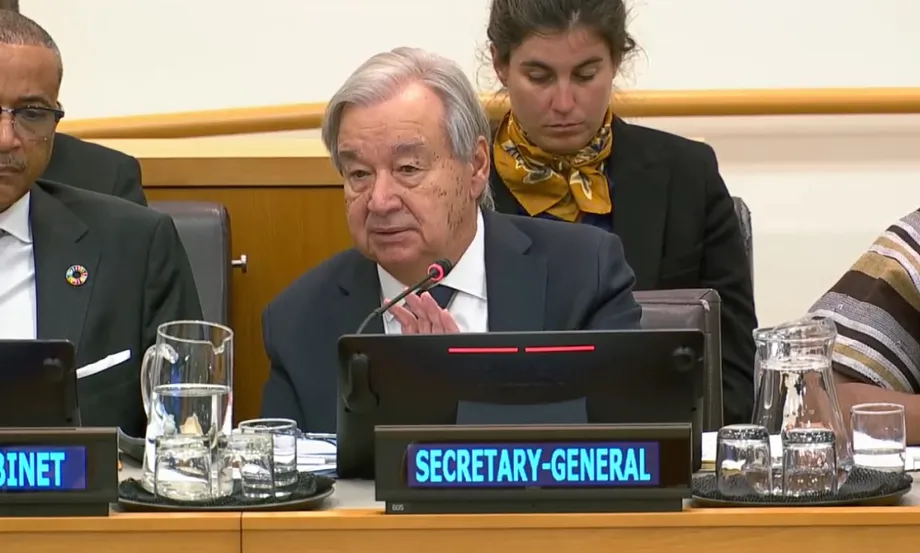
Afghanistan's unpaid United Nations dues have become entangled with a larger struggle over who speaks for the country. Arrears put at $900,000 in May 2024, and described in later accounts as exceeding that amount, have cost Afghanistan its vote in the General Assembly, while the Taliban authorities have made payment conditional on receiving the country's UN seat.
Contents
Naseer Ahmad Faiq, the charge d'affaires heading Afghanistan's UN mission, has described the voting suspension as a technical consequence of UN financial rules. His delegation remains from the government removed when the Taliban returned to power in August 2021. The Taliban, which calls its administration the Islamic Emirate, controls Afghanistan but has not secured its place in that delegation.
The dispute involves two separate UN procedures. One concerns whether Afghanistan has paid enough of its assessed contributions to vote. The other concerns which representatives the organisation accepts to speak for Afghanistan. Resolving the debt would address the financial restriction; the Taliban's demand for the seat goes through a different process.
For Afghans, the immediate result is concrete: their country can take part in General Assembly discussions but cannot cast a ballot while the suspension applies. Afghanistan has belonged to the UN since 1946. In the assembly of 193 member states, each country has one vote, regardless of its wealth, population or military strength.
What the UN payment rule requires
Article 19 of the UN Charter sets the threshold for losing a General Assembly vote. A member falls under the restriction when its unpaid contributions equal or exceed the amount due for the preceding two full years. The rule turns on the size of the debt, rather than simply whether a payment has arrived late.
Faiq explained the rule in his account of Afghanistan's suspension in May 2024:
"It is a technical, and more so, a general rule for all member states, according to Article 19 of the UN Charter, that member states running behind on financial contributions to the organisation cannot vote in UNGA if the amount owed is equal to or more than the contributions for the previous two years," he said.
Afghanistan's annual contribution has been described as approximately $200,000, alongside other small payments. The $900,000 figure recorded in May 2024 was equivalent to about four and a half times that approximate annual contribution. The amount needed to regain voting rights depends on the UN's calculation of the arrears and the Article 19 threshold.
The Charter also allows the General Assembly to permit voting when it accepts that a country's failure to pay resulted from circumstances beyond its control. That exception gives the Afghan mission another possible route to restoring its vote.
Why Afghanistan sought an exception
Faiq has argued that the mission's inability to pay should be considered in light of the absence of a legitimate authority at home. The delegation represents Afghanistan at the UN while the authorities controlling the country seek to replace it, creating a practical dispute over who should provide the money.
The UN Committee on Contributions considers questions involving member states' payments and requests for exceptions. In May 2024, Faiq anticipated that the committee could consider Afghanistan's circumstances, with a decision possible by October and restoration potentially following through a General Assembly resolution before the end of that year. Those were expectations expressed in 2024, not a newly announced timetable.
Afghanistan's explanations for nonpayment had been judged inadequate at that stage. Comoros, Ecuador and Somalia, which were also behind on contributions, received exemptions after explaining their inability to pay. Afghanistan and Venezuela lost their voting rights. Sao Tome and Principe also appeared on the list of countries with unpaid dues.
Those cases show why the exception matters: a country with arrears can retain its vote if the General Assembly accepts its circumstances. Afghanistan's mission sought the same outcome, while continuing to participate in discussions.
How the dispute developed
August 2021 marked the political turning point, when the Taliban took control and the previous government collapsed. The timing of the unpaid bills is less precise. The earlier account of the arrears says dues had gone unpaid since before the Taliban takeover; later accounts describe the previous government as having paid before 2021 and connect the continuing debt to the change in power.
The main reported stages are:
- 1946: Afghanistan became a member of the United Nations.
- August 2021: The Taliban returned to power, while Afghanistan's UN representation remained with diplomats from the previous government.
- May 17, 2024: Faiq publicly described the voting suspension as a technical issue governed by UN payment rules.
- May 2024: The arrears were put at $900,000, and Faiq discussed seeking an exception through the Committee on Contributions.
- Later accounts: The suspension was described first as continuing for three years and subsequently for a fourth consecutive year, with debt exceeding $900,000.
No confirmed restoration date or final outcome of the proposed 2024 review is given. The later description of a fourth consecutive year of suspension indicates that the dispute continued beyond the initial effort to secure an exception.
Who can claim Afghanistan's seat?
The Taliban authorities say Afghanistan's UN seat should pass to their nominated representative as a matter of national sovereignty. Their position rests on their control of the country. The existing mission, however, continues to occupy Afghanistan's place at the UN.
The Credentials Committee is the formal UN channel involved in examining who is authorised to represent a member state. Credentials are the documents identifying a delegation and its authority to speak. The committee's work feeds into the General Assembly's decision on accepting representatives.
Afghanistan remains a UN member throughout this dispute. The contested seat is its national representation at the organisation, including the General Assembly, where all member states are represented. Diplomatic recognition by individual countries and acceptance of a delegation's credentials are related political questions, handled through different decisions.
Political analyst Idris Mohammadi Zazi framed the issue around representation of Afghanistan's population rather than control of government offices:
The rightful holder of Afghanistan's seat at the United Nations is the people of Afghanistan, someone who represents and defends all ethnic groups of the country.
Why recognition remains contested
Calls for an inclusive government and respect for human rights have been central to international resistance to the Taliban's bid for representation. Restrictions on girls' education and women's employment have remained prominent concerns, alongside demands concerning terrorism and drug trafficking.
Thomas Ruttig, co-founder of the Afghanistan Analysts Network, linked the rejection of the Taliban's efforts to the positions expressed by UN member states:
"On balance, and based on the body of UN resolutions and repeated calls by member states for an inclusive government and respect for human rights, especially those of women and girls, it could be surmised that it's because states do not consider the Emirate [the Islamic Emirate of Afghanistan, the Taliban's name for the country] legitimate that they have rebuffed its attempts to be recognised and admitted to the United Nations," Thomas Ruttig said.
The Taliban authorities describe the composition of their government and human rights questions as internal matters. They have also said Afghan territory will not be used to threaten other countries. Those positions leave substantial disagreement over the changes international governments expect before accepting their representatives.
Former diplomat Aziz Ma'arij similarly connected the seat dispute to restrictions on girls' education and women's work. His assessment was that the situation would continue until those issues were resolved. That is a political assessment, while the voting restriction follows the separate financial rule in Article 19.
Offers to pay have not settled the dispute
The Taliban's offer to clear the arrears comes with a condition: transfer Afghanistan's seat to its administration. That ties a financial payment to a decision involving credentials, representation and the positions of UN member states.
Former vice president Amrullah Saleh offered another possible source of money in May 2024. He said he was prepared to cover the outstanding debt and the next three years of contributions. At the approximate annual rate of $200,000, three further years would amount to about $600,000, on top of the arrears.
The payment procedure remained unresolved, including whether an individual could settle the country's dues. Meanwhile, political analyst Gul Mohammad Din Mohammadi called for the removal of current officials from a blacklist and the release of frozen Afghan assets, while also urging flexibility from the Taliban on international demands compatible with its interpretation of Sharia and Afghan values.
What Afghanistan can still do at the UN
Afghanistan's delegation can continue speaking and participating even while it cannot vote. Faiq described that continuing role directly:
"Afghanistan can still participate, can still talk at the table".
The missing vote still matters. General Assembly ballots record countries' positions on resolutions and other decisions. Afghanistan's diplomats can state a position in a speech, but the suspension prevents them from adding the country's vote to the formal result.
The practical routes remain payment sufficient to meet the UN rules or permission to vote under the exception for circumstances beyond the country's control. Acceptance of a Taliban delegation requires action through the credentials process. Afghanistan's financial obligations and the contest over its representatives therefore remain connected in negotiations, while requiring separate decisions at the UN.
Key Points
- Afghanistan's unpaid UN dues were put at $900,000 in May 2024 and described as exceeding that amount in later accounts.
- Article 19 restricts General Assembly voting when arrears reach the amount due for the preceding two full years.
- The General Assembly can allow an exception when nonpayment results from circumstances beyond a country's control.
- Faiq's delegation remains in place, while the Taliban seeks acceptance of its own representative.
- The Taliban has conditioned payment on receiving Afghanistan's UN seat.
- Later accounts describe the voting suspension as continuing for a fourth consecutive year.
- Afghanistan can still participate in UN discussions while its General Assembly vote is suspended.