A bid to turn Kazakhstan's electricity into computing power
Kazakhstan's plan to build a $10 billion artificial intelligence computing cluster gained a concrete milestone on October 23, 2026: Firebird, the US company developing the project, secured an American export license for 45,000 Nvidia Grace Blackwell graphics processing units. The first facility phase, being developed with Kazakhtelecom in Ekibastuz, is expected to begin commercial operations in the third quarter of 2027.
Contents
- A bid to turn Kazakhstan's electricity into computing power
- What the Firebird agreement would build
- Existing computers and the next construction targets
- Why Kazakhstan wants AI that understands Kazakh
- Public services offer an immediate use for the technology
- Higgsfield connects local developers with international capital
- Robotics would take AI into Kazakhstan's industries
- Training and regional connections complete the pitch
- The dates behind the expansion
- Key Points
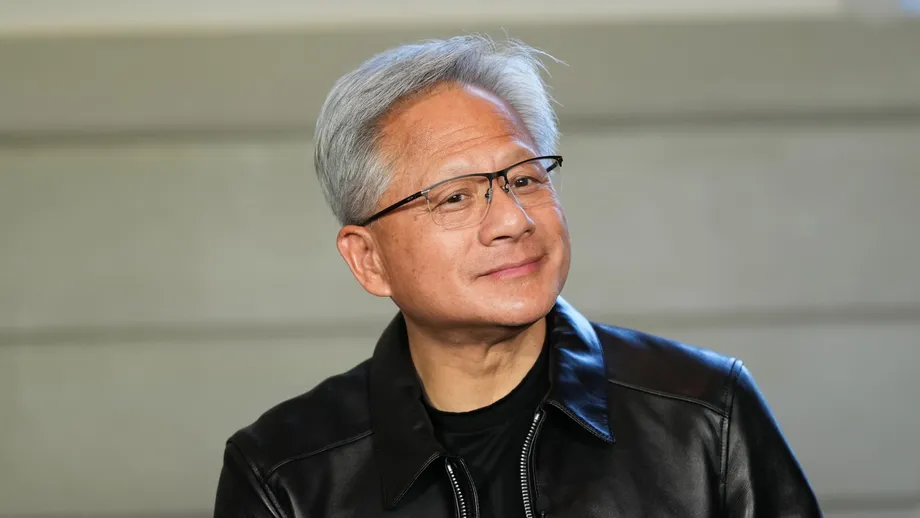
Nvidia founder and chief executive Jensen Huang visited Kazakhstan for the first time that day, meeting Deputy Prime Minister and Minister of Artificial Intelligence and Digital Development Zhaslan Madiyev at the Alem.ai International Artificial Intelligence Center in Astana. His message connected the country's energy resources with its ambition to sell computing services abroad.
Huang described the role he believed Kazakhstan could play in supplying the computing power needed to develop and run AI:
It's going to be a hub, a computing hub, an AI factory hub for all of Europe.
Kazakhstan is pursuing several parts of that ambition at once: large data centers, domestic AI models that understand Kazakh, investment in local developers, and robotics for industries such as mining and agriculture. Nvidia is involved through its chips, planned investment in Firebird, and newly announced backing for video generation company Higgsfield.
The immediate challenge is turning investment commitments, electricity capacity and chip permissions into operating services. Kazakhstan already has Nvidia computing systems in use, while its largest developments are scheduled for later delivery. The gap between those stages matters for businesses seeking access to AI today and for investors expecting a much larger computing market tomorrow.
What the Firebird agreement would build
Kazakhstan's government announced plans in June for a $10 billion AI infrastructure investment with Firebird, targeting a cluster powered by 100,000 advanced GPUs, including Nvidia chips. A GPU is a processor that can perform many calculations at the same time, making it useful for teaching AI systems to recognise patterns and for running them after training.
The October 23 announcement added an investment agreement with the Kazakh government and the US export license for 45,000 Grace Blackwell GPUs. The June plan describes the broader ambition of 100,000 GPUs; the October license covers 45,000 Nvidia units. The first commercial phase with Kazakhtelecom is expected in the third quarter of 2027.
Nvidia intends to invest in Firebird, which is pursuing approximately 2 gigawatts of AI infrastructure expansion across Armenia, Kazakhstan and other markets. That figure covers Firebird's wider expansion rather than Kazakhstan alone.
Ekibastuz, in northeastern Kazakhstan, is the location of Data Center Valley, the planned infrastructure hub at the center of the country's pitch. It has 300 megawatts of power capacity available, with plans to expand to 1 gigawatt. Since 1 gigawatt equals 1,000 megawatts, the proposed expansion would take capacity to more than three times the current level.
Kazakhstan is promoting competitive electricity costs, large land reserves and investment incentives to attract developers. Huang identified three ingredients for an AI economy: electricity, data and demand for AI services. Buildings and chips supply computing capacity; customers using that capacity give the investment a commercial purpose.
Existing computers and the next construction targets
Kazakhtelecom has already deployed 880 Nvidia GPUs in Astana and Almaty. It plans to add more than 2,000 GPUs in 2027, including over 1,000 Nvidia Vera Rubin processors in Ekibastuz. President Kassym-Jomart Tokayev also said earlier in October that two supercomputing clusters using Nvidia technology had been launched in Kazakhstan.
The country is courting other infrastructure investors too. Singapore's GK Hyperscale signed an agreement with the government to develop two hyperscale data centers, with expected investment of $1.5 billion and combined IT capacity of 200 megawatts. Hyperscale facilities house large amounts of computing equipment and are designed to expand as demand grows.
GK Hyperscale's project also includes a planned $1.2 billion investment in power infrastructure. Construction was initially scheduled to begin in early 2026, with the first data center module expected to operate in 2027. Its 200 megawatts refers to IT capacity, while Data Center Valley's figures describe available and planned power capacity.
The announcements therefore describe several different stages of development: equipment already deployed, electricity available for new facilities, and investment plans for future construction. The next dated commercial milestone for the Firebird and Kazakhtelecom facility is July to September 2027.
Why Kazakhstan wants AI that understands Kazakh
Madiyev used the discussion with Huang to ask whether Kazakhstan should build its own equivalent of ChatGPT, able to speak Kazakh and understand the country's cultural context. He said Kazakhstan had already developed several models using technologies with publicly available code or downloadable model weights.
Model weights are the numerical settings an AI system learns during training. When developers can download them, they can adapt and operate an existing model instead of building every part themselves. Madiyev asked when developing a foundational model from scratch would become worthwhile.
Huang supported domestic AI development and described control over national data as a security concern. He compared information about a population, its language and its culture with a country's natural resources.
Huang explained his position in terms of ownership and control:
That data belongs to you, just as your natural resources belong to you. The data of your society is also part of your natural resources.
Kazakhstan's Kazakh LLM drew praise from Huang for its use of national data. A large language model, or LLM, learns patterns in language so it can generate text and respond to questions. A model adapted to Kazakh can be designed around local language use and cultural context, rather than relying entirely on systems developed for other markets.
Domestic infrastructure is part of the same policy. Huang argued that countries should have the capacity to deliver AI services to residents, companies and public institutions, much as they maintain electricity, internet and telecommunications networks.
Public services offer an immediate use for the technology
Alem.ai's service center gave Huang a view of how Kazakhstan is already applying AI. The center features alem.gpt, a chat assistant that lets users interact through ordinary language. Its models run on Alem.Cloud computing clusters equipped with Nvidia H200 GPUs.
The visit also included demonstrations of eGov Mobile services, including digital documents, eGov QR and banking services such as digital mortgages. These applications connect the infrastructure debate with everyday tasks: finding a service, supplying documents and completing transactions.
Kazakhstan has declared 2026 the Year of Digitalization and Artificial Intelligence, established a dedicated ministry and adopted a Law on Artificial Intelligence. Tokayev has linked AI development to national competitiveness and sovereignty. Huang described Kazakhstan as the first country he had visited whose president had declared an intention to make it an AI nation.
Huang also called for responsible development as increasingly autonomous systems gain access to sensitive information and digital tools. His remarks in Astana followed his warning on unsafe developers in Britain, where he said he would consider stopping chip supplies after discussing concerns with a customer. Nvidia also committed $250 million worth of computing resources over five years to British AI safety research.
Higgsfield connects local developers with international capital
Higgsfield, the San Francisco company developing AI video technology, has more than 300 people working across engineering and creative teams in Kazakhstan. On October 23, it announced that Nvidia and investment firm TCV had joined an extension of its Series B funding round. The amount of the extension was not disclosed.
The company had raised $400 million in August at a valuation of $5.4 billion. Its presence in Kazakhstan adds a software and creative business to a national strategy often described through data centers and electricity supply.
Yerzat Dulat, Higgsfield's cofounder and a Kazakhstani AI engineer, described the company's decision to build a substantial team in the country:
Building a team in Kazakhstan was an unexpected bet for many. Today, we're backed by some of the most influential names in technology and media.
Huang also focused on the founders when discussing Nvidia's investment, saying:
The first thing and the last thing is you invest in people, not companies. And the founders of Higgsfield are visionary in the work that they do.
Robotics would take AI into Kazakhstan's industries
Kazakhstan presented a strategy for becoming a global Physical AI hub built around three elements: an institutional environment supportive of development, modern infrastructure and skilled people. Physical AI combines artificial intelligence with machines and systems that sense and act in the real world.
Huang identified mining, agriculture, logistics and energy as areas where Kazakhstan could develop such systems. He also described uses in geological exploration, seismic analysis, mapping mineral deposits and improving industrial processes. These applications connect AI with sectors in which the country already has industrial experience.
Farmers using robots to expand operations, scientists working with AI assistants and engineers developing more advanced designs were among Huang's examples. His argument was that AI could help people undertake larger or more complicated tasks across different professions.
Astana's proposed autonomous taxi trials provide a specific transport example. Under the Astana robotaxi testing plan, inDrive aims to test Pony.ai vehicles using Nvidia technology in the first half of 2027. The initial vehicles would carry a safety operator, and a launch depends on an agreement with Kazakhstan's government.
Huang's tour also included startups developing and manufacturing drones, automated projects and a presentation of Data Center Valley. These demonstrations showed how Kazakhstan wants computing infrastructure to support machines and industrial services, alongside chat assistants and video generation.
Training and regional connections complete the pitch
Astana Hub supported AI Month, which began on September 23 and concluded with Huang's visit on October 23. The program brought together developers, startups, researchers and technology companies. Huang stressed the need to train specialists and involve young people, universities, scientists and businesses in creating demand for AI.
Astana Hub chief executive Magzhan Madiev presented Startup City, a digital project using interaction between participants and game elements to help startups grow internationally. Huang also toured Alem.ai's Museum of Singularity, signed a 1998 Nvidia RIVA TNT graphics card for its collection and visited AI Cinema, which showcases content generated with AI.
Kazakhstan's regional technology ambitions also appeared in the Tianjin Declaration closing the 2025 Shanghai Cooperation Organization summit. Members noted the potential of platforms including an AI innovation center in Kazakhstan. An SCO event on AI in Astana earlier in October brought representatives together to discuss national strategies, regulation and technological cooperation.
International business interest extends beyond computing. Volkswagen's China business began leading vehicle exports to Uzbekistan in late June 2026, followed a few weeks later by an announcement of entry into Kazakhstan. That expansion uses existing Chinese manufacturing operations to serve neighboring markets, while Kazakhstan's AI pitch seeks to attract new computing infrastructure and export digital services.
The dates behind the expansion
Kazakhstan's announcements stretch from national policy to investment agreements and proposed commercial launches. The main milestones show how much of the expansion is scheduled for 2027.
- 2025: The SCO's Tianjin Declaration noted the potential of an AI innovation center in Kazakhstan.
- June 2026: Kazakhstan announced the $10 billion Firebird infrastructure plan targeting 100,000 advanced GPUs.
- August 2026: Higgsfield raised $400 million at a $5.4 billion valuation.
- September 23, 2026: AI Month began in Kazakhstan.
- October 23, 2026: Huang visited Astana; Firebird's license for 45,000 Grace Blackwell GPUs and Nvidia's investment in Higgsfield's funding extension were announced.
- First half of 2027: inDrive aims to begin supervised robotaxi tests in Astana.
- Third quarter of 2027: The first Firebird facility phase with Kazakhtelecom is expected to begin commercial operations.
Kazakhstan's next practical test is delivery: bringing planned computing capacity into service while developing customers, applications and skilled teams to use it. The existing GPU deployments, domestic language models and Higgsfield workforce provide a base for that larger expansion.
Key Points
- Firebird secured a US export license for 45,000 Nvidia Grace Blackwell GPUs for its Kazakhstan project.
- The broader $10 billion plan targets a cluster powered by 100,000 advanced GPUs.
- Data Center Valley has 300 megawatts of power capacity available and plans to reach 1 gigawatt.
- The first Firebird facility phase with Kazakhtelecom is expected to operate commercially in the third quarter of 2027.
- Nvidia and TCV invested in Higgsfield's funding extension; the company employs more than 300 people in Kazakhstan.
- Kazakhstan is combining infrastructure investment with domestic language models, public service applications and industrial robotics ambitions.