New Water Connections Show What the Investment Can Deliver
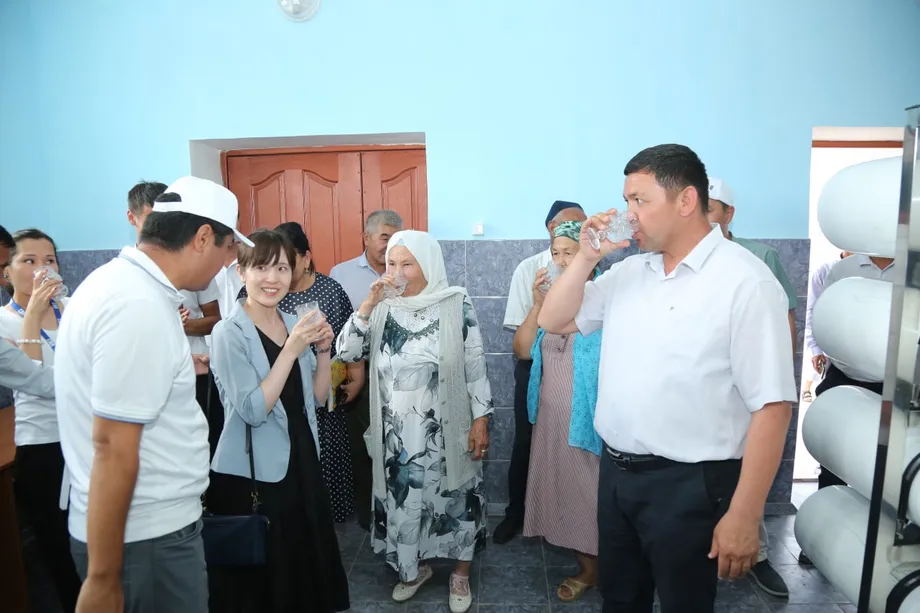
In Uzbekistan's Nukus district, 31,100 residents across 35 settlements have gained access to centralized drinking water for the first time through an $11.4 million project. Nearly 263 kilometers of pipelines and three reconstructed distribution facilities have raised the district's network coverage from 68.4% to 89.7%, an increase of 21.3 percentage points.
Contents
- New Water Connections Show What the Investment Can Deliver
- Why Karakalpakstan Receives a Large Share
- Drinking Water Gains Are Uneven Across Districts
- Amudarya Needs Pipes as Well as a Treatment Plant
- A New Road Section Builds on a Wider Trade Corridor
- Nukus 2 Adds Storage to Wind Generation
- How the Wind Project Is Financed
- Land and Livelihoods Are Part of the Energy Project
- The Dates That Matter for Delivery
- Key Points
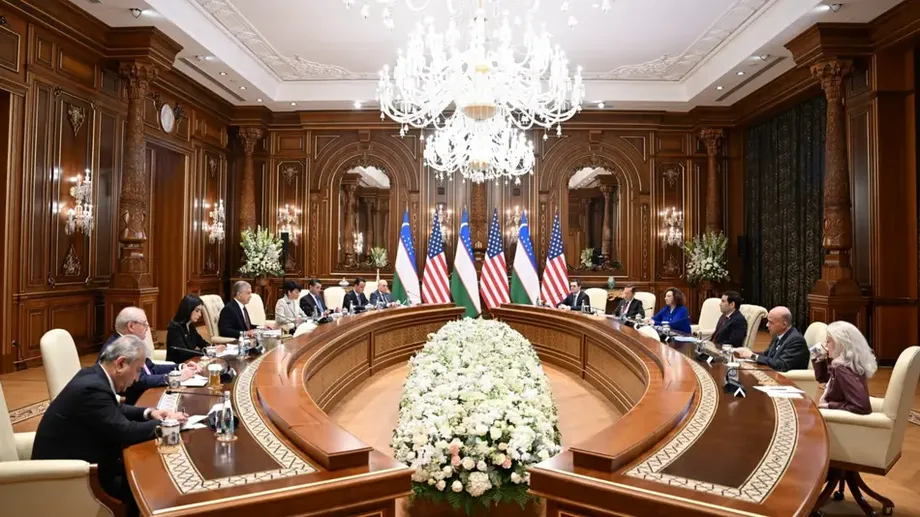
The work is part of a wider Asian Development Bank investment programme in Karakalpakstan, where officials presented more than $760 million in outstanding loans during ADB Days on October 14–16, 2026. Water systems, roads and renewable electricity are the main priorities in a region facing ageing infrastructure and growing demand for public services.
The bank says Karakalpakstan receives 20% of its Uzbekistan loan portfolio, while the region has about 5.5% of the country's population. Earlier discussions at the ADB Days opening put active sovereign operations at more than $780 million, compared with the more than $760 million in outstanding loans presented during the project tour.
Those figures describe different financing measures: outstanding loans are amounts still owed, while active operations describe a portfolio of projects. Across Karakalpakstan, the practical test is whether that financing produces working household connections, dependable electricity and roads that businesses can use throughout the year.
Five projects are being implemented directly in the region across roads, energy, water supply and agriculture. Karakalpakstan also benefits from seven projects covering Uzbekistan more widely. Visits to construction sites and completed facilities showed progress, alongside work still needed before every intended beneficiary receives a service.
Why Karakalpakstan Receives a Large Share
Karakalpakstan has more than 2.16 million residents, and its population is projected to grow by another 400,000 by 2050. That would represent an increase of about 18.5% from the population figure presented at the event, adding pressure to water networks, electricity supplies and public facilities.
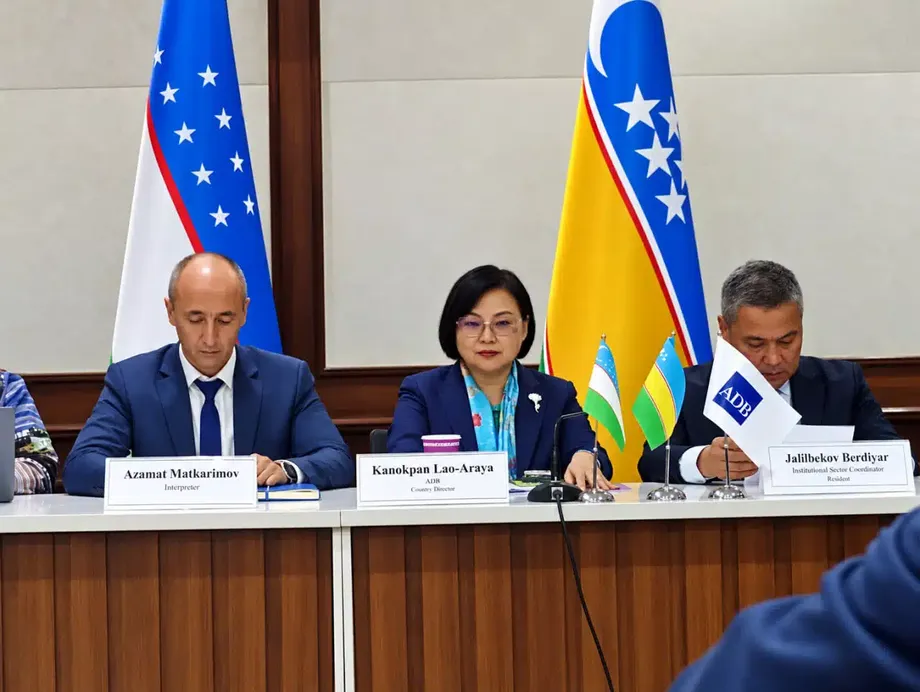
Kanokpan Lao-Araya, ADB's country director for Uzbekistan, described the region's location as an important reason for investment:
Karakalpakstan is an important gateway connecting Uzbekistan with other regions.
Climate pressures add another concern. Irrigation systems inherited from the Soviet period were largely designed around cotton cultivation. Ageing canals and distribution infrastructure lose water, while expected shortages make those losses more costly for farms and communities.
Pressure on services is already visible at Berdakh Karakalpak State University. Its rector said around 28,000 students attend an institution originally designed for 5,000, with teaching spread across four shifts and classes continuing until 9 p.m. That is 5.6 times the original student capacity.
Uzbekistan joined ADB in 1995. The bank's September 2025 financing announcement recorded $14.3 billion in commitments to the country; presentations at the October 2026 event put assistance since 1995 at more than $15 billion, covering loans, grants, guarantees and technical assistance.
Drinking Water Gains Are Uneven Across Districts
A water programme launched under an April 2019 presidential decree covers Amudarya, Beruniy, Karauzyak, Kungrad, Nukus and Muynak districts. Uzbekistan signed a $145 million ADB loan agreement for the initiative, scheduled to run from 2019 to 2026.
Project information presented during the tour put its intended reach at 326,000 residents. The programme description discussed at the ADB Days opening gave a higher figure of approximately 388,000 people across six districts and 116 rural settlements. The difference is 62,000 people; an explanation for the different beneficiary totals was not given.
In Nukus district, the completed work included reconstruction of the Madaniyat, Abadam and Kerder water distribution facilities. These facilities help move treated water through the network to individual settlements and homes.
Residents described previously walking several kilometers to collect 30 to 40 liters of water, carrying it on their shoulders or using carts. A household connection changes that daily burden by bringing water to the home instead of requiring repeated collection trips.
Jamoliddin Sagatkaliev, deputy director of Karakalpak Suvtaminot, the regional water supply company, said 75.1% of Karakalpakstan's population currently has access to centralized drinking water. Nukus district's 89.7% coverage is therefore 14.6 percentage points above the regional figure, showing how uneven access remains.
Amudarya Needs Pipes as Well as a Treatment Plant
Amudarya district has around 220,000 residents, but only half are connected to the centralized drinking water network. Other households rely on canals, streams, wells and artesian wells. Two projects costing a combined $42 million are intended to extend and improve service.
The first is the completed $13 million Mangit Water Treatment Plant, financed with an ADB loan. Designed to process up to 40,000 cubic meters a day, it takes water from the Amu Darya River through a dedicated channel, then through clarifiers and filters before pumping it into the distribution system.
Clarifiers allow suspended particles to settle out of the water. Filters remove further material before the water enters the supply network. The plant is intended to serve around 200,000 residents, but delivery to homes also requires the second project: $29 million of pipeline construction.
That project involves 260 kilometers of pipes and was reported to be 95% complete during the tour, with completion expected by the end of 2026. The new network will connect to the Mangit plant and replace the existing supply arrangement serving approximately 110,000 residents.
More than 180,000 people are expected to receive the improved service, including 70,000 gaining their first centralized connection. The projected coverage increase, from 50% to 82%, amounts to 32 percentage points. The plant's intended reach and the network's beneficiary target describe different parts of the same delivery system.
A New Road Section Builds on a Wider Trade Corridor
A $48.7 million road project is reconstructing 25 kilometers of the route connecting Andijan with Karakalpakstan. Construction began in 2024 and is expected to finish by the end of 2026. The wider route stretches approximately 1,850 kilometers.
The section presented during the tour has four lanes and a design speed of up to 120 kilometers per hour, compared with 60 kilometers per hour on the old road. Engineers described a concrete surface 27 centimeters thick above an additional concrete base measuring 18 centimeters. Around 300 workers are involved.
Karakalpakstan's road investment extends beyond this section. ADB's August 2020 A380 project report sets out an upgrade of about 240 kilometers between Kungrad and Daut-Ata on the Guzar–Bukhara–Nukus–Beyneu highway. The road forms part of Central Asia Regional Economic Cooperation Corridor 2, a regional trade route.
The A380 project includes intelligent transport systems for traffic management and equipment that weighs vehicles while they move. Controlling overloaded vehicles matters because excess weight damages pavement and increases maintenance needs.
A local entrepreneur transporting pellets to Türkiye, Belarus, Russia, Kazakhstan and Tajikistan described journeys on previously poor roads falling from 12–14 hours to 3–4 hours after reconstruction across the region. The account illustrates the value of the wider road programme, while the latest 25 kilometers remains under construction.
Nukus 2 Adds Storage to Wind Generation
The Nukus 2 project in Qoraozak district, also known as Karauzyak, combines a 200 megawatt wind farm with a battery system storing 100 megawatt hours of electricity. ADB describes it as Central Asia's first wind power facility with a battery storage system at utility scale.
ADB's September 8, 2025 wind financing announcement forecasts annual generation of 727,980 megawatt hours and avoided emissions of 406,170 tonnes of carbon dioxide equivalent each year. Carbon dioxide equivalent expresses the warming effect of different greenhouse gases using a common measure.
Megawatts describe how much power a facility can produce at a given moment. Megawatt hours describe an amount of electricity generated or stored over time. During the tour, project general director Sardorbek Makhmudov described the battery as 100 MW; ADB's documents specify 100 MWh of storage, the energy figure used for the project here.
A battery can store electricity and release it later, helping manage changes in wind generation and demand. The project also includes a 44 kilometer transmission line, expansion of the 220 kilovolt switchyard and upgrades at Beruniy substation, connecting the new generator to the national network.
Makhmudov said turbines were being brought online gradually and the battery was being prepared for commissioning. Describing the intended household reach, he said:
When our power plant is fully operational, we will be able to supply electricity to 300,000 homes at the same time.
ADB links the project to Uzbekistan's target of obtaining 54% of its electricity from renewable sources by 2030. The country's Strategy 2030 also targets 25 gigawatts of additional renewable capacity and a 35% reduction in greenhouse gas emissions per unit of economic output.
How the Wind Project Is Financed
Nukus 2 has a stated project cost of $258.9 million. ADB announced a $51 million loan package in September 2025, including $25.4 million from its ordinary capital resources and $25.4 million from the Leading Asia's Private Infrastructure Fund 2, which the bank administers.
The Asian Infrastructure Investment Bank, Dutch development bank FMO, Standard Chartered Bank and Saudi EXIM are parallel lenders. ADB also provided a $7.5 million credit guarantee backed by Uzbekistan's government. According to the bank, including that guarantee in the bidding process reduced financial risk and encouraged competition, helping secure a low electricity tariff.
The bank's Nukus 2 register identifies ACWA Power Beruniy Wind as the borrower and classifies the operation as an active nonsovereign project. This means the loan supports a company rather than being a direct loan to the government.
The register lists three committed loan entries of $24.90 million, $6.65 million and $24.90 million, totaling $56.45 million, alongside the announcement's $51 million package. Both official presentations place ADB financing within a larger project funded by several lenders.
Land and Livelihoods Are Part of the Energy Project
Nukus 2 requires 63.52 hectares for the wind farm and another 7.12 hectares for the transmission line, according to ADB. The land is currently used for farming and seasonal grazing.
A draft land acquisition and livelihood restoration plan identifies 39 affected households, comprising an estimated 260 people, including 93 people classified as vulnerable. It anticipates economic displacement, meaning reduced access to land or income, without requiring people to move from their homes.
ADB says additional potentially affected households were identified late in preparation of the draft plan. Their impacts are to be assessed in the final version. The borrower is responsible for compensation, measures to restore livelihoods and a mechanism through which affected people can raise complaints.
The project also requires environmental management measures, including a biodiversity plan intended to achieve no net loss of natural habitats and species of conservation concern. Those obligations make land access, local incomes and wildlife protection part of implementation alongside electricity generation.
The Dates That Matter for Delivery
Karakalpakstan's infrastructure programme stretches across several years, with completed facilities now sitting alongside projects approaching their stated deadlines. The main milestones are:
- April 2019: A presidential decree launched water supply improvements across six districts.
- August 2020: ADB published its report on the approximately 240 kilometer A380 road project.
- 2024: Construction began on the $48.7 million road section covering 25 kilometers.
- September 8, 2025: ADB and ACWA Power signed the announced $51 million Nukus 2 financing package.
- October 14–16, 2026: ADB Days included visits to water, road and wind projects in Karakalpakstan.
- End of 2026: Completion is expected for Amudarya's pipeline project and the road section covering 25 kilometers.
For Amudarya households, the next concrete step is completion and connection of the pipeline network to the Mangit treatment plant. For road users, it is the opening of the reconstructed section. At Nukus 2, turbines and storage must complete commissioning before the full planned system is operating.
ADB representatives said the bank monitors implementation under its supervision and international standards. Continued operation and maintenance will determine whether the new assets provide dependable services after construction crews leave.
Key Points
- More than $760 million in outstanding ADB loans was presented for Karakalpakstan during the October 2026 project tour.
- Nukus district added centralized drinking water access for 31,100 residents, raising coverage to 89.7%.
- Amudarya's $42 million treatment and pipeline programme aims to raise drinking water coverage from 50% to 82%.
- A $48.7 million road reconstruction project covering 25 kilometers is expected to finish by the end of 2026.
- Nukus 2 combines 200 MW of wind generation with 100 MWh of battery storage and a 44 kilometer transmission line.
- The wind project's draft land plan identifies 39 households facing effects on their livelihoods, with compensation and restoration measures required.