Utility mergers and health charges lead a broad reform package
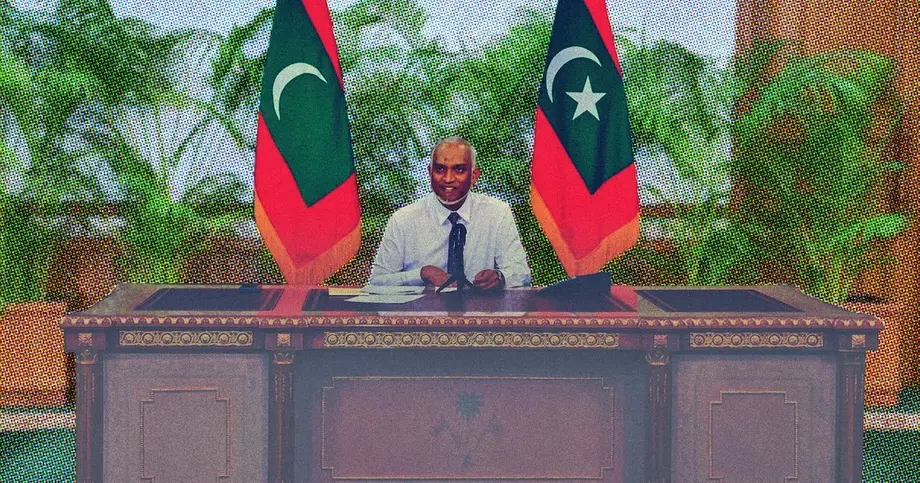
Maldives President Dr Mohamed Muizzu announced on September 7, 2026, that Fenaka Corporation and the Road Development Corporation will be dissolved, while higher earners will begin paying toward Aasandha health coverage in October. The government expects the health insurance change alone to save MVR287 million annually.
Contents
- Utility mergers and health charges lead a broad reform package
- What happens to Fenaka and its workers?
- RDC and the agriculture company face restructuring
- Who will pay more for Aasandha?
- Majority stakes sought in telecoms and water
- Ten resorts would distribute earnings to citizens
- Trade financing provides another financial channel
- Housing promises sit alongside an airport delay
- Court changes would create a route for smaller claims
- Press exclusions put access to the president in focus
- A dismissal and a national religious programme
- Key Points
Fenaka, which employs more than 8,000 people and provides electricity, water and sewerage services across much of the island nation, will transfer its operations to the State Electric Company, known as STELCO. The Road Development Corporation, or RDC, will be absorbed into the Maldives Transport and Contracting Company, known as MTCC.
Muizzu presented the mergers as a way to reduce spending on companies carrying out overlapping work. He also announced plans to seek majority government ownership of telecommunications and water businesses, develop 10 resorts whose earnings would benefit citizens, and change court procedures.
The briefing brought an immediate dispute over public scrutiny. Several media outlets were excluded, and the President's Office recording omitted the final 10 minutes of questions and answers, including an exchange about the invitation process.
What happens to Fenaka and its workers?
STELCO will take over Fenaka's powerhouses and other operations, becoming the nationwide service provider once the transfer is complete. For island residents, the change concerns the company responsible for essential services they use every day.
Muizzu described the intended endpoint of the transfer:
"Once this process is complete, STELCO will provide services across the entire Maldives. Therefore, all of Fenaka's operations will be transferred to STELCO, and Fenaka will be completely dissolved," the President stated.
Fenaka's workforce makes this more than a change of company names. Muizzu said the restructuring of Fenaka and RDC would reduce staff numbers, linking lower employment costs to his plans for a smaller state enterprise system.
Muizzu also cited an Auditor General's report on corruption under the previous administration as a reason Fenaka could not be sustainably reformed. Fenaka has 161 active Anti-Corruption Commission investigations, with MVR21.4 million ordered to be recovered. Those investigations and recovery orders form part of the financial pressure surrounding the company.
The government has not announced how many employees will lose their jobs, how transfers will be managed or when the mergers will be completed. Those details will determine how the restructuring affects workers and the continuity of island services.
RDC and the agriculture company face restructuring
RDC's work will move to MTCC, a company already involved in transport and construction. Muizzu said maintaining separate state companies doing similar work increases expenditure. The government also plans to increase its ownership stake in MTCC and reduce its workforce.
Combining operations could allow the government to bring management and project delivery under one organisation. The savings announced for this part of the programme were described in general terms, without a monetary target comparable to the MVR287 million forecast for Aasandha.
The Agro National Corporation, also referred to as AgroNat, will become a subsidiary of the Maldives Industrial Fisheries Company, or MIFCO. A subsidiary remains a company but operates under the ownership or control of a parent company.
MIFCO will also operate a local market where fishermen and farmers can sell their produce. That gives the agriculture restructuring a practical role beyond administration: bringing the organisation of food production and sales closer to the state fisheries business.
Who will pay more for Aasandha?
Aasandha, the public health insurance scheme, will change in October so that higher earners contribute through payments toward treatment and premiums or an annual fee. A payment toward treatment means the patient pays part of a bill while the scheme covers the rest.
The announced threshold is MVR60,000 a month, approximately US$3,890. The initial announcement describes people earning that amount or more as affected, while the accompanying accounts describe earnings above MVR60,000. The detailed policy, promised in the coming days, will need to settle how someone earning exactly MVR60,000 is treated and specify the charges.
Muizzu argued that giving wealthy people and vulnerable households the same full coverage was unfair. He said international financial institutions also supported changing that approach.
The president explained his position during the briefing:
"The rich, those who pay income tax, they do not necessarily need to receive all these services for free like the general public does. So we are bringing this change effective next month," the President announced.
Aasandha spending has repeatedly exceeded its budget in recent years. The projected MVR287 million annual saving is equivalent to about MVR23.9 million a month. That is the government's forecast for money it could redirect to other needs.
People below the threshold are intended to retain full coverage. For those above it, the practical change will be a new household expense when paying annual charges or receiving care, depending on the final rules.
Majority stakes sought in telecoms and water
The government will seek a 51 percent stake in Dhiraagu from Bahrain's Batelco. Holding 51 percent would give the state a majority shareholding in the telecommunications company.
Muizzu also said the government was working to buy back majority control of the Maldives Water and Sewerage Company from Japan's Hitachi. These proposals extend the restructuring programme beyond companies already under government control.
The ownership plans and the mergers address different parts of the state's business portfolio. Fenaka and RDC would disappear as separate companies, while the proposed Dhiraagu and water company transactions would increase government ownership of existing businesses.
Ten resorts would distribute earnings to citizens
Muizzu announced plans to develop 10 resorts through a state enterprise, with all Maldivian citizens benefiting as shareholders. A significant share of profits would be distributed equally each year in foreign currency, giving citizens a route to dollar income.
The government has selected 10 islands and lagoons in Malé atoll and elsewhere. Some projects are expected to begin in November, with resorts operating within three years. That makes the resort plan a longer project than the Aasandha changes scheduled for October.
Profit is the money a business has left after paying its costs. Citizen payments would therefore depend on the resorts being built, attracting guests and earning money after expenses. Muizzu's announcement connected future tourism earnings directly to annual household income.
Muizzu separately said changes requiring resorts to convert more foreign currency would take time. That measure concerns how tourism businesses exchange their foreign earnings, while the citizen resort plan concerns how profits from new properties would be shared.
Trade financing provides another financial channel
The International Islamic Trade Finance Corporation has signed a framework agreement to mobilise up to US$1.5 billion in trade financing for the Maldives between 2026 and 2031. The corporation is part of the Islamic Development Bank group.
The agreement covers imports of essential and strategic commodities, mainly through state enterprises. It also includes financing through local banks for small and medium businesses and the wider private sector.
Trade financing helps businesses pay for goods moving between countries. For the Maldives, the corporation's previous financing has mainly supported petroleum, staple food, medicine and construction materials, goods that affect electricity generation, household supplies, healthcare and building work.
The first framework agreement, signed in 2019 and concluded in 2024, produced US$1.7 billion in approvals. The new ceiling of US$1.5 billion is US$200 million below that earlier approved total. The corporation has approved more than US$3.3 billion for the Maldives since 2008 and has operated a revolving trade finance facility for the State Trading Organisation since 2017.
Housing promises sit alongside an airport delay
Muizzu said housing would be secured for the majority of citizens by about mid-2028 through flats, loans and financial assistance. Individual housing projects are expected to take 24 to 30 months.
The proposed support includes social housing, affordable Islamic finance loans from the Bank of Maldives and a planned equity finance scheme. Equity finance generally involves sharing ownership or an investment stake, rather than relying entirely on borrowing. The announcement placed several forms of support alongside direct construction.
Kaadedhdhoo international airport faces a different problem. Its development has been delayed, and Muizzu said the project involves a foreign investor and cannot be financed solely from the state budget. The government is considering options and hopes work can begin in 2026.
The dates announced at the briefing show how the programme stretches from immediate policy changes to construction over several years:
- September 7, 2026: Muizzu announces the company mergers, Aasandha changes and wider programme.
- September 13, 2026: Construction of the country's largest mosque is due to begin at a commemorative event.
- October 2026: Higher earners are due to begin contributing toward Aasandha coverage.
- November 2026: Some of the proposed citizen resort projects are expected to begin.
- About mid-2028: Muizzu's stated target for securing housing for the majority of citizens.
- Within three years: The proposed resorts are expected to be operating.
Court changes would create a route for smaller claims
The government plans to propose amendments to the Civil Procedure Code to reduce delays and make court cases more efficient. Civil procedure sets the rules for handling disputes such as unpaid bills, contracts and other claims between people or organisations.
The proposals include a small claims court for minor disputes, including cases involving MVR100,000. Such a court would give smaller financial disagreements a dedicated route through the justice system.
Technical studies are also examining whether to establish a commercial division within the civil court or create a separate mercantile court. Both options concern business disputes, but one would operate inside an existing court while the other would be a separate institution.
Press exclusions put access to the president in focus
Several media outlets, including Dhauru, were excluded from the press conference. Invitations were sent selectively by direct message instead of through the official media WhatsApp group normally used for announcements.
Muizzu said he did not know about the exclusions and was not responsible for deciding which journalists were invited. He described invitations as an administrative matter handled by the President's Office and said the office followed a published press conference policy.
The Maldives Journalists Association condemned the exclusions, saying it had received complaints from several widely read professional outlets. The association said restricting attendance obstructed press freedom and public access to information.
Muizzu maintained that press freedom and transparency had been unprecedented under his administration. Asked whether the invitation rules superseded constitutional safeguards for fundamental freedoms, he said journalists should check independently and would find that nothing had been done against the constitution.
The President's Office video omitted the final 10 minutes of questions and answers, including that exchange. Readers seeking information about the utility transfers, health charges and other announcements therefore faced both restricted media attendance and an incomplete official recording.
A dismissal and a national religious programme
Muizzu also announced the dismissal of his relative Hassaan Waheed, who had served as deputy ambassador to the United Arab Emirates and held a foreign ministry post. The decision followed documents circulating on social media showing that Ayatana Hospitalities, a company in which Hassaan holds shares, had been leased three islands in Thaa atoll with Indian businessmen. The lease amount was US$864,000.
The president said he learned about the matter through media coverage, asked Hassaan about it and was told that Hassaan held shares in the company. Muizzu said the arrangement was unacceptable for someone holding a government post and that Hassaan had been dismissed.
Cabinet has also approved a national respect initiative to take place on every inhabited island. Muizzu complained that opposition parties were discouraging their members from participating.
Boards displaying Islamic counsel and sacred phrases will be installed along main roads on inhabited islands to mark 900 years since the Maldives embraced Islam. Construction of the country's largest mosque is scheduled to begin at the September 13 commemorative event.
Key Points
- Fenaka will be dissolved into STELCO, while RDC's operations will move to MTCC.
- Muizzu said the restructuring would reduce staff numbers; Fenaka employs more than 8,000 people.
- Aasandha charges for higher earners are planned for October, with projected annual savings of MVR287 million.
- The government will seek majority ownership of Dhiraagu and the Maldives Water and Sewerage Company.
- Ten planned resorts would distribute a significant share of profits equally among Maldivian citizens in foreign currency.
- Housing, court reform and infrastructure plans have separate schedules, with the main housing target around mid-2028.
- The journalists association condemned media exclusions from the briefing, whose official recording omitted the final 10 minutes.