A flight through Badong's mountains draws millions of likes
Song Xingyu, a young inventor from Badong in China's Hubei province, has drawn widespread attention with a homemade electric flying board powered by 10 propulsion units. Video shows him flying through the mountainous landscape of Enshi and crossing the Yangtze River, turning an idea inspired by the Green Goblin's equipment in the Spider-Man films into a working experimental aircraft.
Contents
- A flight through Badong's mountains draws millions of likes
- What the flying board can do
- Why the first version caught fire
- Ten propulsion units and a large electrical demand
- Two phones help Song balance
- A workshop built beside the family home
- Earlier experiments brought crashes and debt
- Public attention brings scrutiny of safety
- Key Points
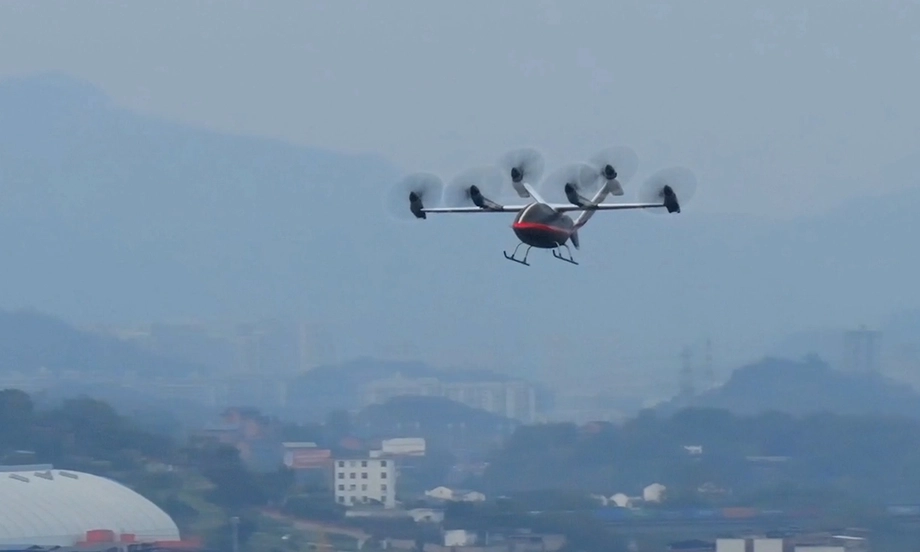
One flight has a particularly detailed account. Dai Xiaoying, a staff member at the Baren River scenic area, said Song's team filmed there on October 6. He flew for about two minutes and covered more than 300 metres, taking off beside the visitor reception centre and landing on a platform in the canyon.
Song, known online as Shenqi Ayu, built the electric version over roughly two months and spent more than 10 days learning to control it. His flying board video attracted nearly four million likes on Douyin, the Chinese video platform.
The attention has brought admiration for his practical engineering and concern about the risks of flying a homemade machine over difficult terrain. His earlier projects include a flight with a wearable jet wing during which his main parachute failed and a reserve opened at about 600 metres above the ground.
What the flying board can do
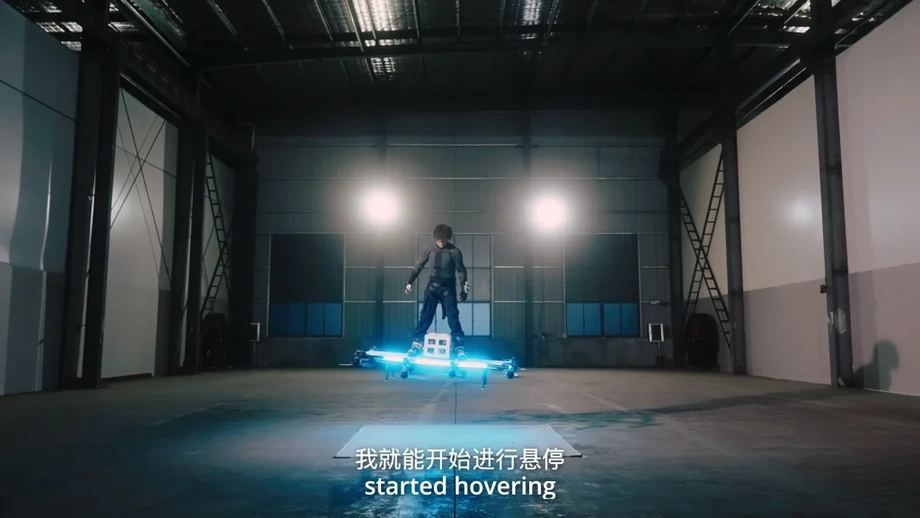
The electric board can take off vertically, hover and move in a straight line. Other test footage shows controlled landings at low altitude. Song also demonstrated the machine by flying into the centre of a stage at a technology event in Shanghai.
The Baren River flight offers a useful measure of one outing: roughly two minutes in the air and a route exceeding 300 metres. Dai said the team spent four to five hours at the scenic area, checking the location, adjusting equipment and filming before completing the flight.
The canyon flight, the Yangtze crossing and the Shanghai appearance describe different settings. The duration and distance Dai gave relate specifically to the scenic area flight. For readers trying to understand the machine's performance, that distinction keeps a short, documented route separate from the broader collection of dramatic video scenes.
Song's board is an experimental device controlled by its rider. Keeping his body balanced is central to its operation, making the training behind the footage as important as the motors underneath him.
Why the first version caught fire
Song initially built a board with five miniature turbojet engines. The stated combined thrust was enough to lift the equivalent weight of three adults. Each engine worked when tested separately, but starting them together caused a fire that destroyed fuel lines and electrical wiring.
The account of his development process describes a problem with the engine layout. The engines sat close together, with their exhaust outlets near the ground. Hot exhaust struck the surface and flowed back into the air intakes, causing a violent combustion event.
A turbojet needs incoming air to sustain its operation. In Song's arrangement, the engines were drawing in some of the hot gases they had just expelled. The experience illustrates a practical engineering difficulty: parts that function individually can behave differently when assembled into a compact machine.
Song submitted his test information to an artificial intelligence tool, which identified exhaust recirculation as the cause and recommended changing to electric propellers. He then abandoned the jet arrangement and built the second version around electric propulsion.
Ten propulsion units and a large electrical demand
The electric version uses 10 brushless propulsion assemblies, each with a stated thrust exceeding 30 kilograms. Brushless motors use electronic switching to drive rotation, rather than the physical electrical contacts found in brushed motors.
Adding those stated figures gives more than 300 kilograms of combined thrust. Here, kilograms describe thrust in terms of the weight it can counteract. The propulsion must support the board and its equipment as well as Song, while providing the force needed to control movement.
The descriptions compare the total thrust with the weight of more than four adults. Song's demonstrations show a single rider. The useful engineering figure is the stated combined thrust, while the machine's own weight and its power requirements also matter during flight.
The board's stated peak electrical current is 2,000 amperes. Current measures the flow of electric charge. Such a large peak makes the battery connections, wiring and heat management important parts of the design. Flight duration also depends on battery capacity and how much power the machine uses while airborne.
Two phones help Song balance
Song used two mobile phones to build an AI assistance system for flight training. One phone sits inside the board and collects information about its orientation. The other is worn on his wrist.
The system analyses movement and sends spoken guidance through a Bluetooth earpiece, telling him when his weight has shifted to one side or when he should adjust a knee. After each flight, it generates a training report with suggestions for improvement.
Small changes in a standing rider's position affect balance. Song therefore had to learn how his own movements interacted with the board's response. More than 10 days of repeated practice helped him achieve hovering and straight flight.
AI played two roles in the project: helping him assess the failed jet design and giving feedback during training. Song remained the rider making physical adjustments in the air. The phone system's contribution was to turn movement data into guidance he could act on.
A workshop built beside the family home
Song's interest in flight began long before the flying board. He left school at 14 and worked in his father's timber business. An old tablet given to him by a friend introduced him to foreign flight testing programmes, encouraging him to experiment with model aircraft.
Money shaped the early work. He collected leftover foam board from advertising shops for model bodies and used secondhand electronic parts supplied by people in model aircraft groups. His first model took a year or two of effort before it could fly.
In June 2022, he borrowed 19,000 yuan from his father to buy a used small truck and took out another loan of more than 20,000 yuan. Back in his rural home, he converted a disused woodworking shed into a laboratory, doing the wiring, furniture work and painting himself.
Tan Fengzhen, a staff member at Badong's government affairs service centre who visited the family, described a basic home beside a workshop containing electronic instruments, microscopes and tools. She also said his mother travelled with him to cook and help with projects. His father, Song Chaofu, expressed support for his ambitions while sharing the family's concern about safety.
Earlier experiments brought crashes and debt
Song's projects have repeatedly involved substantial financial and physical risks. His record includes a remotely controlled aircraft carried by helium balloons, a wearable jet wing and a furnished living room lifted into the sky by a hot air balloon.
The main dated events trace how his experiments developed:
- June 2022: Song returned to his rural home and began converting the former woodworking shed into a laboratory.
- May 2024: He took a homemade aircraft to a remote area of northwestern China for a balloon launch intended to reach 40,000 metres. A separation failure and loss of signal ended with the aircraft crashing.
- November 2024: He jumped from a helicopter at 5,000 metres wearing a homemade jet wing. His main parachute failed, and a reserve opened at about 600 metres.
- September 2025: He lifted a furnished living room using a hot air balloon and filmed himself preparing food aloft.
- December 5, 2025: He wrote publicly about debts exceeding 2.4 million yuan after other projects went wrong, and said support from an organisation had helped him repay most of the amount.
The 2024 balloon mission involved a journey of roughly 2,000 kilometres to the launch area. After the aircraft disappeared, Song recovered its wreckage about 600 kilometres away. Its camera had captured the view from around 40,000 metres.
The jet wing video brought a much larger audience: his Douyin following passed 400,000 within a month. His later account of debt described a jet aircraft crash and the loss of a large boat, showing the financial exposure behind the spectacular projects.
Public attention brings scrutiny of safety
Liu Bo, chairman of Badong Hongfa Industrial Development Group, who helped Song with filming, described him as quiet and cautious before flight. Liu said Song notified the relevant departments before flying.
Public reaction nevertheless included questions about flight safety and legal compliance. The October flights are described without a confirmed year; details of any formal flight authorisation, independently verified maximum endurance and a schedule for further tests have not been published in the accounts of the project.
The locations make those practical questions consequential. A canyon route requires a planned landing place, while a river crossing puts water beneath the rider. Song's earlier parachute emergency gives a concrete example of how quickly an experiment can depend on backup equipment.
His growing audience has brought collaboration requests and interview invitations. Speaking on October 18, Song said he was continuing experiments and filming and wanted to fly higher. The next stage of his work will involve the same demanding combination already visible in the board: propulsion, electrical power, rider control and careful preparation before takeoff.
Key Points
- Song Xingyu built an electric flying board in Badong, Hubei, inspired by the Green Goblin's equipment in Spider-Man.
- The board has 10 propulsion units with stated combined thrust exceeding 300 kilograms and peak current of 2,000 amperes.
- A scenic area staff member described an October 6 flight lasting about two minutes and covering more than 300 metres.
- Two phones provide movement data and AI voice guidance to help Song adjust his balance.
- The electric design followed a fire during testing of an earlier version with five turbojet engines.
- Millions of likes have been accompanied by concern about safety and legal compliance.