A narrow defeat ends a remarkable winning run
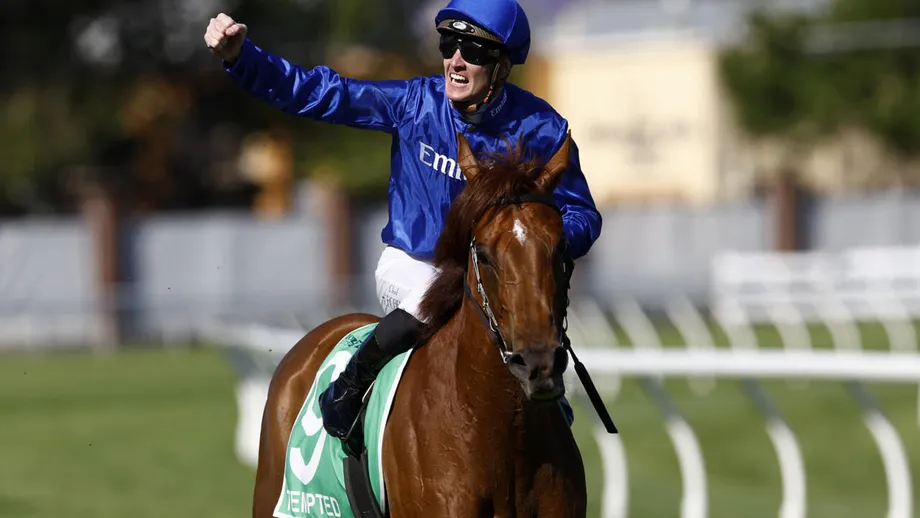
Tempted defeated Hong Kong champion Ka Ying Rising in the A$20 million Everest at Royal Randwick in Sydney on October 17, 2026, reversing their finishing order from last year and ending his run of 21 consecutive victories.
Contents
- A narrow defeat ends a remarkable winning run
- How barrier one became the winning advantage
- The move that left the favourite chasing
- Hayes points to the draw, not the ground
- Tempted turns last year's defeat into victory
- A huge favourite meets a prepared challenger
- Why a sprint carries A$20 million in prizes
- From Tuesday's draw to a return to Hong Kong
- Key Points
Ridden by Chad Schofield, the Godolphin mare used barrier one to secure an economical passage before accelerating clear in the straight. Ka Ying Rising, starting from barrier 11 under Zac Purton, raced wide and finished strongly but reached the line too late. Joliestar, trained by Chris Waller and ridden by James McDonald, finished third.
The winning margin was described as a long neck, although other accounts put it at a neck, half a neck or about a head. The narrow finish followed a much larger tactical gap: Tempted found room close to the inside while the favourite covered extra ground around the turn.
Tempted earned A$7 million, about US$4.9 million, for a winning time of 1 minute 8.21 seconds over 1,200 metres. The time was just under a second outside the track record set by Yes Yes Yes in the 2019 Everest. Ka Ying Rising suffered only the third defeat of his 25 starts, according to trainer David Hayes, and his tally of Group 1 victories remained at nine. Group 1 is the highest category of thoroughbred racing.
Hayes blamed the outside starting position and the difficult journey it produced. Despite concerns before the race about rain and softer ground, he said the surface had been ideal.
How barrier one became the winning advantage
Schofield began planning how to use Tempted's inside draw after Tuesday's barrier allocation. He discussed it with his father, former champion jockey Glyn Schofield, who saw the position nearest the inside rail as their biggest advantage.
A barrier is a horse's starting stall. On a course with a bend, a runner nearer the rail can travel a shorter route, provided the jockey can find space. A horse outside the field may have to cover more ground or drop back to find a position.
Tempted's first 200 metres helped shape both horses' races. Schofield asked her to go forward early, held his position and then took cover behind the leaders. Ka Ying Rising remained wide before Purton restrained him, leaving the favourite farther back than his team had expected.
Schofield, riding in The Everest for the first time, explained that he had changed his usual approach to Tempted because of the strength of the opposition.
"I normally just ride her to relax and trust her to be far too good late," he said.
Schofield said he watched Ka Ying Rising's position closely and held his own place to keep the favourite outside. Once Tempted had settled behind the leaders, she had the sheltered run he wanted.
The move that left the favourite chasing
Schofield drove Tempted through at about the 300 metre mark. He said she put three lengths between herself and her rivals, creating the advantage that would carry her through the closing stages.
Ka Ying Rising was sixth around halfway and had to come around the field. Hayes described his passage as six horses wide without cover. In racing, cover means having another horse ahead to provide shelter from the air and help a runner settle. Being wide without it combines a longer route with a more exposed journey.
Tempted was still about two lengths clear with roughly 200 metres remaining. Ka Ying Rising and Headwall came down the outside, while Joliestar challenged nearer the rail. Tempted's advantage shrank rapidly, but she held on.
The recorded opening and closing sections were 33.93 seconds and 34.28 seconds, adding up to 68.21 seconds. The close figures show how little the pace eased as the race reached its finish.
Schofield said the size of Tempted's initial acceleration made him think she would be difficult to catch, although the long Randwick straight left time for Ka Ying Rising to respond.
Hayes points to the draw, not the ground
Hayes watched from Caulfield and said Ka Ying Rising had settled farther back than planned. His explanation centred on barrier 11 and the extra ground the gelding covered, rather than the weather.
The trainer said the outside draw had initially looked capable of helping his horse, but the race unfolded differently. Tempted and Joliestar saved ground near the inside while Ka Ying Rising went around the field.
"The first and third horse cut the corner and really had dream runs, and we had a horror run being six-wide, no cover," Hayes said.
Hayes was explicit when assessing the Randwick surface after the race.
"The ground was absolutely perfect," he said.
Recent heavy rain had created concern because much of Ka Ying Rising's racing has been on firmer ground at Sha Tin in Hong Kong. The going was described as soft after an upgrade shortly before the start; another description placed it between good and soft despite sunshine before the race. Going is the racing term for the condition of the surface.
Purton offered a different observation about the venue itself. The jockey said Ka Ying Rising appeared to find Randwick difficult, even though he had won The Everest there a year earlier.
I don't know what it is about this track, but he struggles here for some reason," Purton said. "He was gone at the 300m but only his heart and class got him that close.
Hayes said he had spoken with Purton, who also pointed to the wide passage and the winner's favourable run. The trainer thought Ka Ying Rising had moved ahead a stride beyond the finishing post, a measure of how narrowly the late challenge fell short.
"I've had a chat with Zac (Purton) and he just thinks the barrier, getting caught so wide, and the winner had such a beautiful run. And well done to the winner. She's had a big spring," Hayes said.
Tempted turns last year's defeat into victory
Tempted entered this race with her own strong sequence. The four-year-old mare had won all five starts since finishing second to Ka Ying Rising in the 2025 Everest, when he beat her by a length and a quarter.
Saturday's result reversed that order and gave her the biggest victory of her career. Her progress since the previous meeting was central to Schofield's confidence, even with the world's highest rated horse in the field.
Schofield said he knew his ride would have to be precise, but believed Tempted could win. His father described watching the success as better than any major race he had won himself.
Trainer Ciaron Maher had expected Tempted to produce her best performance. After the race, he praised both the mare's effort and Schofield's judgment.
"Amazing. I thought she would run a personal best. I'm thrilled," Maher said.
Maher said the jockey understood the ability beneath him and that Tempted had needed an exceptional performance to win. He also said she had improved with each preparation and suggested there could be more progress ahead.
A huge favourite meets a prepared challenger
Ka Ying Rising started at decimal odds of A$1.35, with Tempted next in the market at A$7. A winning A$1 bet at those prices would return A$1.35 or A$7 respectively, including the original stake.
About 70 per cent of the betting money was placed on Ka Ying Rising, making him the most heavily backed favourite in the race's history. In simple terms, roughly seven of every ten dollars wagered went on the Hong Kong champion.
His record explains that confidence. The six-year-old gelding arrived seeking a 22nd consecutive win, with nine Group 1 successes already achieved and a previous Everest victory over the mare who would beat him.
Tempted was the second choice in the betting, however, and her five victories since their previous meeting gave substance to Schofield's belief. The result brought together two strong records, with the starting positions and the riders' early decisions helping separate them.
Why a sprint carries A$20 million in prizes
The Everest brings together 12 sprinters over 1,200 metres, equivalent to six furlongs or about three quarters of a mile. It is a showcase event of the Sydney Spring Carnival and the world's richest race on turf.
Its A$20 million prize pool ranks behind the Saudi Cup, which is run on dirt, among thoroughbred races. Tempted's A$7 million winning prize represented 35 per cent of the Everest total. Even the horse finishing last received A$700,000.
The winner's allocation was ten times the payment for last place. Those figures show why an event lasting little more than a minute can carry such large sporting and financial stakes for owners and the people who secure places in the field.
The race uses a slot system. Buyers pay A$700,000 for a place, then negotiate an arrangement to bring a horse into the race and share prize money. Twelve slots at that price amount to A$8.4 million.
The concept was modelled on the Pegasus World Cup in the United States, a race over 1,800 metres. The Everest is run under weight-for-age conditions, meaning the weight horses carry is set according to factors including age and sex, rather than adjusted to their individual racing records as in a handicap.
From Tuesday's draw to a return to Hong Kong
The decisive events stretched from the barrier allocation to a finish separated by a fraction of a second. The sequence also shows how Tempted's team turned a favourable draw into a practical race plan.
- 2025 Everest: Ka Ying Rising defeated Tempted by a length and a quarter.
- Between the two Everest races: Tempted won five consecutive starts.
- Tuesday before the 2026 race: Tempted drew barrier one and Ka Ying Rising drew barrier 11. Chad and Glyn Schofield discussed how to use the inside position.
- October 17, 2026: Tempted won at Royal Randwick, with Ka Ying Rising second and Joliestar third.
- After the race: Hayes said Ka Ying Rising would return to Hong Kong, targeting the Longines Hong Kong International Races and then Champions Day.
Hayes said the Hong Kong season was only beginning and expressed hope that Ka Ying Rising could return to The Everest next year. No firm commitment to another Australian attempt was announced.
"He'll be there on Longines day and then Champions Day, and this season is only just starting, so hopefully we might come back next year," Hayes said.
For Tempted, the immediate achievement was a reversal of last year's result and a victory over a champion who had gone 21 races without defeat. For Ka Ying Rising, the next task is to resume his season in Hong Kong after a narrow loss that left Hayes proud of his finish but disappointed by the outcome.
Key Points
- Tempted won the 2026 Everest at Royal Randwick on October 17, earning A$7 million.
- Chad Schofield used barrier one to secure an economical run before making his move about 300 metres from the finish.
- Ka Ying Rising finished second from barrier 11, ending a sequence of 21 wins.
- Trainer David Hayes blamed the wide passage and said the ground was ideal.
- Joliestar finished third for trainer Chris Waller and jockey James McDonald.
- Ka Ying Rising is expected to return to Hong Kong for the international races and Champions Day.