A 300 Baht Charge Could Consume a Day of Earnings
A patient contribution of 10% on a 3,000 baht medical bill would cost 300 baht, equal to a full day of earnings for someone paid that amount and half the 600 baht elderly allowance received by some older people. That calculation sits at the center of a community campaign against changes to Thailand's National Health Security Act of 2002.
Contents
- A 300 Baht Charge Could Consume a Day of Earnings
- What the Proposed Amendment Would Change
- The Existing Law Already Has a Payment History
- Why Campaigners Say Patients Already Contribute
- Patient Experiences Show More Than the Hospital Bill
- Who Gets to Decide Benefits and Budgets?
- The Dispute Has Recurred Across Several Years
- Financial Pressure Is Real, but Old Figures Need Context
- Alternatives Focus on Prevention and the Three Funds
- Key Points
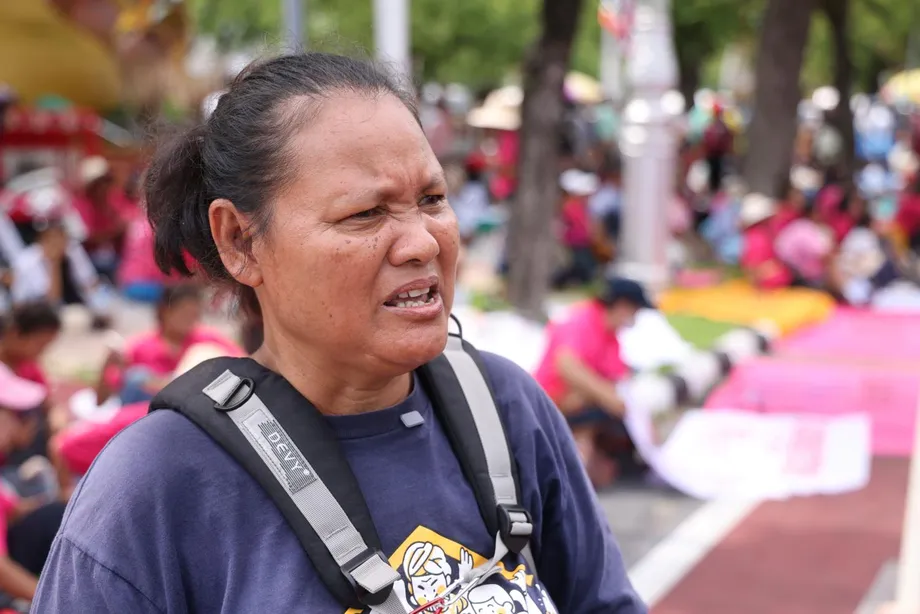
Wimon Thawinpong, a community leader in Bangkok's Sai Mai district, joined a march opposing the amendment on October 5, 2026. In comments reported on October 12, she urged lawmakers to stop changes that could require people using the Universal Coverage scheme, commonly called the gold card, to pay more when receiving treatment.
Her warning concerns the choice facing households with little money left after food and other necessities: pay for treatment or preserve income for the family. She fears some patients would endure illness rather than seek care. The 10% calculation was an illustration of that risk, not confirmation of an approved charge.
The dispute also concerns who controls health spending, how much influence patients retain and whether financial pressure should be addressed through hospital funding, purchasing reforms or charges at the point of treatment. An official notice from 2012 shows that the legal history is more complicated than a simple divide between free care and payment: the existing act already supported a limited 30 baht charge with exemptions.
What the Proposed Amendment Would Change
The Senate public health committee proposed amending the National Health Security Act in July 2026, with discussion of possible patient contributions. The proposal was expected to reach parliament in September or October. On August 26, the Thailand Consumers Council organized an opposing press conference at the Amari Don Muang hotel in Bangkok.
Campaigners warned that changes could weaken access to treatment without additional charges. They also challenged possible changes to the National Health Security Board and the wording used to describe covered services. These are concerns about a proposal, rather than evidence that parliament has approved a particular payment system.
The accounts do not establish a final contribution rate, a payment ceiling, a complete exemption list or a confirmed parliamentary vote. Those details matter: a fixed fee, a percentage of a bill and a charge restricted to particular services would expose patients to different costs.
The Existing Law Already Has a Payment History
The National Health Security Board's 2012 payment notice provides a concrete legal reference. Issued under Section 5, paragraph two, of the National Health Security Act, it prescribed a 30 baht contribution for each qualifying visit involving treatment and receipt of medicine.
The notice applied to designated providers, including Ministry of Public Health hospitals at community hospital level or above, other state hospitals, university hospitals and private hospitals of an equivalent level. It was signed on July 27, 2012, by Witthaya Buranasiri, then public health minister and chairman of the board, and took effect on September 1 that year.
Its exemptions covered health promotion, disease prevention, critical and urgent emergency treatment, poor people, other groups designated by the public health minister, and services at facilities below community hospital level.
This document establishes that the 2002 act already allowed a defined form of patient payment. It does not establish what every patient must pay today or what the 2026 amendment would require. The central distinction is between that historical fixed charge with exemptions and a possible contribution calculated as a share of treatment costs.
Why Campaigners Say Patients Already Contribute
Wimon argues that gold card beneficiaries already help finance public services through taxation, including value added tax on everyday purchases. In her view, requiring payment again at the hospital would shift more of the burden onto people least able to absorb it.
She also points to the scheme's allocation of money per eligible person. This approach, known as capitation, budgets a set amount for each person covered rather than treating every person's contribution as a separate medical account. Pooling resources allows money associated with people needing little treatment to help support those who become seriously ill.
Wimon believes that pooling makes additional patient charges unnecessary. Her comments do not, however, provide a current financial assessment proving that the budget is sufficient. Her argument about shared risk and taxation should be distinguished from a verified finding about hospital finances.
She recalls patients selling farmland, homes and other assets to pay medical bills before the scheme existed. Her concern is that higher charges could again force households to choose between protecting their livelihood and obtaining care.
Patient Experiences Show More Than the Hospital Bill
Patient accounts published on June 27, 2017, illustrate why even relatively modest charges can matter. Nimjin Jareno, then a 60 year old unemployed woman, described having diabetes, high blood pressure and asthma, with hospital visits every three months. For someone receiving regular treatment, payment is a recurring expense rather than a single emergency cost.
Nimjin supported voluntary help from people with more resources, rather than compulsory contributions. Referring to a donation box at a hospital providing breakfast to diabetes patients, she said:
But it should be their choice. People who have more should help others who have less.
Boonlern Jaremnoerwittayakul, then a 76 year old grocery store owner with high blood pressure, said he saw a doctor every three or four months. He recalled an eye treatment that would have cost 9,000 baht but for which he paid 30 baht using the card. This is his account of a particular episode, not a schedule of charges for all patients.
Waraporn Thongchalee, a roti and coffee vendor, described receiving emergency treatment without payment after cutting herself with a knife. Security guard Wiracha Sirinai said transport, food and other expenses already influenced whether he went to a hospital or bought medicine at a pharmacy instead.
That concern also appeared in the August 2026 campaign. Laphit Roekdee, secretary of the Phayao Foundation for Development, warned that people living far from hospitals would face patient charges on top of travel expenses. A low hospital fee can still be difficult to afford when the journey already consumes a substantial part of household income.
Who Gets to Decide Benefits and Budgets?
Meena Duangrasi, chair of the gold card rights protection center in Surin, warned that an amended board could include more service providers and a smaller share of public representatives. Her concern is that this would reduce patient influence over services, policy and spending.
She also challenged a possible distinction between basic benefits and other treatment. If some medicines or services fall outside a basic package, she fears patients could be required to contribute even when that care is medically necessary. The precise wording of an enacted amendment would be needed to determine whether that risk becomes a legal requirement.
Chalom Ketjinda, a pharmacist and vice president of the Songkhla consumer association, recalled that 50,000 public signatures helped bring a proposed gold card law into the legislative process in 2002. She urged additional funding per eligible person, support for medical staff and continued public involvement through local health funds, rather than treating patient advocates and health workers as opposing sides.
The Dispute Has Recurred Across Several Years
The 2026 campaign follows earlier arguments over amendments and patient contributions. The chronology shows that similar concerns have appeared under different political circumstances, although the proposals should not be treated as one continuous bill.
- 2002: The National Health Security Act established the legal framework at the center of the dispute.
- July 27, 2012: The National Health Security Board issued its 30 baht payment notice, effective September 1.
- June 2017: Amendment hearings faced protests, with three of four hearings abandoned after activists walked out or gathered in opposition.
- February 12, 2019: Leaders of four major parties were reported opposing a proposal for patients to pay 10% to 20% of treatment costs.
- July and August 2026: The Senate committee proposed amendments, followed by the consumer council's August 26 opposition event.
- October 2026: Wimon joined the October 5 march and made further objections reported on October 12.
In 2017, Prime Minister Prayut Chan-o-cha said the gold card would not be terminated. Public Health Minister Piyasakol Sakolsatayadorn said the amendment targeted financial mismanagement by some medical providers, rather than cardholders. Those assurances differed from the fears expressed by protesters and patients; neither establishes the content of the separate 2026 proposal.
Coverage figures also differ. Wimon cited more than 45 million beneficiaries, while the August 2026 campaign cited 47 million. The June 2017 patient account and February 2019 political debate used about 48 million, while a separate June 2017 financial discussion used about 49 million. These dated estimates should not be read as a verified trend without consistent enrollment data.
Financial Pressure Is Real, but Old Figures Need Context
Historical spending figures show why funding has remained part of the argument. The Universal Coverage budget rose from 55.3 billion baht in 2003 to 165 billion baht in fiscal 2017. That is an increase of 109.7 billion baht, or about 198%, making the later budget almost three times the earlier amount.
A June 2017 financial account also described a 5 billion baht emergency allocation for five hospitals experiencing liquidity problems. Liquidity means having enough available money to meet immediate expenses. A scheme can protect patients from bills while individual providers still struggle to pay operating costs.
The same account put the share of people aged 60 or older at 14% in 2016 and projected one quarter by 2025. It gave elderly welfare spending as 270 billion baht in 2014, with a projection of 680 billion baht by 2024. That wider welfare total included pensions and allowances, not just gold card healthcare.
These were historical figures and forecasts, not verified 2026 results. They explain the longstanding concern about financing an aging population but do not prove that patient contributions are necessary now.
One patient interviewed in 2017 said the allocation per person had risen from 1,500 to 3,200 baht. That recollection is not a current official funding rate. A judgment about today's budget would require current allocations, treatment costs and provider accounts, none of which is established here.
Alternatives Focus on Prevention and the Three Funds
Opposition to patient charges crossed party lines in February 2019. Pheu Thai, Palang Pracharath, the Democrat Party and Future Forward rejected the proposed 10% to 20% contributions while presenting different approaches to improving healthcare.
Khunying Sudarat Keyuraphan, then chair of Pheu Thai's strategic committee, advocated prevention, health promotion and better budget management. Speaking at a Bangkok seminar, she said:
The party will be gearing toward prevention and health promotion as well as wider public participation in the healthcare system,
Suvit Maesincee, then deputy leader of Palang Pracharath, proposed reducing medicine and supply costs through procurement changes and bringing the three main healthcare funds closer together. Those funds cover civil servants, employees enrolled in social security, and people covered by Universal Coverage. He also supported allowing patients to receive services at any hospital.
Abhisit Vejjajiva, then Democrat leader, called for sufficient National Health Security Office funding and argued that any additional burden should fall on those producing goods that contribute to illness, rather than patients. Future Forward leader Thanathorn Juangroongruangkit said the annual national budget of 2.33 trillion baht was sufficient to finance the scheme. That was a political position based on the budget cited at the time, not a current fiscal assessment.
In August 2026, Sunthorn Suriyo, chair of the Kanchanaburi consumer rights protection center, again proposed combining the three funds to reduce differences in benefits. The recurring alternative is to improve how public money is raised, distributed and spent before charging patients more.
The next decisive step is publication and parliamentary consideration of precise amendment provisions. September and October 2026 were the anticipated submission period, but no confirmed vote, approved contribution rate or commencement date is established. Until those details are settled, campaign warnings must be distinguished from legal changes already in force.
Key Points
- Sai Mai community leader Wimon Thawinpong urged lawmakers to stop amendments that could introduce additional patient charges.
- Her example puts a 10% share of a 3,000 baht bill at 300 baht, equal to a day of earnings for someone paid that amount.
- A 2012 official notice prescribed a fixed 30 baht charge with exemptions, including for poor people and specified emergency care.
- Campaigners also oppose possible reductions in public representation and restrictions on covered benefits.
- Historical budgets show substantial spending growth, but do not establish the scheme's current financial position.
- No final payment rate, exemption system or confirmed parliamentary vote is established for the 2026 proposal.