Unpaid cinema revenue stretches beyond the reported claims
Megabox Central's court rehabilitation has left 23 film distributors waiting for 5.26682 billion won in revenue from 52 films, while a separate complaints center recorded 2.46439 billion won in delayed payments to cinema operators, marketing companies and other businesses. Industry groups estimate a much larger unpaid balance of 23 billion won, exposing a gap between the claims reported to public authorities and the amounts businesses believe remain outstanding.
Contents
- Unpaid cinema revenue stretches beyond the reported claims
- Three distributors account for most of the surveyed balance
- Why regional cinemas are waiting for their own sales revenue
- Gyeonggi accounts for more than two fifths of reported payments
- The 23 billion won estimate measures a broader exposure
- The court process separates older claims from newer payments
- How the payment dispute developed
- Film organizations seek protection before repayment is settled
- Legal assistance is available, but dedicated financing is not
- Key Points
The distributor figure comes from a Korean Film Council survey of 105 companies, of which only 23 responded. The complaints center's figure covers 28 reports received by the end of August for payments accrued through June 14, the date Megabox Central applied for rehabilitation. These are separate measures with different coverage, not amounts that can simply be added together.
The immediate problem is access to money already earned. Independently operated cinemas depend on settlements collected through Megabox's payment systems, while distributors use their share of ticket revenue to pay partners and finance subsequent releases. Payments classified as rehabilitation claims must await the court process, with repayment dates and percentages still undecided.
The Ministry of Culture, Sports and Tourism and the Korean Film Council have arranged consultations and directed businesses toward existing policy loans. They have not established a separate liquidity program for those affected by Megabox's rehabilitation. That leaves businesses facing an uncertain wait for settlement money without a dedicated source of replacement funds.
Three distributors account for most of the surveyed balance
The Korean Film Council's June survey found substantial concentration within the unpaid distributor revenue. One company reported 3.55050 billion won outstanding across three films. Two others reported 744.89 million won and 520.29 million won, respectively.
Together, those three companies accounted for 4.81568 billion won, or 91.4 percent of the 5.26682 billion won reported by all 23 respondents. The largest claim alone represented about 67.4 percent of the survey total. Those figures show that a few businesses face particularly large exposures, although they do not establish how much financial capacity each company has to absorb the delay.
The survey's response rate was 21.9 percent. The unpaid balances of the other 82 companies are unknown, and the respondents cannot automatically be treated as representative of all distributors. Multiplying the reported amount to estimate the entire sector would therefore produce a figure unsupported by the survey.
Distributors typically receive roughly half of ticket revenue about 45 days after a film finishes its theatrical run. For a smaller company relying on receipts from one or two releases, a prolonged delay can interrupt plans to import another film, arrange its distribution or commit money to a new project. The size of an unpaid claim matters, but so does how dependent the business is on that particular payment.
Why regional cinemas are waiting for their own sales revenue
Franchise cinemas accounted for 21 of the complaints center's 28 reports, or 75 percent. Marketing companies filed three reports, distributors filed two, and other businesses filed two. Some cinema claims exceeded 100 million won.
These franchise locations trade under the Megabox brand but are operated by separate businesses. For ticket purchases involving telecommunications discounts or certain digital payment services, money is collected centrally before being settled with the local operator. When those settlements are delayed, the operator can be waiting for revenue generated by its own screenings.
The reported cinema claims were spread across nine provinces and metropolitan areas. Gyeonggi accounted for nine locations, North Chungcheong for three, and Incheon and Jeju for two each. Gwangju, South Jeolla, Busan, North Jeolla and South Gyeongsang each accounted for one.
Megabox operated 72 franchise locations in the first quarter, compared with the 21 that submitted reports to the support center. That means about 29.2 percent of those locations appeared in the complaints tally. The difference suggests limited reporting coverage, but it does not establish that every location that did not report had an unpaid balance.
Gyeonggi accounts for more than two fifths of reported payments
The nine reporting cinemas in Gyeonggi were located in seven areas and reported approximately 1.075 billion won in delayed settlements. Compared with the national complaints total of 2.46439 billion won, that is about 43.6 percent. The province therefore accounted for a larger share of the reported money than its share of the 28 complaints.
Suwon had the largest reported amount within Gyeonggi, at 365 million won. Hwaseong's Dongtan area followed with 243 million won, then Ansan with 142 million won and Hanam with 120 million won. Paju reported 83 million won, Siheung 73 million won and Yongin 50 million won.
The claims included unpaid cinema sales, screening settlements, receivables and advance ticket sales. These descriptions reflect several routes through which theater revenue can become outstanding, rather than a single uniform category of loss.
The regional figures identify where reported payment delays are concentrated. They do not reveal each cinema's cash reserves, other revenue, borrowing capacity or operating costs. They also do not establish whether the delay has caused a particular location to close.
The 23 billion won estimate measures a broader exposure
Distributor representatives estimate that Megabox Central owes approximately 15 billion won in distribution payments, using ticket issuance amounts from the integrated cinema ticketing network as their basis. A group representing Megabox franchise theaters estimates about 8 billion won outstanding across more than 70 locations. Together, those estimates reach 23 billion won.
That combined industry estimate is about 9.3 times the complaints center's 2.46439 billion won total. The distributor estimate of 15 billion won is also about 2.8 times the 5.26682 billion won identified among the survey respondents.
These comparisons illustrate the difference in scale, but not a verified shortfall in the public tally. The complaints center records submitted cases, the distributor survey records responses from a limited group of companies, and the industry estimates attempt to describe a wider balance. Their coverage and methods differ.
The distinction is essential to understanding the headline figures. The 23 billion won estimate is not a court approved total, while the complaints tally is not a complete census of everyone owed money. Potential overlap between reported claims and surveyed distributor balances also means there is no sound basis for combining all three figures into one total.
The court process separates older claims from newer payments
Megabox Central told distributors that unpaid claims accrued through June 14 would be treated as rehabilitation claims and repaid under a future rehabilitation plan. In practical terms, that puts their recovery within the court supervised restructuring process rather than the ordinary settlement timetable.
The company distinguished those older debts from claims arising from June 15 onward, which it said would be paid in the ordinary course after obtaining comprehensive court authorization. It also asked distributors to split June tax invoices between settlement amounts for June 1 to 14 and amounts for June 15 to 30, describing the latter as public interest claims.
That classification matters because the company described different payment routes for the two periods. It does not, by itself, confirm that every payment arising after June 14 has been made. The reported unpaid balances discussed here concern the older settlements caught in the rehabilitation process.
Seoul Rehabilitation Court ordered the commencement of Megabox Central's rehabilitation on June 30. The stated deadline for submitting its rehabilitation plan is December 1. The plan is expected to set out proposed repayment percentages and schedules, but submission is not the same as court approval or immediate payment to creditors.
How the payment dispute developed
The rehabilitation followed a wider liquidity crisis within the corporate group. JTBC failed to repay 20.6 billion won in securitized borrowing on June 12. Two days later, related companies including JoongAng Holdings, ContentreeJoongAng and Megabox Central sought rehabilitation.
The key dates trace the shift from a financing problem to unpaid settlement claims and calls for government intervention:
- June 12: JTBC failed to repay 20.6 billion won in securitized borrowing.
- June 14: Megabox Central applied for rehabilitation, the cutoff used for the older settlement claims.
- June 30: Seoul Rehabilitation Court ordered rehabilitation proceedings to begin.
- July: A coalition of 15 film organizations called for protective measures and consideration of early payment to smaller businesses.
- End of August: The Korean Film Council's complaints center had recorded 28 reports totaling 2.46439 billion won.
- September 21 and September 30: Megabox's Sinchon and Dongdaemun theaters closed, respectively.
- December 1: The stated deadline for Megabox Central to submit its rehabilitation plan.
No direct connection has been established between the Sinchon and Dongdaemun closures and the settlement delays reported by cinema operators or distributors. Their place in the chronology should not be mistaken for evidence that the unpaid claims caused those closures.
Film organizations seek protection before repayment is settled
Film Professionals Solidarity, a coalition of 15 organizations including the Korean Film Directors Association, has called for action within the rehabilitation process. Its concern is that ticket revenue held at the theater stage cannot move onward to the businesses involved in making and releasing films.
The coalition described the dispute as extending beyond individual creditors and Megabox Central:
not a simple matter of claims between individual distributors and Megabox JoongAng, but an issue directly connected to the production, distribution, and exhibition cycle of the film industry
In July, the group urged Megabox Central to consider early repayment of claims held by smaller businesses under Article 132 of the Debtor Rehabilitation and Bankruptcy Act, subject to court permission. That was a request for a possible remedy, not an announcement that the court had authorized payments or that eligible businesses would receive them.
The coalition also requested legal and accounting consultations, emergency liquidity measures and connections to related support programs. One distributor warned that delayed settlements could affect payments to advertising and publicity agencies, translators and digital cinema package providers. A digital cinema package is the collection of digital files used to screen a film in a cinema.
These warnings describe how payment problems could spread between businesses. They do not confirm that suppliers have failed, staff payments have stopped or companies have closed because of this dispute.
Legal assistance is available, but dedicated financing is not
The culture ministry and the Korean Film Council have held meetings with affected businesses, explained the rehabilitation process and provided legal advice on filing claims. Such assistance can help a business identify its claim, meet procedural requirements and understand how it will be handled.
For financing, authorities have pointed businesses toward existing emergency management loans and other policy funds administered through the Korea SMEs and Startups Agency and the Small Enterprise and Market Service. Those programs are not a dedicated compensation or liquidity scheme for Megabox creditors.
Eligibility and timely access are not guaranteed. Legal guidance can help protect a claim, but it does not replace the money needed to meet current bills. Existing loans may offer support to an eligible business, while still leaving it dependent on a future repayment decision.
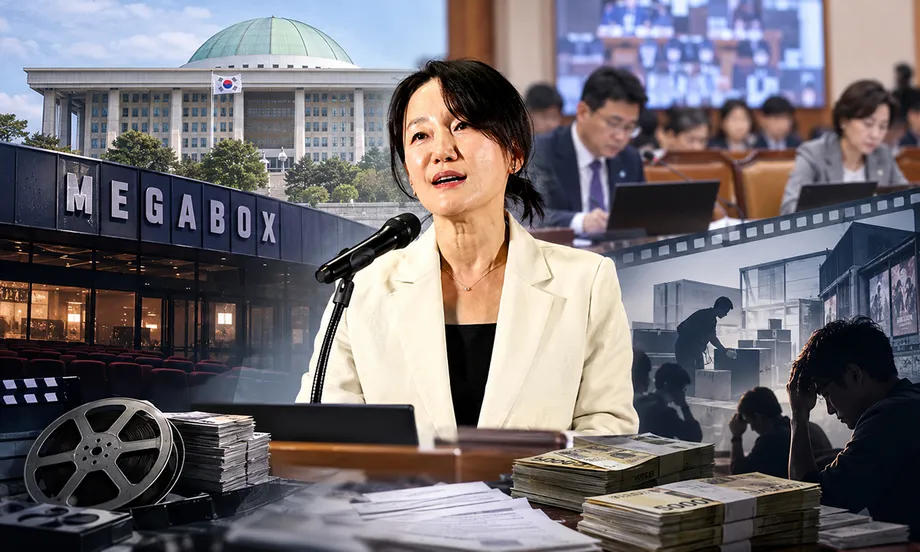
Lee Jae-jung, chair of the National Assembly's Culture, Sports and Tourism Committee, called for continued monitoring of the scale of the payment delays and the progress of rehabilitation. She also urged authorities to consider responses that would prevent smaller film businesses with limited financial resources from carrying a disproportionate burden.
The central unresolved issues are how much of the older settlement debt will be repaid, when creditors will receive it, and whether additional support will be introduced before then. The December 1 plan submission deadline is the next stated procedural milestone, not a guaranteed settlement date.
Key Points
- Twenty three distributors reported 5.26682 billion won unpaid across 52 films; only 21.9 percent of surveyed companies responded.
- A separate complaints center recorded 2.46439 billion won across 28 reports, with franchise cinemas accounting for 75 percent of cases.
- Industry groups estimate 23 billion won outstanding, but that broader estimate is not directly comparable with the complaints tally.
- Claims accrued through June 14 fall within rehabilitation, with repayment timing and percentages undecided.
- Authorities offer legal guidance and referrals to existing loans, but no dedicated liquidity program has been established.
- The stated rehabilitation plan deadline is December 1; no direct link has been established between reported settlement delays and the two September theater closures.