Fewer Medical Applications, More Questions About Career Choices
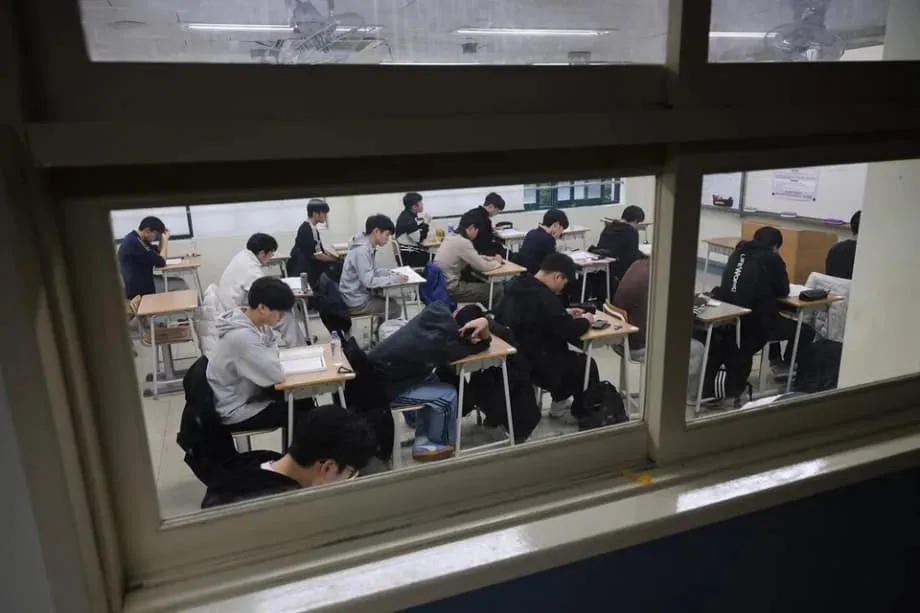
South Korean medical schools received 7,125 applications, the lowest number in five years and a decline of 32.3 per cent from the previous year, according to an analysis released on January 4 by Jongno Hagwon, a major college entrance preparatory academy. The findings have opened a debate about whether students are reconsidering the educational paths long associated with secure jobs and social advancement.
Contents
- Fewer Medical Applications, More Questions About Career Choices
- How Financial Insecurity Shaped University Ambitions
- Why Medical School Applications Fell
- STEM Degrees Face a Tougher Employment Test
- Regional Universities Gain Ground on Seoul
- A Smaller Student Population Changes the Balance
- Educators Call for a Different Entrance System
- AI Grading Is Part of the Reform Discussion
- Career Security Still Drives the Choices
- Key Points
The analysis of high school seniors who took the 2025 College Scholastic Ability Test, commonly called Suneung, also points to declining interest in science and technology institutes and a weaker preference for universities in Seoul. Applications to institutes including the Korea Advanced Institute of Science and Technology (KAIST) fell by 28 per cent for the 2025 academic year.
For decades, many families treated admission to a prestigious university in the capital, preferably to study medicine or science, technology, engineering and mathematics (STEM), as the surest route to financial security. The latest figures suggest that students are weighing those choices more carefully, particularly against employment prospects after graduation.
Jongno Hagwon cautioned that another admissions cycle would be needed before judging whether the medical school decline represents a lasting change:
While it appears that enthusiasm for medical school has cooled, it will be difficult to draw conclusions until next year's admissions cycle unfolds,
As of January 20, 2026, the picture combines several developments: changes in medical school quotas, a difficult entrance examination, uncertainty about employment and a shrinking student population. Students and parents are also reconsidering how much the cost and effort of higher education will pay off in later life.
How Financial Insecurity Shaped University Ambitions
South Korea's preference for medicine, STEM subjects and universities in Seoul grew out of experiences that reached well beyond the classroom. The 1997 Asian financial crisis brought a severe shortage of readily available money, a rapid fall in the currency's value and the near exhaustion of foreign reserves. The country was forced to accept a bailout from the International Monetary Fund.
Families experienced sudden job losses and lasting uncertainty about employment. According to Uway Apply, the centralised university application platform, the crisis changed how South Koreans thought about career stability. Choosing a degree became closely tied to finding protection against another economic shock.
Applications to STEM majors increased in the late 1990s as South Korea's information technology industry expanded. By 2000, three medical schools and one Korean medicine department headed the national list for the most applications. Medicine came to represent a combination of high income, social standing and employment security.
The expression "In-Seoul-dae", referring to universities in Seoul, also entered popular use. Greater government funding for institutions in the capital and stronger employment prospects for their graduates helped establish the belief that studying in Seoul was a prerequisite for reaching the upper levels of society.
Households poured resources into private tutoring academies, known as hagwons, to prepare children for the demanding Suneung examination. Competition was particularly intense for the "SKY" universities: Seoul National University, Korea University and Yonsei University. Their graduates occupy a majority of senior government posts and management positions in powerful business conglomerates.
The main milestones show how economic pressures and policy decisions helped shape the current admissions picture:
- 1997: The Asian financial crisis increased families' concern about job security.
- Late 1990s: Applications to STEM subjects rose alongside the information technology boom.
- 2000: Three medical schools and one Korean medicine department led the national application rankings.
- 2024: President Yoon Suk Yeol increased medical school quotas.
- 2025: Medical school quotas returned to their previous levels, while the difficult Suneung affected application choices.
- January 4, 2026: Jongno Hagwon released its analysis showing 7,125 medical school applications.
Why Medical School Applications Fell
Kim Ju-ha, a college entrance expert and director of the IDA Admissions Academy, linked the decline in medical applications mainly to changes in the number of available places. In her assessment, the admissions structure helps explain the figures more directly than a broad rejection of medicine.
Kim explained how smaller quotas affected both applications and the number of students taking the examination again:
Medical school applicants decreased this year because quotas fell again,
As quotas decreased, the number of Suneung retakers also declined, leading to fewer applicants overall.
President Yoon Suk Yeol's increase in medical school quotas in 2024 was followed by a return to previous levels in 2025. Students considering another attempt at admission therefore faced a changing number of places. That uncertainty likely discouraged some from pursuing the same route again.
The difficulty of the 2025 Suneung also encouraged more cautious applications. Even students with strong results had less confidence about securing a medical school place, according to Kim:
Even top-scoring students lost certainty and hesitated to apply to medical school, opting for other majors,
Kim described the change as a combination of temporary admissions conditions and students' response to competition:
I think it would be more accurate to say this phenomenon reflects a temporary structural change, combined with a competitive mindset.
A Jongno Hagwon survey conducted in May found that 66.8 per cent of students from elementary through high school still hoped to pursue medicine. That finding points to continued interest among younger students, even as the latest application numbers fell. Kim's assessment was that medicine retained its social value, while the circumstances of applying had changed.
STEM Degrees Face a Tougher Employment Test
Science and technology institutes, including KAIST, recorded a 28 per cent decline in applicants for the 2025 academic year. The decrease has prompted concern about the future supply of people entering research, engineering and other technical careers that support South Korea's competitiveness.
Engineering departments at universities in Seoul were traditionally popular choices. A university junior studying computer science in the capital, identified by the surname Kim, recalled the competition when entering the department:
When I first enrolled, it was very difficult to get into my department,
The student connected that demand to expectations created by the growth of artificial intelligence:
There was an AI artificial intelligence boom, and many believed studying computer engineering would guarantee jobs at large firms.
The technology sector's development and increasingly intense competition for jobs at major conglomerates have tempered those expectations. Students are recognising that a technical degree does not automatically bring employment at a large company. Some are looking instead for subjects with a more direct and immediate route into work.
South Korea faces competing demands as these choices change. The government has sought to address a shortage of doctors by increasing medical school places, while science and technology fields also need skilled graduates. Students seeking personal security may choose differently from what national workforce planning requires.
Critics warn that a continued move away from STEM could threaten South Korea's position as a science superpower. Their concern adds pressure for changes that would make research and engineering careers more attractive to young people. The medical application decline and the fall in applications to technology institutes have different explanations, but both put the connection between education and employment under scrutiny.
Regional Universities Gain Ground on Seoul
Universities in the Seoul metropolitan area recorded a competition rate of 6.01 applicants for each place, compared with 5.61 at universities in other regions. The gap was just 0.4, leaving the metropolitan rate only slightly higher for the first time in years.
A competition rate describes how many applications there are relative to the number of places available. The narrowing gap suggests that a university's location is carrying less weight for some applicants, who are paying closer attention to the subject they will study and the work it may lead to.
A university student surnamed Park described leaving a Seoul university to seek a different career route through education in Gangwon province:
I had enrolled at a university in Seoul, but decided to retake the Suneung this year to study education at a university in Gangwon province,
Park explained the employment calculation behind that decision:
I believe studying education outside of Seoul offers better job prospects.
Lim Seong-ho, chief executive of Jongno Hagwon, linked this preference for practical outcomes to the economic slowdown. He said students were increasingly distinguishing between the most prestigious institutions in Seoul and other universities in the capital:
Unless it is a top-tier university in Seoul, students are showing a clear tendency to choose competitive regional universities,
Lim said difficult employment conditions were influencing decisions in both the capital and the provinces:
With employment difficult both in Seoul and the provinces, applicants are prioritising practical outcomes.
Kim Ju-ha described a change in the question students ask when choosing where to apply:
Before, students prioritised which university they went to,
Now, the standard is what do I learn and what are my prospects after graduation?
Students and parents have greater access to information about employment rates and starting salaries. That information is helping them compare particular courses and career routes, rather than treating a Seoul address as the deciding advantage.
A Smaller Student Population Changes the Balance
The Ministry of Education projects that South Korea's elementary, middle and high school population will fall from roughly 5 million in 2024 to 3.8 million by 2031. The country is among the world's fastest ageing societies, and its falling fertility rate means fewer children will move through the education system.
Thousands of schools have already closed as student numbers have declined, particularly in rural areas. Universities must now compete more aggressively for a shrinking pool of future applicants. As the population reaching college age becomes smaller, the balance between available university places and demand for them changes.
Regional universities face the possibility of closure when enrolment is too low. To attract students, they are increasingly providing scholarships, better facilities and stronger connections with local industries. Those measures can make a regional institution more appealing to applicants who are focused on costs and employment.
Families are also considering Seoul's higher living costs compared with those in regional areas. The expense of attending university involves more than the course itself, and the location can affect how families judge the eventual financial return from a degree.
Similar choices are appearing elsewhere in Asia. Students from China and Japan are increasingly looking to regional education hubs such as Malaysia, Taiwan and South Korea's provincial cities for affordable education of a high standard. The cost of living in major capitals is becoming a deciding factor in those calculations.
South Korean admissions strategies are also becoming more divided. Students with the highest scores are preparing earlier for elite universities in Seoul, while others are targeting regional institutions with scholarships and clearer routes into employment. Prestige remains a powerful attraction at the top, even as other applicants place more weight on the opportunities attached to a particular programme.
Kim Ju-ha advised students to choose an admissions strategy that fits their abilities and the opportunities they want to pursue:
Students need to find strategies and admissions routes that highlight their strengths,
Educators Call for a Different Entrance System
The Suneung examination continues to shape the futures of hundreds of thousands of students, but its role has come under scrutiny following anger over the difficulty and alleged flaws of recent tests. Educators are also questioning whether the examination remains suitable in the age of artificial intelligence.
Fifteen senior educators, including an architect of the College Scholastic Ability Test (CSAT), sent an open letter to the president calling for the abolition of the current system. Their argument was that reliance on rote learning and multiple choice practice associated with the 20th century restricts the development of critical thinking.
Rote learning means remembering material through repetition. The educators' proposed change would place more weight on students' ability to explain ideas, reason through problems and write answers, rather than concentrating preparation on selecting an option from a fixed list.
Jung Keun-sik, superintendent of the Seoul Metropolitan Office of Education, has proposed a gradual departure from the CSAT, with complete abolition by the 2040 academic year. His proposal includes moving school tests to absolute evaluation and expanding written and essay assessments.
Absolute evaluation assesses a student's work against a set standard. In the proposed reform, that approach would sit alongside a greater role for answers written in students' own words. The 2040 target provides a proposed timetable for ending the examination; the plan is a proposal, rather than a completed change.
AI Grading Is Part of the Reform Discussion
The Ministry of Education is exploring artificial intelligence as a way to grade written responses. It plans to apply the technology to written answers in schools first, with the longer term goal of using it to standardise scores for subjective responses in the national examination.
Written answers require judgments about the quality of an explanation, rather than a simple check against one selected option. The ministry's approach seeks to make those judgments more consistent while giving students more room to demonstrate critical thinking and creativity.
Teachers' workloads are another part of the plan. Expanding written assessments would require more marking, and the ministry aims to support that change without increasing the amount of work teachers must do.
The proposal represents a departure from the standardised testing culture that has defined South Korean education for decades. It connects the debate about how students are assessed with the wider question of what they should learn before entering university and employment.
Career Security Still Drives the Choices
South Korean families continue to seek the security that made medicine, technical subjects and Seoul universities so attractive after the financial crisis. What is changing is how some students judge the route to that security.
The medical figures reflect reduced quotas, fewer examination retakers and more cautious applications after a difficult Suneung. The STEM decline sits alongside doubts about guaranteed employment, while the narrower competition gap between metropolitan and regional universities points to greater attention to specific courses and job prospects.
The projected fall in student numbers adds pressure on universities to compete for applicants. Scholarships, local industry connections and living costs give families more factors to weigh alongside reputation. At the same time, continued interest in medicine among younger students and early preparation for elite Seoul institutions show that longstanding ambitions remain influential.
The next admissions cycle will help clarify whether the medical school decline lasts. Beyond that immediate test, South Korea faces a projected school population of 3.8 million by 2031 and a proposal to end the CSAT by the 2040 academic year. Students' choices, university recruitment and assessment reform are developing together, with employment prospects at the centre of the debate.
Key Points
- Jongno Hagwon recorded 7,125 medical school applications, down 32.3 per cent and the lowest total in five years.
- Reduced medical quotas and a difficult 2025 Suneung contributed to more cautious applications.
- A May survey found that 66.8 per cent of students from elementary through high school still hoped to pursue medicine.
- Applications to science and technology institutes, including KAIST, fell by 28 per cent for the 2025 academic year.
- Competition rates were 6.01 applicants per place in the Seoul metropolitan area and 5.61 in other regions.
- Students are giving greater weight to courses, costs and employment prospects when choosing universities.
- The school student population is projected to decline from roughly 5 million in 2024 to 3.8 million by 2031.
- Jung Keun-sik has proposed ending the CSAT by the 2040 academic year, while the Ministry of Education explores AI grading for written answers.