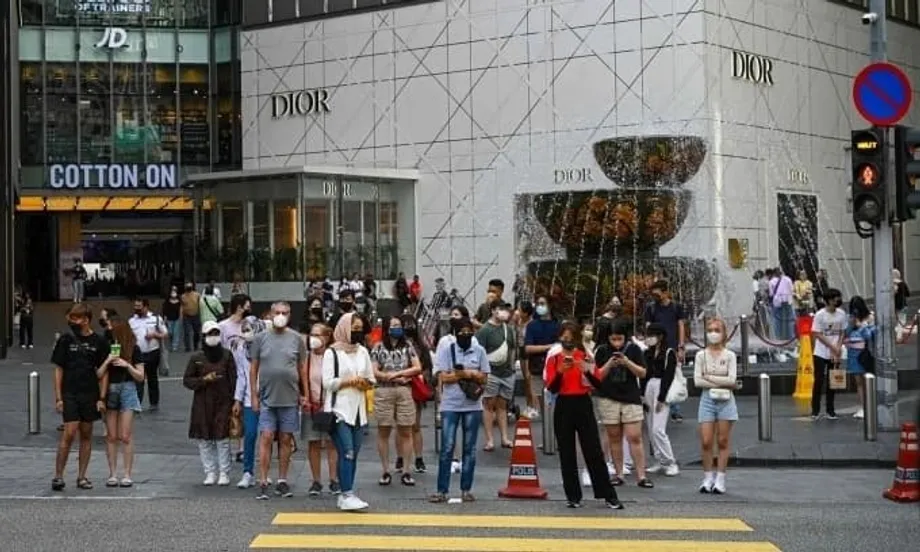
Malaysia Pulls Ahead as Thailand Loses Visitors
Malaysia welcomed 38.3 million foreign arrivals in the first 11 months of 2025, already exceeding its total for all of 2024 and securing its place as Southeast Asia's leading tourist destination for a second consecutive year. Thailand recorded 32.9 million arrivals across the whole of 2025, down 7% from the previous year.
Contents
- Malaysia Pulls Ahead as Thailand Loses Visitors
- Easier Entry Helps Malaysia Build Momentum
- Transport and Destinations Support the Growth
- Thailand Faces Several Setbacks at Once
- How Trusted Thailand Addresses Safety
- Visitor Markets Reveal Different Patterns
- Tourism and Spending Shape the Economic Picture
- Vietnam Adds to Regional Competition
- Thailand Sets Its Recovery Targets for 2026
- What Travelers Can Expect
- Key Points
Thailand's decline was its first annual fall in international visitors in a decade outside the pandemic period. The country had long led the region in tourism, drawing travelers with its beaches, food, cultural attractions and affordability. Malaysia's rise reflects changes in travel preferences alongside easier entry rules, better transport connections and investment in visitor facilities.
The figures show Malaysia ahead by 5.4 million arrivals despite its count covering only January through November, compared with Thailand's full year. Malaysia's December figure is not given. The ranking therefore rests on the totals available as of January 12, 2026.
Tourism matters to both economies because visitors spend money on accommodation, meals, transport, shopping and activities. Thailand's tourism sector typically accounts for approximately 18% to 20% of gross domestic product, while Malaysia's contributes around 15% to 16%. Gross domestic product, or GDP, measures the value of goods and services produced in an economy.
Malaysia entered 2026 with growing visitor numbers and stronger economic momentum. Thailand entered the year with a recovery plan that combines safety measures with efforts to attract travelers who spend more. Vietnam's rapid growth adds another competitor to a region where visitors have an expanding choice of destinations.
The changing rankings also reveal how closely these countries are connected. Singapore is Malaysia's largest source of visitors, while Malaysians themselves became Thailand's largest visitor group in 2025, narrowly ahead of travelers from China.
Easier Entry Helps Malaysia Build Momentum
Malaysia recorded a 10% increase in tourist arrivals in the first quarter of 2025 compared with the same period in 2024. The United Nations Tourism Organization recognized the country's growth trajectory and its approach to tourism development.
Malaysia has presented itself as a destination with a broad range of experiences, including beaches, rainforests, modern cities, shopping and dining. Its mix of Malay, Chinese and Indian cultures gives its tourism campaigns several distinct attractions to promote within one country.
Visa policies have been central to that effort. Malaysia introduced a visa exemption for Chinese travelers in December 2023 and also offers entry without a visa to Indian travelers until 2026. Removing the need to obtain a visa reduces the paperwork involved in planning a trip.
Malaysian Home Minister Datuk Seri Saifuddin Nasution Ismail described a further extension for Chinese travelers as lasting another five years, with 2026 given as the end date and the possibility of an additional extension until 2036. The stated duration and end date leave the precise timetable unclear.
China became Malaysia's second largest visitor market, contributing 1.12 million arrivals in the first quarter of 2025. The entry policy has helped make Malaysia attractive to travelers from a major market that regional destinations compete to reach.
Malaysia has also improved its digital visa systems, simplified applications and reduced administrative obstacles. Better airport coordination and more efficient processing have supported those changes, addressing both the arrangements travelers make before departure and their experience when they arrive.
Transport and Destinations Support the Growth
Malaysia's expansion of international air routes has made its destinations easier to reach. Kuala Lumpur International Airport's Terminal 1 underwent substantial upgrades aimed at increasing capacity and improving passenger comfort.
Investment has extended to transport networks, tourist facilities and hospitality businesses. Kuala Lumpur, Langkawi, Penang, Sabah and Sarawak in Borneo, and the Cameron Highlands have benefited from improvements intended to provide better access and more comfortable stays.
Malaysia's campaigns have promoted the Petronas Towers and Batu Caves alongside Langkawi's beaches and George Town's cultural attractions. Together, these destinations allow the country to appeal to visitors interested in cities, heritage, coastal holidays and nature.
More flights and easier entry work together: travelers need both permission to enter and a practical route to their destination. Malaysia has strengthened its flight services, including services operated by budget airlines catering to regional traffic, while improvements at airports and destinations support visitors after arrival.
Thailand Faces Several Setbacks at Once
Thailand reduced its forecast for foreign tourist arrivals in 2025 from 37 million to 33 million as difficulties accumulated. Its eventual total of 32.9 million was close to that revised forecast, but remained below the record of nearly 40 million visitors achieved in 2019 before the pandemic.
Kidnapping incidents received widespread attention during 2025 and caused concern about personal security among potential visitors. Such incidents remain relatively rare, but their visibility can influence travel decisions well beyond the places where they occur.
A deadly earthquake caused infrastructure damage and uncertainty about travel safety. Severe flooding in several regions also disrupted travel arrangements and reduced the appeal of affected destinations.
Thailand's border tensions with Cambodia added another source of concern. Curfews and heightened security affected districts in Sa Kaeo and Trat near the Cambodian border. Major tourism hubs including Bangkok, Phuket and Chiang Mai remained unaffected by those border measures, although the dispute generated negative publicity about regional stability.
Thailand's difficulties therefore reached travelers through several channels: concerns about safety, disruption from natural disasters and anxiety about the border situation. These pressures coincided with weaker arrivals from important Asian markets.
The sequence of policy changes and tourism developments stretches across several years:
- 2019: Thailand welcomed a record of nearly 40 million international visitors.
- December 2023: Malaysia introduced a visa exemption for Chinese travelers.
- 2024: Malaysia took the regional lead, while Vietnam recorded a 38.64% increase in international arrivals compared with 2023.
- First quarter of 2025: Malaysia's tourist arrivals rose 10% compared with the same period a year earlier.
- Late 2025: Thailand introduced the Trusted Thailand safety certification program.
- January through November 2025: Malaysia recorded 38.3 million foreign arrivals.
- Full year 2025: Thailand recorded 32.9 million arrivals, down 7%.
- 2026: Thailand is pursuing a recovery strategy, while Malaysia's stated visa exemption arrangements for Indian travelers run until this year.
How Trusted Thailand Addresses Safety
Thailand introduced Trusted Thailand in late 2025 to help restore international confidence. The certification program sets requirements for hospitality businesses across four areas: general safety, secure payments, visitor care and transport.
General safety requirements include mandatory CCTV and emergency response systems. Secure payments include integration with platforms such as Alipay and WeChat Pay, making familiar payment services part of the visitor experience.
Multilingual visitor care is another pillar, alongside standardized safe transport routes. These measures address practical concerns about getting help, paying for services and moving between destinations.
The program sits alongside Thailand's wider effort to improve tourism quality. Its purpose is to give prospective visitors greater confidence in the businesses and services they will use, particularly after incidents that damaged perceptions of safety in 2025.
Visitor Markets Reveal Different Patterns
Singapore was Malaysia's largest source market in the first quarter of 2025, contributing more than 4.9 million visitors. Geographic proximity, strong connections and travel across the border helped sustain that flow.
China followed with 1.12 million visitors, while Indonesia contributed 1.08 million. Singapore's total was more than four times China's, showing how strongly Malaysia's visitor numbers are supported by travel from its immediate neighborhood.
Malaysia's combination of Singaporean, Chinese and Indonesian visitors gives it business across several markets and reduces dependence on any single country. Regional traffic remains particularly important to the scale of its arrivals.
Thailand experienced a change in its leading source market. By the end of 2025, Malaysia had contributed 4.38 million visitors, narrowly exceeding China's 4.36 million. The difference was 20,000 arrivals. India ranked third with 2.4 million visitors, followed by Russia and South Korea.
China's weaker performance was a major part of Thailand's decline. Chinese arrivals fell 34.97% to 3.41 million during the first nine months of 2025. China's slower economic recovery and Thailand's difficulties in rebuilding confidence among Chinese travelers after the pandemic contributed to the shift.
South Korean arrivals fell 17.7%, while Taiwanese arrivals dropped 9.14% during the same nine months. These declines show that Thailand's weakness extended beyond China to other important Asian markets.
India and Russia provided brighter results. Indian arrivals increased 15.28% to 1.77 million during the first nine months of 2025, while Russian arrivals rose 9.71% to 1.27 million. Japan, the United Kingdom and the United States also recorded modest increases, showing continued demand from several markets despite Thailand's lower total.
Tourism and Spending Shape the Economic Picture
Malaysia's GDP grew 5.2% compared with a year earlier in the third quarter of 2025. Strong performance in tourism related industries and consumer spending supported the services and manufacturing sectors.
Malaysia's construction sector maintained growth in double digits, partly supported by infrastructure improvements connected with tourism development. The country achieved stronger growth than expected despite external economic pressures.
Thailand's economy expanded by 1.2% compared with a year earlier in the same quarter, its slowest growth rate in four years. Weaker tourism contributed to the slowdown, while exports, production and investment also lost momentum.
The difference between the two countries' quarterly growth rates was four percentage points. Their economic results reflect several forces, with tourism one of the important contributors alongside other business activity.
Thailand retained some resilience in visitor spending. Average expenditure per trip was estimated at 46,000 baht in 2025, an increase of 1.74% from the previous year. Fewer people visited, but those who came spent more on average, partly cushioning the financial effect of lower arrivals.
Visitor totals and spending measure different parts of tourism's economic value. Arrivals count the flow of people entering a destination; expenditure measures the money they spend. Hotels, restaurants, transport operators and other businesses depend on both, which helps explain Thailand's decision to pursue visitors with larger travel budgets.
Vietnam Adds to Regional Competition
Vietnam recorded a 38.64% increase in international arrivals in 2024 compared with 2023, ranking fourth globally among the fastest growing tourist destinations. It was on course to reach a record 21 million international visitors by the end of 2025.
Visa reforms, better infrastructure and an expansion of international flights supported Vietnam's recovery. The country outpaced many regional counterparts as it rebuilt tourism after the pandemic.
Tan Son Nhat International Airport in Ho Chi Minh City and Noi Bai International Airport in Hanoi recorded substantial passenger increases. Government marketing and policies encouraging investment in tourism helped support that growth.
Vietnam has become an increasingly prominent option for families, travelers seeking adventure and visitors interested in culture. Its coastlines, cultural sites and cities, including Hanoi and Ho Chi Minh City, offer experiences distinct from those of Malaysia and Thailand.
Improved connections from Europe and Australia have also widened Vietnam's reach. For Malaysia and Thailand, Vietnam's progress means stronger competition for visitors. For the region, a wider choice of destinations can encourage more varied itineraries and help expand tourism activity across several countries.
Thailand Sets Its Recovery Targets for 2026
Thailand's plans for 2026 include targets of 36 million to 39 million foreign visitors and tourism revenue of 2.8 trillion to 3.0 trillion baht, approximately US$82 billion to US$88 billion.
The Tourism Authority of Thailand (TAT) is targeting 36 million visitors. The Association of Thai Travel Agents (ATTA) believes 39 million is achievable if the Chinese market recovers. These are different ambitions: the higher figure depends on renewed demand from a market that contracted sharply in 2025.
Compared with Thailand's 32.9 million arrivals in 2025, a total of 36 million would mean an increase of 3.1 million visitors. Reaching 39 million would require 6.1 million more. The higher target would bring Thailand closer to its record of nearly 40 million in 2019.
Thailand's strategy, called The New Thailand, shifts attention toward attracting affluent travelers rather than concentrating solely on visitor volume. Health and wellness tourism, digital nomads and LGBTQ+ tourism are among its priorities. Digital nomads are people who work remotely while living or traveling away from their usual base.
Government projects backed by a budget of 4.5 billion baht aim to improve tourism quality and support sustainable growth. The Trusted Thailand certification program forms another part of the effort by addressing safety concerns that discouraged some visitors.
Thailand's beaches, culture, cuisine and affordability remain important strengths. Its recovery strategy depends on using those attractions while improving confidence and distinguishing its travel experiences from those of regional competitors.
What Travelers Can Expect
Malaysia offers travelers a combination of Kuala Lumpur's skyline, Penang's cultural attractions and Borneo's natural environments. Its reputation for being welcoming to families, orderly and relatively safe makes it attractive to families and travelers who place particular weight on reassurance.
Thailand continues to draw millions with its beaches, nightlife, cultural sites and affordability. A period of lower arrivals may bring fewer crowds or better value as destinations compete for business, although those are possibilities rather than promised benefits for every trip.
Vietnam provides another choice for travelers watching their budgets, with coastal destinations and cultural experiences alongside the activity of Hanoi and Ho Chi Minh City. Its growth broadens the range of places travelers can consider within Southeast Asia.
Entry arrangements remain an important part of planning. Malaysia and Thailand have introduced access without a visa for key markets, while policies continue to evolve as countries compete for visitors. Travelers can check official government websites or trusted travel platforms before departure for current requirements.
Flight access has improved across the region, giving travelers more direct services and route choices. Malaysia's stronger regional connections and Vietnam's improved links with Europe and Australia can make itineraries easier to arrange. Greater competition may also support better prices.
Malaysia's lead, Thailand's recovery effort and Vietnam's rapid growth show a region with several strong tourism centers. The immediate contest is about visitor numbers, but spending, confidence, entry policies and transport connections will also shape how much each economy gains from travel.
Key Points
- Malaysia recorded 38.3 million foreign arrivals in the first 11 months of 2025 and led Southeast Asia for a second consecutive year.
- Thailand received 32.9 million visitors in 2025, down 7%, its first annual decline in a decade outside the pandemic period.
- Malaysia's growth was supported by easier entry, expanded air routes, airport upgrades and investment in tourism facilities.
- Singapore contributed more than 4.9 million visitors to Malaysia in the first quarter of 2025, followed by China with 1.12 million and Indonesia with 1.08 million.
- Thailand faced safety concerns, a deadly earthquake, severe flooding and tensions along its border with Cambodia.
- Malaysia became Thailand's largest visitor market in 2025, with 4.38 million arrivals compared with China's 4.36 million.
- Thailand's average visitor expenditure rose 1.74% to an estimated 46,000 baht per trip in 2025.
- Vietnam's arrivals grew 38.64% in 2024, and it was on course for a record 21 million international visitors in 2025.
- Thailand's 2026 ambitions range from 36 million to 39 million foreign visitors and 2.8 trillion to 3.0 trillion baht in tourism revenue.
- Trusted Thailand and The New Thailand combine safety measures with efforts to attract travelers who spend more.