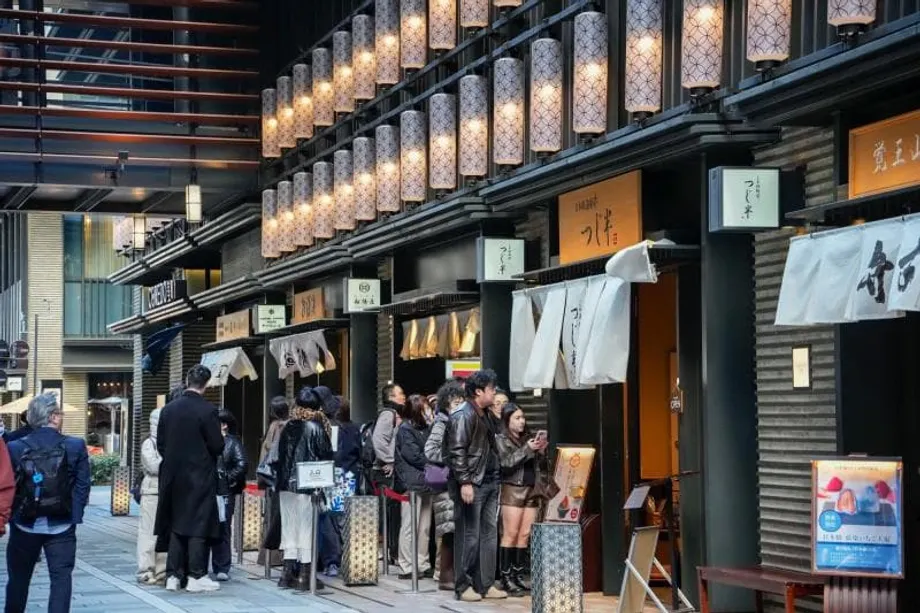
China's contraction reverses a decade of expansion
China lost approximately 15,260 Japanese restaurants between 2023 and 2025, driving the first decline in the worldwide total since Japan began tracking the spread of its cuisine overseas. A Japanese government survey released in late November put the number of Japanese restaurants abroad at about 181,000 in 2025, down from a peak of 187,000 in 2023.
Contents
- China's contraction reverses a decade of expansion
- Why China's restaurant market is shrinking
- Seafood restrictions add pressure to trade
- Latin America and the Middle East gain restaurants
- Where Japanese dining remains strongest
- Japan's export targets face a changing market
- Sake shows how demand is spreading
- Tourism disruption deepens the strain
- Osaka businesses count canceled bookings
- Regions seek a broader mix of visitors
- The dates behind the reversal
- Recovery means finding customers beyond China
- What to Know
The global fall of roughly 6,000 restaurants, or just over 3%, conceals a much larger contraction in the biggest overseas market. China finished the period with approximately 63,500 Japanese restaurants, almost 20% fewer than two years earlier. Expansion elsewhere, particularly in Central and South America and the Middle East, softened the worldwide decline.
Japan's Ministry of Agriculture, Forestry and Fisheries has compiled the survey every two years since 2013, when it counted 55,000 Japanese restaurants overseas. Even after the latest decrease, the international total remains more than three times that starting figure. The reversal nevertheless interrupts more than a decade of growth.
The ministry uses restaurant numbers as a reference for the international uptake of Japanese food products. Restaurants are places where customers encounter Japanese cooking, but they also provide a route to market for ingredients such as soy sauce, miso and seafood. Their changing geography matters to producers seeking customers abroad.
As of December 30, 2025, Japan faces two connected challenges: weaker demand in China and diplomatic tensions disrupting trade and tourism. Meanwhile, Japanese popular culture, interest in healthier food and rising demand in other markets are supporting growth beyond China. The result is a shift in where Japanese cuisine is expanding, even as its worldwide restaurant count falls.
Why China's restaurant market is shrinking
China remains the largest market for Japanese restaurants outside Japan despite losing nearly one in five establishments over two years. Its economic difficulties include weak domestic demand, a prolonged property industry crisis and high levels of local government debt.
The property downturn affects more than construction companies. Falling property wealth can leave households feeling less financially secure, encouraging them to reduce optional spending. Dining at restaurants serving international cuisine can be among the expenses consumers cut as they become more cautious.
Chinese customers are also prioritizing domestic alternatives. Japanese restaurant operators that expanded aggressively during the previous decade now face a less welcoming business environment, with difficult decisions about closing locations and reducing operations.
November's retail figures show the wider weakness in consumer spending. Sales rose just 1.3% compared with a year earlier, the slowest increase since December 2022. Automobile sales fell 8.3%, while purchases of appliances and audiovisual equipment dropped 19.4%.
Investment figures show businesses pulling back as well. Fixed asset investment, spending on assets such as buildings and equipment, fell 2.6% in the first 11 months of 2025. Property investment declined 15.9% compared with the same period a year earlier. The investment performance was the weakest since June 2020.
Seafood restrictions add pressure to trade
China's economic slowdown coincided with restrictions on Japanese seafood. Beijing began a blanket suspension of those imports in August 2023 after the release of treated water from the Fukushima Daiichi Nuclear Power Plant. The restriction added a trade obstacle to the pressures already facing Japanese food businesses.
Japanese food exports to China fell 14.6% in 2023 to ¥237.6 billion, even as Japan's total food exports reached a record ¥1.45 trillion. China had been Japan's largest destination for food exports, making the decline particularly important for producers selling overseas.
For Japanese restaurants in China's major cities, weaker consumer spending and political tensions arrived together. For exporters, fewer restaurants mean fewer potential customers for authentic Japanese ingredients, including premium soy sauces, miso pastes and specialty seafood products.
Latin America and the Middle East gain restaurants
Central and South America recorded approximately 2,400 additional Japanese restaurants, an increase of about 20%. Ministry officials linked the expansion to growing interest in anime and other forms of Japanese popular culture, especially among younger consumers.
Anime and manga can introduce audiences to a wider range of Japanese cultural interests, including food. This cultural crossover helps restaurants attract customers in markets where they face competition from local dining traditions and other Asian cuisines. It is an example of soft power, the ability of a country's culture to build interest and influence abroad.
The Middle East also recorded growth of about 20%, adding approximately 300 Japanese restaurants. The ministry attributed that increase to greater health consciousness among consumers and the perception of Japanese cuisine as a healthier alternative to other international dining options.
The region's relatively affluent consumers have shown growing appreciation for the fresh ingredients, lean proteins and vegetables associated with Japanese cooking. The different explanations for growth in Latin America and the Middle East show that demand is developing through more than one route.
Together, the two regions added about 2,700 establishments. That was much smaller than China's loss of approximately 15,260 restaurants, but it helped limit the worldwide decline. Growth outside China is becoming more important as the largest market contracts.
Where Japanese dining remains strongest
The United States remains the second largest overseas market for Japanese restaurants, with approximately 26,360 establishments. Its restaurant count showed relative stability while China's declined. South Korea ranks third with 19,800, followed by Mexico with 7,430.
China's 63,500 restaurants still exceed the combined 46,160 in the United States and South Korea. That comparison explains why a sharp contraction in China can outweigh gains across several smaller markets and move the worldwide total downward.
Europe is also showing growing demand for Japanese food products. Germany, France and Italy recorded strong sales as Japanese culture and cuisine gained popularity. Combined exports to the European Union and Britain increased 16.2% to ¥2.7 billion in 2024.
Growth across these markets gives Japanese businesses more places to sell their products. It also reduces their dependence on the economic conditions and political relationships affecting any single destination.
Japan's export targets face a changing market
Japan set food export targets of ¥2 trillion for 2025 and ¥5 trillion for 2030. China's import restrictions and economic slowdown have complicated that strategy, particularly because restaurants overseas serve as both showcases for Japanese food and customers for Japanese ingredients.
The government's 2025 target was ¥550 billion above the record ¥1.45 trillion in food exports recorded in 2023. Meeting higher targets requires producers to find additional demand while dealing with the loss of sales in an important market.
The United States has become a promising destination. Japanese food exports there rose 6.4% to ¥206.2 billion in 2023, supported by strong sales of buri, or yellowtail, and green tea. Demand for these products points to American consumers developing more varied tastes for Japanese ingredients.
Japanese businesses are therefore seeking growth in markets with stronger demand and more stable diplomatic relationships. The restaurant survey provides a practical guide to that effort: a growing restaurant sector can create more opportunities to introduce ingredients, while a shrinking one can reduce potential orders.
Sake shows how demand is spreading
Japanese sake exports rose 6.4% in 2024 to ¥43.5 billion. Sales to the United States increased 25.9% to ¥11.4 billion, approaching the ¥11.7 billion exported to China. The difference between the two destinations was just ¥300 million.
That growth offers a concrete example of diversification. China remained the larger sake export market, but the United States was close behind after a substantial increase. Producers gaining customers elsewhere have more options when demand or trade conditions weaken in one country.
Traditional sake making knowledge and skills were inscribed on UNESCO's Intangible Cultural Heritage list in December 2024. The recognition is expected to encourage further international interest in Japanese culture and cuisine.
The Japan Sake and Shōchū Makers Association is promoting sake to international visitors and working with sommeliers to expand its audience. Sommeliers, professionals who advise customers about drinks and food pairings, can help introduce sake to diners unfamiliar with it. Cultural recognition and direct promotion are both part of the effort to reach new customers.
Tourism disruption deepens the strain
Diplomatic tensions between Tokyo and Beijing have also affected travel, adding another source of pressure for Japanese restaurants, hotels and retailers. More than 500,000 flight bookings from China to Japan were canceled, and Chinese travel agencies halted group tours.
The disruptions were attributed to political and safety concerns, including controversial comments by Japanese officials and growing fears among Chinese citizens. Chinese visitors are typically Japan's biggest tourism spenders, making their absence costly for businesses that depend on them.
Japan's tourism revenue reached approximately ¥8.1 trillion in recent years, with Chinese visitors accounting for about one fifth. That share represents roughly ¥1.62 trillion, illustrating the scale of spending connected to the Chinese market.
Osaka, Japan's second largest economic hub, has been particularly affected. Kansai International Airport recorded the steepest flight cuts nationwide, while hotels, retailers and restaurants faced waves of cancellations. China also ordered its airlines to reduce flights to Japan through March 2025.
The restaurant contraction in China and the tourism disruption in Japan affect businesses on opposite sides of the same relationship. Japanese food companies face weaker demand abroad, while businesses in Japan lose spending from Chinese visitors.
Osaka businesses count canceled bookings
Denryu Lin, who operates about 80 vacation rentals in central Osaka, described a sharp loss of business beginning in late November as tensions between Tokyo and Beijing escalated. His cancellations involved hundreds of bookings and more than 1,000 Chinese guests.
Over 600 bookings—more than 1,000 Chinese guests—have been canceled through year-end,
Lin also described the pressure on people working in related businesses:
everyone I know in real estate and the travel industry is struggling.
His experience shows how a decline in visitors can spread across connected industries. Accommodation operators lose bookings, restaurants lose potential diners and retailers lose customers. Osaka's dependence on Chinese tourism makes the disruption especially difficult for businesses built around that demand.
Jiro Kobayashi, director of rooms at Stargate Hotel Kansai Airport in Osaka, said Chinese customers now account for 30% of the hotel's customers, down 20 percentage points from before the pandemic. The hotel is targeting Southeast Asia, Taiwan and South Korea to help fill the gap.
Kyoto's Yojiya cosmetics chain recorded a 10% drop in sales to Chinese visitors in late November, but increased domestic spending offset those losses. Some retailers have likewise maintained total revenue through domestic demand even as sales made without duty declined.
Regions seek a broader mix of visitors
Japan's government has encouraged regions to broaden their visitor mix since the reopening after the pandemic. Progress has been uneven, but some destinations are now less dependent on Chinese guests than they were in 2019.
In Gifu, Chinese guests account for 10% of stays, compared with 41% in 2019. In Shizuoka, their share has fallen to 45% from 71%. Those are declines of 31 and 26 percentage points respectively.
The lower shares come with lost revenue from Chinese visitors, while a broader customer base can make destinations less vulnerable to future disruptions in relations between China and Japan. Hotels seeking visitors from other parts of Asia are pursuing the same approach as food exporters entering additional markets.
Akiko Kohsaka, a senior researcher at Japan Research Institute, said the tourism downturn could speed up that change and affect how regions present themselves to potential visitors.
The abrupt decline in Chinese tourism may ultimately help accelerate Japan's pivot toward a more diverse visitor base,
Kohsaka also called for preparation beyond the immediate disruption:
It may prompt further shift in how regions position themselves in the market. It's important to lay the groundwork for the future.
The dates behind the reversal
Japan's changing restaurant, export and tourism markets developed over several years. The restaurant survey measures the change between 2023 and 2025, while the trade figures and cultural developments help explain how businesses have been adapting during that period.
- 2013: Japan began its survey of Japanese restaurants overseas, recording approximately 55,000 establishments.
- August 2023: China began a blanket suspension of Japanese seafood imports following the release of treated water from Fukushima Daiichi.
- 2023: The overseas restaurant count reached 187,000. Japanese food exports totaled a record ¥1.45 trillion, while exports to China fell 14.6%.
- 2024: Sake exports rose to ¥43.5 billion, with exports to the United States increasing 25.9%.
- December 2024: UNESCO inscribed traditional sake making knowledge and skills on its Intangible Cultural Heritage list.
- Late November 2025: Japan released the survey showing approximately 181,000 Japanese restaurants overseas. Osaka businesses also described cancellations as diplomatic tensions escalated.
- 2030: Japan's food export target is ¥5 trillion.
The latest figures describe a large overseas restaurant network undergoing a geographic adjustment. China still leads by a wide margin, but growth in other regions is increasingly important to Japanese businesses seeking new customers.
Recovery means finding customers beyond China
Japan's international food business retains a much larger base than it had in 2013. The worldwide restaurant count of approximately 181,000 compares with 55,000 at the start of the survey, while expansion in Latin America and the Middle East continues despite China's contraction.
The timing and scale of a recovery in Chinese demand are uncertain. Subramania Bhatt, chief executive of China Trading Desk, offered a forecast for tourism, predicting that Japan could regain part of the Chinese visitor volume it had lost over the following 12 to 18 months.
Japan can claw back maybe half to two-thirds of the lost Chinese volume over the following 12 to 18 months, but the era of treating China as an endlessly reliable growth engine for Japan tourism and for places like Osaka in particular is over for now.
Japanese food producers, restaurants and tourism businesses are responding by looking for a broader customer base. Sake's growth in the United States, restaurant expansion in Latin America and the Middle East, and hotels targeting other Asian markets show how that adjustment is taking shape.
China remains central to Japanese cuisine overseas, but the latest restaurant count makes the cost of depending heavily on one market visible. Japan's next stage of expansion is increasingly tied to demand spread across more countries and regions.
What to Know
- Japanese restaurants overseas fell from 187,000 in 2023 to approximately 181,000 in 2025, the first decline since tracking began in 2013.
- China lost approximately 15,260 establishments, nearly 20%, leaving about 63,500.
- Central and South America added approximately 2,400 restaurants, while the Middle East added about 300. Both regions grew around 20%.
- The United States has approximately 26,360 Japanese restaurants, South Korea 19,800 and Mexico 7,430.
- Japanese food exports reached ¥1.45 trillion in 2023, while exports to China fell 14.6% to ¥237.6 billion.
- Sake exports rose 6.4% to ¥43.5 billion in 2024. The United States accounted for ¥11.4 billion, close to China's ¥11.7 billion.
- More than 500,000 flight bookings from China to Japan were canceled amid diplomatic and safety concerns.
- Japan set food export targets of ¥2 trillion for 2025 and ¥5 trillion for 2030.
- The overseas restaurant total remains more than three times the 55,000 recorded in 2013.