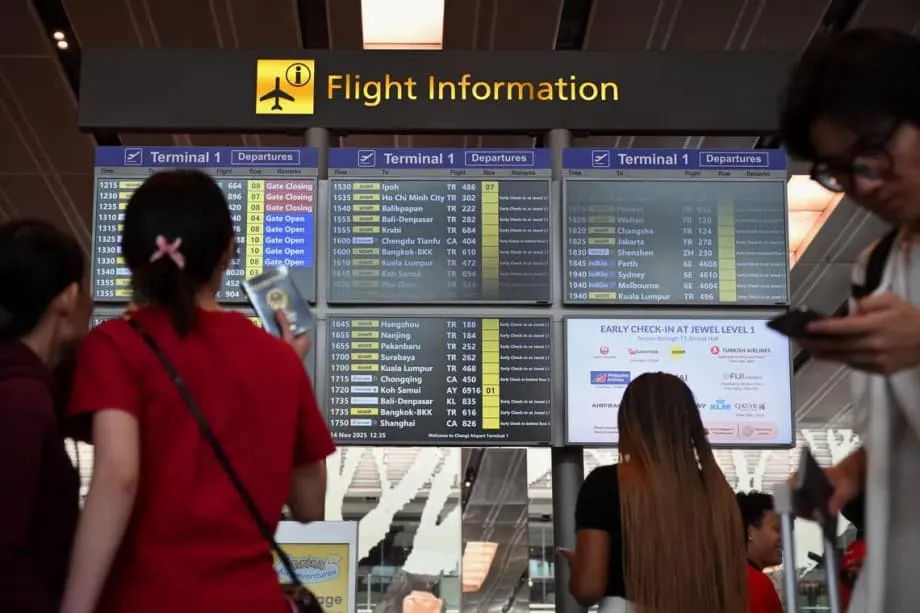
Border screening moves to the departure airport
Singapore will require airlines to stop travellers flagged by the Immigration and Checkpoints Authority (ICA) from boarding flights to the Republic from January 30, 2026. The new no boarding directive will apply to all airlines operating at Changi and Seletar airports, moving a key border decision to the airport where a journey begins.
Contents
- Border screening moves to the departure airport
- How ICA will decide who cannot board
- Who can be stopped before takeoff
- What airlines and crew must do
- What travellers should check before flying
- Rising traffic and more entry refusals
- Automation is changing checkpoint clearance
- Sea travel follows in 2028, while land poses difficulties
- Permanent residents gain time to renew permits overseas
- What to Know
ICA will issue notices identifying travellers whom carriers must refuse to board. The system covers people assessed as undesirable or high risk, those prohibited from entering Singapore and those who fail to meet entry requirements. A missing visa, where one is required, or a passport with fewer than six months of validity can trigger action alongside security, immigration and public health concerns.
Airlines that fail to comply can face fines of up to S$10,000. Pilots and airline employees who fail to follow the instructions can also face fines of up to S$10,000, imprisonment for up to six months, or both.
The change means a traveller who would previously have faced further scrutiny or refusal at a Singapore checkpoint may instead be stopped before departure. ICA says earlier screening will strengthen border security and reduce the enforcement work needed when travellers reach the arrival hall.
The framework will extend to vessels carrying travellers to Singapore in 2028. Alongside the aviation change, permanent residents overseas will receive a new period of 180 days to apply for a re entry permit from December 1, replacing a rule under which they immediately lost their status if they were outside Singapore without a valid permit.
How ICA will decide who cannot board
ICA already uses information supplied before flights depart to identify people who may need closer checks when they arrive. The no boarding directive, often shortened to NBD, allows the authority to act on that information earlier by instructing the airline to prevent a particular traveller from boarding.
Airlines share flight manifests and standard advance passenger information, including names, passport numbers and nationalities. A flight manifest is the list of people travelling on a flight. ICA also screens details submitted online by travellers through the SG Arrival Card.
Some carriers share parts of the passenger name record, which contains booking and contact details. Together, these records help authorities assess risk and check whether a traveller has a visa when required and meets general entry conditions, including passport validity.
The process builds on information that airlines already collect before departure and on procedures familiar to carriers and border agencies. Its main change is the timing of the action: ICA can require an airline to stop someone at the departure airport instead of waiting for that person to reach Singapore.
ICA may also direct airlines to carry out specific checks before a passenger or crew member boards. Those checks can include confirming that a visa is in place or verifying that the person has submitted the SG Arrival Card.
Who can be stopped before takeoff
Travellers who pose security, immigration or public health risks fall within the directive. It also covers people previously barred from entering Singapore after certain criminal convictions, as well as other prohibited or undesirable travellers.
Routine document problems can also lead to a boarding refusal. Someone who needs a visa but does not have one, or whose travel document expires in fewer than six months, may be stopped before leaving for Singapore.
A traveller who believes a directive was issued in error can contact ICA for guidance. Anyone denied boarding who still wishes to visit must first write to ICA and receive approval before booking another flight.
Correct documents and an explanation of any mismatch will be important for a fresh assessment. A new passport or updated visa may require clarification, particularly when the details held in a booking or travel submission differ from the documents the traveller intends to use.
What airlines and crew must do
Airlines receiving a no boarding notice must ensure that the named traveller does not get on the flight. ICA may also require staff to verify a visa, check an SG Arrival Card submission or complete other checks before boarding.
Carriers will need to make these instructions part of their departure procedures. The obligation applies when a notice is received, making the boarding process a point at which Singapore's entry decision must be carried out.
The penalties place responsibility on both operators and individuals. Airlines can be fined up to S$10,000 for noncompliance, while pilots and airline employees can face a fine of the same maximum amount, up to six months in jail, or both, for failing to comply with instructions tied to the directive.
Airline crew and other staff travelling on duty are also covered by the new process. Carriers may need to add checks to crew travel arrangements to confirm that documents remain valid and required submissions are complete before departure.
What travellers should check before flying
Travellers planning a trip to Singapore should review their documents before departure. The directive allows entry problems to be addressed at the airport where they board, so a missing document can interrupt the journey before the flight begins.
Visa requirements, passport validity and matching personal details are the main practical checks described in the new process. Travellers should also complete their SG Arrival Card online before flying and ensure that its details match their passport and booking.
- Confirm whether a Singapore visa is required and apply in advance if it is.
- Check the passport expiry date. Many travellers must have at least six months of validity.
- Submit the SG Arrival Card online before departure, with names, passport numbers and travel dates matching the booking and passport.
- Bring the same passport used for the visa and SG Arrival Card submission.
- Contact ICA before making new plans if there has been a previous entry refusal or an existing restriction.
Travellers with an existing restriction should seek guidance before reaching the check in counter. Those stopped under an NBD must obtain ICA's approval before arranging a new flight.
Keeping visa approvals, updated passport details and proof of SG Arrival Card submission can help resolve mismatches quickly. These records give travellers the information needed to explain a document change or correct an error when seeking a fresh assessment.
Rising traffic and more entry refusals
About 230 million crossings took place through Singapore's air, sea and land checkpoints in 2024. Further growth is expected as major transport and border projects come into service, increasing the need to manage large numbers of travellers while identifying people who require closer scrutiny.
The projects include the Johor Bahru Singapore Rapid Transit System, Changi Airport Terminal 5 and the expansion of Woodlands Checkpoint over the longer term. ICA's approach combines more automation for routine journeys with earlier risk assessment.
In the first half of 2025, the number of foreigners refused entry at Singapore's borders rose by about 43 percent compared with the same period in 2024. ICA attributes the increase to improved profiling and detection, which helped identify more high risk travellers before arrival, rather than simply to more people travelling.
Moving the decision to the departure airport builds on those screening changes. For arrival operations, the purpose is to reduce the number of cases that must be dealt with after a traveller has already reached Singapore, while keeping clearance quick for visitors who meet the rules.
Automation is changing checkpoint clearance
Singapore has introduced passportless immigration clearance at air and sea checkpoints using facial or iris scans. At land checkpoints, travellers use QR codes for clearance at automated gates.
These systems form another part of the effort to manage growing traffic. Automated clearance is intended to speed up routine processing for the large majority of visitors who comply with entry rules, allowing officers to focus more attention on cases needing detailed checks.
ICA is also planning an Automated Passenger Clearance System at Tuas Checkpoint. The system will allow travellers in cars, motorcycles and cargo vehicles to clear immigration themselves without having to alight.
A similar arrangement is planned for Woodlands Checkpoint after Tuas. The vehicle systems, passportless clearance and no boarding directive address different stages of a journey, but all form part of the programme to streamline routine traffic and assess risk earlier.
Sea travel follows in 2028, while land poses difficulties
Vessels carrying travellers to Singapore will come under the no boarding framework in 2028. Shipping lines already supply advance information about passengers and crew, giving authorities a basis for early screening similar to the aviation process.
The phased rollout allows sea operators time to adjust their workflows, train staff and make sure their systems can handle the checks. Aviation will therefore be the first part of the new boarding framework to take effect.
Applying an equivalent directive to land travel is more complicated because bus operators typically do not collect and submit passenger details before departure. Without that advance information, screening people before boarding is harder to introduce without disrupting operations.
ICA continues to invest in land checkpoint clearance through QR codes and planned systems allowing travellers to complete checks themselves while remaining in their vehicles. Those changes aim to keep traffic moving and direct resources towards cases requiring more attention.
Permanent residents gain time to renew permits overseas
From December 1, 2025, a permanent resident outside Singapore without a valid re entry permit will have 180 days to apply for a new permit and retain permanent resident status. The change is tied to the same border control law as the new boarding framework.
A re entry permit allows a permanent resident to leave and return to Singapore while keeping that status. Under the previous rule, a permanent resident outside Singapore without a valid permit was considered to have lost permanent resident status immediately.
The new window gives residents a chance to put their status in order if their permit expires while they are overseas. ICA will publish updated conditions on its website. Residents who travel frequently are encouraged to check validity and renew early to avoid disruption.
The announced changes will take effect in stages:
- December 1, 2025: The period of 180 days begins for permanent residents overseas without a valid re entry permit to apply for a new permit.
- January 30, 2026: The no boarding directive starts for flights to Singapore, covering all airlines operating at Changi and Seletar airports.
- 2028: The no boarding framework extends to vessels carrying travellers to Singapore.
What to Know
- ICA will require airlines to refuse boarding to flagged travellers from January 30, 2026.
- The directive covers security, immigration and public health risks, prohibited travellers and failures to meet entry requirements.
- A missing required visa or a passport with fewer than six months of validity can lead to boarding refusal.
- Airlines face fines of up to S$10,000. Pilots and airline employees can face the same maximum fine, up to six months in jail, or both.
- Travellers denied boarding must write to ICA and receive approval before booking another flight.
- The number of foreigners refused entry rose by about 43 percent in the first half of 2025 compared with the same period in 2024.
- The framework extends to sea travel in 2028. Advance screening for land travel is more complex because bus operators typically do not collect passenger details before departure.
- From December 1, permanent residents overseas without a valid re entry permit gain 180 days to apply for a new permit and retain their status.