Two models bring Qwen into everyday eyewear
Alibaba has begun selling its first artificial intelligence glasses in China, with prices starting at 1,899 yuan for the lighter G1 and 3,799 yuan for the S1, which puts digital information in front of the wearer's eyes. As of November 28, 2025, the Quark AI Glasses launch brings Alibaba into direct competition with Meta, Xiaomi and Chinese eyewear developers including Rokid and Xreal.
Contents
- Two models bring Qwen into everyday eyewear
- What wearers can ask the glasses to do
- How Qwen connects the glasses and phone
- Inside the S1's display and camera system
- Choosing between a display and a lighter frame
- Why shopping and payments matter to Alibaba
- A platform for services beyond Alibaba
- Prices, stores and the planned overseas rollout
- How the glasses compare with rivals
- What Snapdragon AR1 contributes
- Privacy becomes part of the daily experience
- What to Know
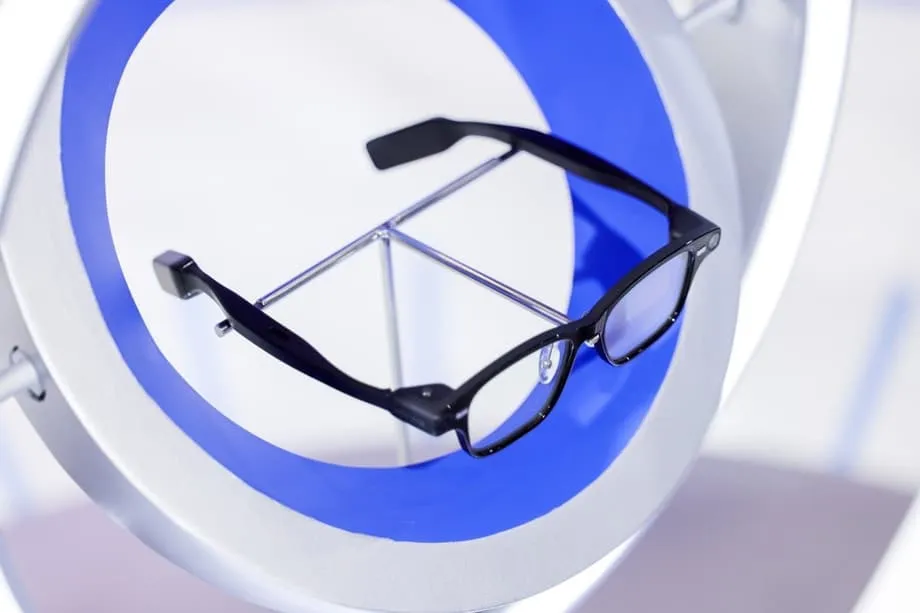
The two families share a central idea: connect Alibaba's Qwen artificial intelligence to services people already use for shopping, payments, directions and travel. The S1 adds a display for information such as navigation instructions and translated text. The G1 leaves out the display, focusing on audio, camera capture and AI assistance in a frame weighing about 40 grams.
Alibaba is positioning the glasses as a way to handle ordinary tasks without taking out a phone. Alipay supplies payments, Taobao supports shopping and price checks, and Amap provides directions. A new companion Qwen app connects the eyewear to the company's wider AI platform, while voice and touch controls let wearers call up assistance.
Wu Jia, a vice president at Alibaba, described the devices as part of a major change in how people interact with computers. His assessment places AI glasses alongside one of the most widely used consumer technologies.
AI glasses represent a significant advancement in human computer interaction, comparable in importance to mobile phones.
Alibaba's bet is that glasses tied to familiar services can attract mainstream consumers, beyond the early adopters who usually try augmented reality products. Augmented reality places digital information over a view of the real world. On the S1, that means seeing useful text or graphics while still being able to see the scene ahead.
What wearers can ask the glasses to do
Qwen responds when a wearer says "Hello Qwen" or activates it through touch. The assistant uses voice, images and context to answer questions, translate language, provide reminders and help with navigation. Both models also support taking photos and recording video without holding a phone.
Taobao gives the camera a shopping role. A wearer can point the glasses at a product, have the system identify it and bring up pricing through Alibaba's shopping service. Alipay handles payments, while Amap supplies maps and transit information. Fliggy can help with travel bookings, extending the device's usefulness beyond local errands.
The S1 can display directions in the wearer's field of view, including navigation arrows and instructions for each turn. Its screen also supports translated text, short notes and a live teleprompter, which shows a script to someone giving a presentation. For work, the glasses can generate meeting notes.
Music support includes Tencent's QQ Music and NetEase Cloud Music. Bone conduction audio supplies discreet calls and spoken prompts. Taken together, the functions are intended for situations such as commuting, checking a price in a supermarket, attending a meeting or traveling.
How Qwen connects the glasses and phone
Qwen is Alibaba's large language model, a type of AI system that can generate text, interpret images and follow complex instructions. In the glasses, it handles tasks including translation as someone speaks, visual recognition of products and prices, and summaries of meeting content.
The companion Qwen app links the device to the broader Qwen platform so requests can move between glasses and phone without extra steps. Alibaba says the app recorded more than ten million downloads in its first week of public testing, indicating strong interest in the company's consumer AI services.
Alibaba has also upgraded its Quark AI browser. Quark began years ago as a mobile browser and has developed into an AI information platform in China. The browser changes and the new Qwen app are part of an effort to put Qwen at the center of Alibaba's consumer software.
Alibaba wants the same assistant to work across desktop computers, phones and glasses. That continuity matters when a person changes devices during the day: the glasses become another way to reach the assistant and its connected services, alongside existing screens.
Inside the S1's display and camera system
The S1 uses two micro OLED displays positioned near the eyes. These compact panels are known for high contrast and rich color. Alibaba describes their presentation as translucent, placing text and graphics over the wearer's view without blocking the surrounding scene.
Cameras, bone conduction microphones and an array of six microphones support image capture and voice control. The hardware pairs Qualcomm's Snapdragon AR1 platform with a coprocessor that uses little power. A coprocessor is a supporting chip that can handle routine work while the main chip takes on more demanding tasks.
The system can run a lightweight real time operating system alongside Android. A real time operating system is designed to respond promptly to incoming tasks, helping audio, sensors and AI functions stay responsive. The combination is intended to balance performance with battery life in a device small enough to wear on the face.
Alibaba highlights 3K still captures, video output improved by AI to 4K, and better camera performance in low light and night scenes. The company also says swappable batteries can support up to 24 hours of service, depending on how heavily the wearer uses the features. Its full day target is based on mixed use.
Choosing between a display and a lighter frame
The G1 shares the S1's main chipset, acoustics and camera but leaves out the display. That reduces weight and cost, with the roughly 40 gram design aimed at people who want camera capture and voice assistance in a more classic frame.
The S1 suits tasks where a quick glance is useful. It can show translations, navigation arrows, a short presentation script or brief notes directly in front of the wearer. Its display provides augmented overlays and guidance that the G1 cannot present in the same way.
The G1 delivers information through spoken output and haptic cues, meaning signals the wearer can feel. When visual information is needed, it relies on the phone display. Both families accept voice and touch input, so the main choice is whether the wearer wants information in view or prefers assistance centered on audio.
Alibaba presents the G1's lighter design as suitable for long daily wear, workouts and travel. The S1 offers more ways to display information, while the G1 favors comfort and a simpler frame. Those differences are likely to shape which model appeals to each buyer.
Why shopping and payments matter to Alibaba
Alibaba's entry comes as technology companies seek an AI device that is less intrusive than a headset and more immediate than a phone. The company describes a shift toward ambient computing, where intelligent services appear when needed without the user holding a device.
Shopping gives Alibaba a particular reason to pursue that shift. In China's competitive ecommerce market, companies seek the next major traffic entry point: the place where people begin a search or transaction. Glasses that identify an item, show its price, guide a checkout or complete a payment could become another starting point for those activities.
Li Chengdong, an electronics industry analyst, described Alibaba's approach as extending its established services into a new type of device. He pointed to shopping, payments and navigation as the basis of the glasses' appeal.
Alibaba's strengths in shopping, payments, and navigation mean its AI glasses function more as a life assistant.
Alibaba is investing heavily in AI across its cloud and consumer businesses. Bringing Qwen into a physical product expands that effort from software into hardware connected to services. The glasses' emphasis on daily tasks also gives the company a different pitch from products built mainly around entertainment.
A platform for services beyond Alibaba
Alibaba is opening the glasses platform to partners as well as connecting its own applications. The devices support a model context protocol, which allows developers outside Alibaba to build services that understand information such as the user's location or current task.
The aim is to let Qwen match a request to the appropriate service without making the wearer repeatedly switch applications. Alibaba wants the assistant to act as the decision layer between what a person asks for and the tool that can carry it out, whether that tool belongs to Alibaba or another developer.
Possible uses include language learning services that respond to a neighborhood sign, fitness applications that guide a run, and productivity tools that display short prompts during a meeting. These are examples of what the platform could support as partners build services around the glasses.
The Quark brand connects the hardware to Alibaba's longer software effort. With the browser and Qwen app both upgraded, the company is seeking a consistent environment across devices rather than treating the glasses as an isolated product.
Prices, stores and the planned overseas rollout
The S1 starts at 3,799 yuan, about $537 at the exchange rates cited at launch. The G1 starts at 1,899 yuan, about $268. Using the yuan prices, the S1 costs 1,900 yuan more, roughly twice the G1's starting price. That gives buyers a clear price choice between display functionality and a lighter device without a screen.
The glasses are available through Tmall, JD.com and Douyin. Alibaba has also arranged retail partnerships, with S1 units already in hundreds of stores across dozens of Chinese cities. G1 units are open for preorder.
Alibaba has signaled an international rollout beginning in 2026, with Asia and parts of Europe likely to come first. No precise overseas launch date was given.
The launch and expansion schedule has two broad stages:
- November 28, 2025: The China launch includes S1 availability in physical stores and G1 preorders, alongside sales channels on Tmall, JD.com and Douyin.
- 2026: Alibaba plans to begin an international rollout, with Asia and parts of Europe identified as likely initial markets.
How the glasses compare with rivals
Meta's latest Ray Ban Display glasses start at about $799 and combine a color display in one lens with social integrations and a widely known fashion brand. Alibaba's S1 starts at about $537, putting its entry price below that rival while offering two micro OLED displays and connections to commerce and payment services widely used in China.
Xiaomi, Rokid and Xreal also compete with designs ranging from glasses equipped with cameras to lightweight displays. Alibaba's response is a choice between the S1's visual overlays and the G1's less expensive, display free design, with both built around Qwen and everyday services.
Apple's Vision Pro and Samsung's Galaxy XR belong to the wider mixed reality market, where digital content and the physical environment are combined. Those heavier headsets focus on media or productivity rather than eyewear designed for daily use. Meta also leads in virtual reality headsets, placing its glasses within a broader device business.
Forecasts cited for the category put shipments of glasses oriented around AI above ten million units in 2026. China is the world's largest wearables market, with tens of millions of devices shipped each quarter. Lighter materials, better displays, more efficient chips and AI models that understand voice and images as they arrive are helping drive the category's growth.
What Snapdragon AR1 contributes
Qualcomm designed Snapdragon AR1 for augmented reality glasses. The platform focuses on efficient AI tasks such as voice recognition, translation on the device and understanding images as they are captured, while keeping power consumption low enough for extended wear.
AR1 supports multiple cameras and sensors and helps coordinate audio, video and display output with minimal delay. In the Quark glasses, it works alongside the smaller coprocessor so demanding jobs can run when needed while routine sensing uses less power.
Battery size is a practical constraint for anything worn on the face for hours. Alibaba's combination of two chips and replaceable batteries is intended to balance responsive features with a design that avoids a heavy battery pack.
Early buyers and testers in China have praised the lightweight design, smooth pairing with the Qwen app, translation and the S1's navigation display. Some users have also said that frequent camera use, translation and display activity can drain batteries faster than a claim based on mixed use suggests.
Privacy becomes part of the daily experience
Camera glasses bring a familiar concern into a new setting: people nearby may not expect to be photographed or recorded. Early reactions to Quark have included privacy concerns similar to those that followed Google Glass and Ray Ban models.
The combination of readily available cameras, microphones and AI can help with translation and meeting notes. It also creates expectations about when recording is acceptable, where captured data is stored and which controls the wearer has in public spaces.
Many jurisdictions expect visible lights, audible prompts or other cues to signal recording. Clear permission from contacts and workplaces can help avoid surprises. Debates around new camera glasses often push manufacturers toward more visible indicators and more detailed camera and microphone controls.
Alibaba's international plans make those choices relevant beyond China. The company will need to balance convenience with user control and the social norms of each market as it expands. For consumers, practical considerations include how comfortable the frame feels, how long batteries last during their own routines and how recording fits the places where they wear the glasses.
What to Know
- Alibaba has launched Quark AI Glasses in China, with the S1 starting at 3,799 yuan and the G1 at 1,899 yuan.
- The S1 has two micro OLED displays; the G1 omits a display and weighs about 40 grams.
- Both models use Qwen AI, with voice and touch controls and a new companion app.
- Connected services include Alipay, Taobao, Amap and Fliggy, alongside QQ Music and NetEase Cloud Music.
- Functions include translation, product and price recognition, navigation, meeting notes, photo and video capture, and a teleprompter on the S1.
- Hardware includes Snapdragon AR1, a coprocessor, cameras, bone conduction features and six microphones. Alibaba targets up to 24 hours of service with swappable batteries, depending on use.
- S1 units are in hundreds of stores across dozens of Chinese cities; G1 units are available for preorder.
- An international rollout is planned to begin in 2026, with Asia and parts of Europe likely to come first.
- Alibaba is competing with Meta, Xiaomi, Rokid and Xreal through an emphasis on shopping, payments, navigation and everyday AI assistance.