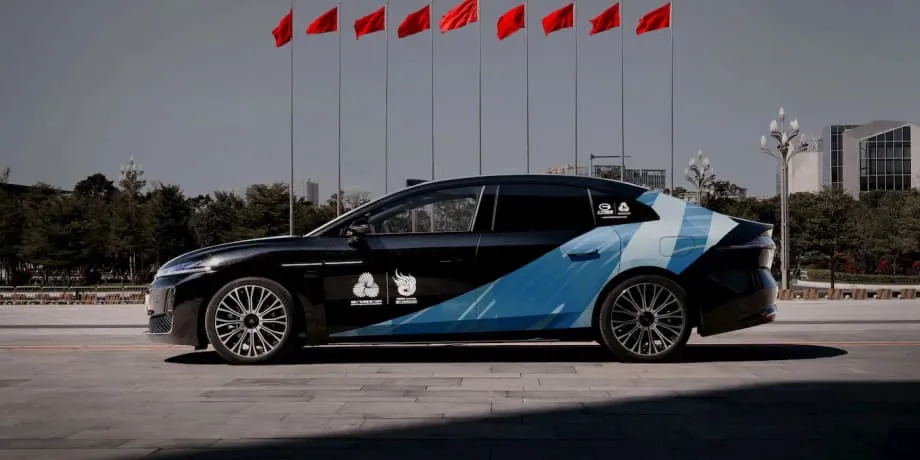
GAC moves large battery cells from the laboratory to a production line
Guangzhou Automobile Group (GAC) has completed what it describes as China's first production line for large, vehicle grade all solid state battery cells, taking a technology long pursued in laboratories into small batch manufacturing. As of November 27, 2025, the facility is producing 60 ampere hour (Ah) cells for testing, with a line designed for cells above 60 Ah.
Contents
- GAC moves large battery cells from the laboratory to a production line
- What changes inside an all solid state battery?
- How a 500 kilometer car could target 1,000 kilometers
- What the safety targets involve
- Why GAC is changing electrode production
- When the batteries could reach vehicles
- China coordinates the push toward commercialization
- Chinese competitors pursue different stages of development
- Companies outside China target the late 2020s
- What manufacturers still need to solve
- What longer range would mean for charging
- The Bottom Line
GAC says the technology offers nearly twice the energy density of existing lithium ion batteries. Its target is to turn the range of an electric vehicle that travels just over 500 kilometers on a charge into more than 1,000 kilometers, while also improving safety and supporting faster charging.
The company's next steps are vehicle integration tests in 2026 and a gradual move toward mass production between 2027 and 2030. Validation and cost will determine how quickly that happens. Small batch output gives engineers cells to examine and test; the planned expansion would require manufacturing them reliably in much greater numbers.
The line also reports an electrode areal capacity of up to 7.7 milliamp hours per square centimeter (mAh/cm2), compared with about 5 mAh/cm2 on many conventional production lines using liquid electrolytes. That measurement describes how much electrical charge an electrode can hold across a given area, making it an important part of fitting more energy into a battery.
China already leads the global supply of conventional EV batteries through companies including CATL and BYD. GAC's development adds a manufacturing milestone to the country's effort to commercialize the next generation of cells. The attraction for drivers is straightforward: more distance between charging stops, or a smaller battery that delivers a familiar range.
What changes inside an all solid state battery?
Conventional lithium ion batteries use a liquid electrolyte to carry ions between their positive and negative electrodes during charging and discharging. An all solid state battery replaces that liquid with a solid material. The electrolyte still performs the same essential job: allowing ions to move through the cell as it stores or releases energy.
Liquid electrolytes transport ions efficiently, but they are flammable and limit how tightly energy can be packed. Solid electrolytes can allow denser arrangements of battery materials and offer greater thermal stability. Those properties create opportunities to store more energy for a given weight or volume and reduce the risk of fire if a cell is damaged.
GAC's 60 Ah cells matter because their capacity is relevant to mainstream electric cars. The move into this size brings the technology closer to the demands of full size vehicles than a small laboratory cell would. The new line therefore gives the company a way to test both its battery design and the process used to make it.
How a 500 kilometer car could target 1,000 kilometers
Energy density measures how much energy a battery stores relative to its weight or size. GAC's claim of nearly twice the energy density points to two possible choices for vehicle designers: put more energy into a pack of similar dimensions, or reduce the pack's size while retaining a similar driving range.
For a vehicle traveling about 311 miles, or 500 kilometers, a pack of the same dimensions using these cells could target roughly 621 miles, or 1,000 kilometers. The comparison describes the scale of the company's ambition. Vehicle testing is scheduled to begin in 2026.
Chinese range claims often use the China Light Duty Vehicle Test Cycle (CLTC), which tends to produce more generous figures than the Environmental Protection Agency (EPA) cycle used in the United States. The estimate accompanying the 1,000 kilometer CLTC claim is roughly 650 to 750 kilometers, or about 400 to 465 miles, in actual driving or use comparable to EPA testing.
GAC's proposed gains could also support a lighter, smaller and cheaper pack instead of the longest possible range. That option would reduce the battery weight a vehicle carries and the amount of material needed, while potentially improving the cost and convenience of electric driving.
What the safety targets involve
GAC cites thermal stability in the range of 300 to 400 degrees Celsius for its solid state technology, compared with around 200 degrees for many conventional lithium ion cells. A greater tolerance for heat can improve resistance to damage and help with thermal management during fast charging or heavy loads.
Solid electrolytes are less prone to leakage and ignition than liquid electrolytes. Their use can therefore increase the margin of safety when a battery is damaged, alongside the potential gains in energy storage.
Battery developers also want to limit dendrites, tiny structures resembling needles that can form from lithium and damage cells. The aim is to combine materials and manufacturing methods that improve both performance and safety. Achieving those benefits consistently depends on how the cell behaves through repeated charging, discharging and physical changes during use.
Why GAC is changing electrode production
GAC highlights a dry anode process that brings several manufacturing stages into one continuous operation. The anode is the battery's negative electrode. In traditional production, manufacturers mix active materials into a slurry, coat the mixture onto metal foil and roll the electrode to the required thickness, with drying and solvent recovery between stages.
The company describes its process as integrating slurry preparation, coating and rolling into a single step. GAC says this reduces manufacturing time and energy consumption. Removing solvent drying can also reduce emissions and, when production expands, help lower costs.
The reported areal capacity of 7.7 mAh/cm2 is another part of the manufacturing advance. Many conventional lines operate near 5 mAh/cm2. Higher areal capacity supports thicker electrodes that store more charge across the same area, helping increase the energy that fits into a cell without making it physically larger.
Thicker electrodes also create a difficult engineering balance. Ions must still move through the material efficiently, while the electrode remains mechanically strong and uniform. High areal capacity therefore needs to work alongside conductivity and durability through repeated cycles of charging and discharging.
For automakers, more energy per cell can mean fewer cells are needed to reach a pack's target capacity. That can reduce wiring, connectors and other parts, simplify pack design and lower the cost per kilowatt hour. Fewer components can also reduce weight and leave fewer potential points of failure.
When the batteries could reach vehicles
GAC plans to install the cells in test vehicles in 2026, checking performance, durability and safety under actual driving conditions. Its mass production ambition covers 2027 to 2030, with the pace dependent on successful validation and acceptable costs.
Early use is likely to be concentrated in higher priced vehicles or limited production runs. Those models provide a place for a more expensive battery to enter the market before falling costs and greater supply allow wider adoption, following the pattern of earlier battery advances.
The planned sequence is:
- By November 27, 2025: GAC has completed the production line and begun small batch output of 60 Ah cells for testing.
- 2026: GAC plans to integrate the batteries into test vehicles to assess their behavior in use.
- 2027 to 2030: The company targets a gradual expansion into mass production, depending on validation and costs.
Qi Hongzhong, head of new energy power research and development at GAC's advanced platform technology institute, described the energy density and range gains the company is pursuing:
Qi Hongzhong said the energy density of the new solid state cells is nearly double that of existing lithium ion batteries, and that vehicles which travel just over 500 kilometers today could reach more than 1,000 kilometers with these cells.
GAC's task is to demonstrate that performance in production vehicles, across different climates and years of use, at a price that a broad range of buyers can afford.
China coordinates the push toward commercialization
China has formed a national collaborative innovation platform bringing together materials suppliers, battery manufacturers and automakers to accelerate all solid state battery development. The effort seeks to align technical approaches, safety standards and the equipment needed for manufacturing.
Chinese authorities have signaled support for rapid development of the technology. Policy backing, coordinated research and a domestic supply base helped China advance through earlier battery development cycles. Those same resources are now being directed toward solid state designs.
The opportunity extends beyond the cells themselves. Analysts in China project that sales of equipment used to make solid state batteries could reach about 2.5 billion yuan in 2027 and more than 27 billion yuan in 2030, if commercialization proceeds as planned.
Those figures imply a market more than ten times as large in 2030 as in 2027. The forecast depends on manufacturers moving from development and pilot facilities into broader production, which would create demand for the tools needed to build cells at scale.
Chinese competitors pursue different stages of development
BYD is conducting trials under actual driving conditions of a first generation solid state pack reported at around 400 watt hours per kilogram. Watt hours per kilogram express how much energy a battery stores for each kilogram of weight. BYD aims to begin pilot output by 2027 and expand integration around 2030.
SAIC and its partner Qingtao have completed core production lines for an all solid state battery plant in Shanghai. Gotion High Tech also has a pilot line and road tests underway for cells with high energy density.
NIO has deployed a 150 kilowatt hour semi solid pack through a partner. Its design represents an intermediate stage rather than the all solid state approach GAC is pursuing, while providing experience in integrating batteries with high energy capacity into vehicles.
GAC's production milestone therefore sits within a wider Chinese effort involving automakers, battery companies and manufacturing partners. Their programs are at different points, from pilot production and road testing to the use of an intermediate battery design in vehicles.
Companies outside China target the late 2020s
Toyota and Nissan are building prototype lines for laminated all solid state cells, with plans aimed at the late 2020s. Samsung SDI and LG Energy Solution are investing in research, development and pilot facilities for solid state batteries.
Solid Power, based in the United States, is expanding production of sulfide electrolytes for its partners. That work addresses a material required by one route to solid state battery manufacturing, alongside the efforts of companies developing complete cells and vehicle systems.
Across these programs, initial automotive deployment targets cluster around 2027 to 2030. Larger production volumes are expected later, as manufacturers improve yields and reduce costs. Yield is the proportion of cells coming off a production line that meet the required quality standards.
What manufacturers still need to solve
Producing millions of cells each year requires a solid electrolyte that carries ions efficiently and stays stable against the electrodes through thousands of charging cycles. The contact surfaces between the solid electrolyte and electrodes must remain closely joined without developing layers that resist the movement needed for the battery to work.
Some solid electrolytes, particularly those based on sulfides, require strict control of moisture during production. Factories must also raise yields to the levels needed for competitive industrial manufacturing. A process that makes too many unusable cells drives up the cost of each good one.
Materials supply creates another set of demands. Manufacturers will need large quantities of solid electrolyte powder and anodes using lithium metal or a high proportion of silicon. Equipment for mixing, pressing and lamination must maintain tight tolerances while operating quickly enough for large production volumes.
Recycling routes for the new materials also need to be developed. Together, the investment in materials, machinery, process control and recycling helps explain why early adoption is likely to focus on models where extra range or lower weight can justify a higher battery price.
What longer range would mean for charging
An EV capable of traveling a practical 1,000 kilometers between charges would change trip planning. Many drivers could charge only a few times a month, while long rural stretches that currently require careful planning could fit within a single journey between charging stops.
Automakers could also use the energy density gains to reduce pack size without sacrificing convenience. Smaller packs would weigh less, require fewer raw materials and potentially cost less, helping bring the technology's benefits to vehicles at more accessible prices.
Charging networks would still have a central role. Batteries with more energy storage also need suitable charging performance to keep long journeys convenient. China is already moving toward faster charging sites, with new systems in the megawatt class entering service for the next generation of vehicles.
Solid state designs that accept higher charging rates with modest thermal management could shorten stops and reduce stress on battery packs. Improvements in cell efficiency and stability would also make those network upgrades more useful. GAC's vehicle testing and planned production expansion will put its range, safety and manufacturing targets through the next stages of development.
The Bottom Line
- GAC has completed what it describes as China's first line for large, vehicle grade all solid state cells, producing 60 Ah cells in small batches and targeting capacities above 60 Ah.
- The company reports areal capacity up to 7.7 mAh/cm2 and nearly twice the energy density of existing lithium ion batteries.
- Vehicle tests are planned for 2026, followed by a targeted mass production expansion between 2027 and 2030.
- The range ambition exceeds 1,000 kilometers. The accompanying estimate for a 1,000 kilometer CLTC claim is about 650 to 750 kilometers, or 400 to 465 miles, in actual driving or use comparable to EPA testing.
- GAC's dry anode process combines manufacturing stages to reduce time and energy consumption, with potential cost and emissions savings.
- China's collaborative platform supports commercialization, while equipment sales are projected to rise from about 2.5 billion yuan in 2027 to more than 27 billion yuan in 2030.
- Chinese and international competitors are pursuing deployment around the late 2020s, with larger volumes expected as yields improve and costs fall.
- Durability, stable material interfaces, manufacturing yields, supply chains and recycling remain central tasks before widespread adoption.