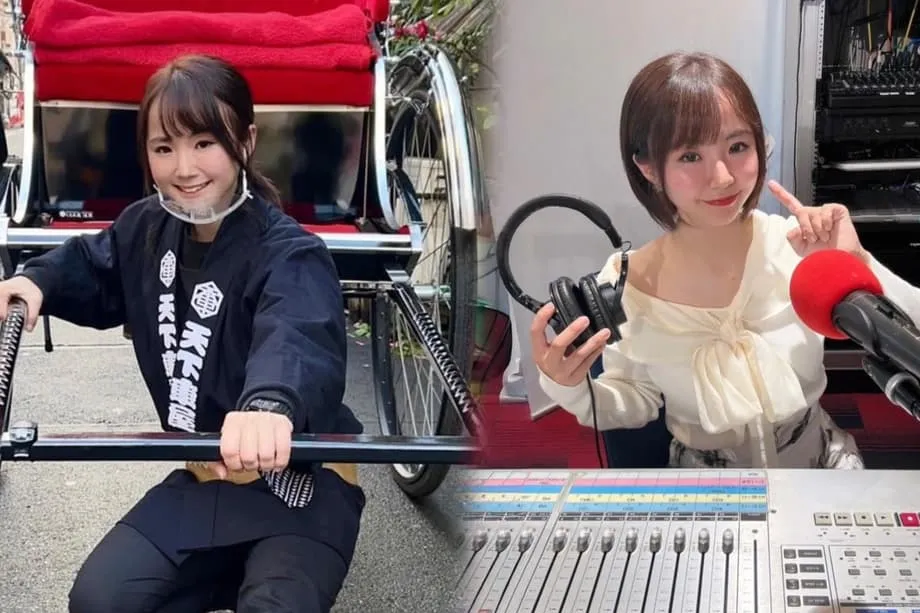
Eight years between the rickshaw and the microphone
Arisa Sekimori, 29, spends four days a week pulling visitors through Tokyo's Asakusa district and the rest of her working week hosting radio programs. Eight years after taking up rickshaw work to become more comfortable speaking to strangers, she has become her company's first female manager while keeping her broadcasting career alive.
Contents
- Eight years between the rickshaw and the microphone
- Learning how to hold an audience
- How a small driver handles a heavy cart
- Social media brings women into the trade
- Training covers safety, history and hospitality
- What drivers earn and what customers value
- Women still face skepticism on the streets
- Asakusa turns a traditional vehicle into a personal tour
- Two careers built on listening and timing
- At a Glance
Near the red lantern of Kaminarimon, Sekimori calls out to tourists and guides a cart with two wheels through one of Tokyo's oldest neighborhoods. Her tours combine the history of Sensoji Temple with suggestions for sweets shops and quieter side streets. The job asks her to move passengers safely, hold their attention and make a short journey feel personal.
Sekimori arrived at that combination after more than one hundred unsuccessful interviews across Japan's broadcast industry, including interviews with television stations. A job coach suggested that she go out and talk to people. Pulling a rickshaw gave her a place to practice every day, with strangers deciding whether to stop, listen and take a ride.
Her career has developed alongside a growing presence of women in Asakusa's rickshaw trade. Companies describe a steady increase in female drivers and guides, encouraged partly by social media videos showing women learning the work. The attraction combines physical activity, public speaking, tourism and the chance to build a personal following.
Sekimori keeps no days off. She says her commitment comes from enjoying both jobs and from the connection she feels with passengers who entrust her with their time and stories. The same skills now run through both parts of her week: controlling her voice, choosing the right moment for a story and responding to the person listening.
Learning how to hold an audience
Sekimori initially struggled to attract customers and keep them engaged. Her company's president helped her understand that a successful ride needed more than a sequence of facts. Commentary, humor and local knowledge mattered alongside the strength needed to move the cart.
She gradually stopped reciting information and began entertaining. Street work taught her to project her voice, fit a story to a corner or a view, and adjust her energy to the people in front of her. Those lessons helped when an opportunity to host on radio eventually arrived.
Sekimori chose a radio station that welcomed her commitment to rickshaw work. She also mentors new employees, using what she learned about turning a brief ride into a memorable tour. Her move into management adds another responsibility to a week already divided between the streets and the studio.
Her path and the wider recruitment trend developed over several years:
- Before entering radio, Sekimori attended more than one hundred broadcast industry interviews without being hired.
- Eight years before this account, published on November 26, 2025, she began pulling rickshaws to improve her ability to speak with strangers.
- In 2020, Tokyo Rickshaw counted four women among its runners.
- In 2024, Tokyo Rickshaw counted nearly 30 women, including trainees, among about 130 runners.
- By November 26, 2025, Sekimori was combining radio hosting with four days of rickshaw work each week and had become her company's first female manager.
How a small driver handles a heavy cart
Sekimori stands about 155 centimeters tall. She once carried a passenger weighing about 150 kilograms without incident, an experience that illustrates why she places such importance on technique.
Sekimori, a rickshaw driver, manager and radio host, explains that finding the right balance changes how the load feels:
There is a point where the rickshaw becomes lighter when you pull up on the handle while maintaining balance. Once you get the hang of it, women have no problem pulling a rickshaw.
Her method combines balance through the arms and back, careful footwork and attention to the road. Strength matters, but keeping the cart steady also depends on learning how to hold and move it efficiently. Her family was skeptical when she started; their doubts eased as they saw how much she enjoyed the craft.
Asakusa pullers cover about 20 kilometers a day, sometimes in heat or rain. An empty standard cart can weigh close to 90 kilograms, while the cart and passengers together can approach 200 to 250 kilograms. Drivers must manage that load while walking or trotting through streets shared with other people and traffic.
Split toed tabi shoes help provide grip on wet streets and support balance. Efficient steps, sound posture and knowing when to rest are part of the work, alongside careful planning for hydration, stretching and meals to avoid injury.
Social media brings women into the trade
Tokyo Rickshaw describes women as accounting for about a third of its runners. Its dated figures put the number at four in 2020 and nearly 30, including trainees, out of about 130 runners in 2024. The 2024 count amounts to roughly 23 percent, while the near 30 figure is more than seven times the 2020 count.
Ryuta Nishio, president of Tokyo Rickshaw, credits early female recruits and videos of their work with encouraging others to apply. He also describes making the workplace comfortable for women as a company goal:
The first girl who joined was cool. Since we posted videos of her on social media, many girls have followed suit and joined us. Going forward I want to create a place where women feel comfortable to work and play an active role.
Training clips, accounts of daily routines and live streams give potential applicants a closer view of the job. They show the effort required, while also showing that conversation and customer care are central to a driver's success.
Yumeka Sakurai, a college student who joined after watching women online, trained for months before driving solo. She describes seeing other women succeed as the encouragement she needed:
I have watched many videos of women training hard and becoming rickshaw drivers themselves. They gave me the confidence that I could do it too if I tried hard.
Drivers also post routes, favorite snack shops and glimpses of work behind the scenes. Some visitors request a particular driver by name. Those personal followings can support earnings, repeat bookings and a more dependable flow of customers for new recruits.
Training covers safety, history and hospitality
Companies use several stages of training to teach drivers how to handle the cart and guide a tour. Preparation can last from a few months to a year, depending on fitness and progress. Some drivers are ready in two months; others take most of a year.
Trainees practice starting, stopping, turning through narrow lanes and responding to emergencies. They study routes, history and etiquette so they can answer questions and arrange photographs at gates and bridges. Many speak at least basic English, and experienced guides adjust their approach for families, couples and people traveling alone.
Teams begin their working days by stretching, polishing carts and preparing to meet visitors from around the world. Rookies are often paired with experienced runners during their first weeks. Women increasingly serve as trainers themselves, giving new applicants people whose careers they can follow.
Yuka Akimoto, another driver, says the beginning was physically difficult. She describes having to persist until she found a pace she could sustain:
I do not deny it was extremely hard at the beginning. I am not athletic and the cart felt so heavy.
New drivers describe their first smooth journey with real passengers as a reward for that preparation. A steady ride and a positive response from customers bring together the physical and conversational skills they have spent months developing.
What drivers earn and what customers value
The highest earning drivers can make more than 1 million yen a month, about $6,700, during peak seasons. Earnings vary with skill and bookings, and many companies use a commission model, meaning that pay depends on the business a driver brings in. No typical monthly income is given.
Competition for jobs can be intense. Some operators accept fewer than one in ten applicants. Weekend and holiday hours can be long, making the ability to sustain the work as important as the initial enthusiasm for it.
Misato Otoshi, a senior puller and company public relations lead, says friendly conversation and knowledge of places to eat help women build relationships with visitors:
Some customers say that female pullers are easier to talk to. Their knowledge of new sweets shops and local eateries adds a special touch to the experience.
Otoshi and other senior staff coach newcomers in both physical form and presentation. Projecting the voice, choosing a detail worth sharing and building a short story around an alley or temple are practical parts of the job. A passenger pays for transport, but the guide's ability to make the neighborhood engaging shapes the experience.
Women still face skepticism on the streets
Some customers question women's strength or test their local knowledge. Occasional harassment also occurs, and managers say they intervene quickly when employees report problems. Companies say the performance standards are the same for everyone, while many female drivers want their work judged on its quality.
Nishio, Tokyo Rickshaw's president, says the company uses the same expectations for male and female runners:
We treat both male and female pullers completely equally. The women say they want to be treated the same as the men, and in fact many of them are way tougher.
Shiori Yano, a veteran puller who returned after having a child, describes a career with both attraction and strain. After working a full day, she hurries to pick up her daughter and prepare dinner.
Yano says the public image of the job can hide difficult experiences, including customers choosing a man instead:
This job looked flashy from the outside but I have had some hard times, including when I was rejected in favor of a male driver.
Pairing new recruits with experienced staff and appointing women as trainers provide support within the workplace. Sekimori's appointment as her company's first female manager offers another example of a role extending beyond pulling the cart.
Asakusa turns a traditional vehicle into a personal tour
The word rickshaw comes from jinrikisha, the Japanese term for a human powered vehicle. After restrictions on wheeled transport were lifted in the late nineteenth century, carts with two wheels spread quickly through cities. In twenty first century Tokyo, their role combines a ride, a guided tour and a platform for local storytelling.
Asakusa is at the center of that experience. Drivers take visitors past shops selling ningyo yaki cakes, across photogenic bridges over the Sumida River and to the lantern at Kaminarimon, before the long approach to Sensoji Temple. Along the way, they take photographs and suggest snacks. Some briefly sprint when a passenger requests it.
Riho Arai, a young driver who began working in Asakusa, wanted a job that would let her speak English. She says appreciation from passengers helps her continue through the heat:
I wanted a job where I could use my English skills. People's gratitude, like when they say, 'I am so glad you were our guide' is what keeps me motivated.
Other newcomers are drawn by similar aims: speaking with overseas visitors, learning local history and testing themselves in the streets. The work combines those interests in a setting where each customer brings a different pace, set of questions and reason for visiting.
Two careers built on listening and timing
The growth of women in Asakusa's rickshaw trade reflects changing choices among some young people in Japan about jobs, status and schedules. For these recruits, work combining fitness, hospitality and personal promotion can be more appealing than a desk job.
Social media makes the work easier to see before applying and gives prospective drivers role models. Tourism's recovery has also expanded opportunities to use languages and build direct relationships with customers. Training, safety and inclusive management help companies attract people who might otherwise choose different careers.
Sekimori's experience connects those changes to an individual ambition. A job taken to improve her speaking became a lasting career, a management position and practical preparation for radio. She continues to move between the cart and the microphone rather than choosing just one.
Both roles require voice control, timing and empathy. Each also asks her to learn from mistakes and return ready for a new audience. For Sekimori, the skills developed on an Asakusa street now travel with her into the studio, while her commitment to passengers keeps her returning to the rickshaw.
At a Glance
- Arisa Sekimori, 29, has spent eight years pulling rickshaws and is her company's first female manager.
- She works on Asakusa's streets four days a week, hosts radio programs on other days and keeps no days off.
- She began rickshaw work to practice speaking after more than one hundred unsuccessful broadcast industry interviews.
- Tokyo Rickshaw counted four women in 2020 and nearly 30, including trainees, among about 130 runners in 2024. It also describes women as about a third of its runners.
- Drivers cover about 20 kilometers daily. A cart can weigh close to 90 kilograms empty and approach 200 to 250 kilograms with passengers.
- Training ranges from about two months to most of a year and covers cart handling, safety, routes, history and customer care.
- The highest earners can exceed 1 million yen a month, about $6,700, during peak seasons. Earnings depend on skill and bookings.
- Social media encourages recruitment and helps drivers attract requests, personal followings and repeat customers.
- Women face skepticism and occasional harassment, while more are becoming trainers and taking on management responsibilities.
- Asakusa tours combine landmarks such as Kaminarimon and Sensoji with photographs, food recommendations and personal storytelling.