QMB Slows Production While Awaiting More Waste Storage
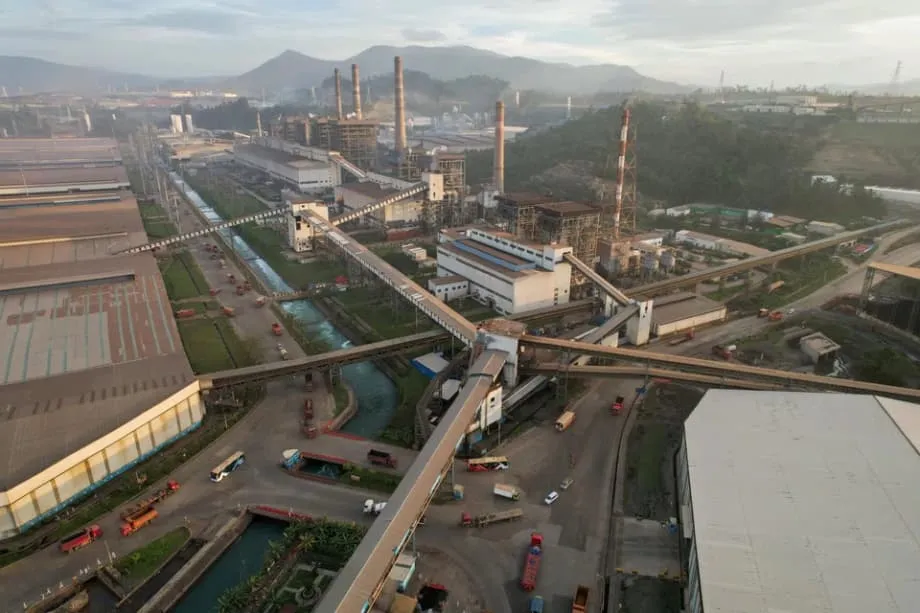
PT QMB New Energy Materials, one of Indonesia's largest nickel refineries, has reduced production for at least two weeks because its tailings storage area is nearly full. The company, based at the Indonesia Morowali Industrial Park (IMIP) in Central Sulawesi, is waiting for approval for another disposal site. The park's management confirmed the lower operating rates.
Contents
- QMB Slows Production While Awaiting More Waste Storage
- Why Nickel Processing Leaves So Much Waste
- A Deadly Landslide Added to Safety Concerns
- Residents Describe Pressure on Water, Fisheries and Air
- Obi Island Floods Exposed Another Weak Point
- At Weda Bay, Slag Is Reshaping the Coast
- Storage Choices Carry Different Risks and Costs
- The Environment Ministry Demands Corrective Action
- Battery Buyers Face a Waste Management Supply Risk
- What to Know
As of November 26, 2025, the immediate constraint is space for the waste left after nickel extraction. QMB is backed by Chinese metals companies GEM and Tsingshan and supplies intermediate nickel products to the battery industry. Approval for additional storage will determine how quickly production can return to normal.
Indonesia supplies more than half of the world's nickel, which is used in electric vehicle batteries and stainless steel. Investment, often led by Chinese companies, has rapidly expanded processing capacity. IMIP sits at the center of that expansion, with scores of plants and more than 100,000 workers.
Much of the new refining capacity uses high pressure acid leaching (HPAL), a process that extracts nickel and cobalt from lower grade laterite ore. Its useful product is mixed hydroxide precipitate (MHP), an intermediate material favored by battery makers. Its other major output is a large volume of wet waste that needs careful treatment and containment.
QMB's slowdown brings together several pressures facing the industry: storage sites filling up, a deadly landslide at a tailings area earlier this year, higher sulfur costs and stronger demand for MHP following cobalt export controls in the Democratic Republic of Congo. Communities and investors are also asking whether protections for workers, water and air are keeping pace with production.
Why Nickel Processing Leaves So Much Waste
HPAL works much like a pressure cooker for ore. Crushed laterite is heated with sulfuric acid at high temperature and pressure inside vessels called autoclaves. Nickel and cobalt dissolve into the liquid and are later precipitated, or separated into a solid material, as MHP.
The remaining tailings contain fine particles of rock and chemical residues. They have a high moisture content and can contain harmful substances. Some operations generate up to 100 tons of tailings for every ton of nickel produced, so a refinery's waste storage needs can grow much faster than its metal output suggests.
Operators often pump this material into storage cells, allow it to settle, compact it and eventually stack it behind engineered embankments. The toxic slurry must be dried and contained. Heavy rain slows drying and compaction, while continued processing adds more waste to the same limited storage space.
Civil society assessments estimate that IMIP generates more than 11 million tons of tailings a year. That amount could rise to several times its current level as additional processing lines begin operating over the next few years. The park has a limited number of tailings storage facilities within its boundaries.
Indonesian rules classify tailings as hazardous waste, known as B3, because of lasting risks to people and ecosystems, including exposure to sulfuric acid and hexavalent chromium. Managing that waste requires more than finding vacant land. Containment structures must remain stable in a tropical region where intense rainfall and earthquakes are part of the operating environment.
QMB's production cut shows how these requirements affect day to day operations. When active storage cells approach capacity, permission for another site becomes an immediate condition for continued production. Higher sulfur costs add another pressure because sulfur is used to make the acid required by HPAL.
A Deadly Landslide Added to Safety Concerns
In late March 2025, a landslide struck a tailings area inside IMIP managed for two HPAL producers, including QMB. At least two workers died and another was reported missing. Park officials attributed the incident to several hours of heavy rain.
Local groups pointed to weaknesses in tailings design and operations. Their concern was that repeated storms increase the likelihood of failure when storage cells contain a wet, unstable mass. IMIP managers maintained that heavy rain, rather than structural failure, caused the landslide.
Days before the landslide, floodwater mixed with mud had affected the region. Activists suspected that the material came from a breach at a neighboring HPAL plant. Satellite images had shown damage at a containment structure earlier in the year. Park managers said the earlier flooding and the landslide were separate events.
IMIP's wider safety record includes a smelter blast in 2023 that killed 21 workers and injured many others. From 2015 to the middle of 2024, dozens of workers died at the park in separate incidents. The tailings accident added another type of danger to a complex already facing scrutiny over industrial safety.
The sequence of incidents places the current production cut within a longer record of accidents and waste infrastructure under pressure:
- From 2015 to the middle of 2024, dozens of workers died in separate incidents at IMIP.
- In 2023, a smelter blast at the park killed 21 workers and injured many others.
- Earlier in 2025, satellite images showed damage at a containment structure.
- In late March 2025, a tailings landslide killed at least two workers, with another reported missing.
- In June 2025, muddy floods affected three villages near a nickel complex on Obi Island.
- By November 26, 2025, QMB had reduced production for at least two weeks as its tailings storage approached capacity.
Residents Describe Pressure on Water, Fisheries and Air
Communities around IMIP describe changes to both their coastline and the air they breathe. Near Kurisa village, residents said the sea had turned red and fish farms had failed. Many fishers have stopped fishing or must travel much farther to find clean water.
Coal power plants supplying the industrial complex contribute to respiratory problems. Studies in nearby villages found particulate matter and sulfur dioxide above national safety standards. Local schools reported coal ash dust, while students complained of coughs and fevers.
Tailings create another source of pressure on surrounding communities. Millions of tons of hazardous waste are produced each year, and heavy rain has caused containment structures to burst in several cases, exposing people and waterways to toxic material.
Earthquakes add a further risk to dams holding saturated waste. Rain can increase the water held within a storage area, while seismic movement can challenge the structures containing it. Those conditions make waste management central to both reliable production and the protection of nearby settlements.
IMIP's expansion has transformed Indonesia's position in materials used for clean energy. For residents, the same expansion has brought concerns about lost fishing income, industrial emissions and the ability of waste infrastructure to withstand local conditions.
Obi Island Floods Exposed Another Weak Point
On Obi Island in North Maluku, heavy rain in June 2025 triggered muddy floods that swamped three villages near a large nickel complex. A sediment pond designed to collect runoff was breached, allowing contaminated water to enter the Todoku River and then homes and fields.
Local groups had documented years of water samples containing hexavalent chromium above legal limits. After the breach, community leaders said seawater turned red and demanded repairs, clean water and electricity.
Residents who protested reported intimidation and a lack of support as they tried to recover. The flooding showed how a failure in infrastructure intended to collect runoff could affect households and farmland beyond the industrial site.
Obi Island and Morowali face related pressures from heavy rain, but the facilities involved serve different functions. The Obi incident involved a sediment pond collecting runoff; QMB's current production constraint concerns storage for the waste generated by HPAL processing.
At Weda Bay, Slag Is Reshaping the Coast
In Central Halmahera, slag from nickel smelters has been used to reclaim land and extend an airport runway at Weda Bay. Slag is a different form of processing waste from the wet tailings produced by HPAL, and its use in coastal construction has generated its own environmental dispute.
Environmental organizations reported heavy metals in seawater and fish. Blood tests on residents found elevated mercury and arsenic in some samples. Critics said the reclamation buried coral and seagrass and called for tighter oversight of slag placed in the sea.
The government removed nickel slag from the hazardous waste list after tests showed levels below thresholds for certain uses. It said monitoring would continue. That policy concerns slag, while HPAL tailings remain classified as hazardous waste.
The industrial park said it followed official guidance and presented the reuse of slag in construction as part of its circular economy goals. That approach seeks to put leftover material to another use, but the dispute at Weda Bay centers on the conditions under which it is placed along the coast and how its effects are monitored.
Storage Choices Carry Different Risks and Costs
The Nickel Institute has identified several challenges in Indonesia's nickel belt: intense rainfall that saturates waste, steep terrain that speeds erosion, exposure to earthquakes and a setting rich in biodiversity. The industry's heavy reliance on coal also increases air pollution and carbon emissions.
Some miners in Indonesia have explored deep sea tailings disposal (DSTD). This method sends waste through pipes into the ocean at depth. It can be cheaper than building large storage dams, and supporters argue that it reduces the danger of a dam failing on land.
Marine scientists and environmental groups warn that deep trenches can still expose marine life to harm. Their concerns include currents lifting deposited particles back into the water, chemical reactions affecting sea life and lasting damage to the Coral Triangle, a region with exceptional biodiversity and some of the richest reefs on Earth. Fishing communities could also suffer.
Other methods include thickening tailings into a paste, returning waste to mined pits and dry stacking. These approaches can reduce water content and improve stability. They require capital, engineering skill, strict operating controls and reliable maintenance over decades.
Regulation also depends on practical enforcement. Authorities need the capacity to check designs, monitor how facilities perform and penalize violations. Indonesia's government has acknowledged that oversight needs to keep pace with the speed and scale of industrial growth.
Some producers have begun land rehabilitation, projects to reduce carbon emissions and engagement with communities. Even so, Indonesia's rapid change from an ore exporter into a processing giant has outpaced many of the systems intended to protect people and nature.
The Environment Ministry Demands Corrective Action
Indonesia's Environment Ministry has taken a tougher stance at IMIP after inspectors found operations outside the scope of the park's environmental approvals. They also identified problems with wastewater treatment and air pollution control, along with large volumes of unmanaged mining residue near the complex.
The ministry said unauthorized activities must stop, ordered an environmental audit and prepared fines and legal steps for hazardous waste violations. These measures place environmental compliance directly alongside Indonesia's ambition to supply minerals for the energy transition.
Authorities also revoked several nickel mining licenses in Raja Ampat for environmental damage. The action followed public outcry over mining in protected waters and extended the government's response beyond the industrial parks discussed here.
IMIP's operator said it was improving standards in line with ministry requirements. Its measures include land reclamation, leveling and reforestation intended to reduce disaster risks.
The park also said its topography makes a central wastewater treatment plant difficult to build, so individual companies operate their own systems. That arrangement makes the performance of each company's treatment facilities part of the park's wider environmental management.
For QMB, the immediate operational issue remains the need for additional tailings storage. Production has been reduced for at least two weeks, and a date for approval of the new site or a full return to normal output has not been given.
Battery Buyers Face a Waste Management Supply Risk
Nickel demand is expected to grow with electric vehicle use, and batteries are expected to account for a larger share of nickel consumption by 2040 than at the start of this decade. MHP demand has also received support from new cobalt export restrictions in the Democratic Republic of Congo.
The nickel market has experienced periods of surplus. Even with plentiful metal in the wider market, the concentration of new supply in Indonesia creates another risk for buyers: interruptions caused by waste storage limits, flooding or safety investigations. A refinery needs enough approved space for its waste to keep supplying its useful products.
QMB's slowdown illustrates that connection. Tailings capacity affects MHP production, and MHP feeds the battery supply chain. Buyers' expectations of reliable deliveries therefore depend partly on how well producers manage material that never becomes part of a battery.
Automakers and battery cell makers are responding in several ways. Some are diversifying supply toward countries with strong oversight, including Australia, Brazil and Canada. Others are increasing their use of lithium iron phosphate (LFP) batteries, especially in models designed for standard driving ranges. LFP batteries require neither nickel nor cobalt.
Many buyers are also tightening audits and assigning a premium to material with strong environmental and social records. Credible waste management and transparent performance can help producers compete as purchasing teams weigh price, availability and operational risk.
Indonesia's nickel industry has gained scale and a central role in battery materials. QMB's production cut shows that maintaining that role also requires enough permitted waste capacity, dependable containment and safety systems that can withstand the conditions where plants operate.
What to Know
- QMB reduced output for at least two weeks at IMIP because tailings storage is nearly full and another site awaits approval.
- Indonesia supplies more than half of the world's nickel, while IMIP hosts scores of plants and more than 100,000 workers.
- Civil society assessments put IMIP's annual tailings production above 11 million tons, with further growth expected as new lines open.
- A landslide at an IMIP tailings area in late March 2025 killed at least two workers, and another was reported missing.
- Residents near nickel complexes have reported damaged fisheries, polluted water, industrial dust and flooding.
- The Environment Ministry ordered an audit and prepared penalties for violations at IMIP; authorities also revoked several mining licenses in Raja Ampat.
- Waste storage interruptions can affect battery material supplies, while buyers diversify sourcing, expand LFP use and tighten environmental audits.