A surge in orders for the equipment behind AI
China exported about US$7.3 billion worth of transformers and US$4.3 billion worth of high voltage gas insulated switchgear in the first ten months of 2025, as the worldwide rush to build artificial intelligence infrastructure put electricity networks under growing pressure. Transformer exports rose 37.8 percent from the same period a year earlier, while switchgear shipments increased 28.5 percent. Both far outpaced the 5.3 percent growth in China's total exports.
Contents
- A surge in orders for the equipment behind AI
- Why data centers are stretching electricity networks
- How long waiting lists are helping mainland suppliers
- North America faces a race to add power
- China expects another wave of domestic investment
- What an AI facility needs beyond computer chips
- Emerging markets add to the order book
- Investors move toward electricity supply chains
- Trade rules, testing and materials can limit growth
- How developers are trying to bridge the gap
- What to Know
The two equipment categories together accounted for about US$11.6 billion in exports. Their growth shows how spending on AI is reaching beyond computer chips and software into the machinery that carries electricity from power stations to server rooms.
Artificial intelligence systems run in data centers, large facilities containing clusters of computers. Training a model and answering users' queries require thousands of powerful chips operating together. Those chips consume large amounts of electricity and release heat, creating another heavy demand for industrial cooling.
Electricity has become the binding constraint in many locations. A developer can install computers only as quickly as it can secure sufficient power, a reliable grid connection and equipment capable of handling the load. That makes transformers, switchgear, cables, cooling systems and batteries central to the expansion.
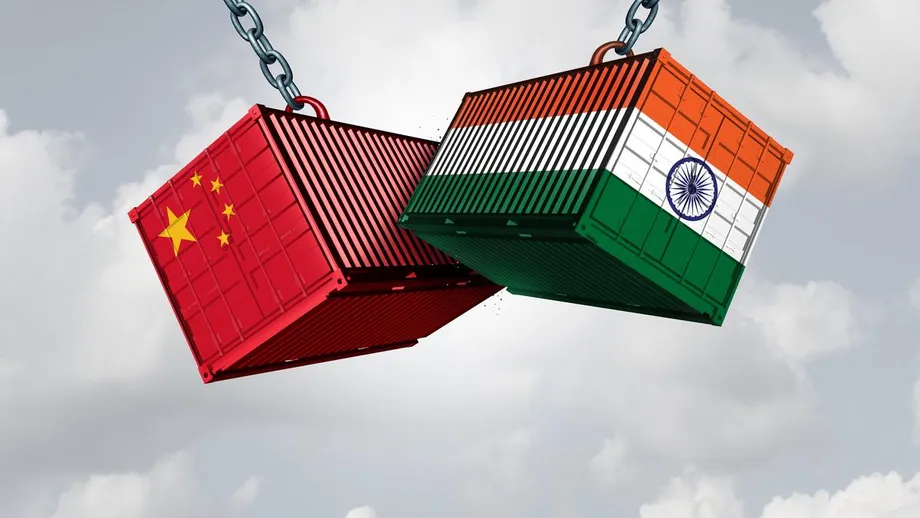
As of November 26, 2025, Chinese manufacturers are benefiting from a combination of rising demand and long waits at competing suppliers. Geopolitical tensions steer large US technology buyers toward companies in Japan and South Korea. As those companies accumulate orders stretching years into the future, buyers in emerging markets are turning to mainland suppliers for faster delivery and lower prices.
Why data centers are stretching electricity networks
The International Energy Agency estimates that data centers consumed about 415 terawatt hours of electricity in 2024, roughly 1.5 percent of the world total. A terawatt hour measures an amount of electricity used over time. In its base case, the agency projects consumption of around 945 terawatt hours by 2030, more than twice the 2024 level.
The United States, China and Europe are the largest users today. The United States and China alone are expected to account for nearly 80 percent of the increase through 2030. Because data centers concentrate enormous demand at particular locations, their construction can require costly upgrades to local networks even where electricity is available elsewhere.
AI servers use powerful graphics processors that draw more electricity per rack than conventional computing equipment. Higher power density means more electricity must pass safely through a smaller area. Transformers adjust voltage, switchgear controls electrical connections, and fault protection helps isolate equipment when something goes wrong.
Utilities may also require developers to install backup power and energy storage at their sites. These systems help maintain reliability when data center demand rises quickly or the grid experiences a disruption. Cooling adds another layer of infrastructure because the heat released by the chips must be removed continuously.
Several dates show the scale and timing of the pressure:
- 2024: Data centers used about 415 terawatt hours of electricity, or roughly 1.5 percent of global consumption.
- January to October 2025: China's transformer and gas insulated switchgear exports rose 37.8 percent and 28.5 percent respectively.
- 2026: Some researchers forecast that AI related power demand could grow by an order of magnitude, meaning about ten times, although the starting point for that comparison was not specified.
- Through 2028: Industry estimates suggest data center projects could create a North American power shortfall of up to 20 percent if electricity infrastructure expands too slowly.
- 2028 to 2030: UBS projects annual growth of about 8 percent in China's electricity demand.
- 2030: The International Energy Agency's base case puts global data center electricity consumption at around 945 terawatt hours.
How long waiting lists are helping mainland suppliers
Pierre Lau, China equity strategist and head of Asian utilities and clean energy research at Citigroup Global Markets, has tracked how purchasing decisions are shifting across the equipment supply chain. He said US demand for Japanese and South Korean products was leaving other buyers facing lengthy queues.
The US buys products from Japan and South Korea instead of China amid geopolitical tensions. Now the pipeline for Japanese and Korean firms is as long as three years, so companies from emerging markets turn to mainland suppliers.
Chinese manufacturers compete through their production scale, cost base and experience supplying large domestic grid projects. Those strengths allow them to quote aggressively, particularly when customers elsewhere need equipment sooner than other suppliers can deliver it.
Lau also linked the duration of the expansion cycle to continued White House support for aggressive AI construction by large cloud and telecom investors. Describing his view of the political conditions supporting demand, he said:
[The upcycle will be sustained] as long as Trump remains the person in charge.
The export opportunity therefore extends beyond direct sales to the United States. When US buyers fill the order books of suppliers in allied countries, customers in other regions can seek alternatives in China. Mainland companies can supply components to international contractors or sell directly to customers building electricity networks and data centers.
North America faces a race to add power
North America is the most visible center of demand and the region where pressure is most acute. Industry estimates suggest data center projects could cause a power shortfall of up to 20 percent through 2028 if generation, transmission and distribution fail to expand in time. Generation produces electricity, transmission carries it over long distances, and distribution delivers it to individual users.
Large cloud providers have sharply increased their capital spending plans. Analysts expect grid investment to rise around 5 percent a year this decade. Some researchers also forecast a tenfold expansion in AI related electricity demand by 2026, adding to expectations of further orders for transformers and switchgear.
Analysts expect utilities to turn to gas turbines for quick capacity in the short term. Longer term additions are expected to include plants using gas and nuclear power, along with extensive grid upgrades. Transformer supply gaps are widening as older coal and gas plants retire and queues for new connections grow.
Additional nuclear capacity in the United States is unlikely to arrive before 2028 to 2030. In the meantime, developers need equipment to connect facilities, distribute electricity and maintain service while larger power projects move through planning and construction.
Utilities and cloud operators work to different schedules. Large power plants and transmission lines can take years to obtain permits and build, while data center teams move in months. That mismatch helps explain why a strong appetite for AI investment can become a shortage of electrical equipment.
China expects another wave of domestic investment
UBS now forecasts that China's electricity demand will grow about 8 percent a year from 2028 to 2030. Its research assigns roughly 2.3 percentage points of that growth to AI data centers, 1.4 points to manufacturing for export and 1.2 points to the electrification of transport and industry.
Together, those three drivers account for 4.9 percentage points of the projected annual increase. The figures place AI data centers ahead of either export manufacturing or electrification individually as a contributor within the forecast.
China plans about 5 to 6 gigawatts of new AI data center capacity over the next three years, compared with 40 to 45 gigawatts in the US pipeline. A gigawatt measures power capacity rather than electricity consumed over a period. The US pipeline is roughly seven to nine times the Chinese figure, a gap that suggests room for further expansion in China.
UBS expects a new capital spending cycle during China's 15th Five Year Plan, with power investment growing near 12 percent annually. The anticipated spending spans approvals for nuclear projects, additions of wind power, grid expansion and energy storage.
Chinese equipment manufacturers consequently face demand from two directions: overseas customers seeking available supplies and a domestic electricity system preparing for greater consumption. Factory capacity, materials and delivery schedules will matter to both.
What an AI facility needs beyond computer chips
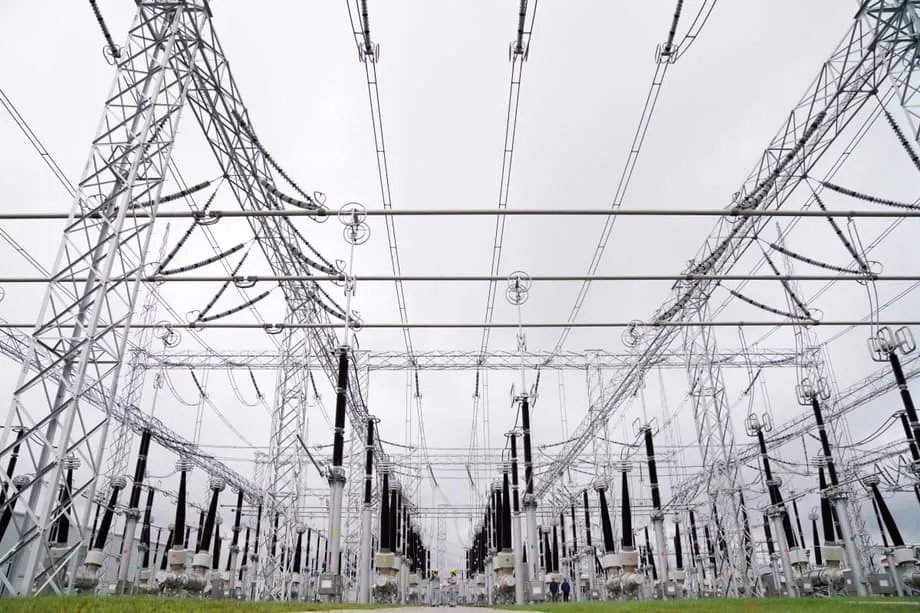
A large AI facility may need its own high voltage connection and equipment resembling a miniature electricity grid. Its shopping list can cover an entire substation, the place where electricity is transformed and routed, as well as the systems inside its buildings.
The principal equipment includes:
- Power transformers: These raise voltage for transmission and lower it for use by servers. Their cores use grain oriented electrical steel, and finished units must pass demanding tests. Manufacturing can take many months.
- Gas insulated switchgear: Known as GIS, this equipment uses sealed enclosures to save space and support reliability in dense urban locations or harsh climates. It manages high fault currents and allows heavy electrical loads to be switched safely.
- High voltage direct current equipment: Known as HVDC, these systems can carry large blocks of electricity from distant generation to growing data center hubs. They require converters, control systems and specialized transformers.
- Medium voltage equipment and power distribution units: These route electricity across buildings and between racks. Coordinated protection helps prevent electrical faults from causing wider outages.
- Cooling and thermal management: Chillers, evaporative systems and liquid cooling keep chips within safe operating temperatures as power density rises.
- Energy storage systems: Battery banks absorb short spikes in demand, respond quickly to changes and help maintain service during grid fluctuations.
- Cables and conductors: Copper and aluminum cables with large cross sections connect facilities to the grid and link equipment inside them. Rising grid construction has increased demand for aluminum used in cables.
Chinese manufacturers compete across many of these categories. A customer choosing a transformer or switchgear supplier must consider how the equipment will fit into the wider installation, how quickly it can arrive and whether support will be available throughout its working life.
Emerging markets add to the order book
Countries in Latin America, the Middle East and Southeast Asia are expanding electricity generation and upgrading transmission to support industrial growth and new data centers. Their needs add another layer of demand alongside the much larger and more visible AI construction push in North America.
Many buyers in these regions are sensitive to both price and delivery time. Long queues at Japanese and South Korean manufacturers create an opening for mainland exporters supplying transformers, GIS and cables capable of carrying high currents.
Data center developers tend to cluster where they can find cheap electricity, reliable connections and favorable permitting. Locations with hydroelectric power, nuclear plants or large renewable fleets have attracted projects because access to power helps determine where computing facilities can operate.
Chinese companies can participate as component suppliers to international contractors or as direct exporters. That allows manufacturers to fill gaps in individual equipment categories as well as supply customers undertaking broader grid construction.
Investors move toward electricity supply chains
TBEA, a Chinese producer of electrical components, saw its shares jump nearly 30 percent during a standout week in November. CSI Solar, a solar equipment manufacturer, rose more than 40 percent in the same period. The rallies reflected growing investor interest in the infrastructure that makes computing possible.
As enthusiasm for pure AI companies cools after strong share price gains, investors are looking at power equipment, energy storage, cooling and metals. Copper and aluminum producers are part of that search because their products feed into cables and other electricity infrastructure.
China has multiple listed companies exposed to this spending. If grid investment proceeds as expected, transformer and switchgear manufacturers could gain visibility over orders extending for years. Suppliers may also gain greater ability to negotiate prices in specialist markets where waiting times are long and quality requirements are demanding.
Share prices will continue to respond to more than the volume of orders. Commodity price movements and changes in export policy in major consuming regions can affect costs, market access and profitability. The timing gap between fast data center construction and slower utility projects also influences when anticipated demand becomes actual revenue.
Trade rules, testing and materials can limit growth
Governments are sensitive to the origin of equipment installed in critical infrastructure. Higher tariffs, requirements to buy locally or new security reviews could limit Chinese shipments to some markets and alter purchasing decisions.
Buyers also need equipment that meets technical requirements and can operate reliably for decades. They specify compliance with IEC or IEEE standards, which provide technical requirements for electrical equipment, and often require factory inspections, type tests and support during commissioning at the installation site.
Type tests check whether an equipment design meets the required performance and safety conditions. Commissioning checks the installed system before it enters service. Strong warranties and service networks are essential for high voltage equipment expected to remain in operation for many years.
Copper, aluminum and grain oriented electrical steel are major inputs for transformers and cables. Sharp increases in their prices can squeeze manufacturers' margins even when order books are strong. Renewable energy projects and electric vehicle growth compete for some of the same materials, adding pressure to supplies.
A large transformer can take 12 to 24 months to build after an order is placed. Transport and installation add more time. Expanding factories also requires new equipment, trained welders and a consistent supply of steel, so manufacturers cannot increase output simply by accepting more orders.
How developers are trying to bridge the gap
Data center developers are pairing facilities with battery storage to smooth changes in demand and provide backup. Where permitted, they are also adding generation at their sites, including gas turbines or solid oxide fuel cells, and contracting for electricity from new wind and solar farms.
Transmission planners are expanding the use of HVDC to move large blocks of power to new computing hubs. These projects can connect distant generation to areas with heavy demand, while creating further requirements for converters, control equipment and specialized transformers.
Efficiency improvements can reduce the electricity needed for each unit of computing. More efficient accelerators and better power usage effectiveness can help. Power usage effectiveness describes how much electricity a data center uses in total compared with the electricity used by its computing equipment, including the extra demand from cooling and other supporting systems.
The International Energy Agency still expects data center electricity consumption to grow faster than other sectors through 2030 in its base case, with the United States and China driving most of the increase. Steady grid investment and early procurement planning remain central to meeting that demand.
China's export boom sits within this wider construction challenge. Manufacturers can gain orders as customers search for equipment, while utilities and developers work to align power supply, grid connections and computing capacity. With new US nuclear capacity unlikely before 2028 to 2030 and large transformers requiring lengthy production schedules, pressure on transformers and switchgear is expected to remain elevated for several years.
What to Know
- China exported about US$7.3 billion in transformers and US$4.3 billion in high voltage gas insulated switchgear in the first ten months of 2025.
- Those exports grew 37.8 percent and 28.5 percent respectively, compared with 5.3 percent growth in total exports.
- Citigroup's Pierre Lau said Japanese and South Korean suppliers have order pipelines stretching as long as three years, pushing emerging market buyers toward mainland suppliers.
- The International Energy Agency projects global data center electricity use will rise from about 415 terawatt hours in 2024 to around 945 terawatt hours in 2030.
- Industry estimates suggest a North American power shortfall of up to 20 percent through 2028 if infrastructure expansion falls behind data center demand.
- UBS forecasts China's electricity demand will grow about 8 percent annually in 2028 to 2030, with AI data centers contributing roughly 2.3 percentage points.
- China plans 5 to 6 gigawatts of new AI data center capacity over the next three years, compared with 40 to 45 gigawatts in the US pipeline.
- Trade restrictions, equipment testing, long production schedules and material costs remain major constraints on the export opportunity.