A small cargo opens a much larger trade route
Nearly 10,000 metric tons of iron ore aboard the bulk carrier Winning Youth mark the beginning of a project that could eventually export 120 million tons a year. As of November 23, 2025, Guinea's Simandou has begun moving ore from its southeastern highlands to the Atlantic coast, opening a new supply route for China and a new source of competition for Australia and Brazil.
Contents
- A small cargo opens a much larger trade route
- Why Simandou took decades to reach the sea
- The railway and port make the mine possible
- Who owns the ore, and how quickly can output grow?
- Why richer ore matters to steelmakers
- China gains another tool in price negotiations
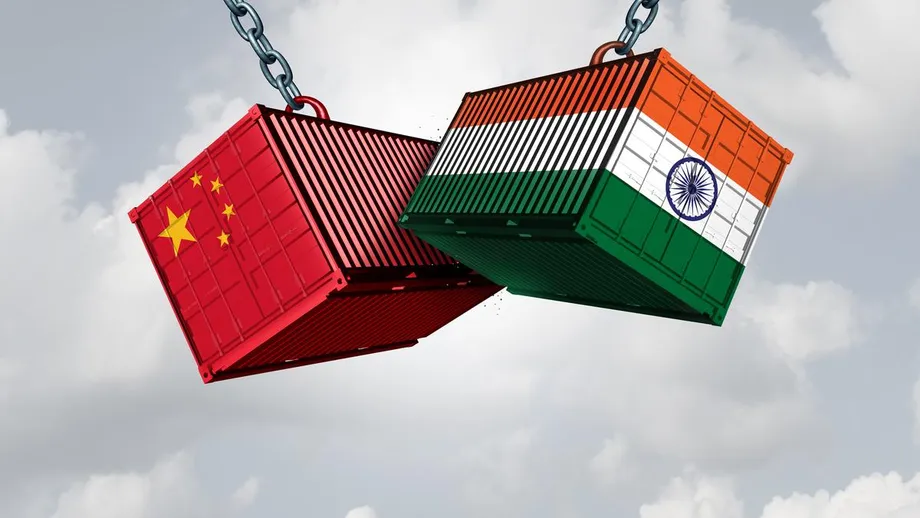
- Australia and Brazil face competition, not replacement
- Longer voyages create demand for more ships
- Guinea seeks benefits beyond ore exports
- The Bottom Line
The first cargo reached the new port of Morebaya after traveling on the first train to run the TransGuinean railway. Winning Youth waited offshore with the small but symbolic load of rich red ore. Its journey toward Asia stretches roughly 11,000 nautical miles around the Cape of Good Hope, across the Indian Ocean and through the Strait of Malacca, before turning north into the South China Sea. A Chinese steel mill is its likely destination.
Simandou is the world's largest previously untapped deposit of high grade iron ore. Its reserves are estimated in the billions of tons, with average iron content often above 65 percent. At its planned capacity, Guinea would join the leading iron ore exporters, behind only Australia and Brazil in trade carried by sea and comparable with some of the largest national producers.
China, the world's largest steel producer and iron ore buyer, has helped finance, build and operate the mine, railway and port. Its immediate gain is another source of a strategic raw material. Chinese mills depend heavily on Australian producers in the Pilbara and Brazil's Vale, leaving purchases concentrated among a small group of suppliers.
Western Australia is much closer to China: the route to Qingdao is about 3,500 nautical miles. Simandou's attraction lies instead in the quality of its ore and the prospect of a stable supply over many years. Those advantages could help mills manage costs and reduce emissions even with a much longer voyage.
Why Simandou took decades to reach the sea
Geologists recognized Simandou's promise in the 1950s, when Guinea was still a French colony. Rio Tinto secured exploration rights in 1997 and confirmed vast resources. Political upheavals, legal disputes, corruption allegations and the difficulty of building transport infrastructure across a mountainous interior repeatedly delayed exports.
Sidiki Kone, a geologist involved in early exploration in the late 1990s, recalled teams walking for hours through dense forest to map exposed rock and identify drilling targets. With forest surrounding his team on every side, he questioned whether the work could be done:
how is this work possible?
The isolation that confronted those exploration teams remained a central obstacle for developers. A large ore deposit had little commercial value without a railway capable of carrying heavy loads and a port capable of transferring them onto ships.
A coalition of Chinese state companies, international miners and Guinea's government eventually agreed on shared ownership and infrastructure. That compromise helped restart a project long associated with unrealized potential. Civil works accelerated from 2021, and the construction workforce reached into the tens of thousands.
Guinea's transitional authorities inaugurated the railway and port on a November day, presenting the opening as a reset for national development. Officials put total investment in the mines, railway and port at more than $20 billion.
The project's main milestones span generations:
- 1950s: Geologists recognized Simandou's potential while Guinea was a French colony.
- 1997: Rio Tinto obtained exploration rights and subsequently confirmed large resources.
- Late 1990s: Exploration teams, including Kone, worked through the remote forested highlands.
- 2021 onward: Civil construction accelerated.
- November 2025: Guinea inaugurated the railway and port, and the first ore moved toward export.
- 2026: Substantial shipments are expected to begin building.
- Before the end of the decade: Combined annual production is expected to approach 120 million tons, subject to construction, weather and operating performance.
The railway and port make the mine possible
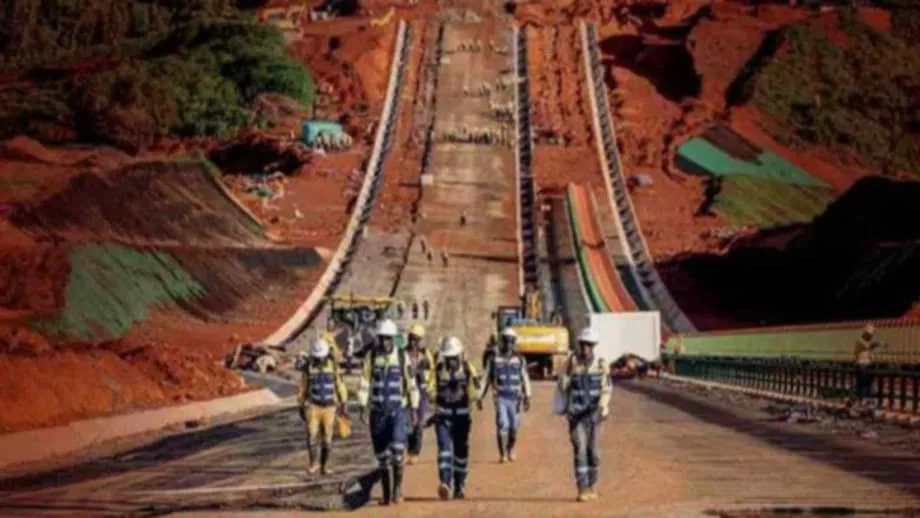
The transport plan called for a railway of more than 620 kilometers between the southeastern mines and Morebaya on the Atlantic. Engineers designed 12 stations, 206 bridges and four tunnels for what is now Guinea's longest modern railway. The system includes a railway with two tracks built to carry heavy loads.
Morebaya uses offshore transshipment, meaning ore is carried by barges from the coast to large ships waiting at sea. This arrangement accommodates a coastline where water depth and complex tides make loading very large vessels at a conventional berth difficult.
The port can serve capesize and newcastlemax bulk carriers, categories of large ships used to transport commodities such as iron ore. Barges are staging the maiden shipment and topping up a bulk carrier with a capacity of 200,000 tons offshore. That allows the vessel to load fully without requiring a berth deep enough for its loaded hull.
The railway and port are designed to handle up to 120 million tons annually. Initial train movements and offshore loading have brought the project into operation, but running both systems at that scale will require a sustained increase in throughput.
Construction has already faced extreme rainfall, difficult ground conditions and safety incidents. Those challenges remain relevant as the developers move from completing civil works to maintaining reliable daily operations. The project is among Africa's largest integrated mine and infrastructure developments.
The shared corridor also reflects an environmental decision. Partners agreed to use the same railway and port to reduce the land affected and avoid building duplicate routes across the highlands. Even with that arrangement, construction and mining carry environmental risks in one of West Africa's most biodiverse regions.
Who owns the ore, and how quickly can output grow?
Simandou consists of two major concessions. Winning Consortium Simandou develops the northern concession, Blocks 1 and 2, with China Baowu Steel Group as a key partner. The southern concession, Blocks 3 and 4, belongs to a joint venture involving Rio Tinto Group, Aluminum Corporation of China, also known as Chinalco, and Guinea's government.
The two mining developments share the railway and port. Chinese state companies, international mining businesses and Guinea hold interests across the mines and common infrastructure, spreading ownership among the partners whose agreement unlocked construction.
Rio Tinto has targeted a gradual increase toward about 60 million tons a year from the southern concession over several years. Combined northern and southern production is expected to reach about 120 million tons annually before the decade ends. No exact date for full capacity has been given.
Small quantities have begun moving, while substantial flows are expected to build during 2026. Construction progress, rainfall and operating performance will determine how quickly shipments rise. The first cargo and the planned annual capacity are therefore different stages of the same development.
At its peak, Simandou would account for roughly 5 percent of global iron ore supply and a high single digit share of trade carried by sea. Those shares explain why a project in Guinea matters to mills, miners and shipowners far beyond West Africa.
The developers must also coordinate two mining concessions with one transport system. As output rises into tens of millions of tons a year, the railway and port will face their biggest operational test: moving ore consistently through the entire route from the highlands to waiting ships.
Why richer ore matters to steelmakers
Simandou's ore often averages more than 65 percent iron, with grades described in the range of 64 to 67 percent and relatively low impurities. A higher iron content means mills receive more usable iron in each ton of material.
Blast furnaces use coke, a fuel made from coal, to help turn ore into hot metal, the molten iron used in steelmaking. Richer ore with fewer impurities allows a mill to produce the same quantity of hot metal with less coke and energy. That usually lowers emissions and increases furnace productivity.
Higher grades also command a premium over the benchmark index for ore containing 62 percent iron. This premium is the extra price paid for better material. It tends to widen when mills place more value on efficiency and reducing emissions.
European steelmakers are building or planning facilities that produce direct reduced iron and pair them with electric arc furnaces. Direct reduction removes oxygen from iron ore without melting it in a conventional blast furnace; electric arc furnaces then use electricity to melt material for steelmaking. These routes need high grade inputs, including pellets made from quality fines and concentrates.
Simandou could supply that demand if pellet production expands near the mines or port, or if partnerships develop along the production chain. Fines are small ore particles, while concentrates are material processed to increase iron content. Turning suitable material into pellets gives mills a more uniform input.
Chinese mills could also blend Simandou ore with other supplies to balance quality and cost. Richer material can replace portions of blends containing lower grade fines, giving buyers another way to manage coke consumption, furnace output and purchasing expenses.
China gains another tool in price negotiations
China's interest extends beyond obtaining additional tons. Beijing has spent years seeking to reduce its exposure to price swings in a market dominated by a small group of major suppliers. Chinese stakes in Simandou give its buyers access to another large supply source.
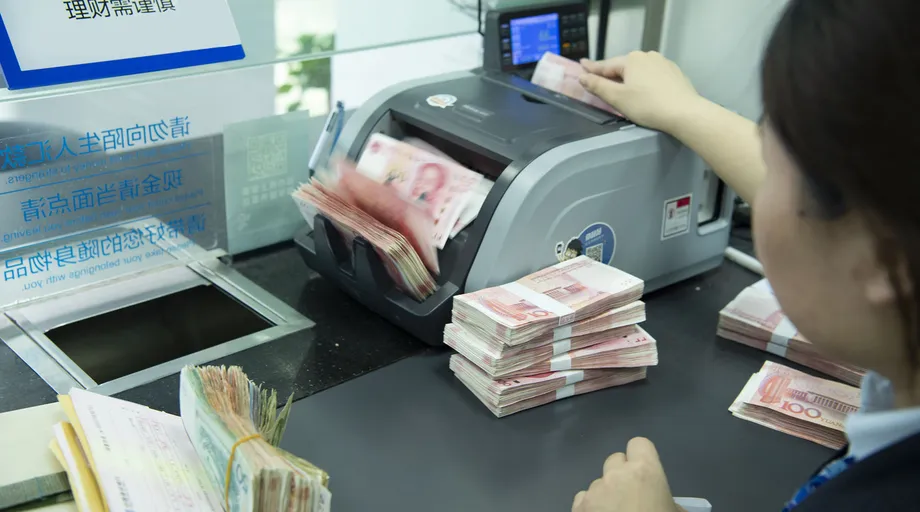
China created China Mineral Resources Group to centralize purchases for many state owned steel mills. It has also encouraged more transactions settled in renminbi. Negotiations with major suppliers have included tense exchanges over discounts, index pricing and the currencies used in contracts.
John Coyne, a researcher at the Australian Strategic Policy Institute who has studied Chinese market power across industrial commodities, described the influence a dominant customer can exercise:
Where China does not possess a near monopoly, it can control the market through monopsony, a market condition featuring one overbearingly and singularly important customer.
A monopsony is a market in which one buyer has unusually strong influence over sellers. China's position as the largest ore buyer, combined with more coordinated procurement and another source of supply, gives its mills additional tools when negotiating with Australia's Pilbara miners and Brazil's Vale.
Suppliers will still compete in a global market, and prices will continue to move with demand and production. The negotiating advantage from Simandou is likely to matter most when steel demand softens and buyers have more material to choose from.
Iron ore futures in Dalian and Singapore have slipped from recent highs during the quarter as traders weigh strong shipments to China against weaker demand signals. Analysts expect Chinese hot metal output to drift lower in the near term. Lower production would mean mills need less ore just as Simandou prepares to increase supply.
Market forecasters expect additional Simandou output to put downward pressure on the benchmark over time. Some base case projections place the 62 percent iron ore index in the high $80s per ton in the early 2030s. Lower prices would squeeze producers whose costs are already close to what they earn from selling each ton.
Australia and Brazil face competition, not replacement
Simandou has acquired the nickname Pilbara killer in mining circles. Australia's large producers nevertheless retain major advantages: mature mines, very short railway journeys and deep water ports facing Asia. Costs for the largest operators are often in the range of $20 to $35 per ton, among the lowest in the industry.
Simandou must first move ore about 620 kilometers by rail, then send it roughly three times farther to North Asia than cargo from Western Australia. Using the stated routes, 11,000 nautical miles from Guinea compares with 3,500 nautical miles from Western Australia to Qingdao. The longer land and sea journeys raise the cost of delivery.
Ore quality helps offset that disadvantage. Mills willing to pay more for iron content and fewer impurities can give Simandou a stronger realized price, meaning the actual price received for its material. Its total costs, including railway transport and ocean freight, remain above those of the cheapest Australian producers.
The greatest pressure is likely to fall on producers with higher costs or lower grades. These include some domestic Chinese mines and smaller operations elsewhere. More rich ore on the market can change both the premiums paid for better material and the discounts applied to poorer material, narrowing margins for vulnerable mines.
Australia and Brazil are more likely to face a change in bargaining power and price levels than a collapse in their market shares. Large Pilbara exporters should remain profitable at lower benchmark prices because their costs are low.
Projects requiring substantial new investment to maintain production face greater risk. Developers considering new mines outside West Africa must now include Simandou's planned output in their forecasts of future supply, demand and prices. The question for those investments is whether expected selling prices will cover construction and operating costs once Guinea's ore reaches the market in large quantities.
Longer voyages create demand for more ships
A voyage from Guinea to northern China can take about 45 days. Moving the same quantity of ore over a longer route keeps ships occupied for longer, changing the rhythm of deliveries and increasing demand for vessel capacity.
Shipping measures this work in tonne miles: the weight of cargo multiplied by the distance it travels. If Simandou reaches 120 million tons a year and replaces an equivalent amount of shorter journey cargo from Australia, total iron ore tonne miles could rise by around 10 percent.
Analysts estimate that about 170 capesize vessels would be needed to serve Simandou at its planned capacity. Longer round voyages and more travel without cargo between loading assignments could keep the market for these large ships tight for years.
Chinese shipping companies have responded by ordering new bulk carriers and arranging transshipment systems off Guinea. Builders and operators have booked additional large vessels for expected shipments, while offshore loading gives charterers flexibility to fill ships to their maximum permitted depth.
West African rainfall, tides and port conditions could create new seasonal patterns in loading. Early operations at a new export hub also carry the risk of queues and weather delays. Those pressures will become more visible as annual shipments move beyond the first small cargoes.
Longer voyages also affect shipping emissions. Regulators are implementing emissions reporting and targets for the amount of emissions associated with transport activity. More time at sea increases the shipping work needed to deliver Guinea's ore, while its higher grade can reduce emissions inside steel mills. Simandou's total climate effect will depend on both parts of that journey.
Guinea seeks benefits beyond ore exports
Guinea holds a 15 percent noncontributory stake in the mining and infrastructure companies. The arrangement gives the state a share of future revenues without requiring it to contribute capital for that stake.
Authorities estimate that Simandou's expansion could lift national gross domestic product by a large margin over the medium term. GDP measures the value of goods and services produced in a country. Tens of thousands of construction jobs have already been created, and the government wants the transport corridor to support activity beyond mining.
Plans include carrying agricultural products and other freight on the railway and exploring options to process some ore locally. Services and industrial activity could grow around the corridor. Neighboring landlocked countries could gain access to an Atlantic outlet if capacity allows.
Djiba Diakite, spokesperson for the transitional government and chair of the Simandou 2040 strategic committee, described the launch as a test of whether mineral wealth can support broader prosperity:
Guinea will prove that Africa can avoid the resource curse.
The resource curse describes the risk that a country rich in minerals fails to turn that wealth into widely shared benefits. Guinea's government will be judged on how revenues are used, how benefits reach communities and how transparently the project is governed.
Political stability and environmental management will also shape the outcome. Guinea is in a transition period, with elections scheduled to move the country from military to civilian rule. Investors, lenders and local communities will watch both that process and the management of mining in the biodiverse highlands.
The shared railway reduces duplicate construction, but operations still require monitoring of environmental risks. Guinea's larger ambition is to turn the route from the interior to the coast into an economic backbone, carrying more than iron ore. Its success will depend on whether the transport system and revenues support lasting activity alongside the mines.
The Bottom Line
- By November 23, 2025, Simandou had begun exports, with nearly 10,000 metric tons reaching Morebaya for the first shipment aboard Winning Youth.
- The project aims for 120 million tons annually before the decade ends, about 5 percent of global supply and a high single digit share of seaborne trade.
- Investment exceeds $20 billion across mines, a railway of more than 620 kilometers and port facilities using offshore loading.
- Winning Consortium Simandou and China Baowu are involved in the northern blocks; Rio Tinto, Chinalco and Guinea share the southern concession.
- Ore often exceeding 65 percent iron can help mills use less coke and energy, supporting premium prices and lower furnace emissions.
- China gains another supply source and more negotiating options, while higher cost and lower grade producers face the greatest price pressure.
- Australia retains advantages from low costs and shorter routes; Guinea's longer voyages could require about 170 capesize vessels at full production.
- Guinea's 15 percent state stake, employment and broader freight plans offer economic opportunities, alongside demands for transparent governance and environmental protection.