A home of 35 square meters, deep in the mountains
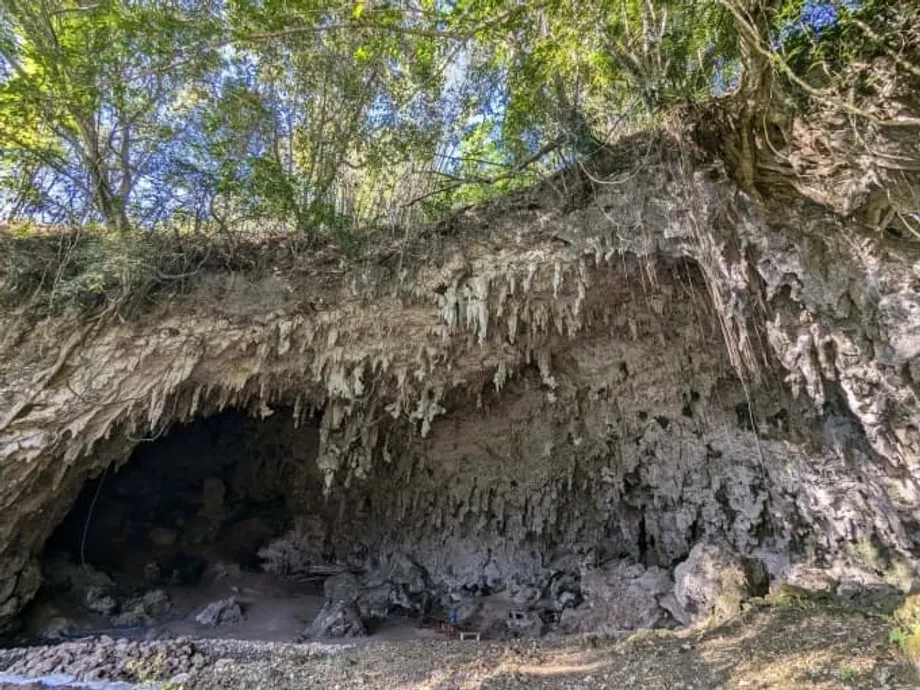
Sudarmaji, 70, has lived for more than four decades in a mountain cave above Sumberjo village near Mojokerto City in East Java, Indonesia. His home has no electricity or internet. Water drips from the cave walls into buckets, a small wood stove serves as his kitchen, and a thin, aging mattress provides his bed.
Contents
- A home of 35 square meters, deep in the mountains
- A steep trail separates the cave from village life
- How water shapes the cave and its rooms
- Food, firewood and occasional journeys for supplies
- What the meditation space says about his solitude
- Drinking water and a limited diet need care
- Recent landslides underline the danger of heavy rain
- Local knowledge stretches back decades
- Online attention reaches a place without internet
- What to Know
The main chamber measures about 35 square meters and overlooks a stream flowing from Anjasmoro peak. A narrow passage leads to a smaller space where two statues and simple ritual gifts suggest a personal spiritual practice. Most days, Sudarmaji lives alone, surrounded by forest and the sound of water.
As of November 22, 2025, a video circulating online has brought renewed attention to his secluded life. The clip has attracted many views and comments, with people expressing admiration for his simplicity and concern about an older man living somewhere so difficult to reach.
Local forestry officer Tarmidi places the start of Sudarmaji's cave residence at around 1983. A village head believes he may have lived there for 50 or even 60 years. Both describe a stay lasting decades, although the precise starting date remains uncertain.
Sudarmaji has declined to explain why he chose this life. His daily routine offers a clearer picture: he raises a few chickens, gathers edible plants, collects water and occasionally rides an old motorbike to the village for supplies. Visitors sometimes bring rice or vegetables, maintaining a small but useful connection between the cave and the community below.
A woman from the village once helped him, according to Tarmidi. After she died, Sudarmaji stayed in the cave. His home remains secluded, but those relationships show that his life has retained contact with people outside the forest.
A steep trail separates the cave from village life
Visitors reaching Sudarmaji's home by motorbike must follow a narrow dirt trail for roughly 35 minutes, then descend a slope of about 50 meters on foot. The trail is steep and often slippery. Another route involves a forest walk lasting nearly two hours.
The cave sits high on a ravine, with water running below it. Dense vegetation covers the surrounding slopes, and streams draining from the Anjasmoro range feed the narrow valley. The landscape itself creates the separation from village life.
Supplies, path repairs and emergency assistance all face the same difficult access. Heavy rain makes the dirt trail slick and the descent more dangerous. A journey that is already demanding can become much harder when the weather changes.
No wires, pumps or pipes reach this part of the forest. Water and insects dominate the sounds around the cave, occasionally joined by a motorbike that cannot travel far beyond the ridge. Visitors describe a feeling that time slows in this setting.
Privacy comes with practical costs. An injury or sudden illness would leave Sudarmaji waiting for help to travel through the same terrain that keeps his home quiet. The distance matters, but the steep slopes and difficult footing also determine how quickly someone could reach him.
How water shapes the cave and its rooms
Sudarmaji places buckets beneath steady drips along the cave walls to collect water for drinking and daily use. Rainwater is plentiful during wet months, while water continues to seep through the walls during drier periods.
Mountain caves in tropical regions can form as water enters cracks in rock and gradually hollows out a cavity. These spaces can remain cool compared with the air outside. Moisture also condenses and trickles inside, producing the drips on which Sudarmaji depends.
The same damp conditions affect ordinary household tasks. Cooking, drying clothes and keeping bedding usable all take place in a space where moisture is a constant presence. The water supply is useful, but the containers and the water itself need care.
Inside the main chamber, the furnishings are sparse. The old mattress serves as a bed, while a woven mat is reserved for occasional visitors. Smoke from the small wood stove has blackened the rock around the cooking area.
A tight passage separates the main living space from the niche used for quiet reflection. The two statues and ritual gifts sit deeper inside, away from the entrance, where the light is softer and the air is still. The arrangement gives Sudarmaji distinct places to cook, rest, receive visitors and meditate within a modest natural shelter.
Food, firewood and occasional journeys for supplies
Sudarmaji gathers wood nearby to fuel his stove. His meals are simple, and daily activities follow the available daylight. Without electricity, cooking and other tasks depend on the resources he can collect or bring back from the village.
A few chickens provide eggs and sometimes meat. Wild vegetables and other edible plants supplement his meals. Rice and other necessities arrive through occasional purchases or through visitors who carry food down to the cave.
The old motorbike allows him to obtain items the forest cannot provide. The difficult route makes weather and health practical considerations when planning those journeys. Even a routine purchase requires travel over a demanding path.
Visitors also provide brief companionship. People sometimes descend to say hello, ask how he is doing or leave rice and vegetables. Those visits supplement his supplies while preserving a connection to nearby communities.
His routine combines dependence on the forest with limited contact with village life. Water, fuel and some food come from his immediate surroundings; other necessities require either a journey out or someone willing to make the journey in.
What the meditation space says about his solitude
Sudarmaji has kept his reasons for moving into the cave private. The meditation niche provides a glimpse of his personal practice, but his own explanation for choosing seclusion has not been given.
Caves and forest huts have long been places of spiritual retreat in Java. People may seek them for meditation or personal vows. Statues and ritual gifts are familiar expressions of respect in Javanese spiritual practice, used in places where a person prays or reflects.
Javanese traditions of retreat connect contemplation with patience, discipline and a relationship with nature. Similar forms of withdrawal exist elsewhere in Asia and beyond, including mountain hermitages and desert retreats. People who choose solitude sometimes describe a search for clarity and simplicity, with silence becoming part of their routine.
Chosen solitude and unwanted isolation present different experiences. Research has found that time alone can reduce stress and improve concentration when someone is safe and supported. The risks become greater when isolation is unwanted or basic needs are uncertain.
At 70, Sudarmaji also faces the practical effects of age in a remote setting. An illness or injury can become dangerous when assistance is far away. His occasional village trips and the visits he receives therefore matter both socially and for everyday support.
Drinking water and a limited diet need care
Water is an immediate health concern in a home supplied by rain and seepage. Water passing through soil and rock can pick up microbes from animal droppings or contaminated ground. Rodents and insects can also contribute to contamination in tropical caves.
Boiling is a simple way to make water safer to drink, and Sudarmaji's wood stove makes that possible. Clean buckets and careful storage can further reduce the risk of contamination. These measures are especially relevant when the same collected water supplies drinking and other daily needs.
Food variety presents another concern. Eggs, greens and purchased staples can cover basic needs, but a narrow diet may lack some nutrients over time. Iodine is one example of a mineral that may be missing, while vitamins can become harder to obtain if vegetables are scarce during the dry season.
The forest setting also makes familiar injuries more serious. A twisted ankle on the slippery descent could limit movement. A cut could become infected, while smoke from the stove creates a risk of inhalation. Each problem becomes more difficult to manage when medical care requires a lengthy trip.
Sudarmaji's access route connects these concerns. The path used to buy food is also the route visitors take to check on him and the route help would need to follow in an emergency. Weather, mobility and supplies are closely linked in his daily life.
Recent landslides underline the danger of heavy rain
Java's wet season generally begins around September and can continue into April. Heavy downpours can cause slopes to fail, particularly in districts with steep terrain and soft soil. Flash floods are another danger when rain intensifies around streams and ravines.
In the days before November 22, Indonesian disaster officials said landslides in Banjarnegara and Cilacap in Central Java had killed 30 people, with many others missing. Search teams faced continuing rain, ponds of debris and the possibility of further slides.
Banjarnegara and Cilacap are far from Mojokerto. The conditions described by search teams nevertheless illustrate how quickly rain can alter a mountainside and how difficult rescue work can become while the weather remains poor.
Sudarmaji's cave is positioned above a ravine with a stream below. During storms, the surrounding slopes, water flow and access trail require attention. Heavy rain can make reaching or leaving the cave more dangerous at the same time that assistance becomes harder to deliver.
The wet season therefore affects more than comfort inside a damp shelter. It also changes the safety of the route, the ease of bringing supplies and the ability of neighbors or local staff to respond if Sudarmaji needs help.
Local knowledge stretches back decades
Forestry staff and village leaders have known about Sudarmaji's cave residence for years. Tarmidi's estimate of around 1983 provides a specific point in that history, while the village head's estimate of 50 to 60 years suggests a substantially longer stay.
The known sequence includes a long residence, support from a village woman and continued life in the cave after her death. The history can be outlined without assigning dates to events whose timing has not been given:
- Around 1983: Tarmidi places Sudarmaji's move into the cave at approximately this time. The village head estimates a residence lasting 50 to 60 years.
- During his residence: A woman from the village helped him.
- After the woman's death: Sudarmaji remained in the cave.
- By November 22, 2025: A circulating video had drawn wider attention to his living conditions and safety.
People nearby sometimes bring food and have expressed concern about his health. Their concern reflects both his age and the difficulty of reaching the cave, a challenge for anyone who attempts the trail.
The woman's help and the continuing visits give this story a human connection beyond the image of a man alone in the mountains. Sudarmaji has maintained his residence through decades while receiving some support from people in the surrounding community.
Online attention reaches a place without internet
The video of Sudarmaji and his cave has brought a secluded home into public view. Comments have focused on safety, dignity and the value of living without electricity or internet. Curiosity can encourage help, but it can also bring more people onto a difficult trail.
Unprepared visitors face steep, slippery ground and a demanding descent. Greater foot traffic can create risks for those making the trip and disturb the resident whose quiet life attracted their attention in the first place.
Respectful visits would include asking permission before filming or posting images and taking care not to disturb the cave. Leaving food or rubbish can attract animals, adding another problem to a place with limited facilities.
Local authorities may consider how to manage visitors on the path if public interest continues. The practical concern is keeping access safe while allowing Sudarmaji to retain the privacy he has maintained for decades.
Sudarmaji's life brings simplicity and vulnerability into the same small space. His water buckets, stove, chickens and occasional supply trips support a routine he has sustained for years. His age, the damp cave and the difficult terrain make contact with neighbors and local staff particularly valuable.
What to Know
- Sudarmaji, 70, lives in a mountain cave above Sumberjo village near Mojokerto City in East Java.
- Tarmidi, a local forestry officer, dates his move to around 1983. A village head estimates a stay of 50 to 60 years.
- The main chamber is about 35 square meters, with an aging mattress, a visitors' mat and a wood stove.
- He has no electricity or internet and collects rainwater and seepage in buckets.
- Access requires roughly 35 minutes by motorbike and a descent of about 50 meters, or a forest trek of nearly two hours.
- He raises chickens, gathers wild vegetables, buys necessities in the village and sometimes receives food from visitors.
- A narrow passage leads to a meditation niche with two statues and ritual gifts. He has not explained why he chose seclusion.
- A village woman once helped him. He stayed in the cave after her death.
- A circulating video has prompted admiration and concern about his health, privacy and safety.
- Recent landslides in Central Java killed 30 people, according to disaster officials. Heavy rain also makes steep paths and ravines hazardous.