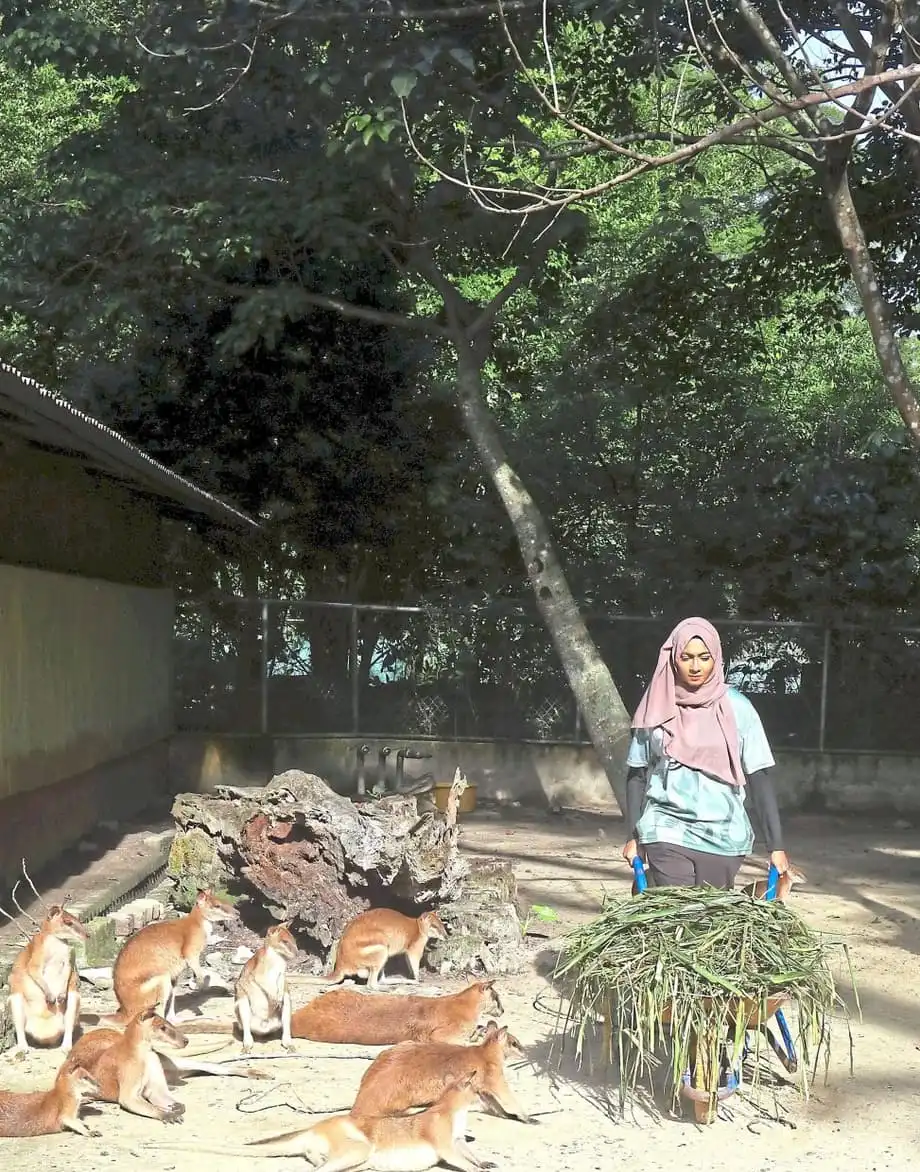
86 students step into the work of zookeepers
Eighty six students recently spent half a day cleaning enclosures, chopping fruit and vegetables, and making enrichment items at Zoo Negara, Malaysia's national zoo in Kuala Lumpur. Their work helped keepers care for a collection of more than 4,000 animals while giving the students a closer look at the effort behind each exhibit.
Contents
- 86 students step into the work of zookeepers
- How the morning is organised
- Who can join and what the fee covers
- Why cleaning and meal preparation matter
- Enrichment encourages animals to explore
- Work extends beyond the enclosures
- What students take back to campus
- Corporate teams have a separate route
- How one morning connects with conservation
- Safety and respect guide every task
- Key Points
The students joined KeeperKu, a volunteer programme launched in 2015 that brings young Malaysians into the daily routines of animal care. Recent college groups included many participants volunteering for the first time. Alongside cleaning and food preparation, they helped with gardening and grounds work, taking on practical jobs that support animals, staff and visitors.
KeeperKu turns a morning at the zoo into something more demanding than a visit. Students prepare meals, clean habitats and learn how keepers encourage animals to forage and explore. The aim is to turn curiosity about wildlife into useful skills and a lasting respect for conservation.
The programme also shows why animal welfare depends on routine work done carefully. Husbandry means the everyday care of animals, including feeding, cleaning and maintaining suitable living spaces. Enrichment gives animals activities that encourage their natural behaviour. Both require planning, observation and attention to each species.
Participants have described leaving with greater confidence, stronger teamwork and a better understanding of discipline after a single shift. Many saw species up close that they had previously encountered only in textbooks. Others discovered that zookeeping combines patience, physical effort and careful observation, rather than simply feeding animals and watching them.
How the morning is organised
KeeperKu runs from Thursday to Sunday, with activities scheduled from 8:00 am to 12:30 pm. Participants are asked to arrive at 7:30 am for registration and a safety talk before work begins. Zoo Negara organises volunteers into teams, assigns them to zones and pairs them with supervising keepers.
Keepers introduce the work areas and explain the day's tasks. Duties are adjusted to participants' age and experience, with clear limits on contact with animals. Volunteers receive guidance on hygiene, using tools and moving around exhibits without startling wildlife.
Students may clean and replenish exhibits, stack browse for hoofstock, prepare portions for primates and birds, or help maintain paths and viewing areas. Browse is the plant material placed for animals such as giraffes and antelope. Hoofstock refers to animals with hooves.
The morning gives teenagers a view of facilities that most visitors do not see, from kitchens and quarantine rooms to compost bays and tool sheds. These spaces help explain how much work takes place beyond the public viewing areas.
Zoo Negara expects practical clothing that can get dirty and closed footwear. Direct animal handling is not part of a typical shift. Any work close to animals takes place under a keeper's direct supervision, with animal welfare and participant safety guiding the activity.
Who can join and what the fee covers
KeeperKu welcomes students aged 16 and above from schools, colleges and universities. Applicants aged 16 or 17 need a parent or guardian's signature on their application form. All participants are asked to read the rules beforehand so they understand the expectations before arriving.
The programme charges RM55 to support operational needs and pay for gloves, tools and materials used during volunteer activities. Students should confirm their date and submit the required application and consent before attending.
Zoo Negara's Education Department handles enquiries. Prospective participants can email [email protected] or call +603 4108 3422. The KeeperKu volunteer page provides programme information, rules, forms, available days and departments. Students should check the page or confirm details by email for current dates and any changes.
Zoo Negara has also used a social post to invite students to participate. The zoo's invitation described opportunities in animal care and several other departments:
Calling all students! Did you know you can be a volunteer at Zoo Negara? Our KeeperKu program welcomes all students aged 16 and above from schools, colleges, and universities! Participants will not only get the opportunity to work with animals on wildlife husbandry and enrichment but also support departments such as Education, Public Relations, Customer Service, and others. Want to know more or sign up? Just click this link or drop us an email at [email protected]. Hope to see you soon!
Why cleaning and meal preparation matter
Animal care occupies much of a student shift. Volunteers help clean enclosures, replace bedding, replenish water and prepare diets. They may portion fish for aquatic birds, weigh fruit and vegetables for primates, or place browse for giraffes and antelope.
Keepers also involve volunteers when an exhibit needs fresh substrate, the material covering its floor, or when a pool needs scrubbing. Working together, they restore a clean and safe space for the animals. These jobs help volunteers understand why husbandry requires consistency rather than guesswork.
A carefully prepared diet respects the needs of a particular species. A clean enclosure reduces disease risk and stress. Accurate records help staff track what animals receive, while routine maintenance keeps their surroundings suitable and secure.
Some of the strongest lessons are small and specific. Participants learn how to scrub algae safely from a tortoise pool, why a feeding log must be accurate to the gram, and how a keeper reads a tiger's body language before starting a task. Each example connects a simple action with the responsibility of caring for wildlife.
Volunteers' help with routine duties gives keepers more time for specialised work, including health checks, training sessions and close observation of behaviour. The relationship is practical: students learn through useful tasks, while professional staff retain responsibility for animal care.
Enrichment encourages animals to explore
Enrichment is a highlight of KeeperKu because it shows students how animal care extends beyond food, water and clean surroundings. An enrichment activity or object encourages an animal to use behaviours such as searching, manipulating, exploring or foraging.
A puzzle feeder can make a bear move objects to reach its food. A scent trail can encourage a tiger to explore its space. A bundle of straw can keep a troop of macaques occupied with foraging and shredding. These examples show how activities can be matched to different animals.
Students help build enrichment items and learn why keepers design and rotate them. Staff assess whether each activity is safe and effective, rather than simply placing an unfamiliar object in an enclosure. The work introduces volunteers to enrichment informed by science and observation.
Zoo Negara's programme connects this planning with the daily effort of keeping exhibits clean and animals well cared for. Volunteers see that enrichment, diet preparation and habitat maintenance belong to the same routine, with each task supporting animal welfare.
Work extends beyond the enclosures
KeeperKu also places students in departments outside direct animal care. Volunteers can assist with education sessions, answer simple visitor questions at information points, and support public relations and customer service during busy periods.
Park and gardens teams need help maintaining paths, plantings and shaded areas. This work supports the spaces used by visitors and contributes to the upkeep of the zoo. Recent college volunteers have taken part in gardening and grounds duties alongside their work with keepers.
Some days include errands for the veterinary hospital, such as moving supplies or preparing clean spaces. Students gain a view of the clinical side of animal care without taking part in procedures. The activity helps them understand how support work contributes to the work of veterinary staff.
Zoo Negara functions like a small city, with specialised trades, different departments and strict safety procedures. A volunteer shift can show how kitchens, animal areas, visitor services, education teams and maintenance staff connect. Its mission brings together care, education and conservation, rather than leaving each department to work in isolation.
What students take back to campus
Students often arrive expecting zookeeping to centre on feeding and watching animals. The morning shows them that time management, careful records and observation matter as much as strength and stamina. Tasks must be organised, instructions followed and details checked.
Teamwork is part of that learning. Volunteers practise communicating in noisy work areas, dividing responsibilities and following a keeper's directions. Reliable work helps build trust between staff and students, while completing unfamiliar tasks can build confidence.
University groups have highlighted the value of applying skills outside the classroom. Accounting and engineering students, for example, organise shifts, share responsibilities and solve small problems as they arise. Their subjects may differ from animal care, but communication and coordination remain useful.
Empathy is another lesson. Cleaning an exhibit makes the need for a suitable living space tangible. Preparing a diet to a precise recipe shows why different species need different care. Students see that attention to an animal's needs is expressed through ordinary work done properly.
Many participants describe the morning as an experience that changes their understanding of the zoo. It connects broad ideas such as biodiversity and habitat loss with practical tasks they can carry out. Some take environmental topics more seriously in their studies and community activities afterward, and leave ready to encourage friends to volunteer.
Corporate teams have a separate route
Zoo Negara has revived an adult volunteering programme called the CSR Green project. Companies can send teams, typically starting at 30 participants, for a structured morning of activities under staff supervision.
Corporate groups help keepers with enrichment, husbandry, exhibit cleaning and food preparation. The format resembles KeeperKu but is adjusted for the size of the group and the time available. Companies can include the activity in their workplace volunteer calendars.
Public interest has also grown in opportunities for adults applying as private individuals. Zoo Negara has explored ways to involve adults beyond company groups. As of November 14, 2025, corporate participation remained the most consistent adult option, while KeeperKu remained the main route for individual student volunteers.
Interested companies can contact Zoo Negara to discuss scheduling and requirements. The corporate programme gives working adults a way to contribute to the same kinds of practical care and maintenance that students encounter through KeeperKu.
How one morning connects with conservation
Modern zoos combine animal care, research, education and visitor services. Their daily husbandry requires substantial labour. When trained volunteers carry out routine cleaning, food preparation and simple maintenance, keepers can devote more time to observing diet and health, planning enrichment and training animals in ways that make veterinary work easier.
The benefit reaches beyond the tasks completed during a shift. Students can become advocates for wildlife by sharing their experience with family and friends and bringing conservation into campus projects. Practical messages include choosing products made with certified sustainable palm oil.
Chester Zoo in the United Kingdom offers a comparison in its approach to youth participation. It involves hundreds of young volunteers each year and links their work to a conservation plan supporting threatened species over the longer term.
Zoo Negara's approach has a similar purpose: expanding education partnerships and giving young Malaysians credible opportunities to develop conservation skills while keeping animal welfare central. KeeperKu makes that purpose concrete through supervised work rather than leaving conservation as an idea discussed only in a classroom.
Safety and respect guide every task
Keepers set the boundaries for animal contact throughout KeeperKu. Volunteers do not handle wildlife independently, and close access requires direct supervision. Animals can be powerful, quick or easily frightened, so safe working habits protect people while reducing stress for wildlife.
Instructions cover correct tool use, checking locks and latches, and keeping an exit route clear. Volunteers also learn how to move around exhibits carefully. These procedures are part of the work itself, rather than something separate from caring for animals.
A successful shift is measured by useful care: accurately prepared food, clean water, suitable enrichment and secure, tidy exhibits. Touching an animal is not the goal. Students contribute by following instructions and completing tasks that support its wellbeing.
Respect also extends to public areas. Volunteers are expected to keep noise down near sensitive species, discourage visitors from feeding animals and leave habitats as undisturbed as possible after finishing their work. Their conduct helps model appropriate behaviour for other visitors.
Students preparing to attend should confirm their booking, complete the application and obtain parental consent when required. Closed shoes, clothes suitable for dirty work, sun protection and a refillable water bottle are practical essentials. Arriving on time, listening carefully, asking questions and approaching the morning with a willingness to work as a team help participants make the most of a busy shift.
Key Points
- KeeperKu began in 2015 and gives students a supervised morning of practical work at Zoo Negara in Kuala Lumpur.
- Recent college groups included 86 students helping with enclosure cleaning, food preparation, enrichment, gardening and grounds work.
- Zoo Negara cares for more than 4,000 animals.
- Students aged 16 and above can apply. Those aged 16 or 17 need a parent or guardian's signature.
- Activities run Thursday to Sunday, from 8:00 am to 12:30 pm, with arrival at 7:30 am for registration and a safety talk.
- The RM55 fee supports operational needs, gloves, tools and volunteer materials.
- Placements can include animal care, education, public relations, customer service, veterinary support, and park and gardens work.
- Volunteers do not handle wildlife independently. Work close to animals requires direct keeper supervision.
- The revived CSR Green project provides a corporate route for adults, typically in groups starting at 30 participants.
- Enquiries go to [email protected] or +603 4108 3422.